


Content Writer | Updated On - Apr 23, 2026
JNU's Executive Council approved 11% supernumerary seats exclusively for women in BTech programmes, adding 14 seats per batch equally distributed between Computer Science Engineering and Electrical and Communications Engineering courses.
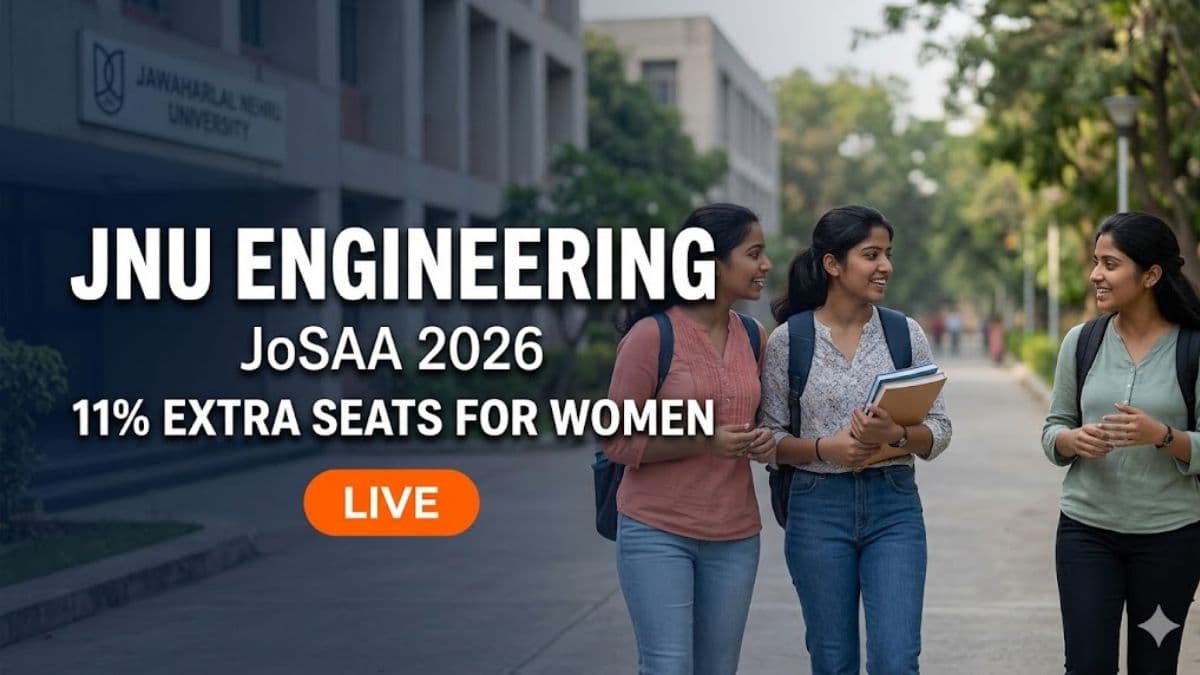
Jawaharlal Nehru University has approved the introduction of 11% supernumerary seats exclusively for women candidates in its School of Engineering BTech programs.
The decision, approved by the university's Executive Council on April 15, 2026, adds 14 additional seats per batch to strengthen gender diversity in engineering education.
These seats will be equally distributed between Computer Science Engineering (CSE) and Electrical and Communications Engineering (ECE) courses, with admissions continuing through the existing Joint Seats Allocation Authority (JoSAA) mechanism.
The university considered this proposal following multiple meetings within the School of Engineering to address gender imbalance in engineering disciplines.
A Special Committee meeting held on February 11, 2026, comprising JNU faculty members and external experts from IIT-Delhi, IIIT-Delhi, and Delhi Technological University, endorsed the proposal.
The committee noted that the percentage could be reviewed in the future depending on infrastructure improvements and that seats would be governed by prevailing government norms.
JNU B.Tech Admission 2026 Key Dates
| Event / Description | Date |
|---|---|
| Proposal endorsement by the Special Committee | February 11, 2026 |
| Approval of 11% supernumerary seats for women by the Executive Council | April 15, 2026 |
| Implementation for the Current Academic Session (Admissions via JoSAA) | (Active) 2026 |
The decision aims to enhance women's representation in engineering programmes at JNU, where gender imbalance has been a persistent concern. Currently, both CSE and ECE courses have 63 seats each under the regular admission process through JoSAA.
The 14 additional supernumerary seats represent a significant step toward creating more inclusive engineering education opportunities for women candidates.
These seats will operate independently of the regular merit-based allocation, ensuring dedicated opportunities for female applicants.
JNU Executive Council Approves Women Quota After Expert Consultation
The approval process involved rigorous deliberation among academic stakeholders and external experts from premier engineering institutions.
The committee appreciated the efforts of the Dean, School of Engineering, in proposing this measure while maintaining the university's existing reservation policy as per government rules.
The decision reflects JNU's commitment to addressing systemic gender gaps in technical education and aligns with broader national initiatives promoting women's participation in STEM fields.
5% Supernumerary Seats for Staff Wards Face Opposition from JNUTA
Alongside the women's quota, the university also approved a separate provision introducing 5% supernumerary seats for wards of teaching and non-teaching staff in undergraduate and postgraduate programmes.
However, this decision triggered significant dissent from elected members of the Executive Council and has faced opposition from the JNU Teachers' Association (JNUTA), which termed the move "regressive" and lacking rational justification.
JNUTA argued that such provisions could dilute opportunities meant for disadvantaged sections and called for strengthening the existing deprivation points mechanism instead.
Separate Seat Allocation for Women Through JoSAA Counselling
The 11% supernumerary seats for women represent a targeted intervention to address gender representation specifically in engineering disciplines.
Eligible women candidates can apply through the standard JoSAA counselling process, with these seats allocated separately from the general merit pool.
The university has indicated that infrastructure improvements may warrant future review of the percentage, suggesting flexibility in the policy based on institutional capacity and outcomes.
What Students Should Do Next: JoSAA Updates & Admission Guidelines
Students seeking admission to JNU's BTech programmes should monitor the JoSAA website for seat allocation details and counselling schedules.
The university will release official guidelines clarifying the application process and eligibility criteria for the supernumerary seats.
Prospective candidates are advised to verify all details on admit cards and follow official instructions during the counselling process to secure their seats in CSE or ECE programmes.
Also Check
- JNU Admissions 2026 to Begin Mid-May After CUET Results; Registration Opens Soon
- QS Subject Rankings 2026: 4 IITs, JNU, BITS Pilani Feature in Global Top 50; Check List Here
- NTA Introduces Instagram, Facebook Handles for Real-Time JEE, NEET, CUET Updates
- SNU Noida UG Admission 2026-27 Round 2 Phase 1 Deadline April 30; SNUSAT May 10
Subscribe to Collegedunia to get the latest news and updates –


.jpeg?h=127&w=254&mode=stretch)
.jpeg?h=127&w=254&mode=stretch)

.jpeg?h=127&w=254&mode=stretch)
.jpeg?h=127&w=254&mode=stretch)
.jpeg?h=127&w=254&mode=stretch)

%20(54).jpeg?h=40&w=40&mode=stretch)
%20(53).jpeg?h=40&w=40&mode=stretch)


%20(59).jpeg?h=40&w=40&mode=stretch)
%20(56).jpeg?h=40&w=40&mode=stretch)

%20(55).jpeg?h=40&w=40&mode=stretch)
%20(60).jpeg?h=40&w=40&mode=stretch)
%20(60).jpeg?h=40&w=40&mode=stretch)
.jpeg?h=40&w=40&mode=stretch)
.jpeg?h=40&w=40&mode=stretch)





Comments