



In a world overflowing with information, journalism is the guiding force that helps us make sense of the endless news and stories. Aspiring journalists in India are stepping into a field that's not only driven by passion and curiosity but is also adapting to new technologies and social changes. The landscape of journalism careers in India is evolving, presenting a mix of challenges and opportunities for those keen to venture into reporting and storytelling.
In today's digital age, the media landscape has expanded exponentially, with social media, podcasts, blogs, and streaming platforms all vying for the public's attention. The rapid proliferation of information technologies has reshaped how news is disseminated, raising questions about the traditional role of journalism and the skills required to thrive in this new era.
In this blog, we'll delve into the fascinating world of journalism careers in India, exploring the challenges and triumphs that await budding journalists. We'll uncover invaluable tips and insights from industry experts, shedding light on the skills, attitudes, and strategies that can set you on the right course for success. Lastly, we will also discuss the best university to pursue a journalism course in India.
Journalism Careers in India
Mass communication jobs offer a wide variety of options, letting you turn your interests into a career. Love taking photos? You can become a photojournalist. Enjoy talking about politics? You might want to be a political journalist.
Different roles need different skills, and good colleges can teach you many. Over time, you can specialise in areas that interest you the most.
Here are some jobs roles in journalism:
- News Reporter
- News Writer
- News Editor
- Chief Editor
- Anchor
- Broadcast Journalist
- Photojournalist
- News Producer
- Columnist
- Sportswriter
- Copywriter
- Communication Specialist
- Technical Writer
Each job needs different abilities and has different duties. The more skills you have, the better your opportunities.
Key Skills for Thriving in Journalism and Mass Communication
To do well with a Journalism and Mass Communication degree, you should have:
- Writing Skills: Being able to write clearly and interestingly is super important.
- Communication Skills: Talking and listening well helps in interviews and conversations.
- Curiosity: Being curious helps you find interesting stories and ask good questions.
- Research Skills: Finding accurate information is key to good journalism.
- Adaptability: The media world changes, so being open to new ways of doing things is helpful.
- Critical Thinking: You need to analyse information and decide what's true and important.
- Creativity: Thinking of unique angles and ideas makes your work stand out.
- Teamwork: Collaborating with others often happens in media projects.
- Time Management: Meeting deadlines is crucial in the fast-paced media industry.
To acquire these skills, it's important to study journalism and mass communication at a reputable college/ university. Continue reading to discover the leading university/college for pursuing a media degree.
Study at Shoolini University
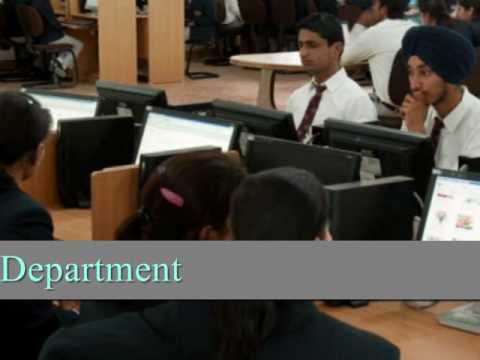
The School of Media and Communications at Shoolini University provides a comprehensive program aimed at equipping students with up-to-date knowledge and skills in the digital realm. The faculty includes experts from well-known media organizations like Yash Raj Films, Sony Entertainment, Colors TV, Indian Express, Reuters, Lehman Brothers, and others, offering students a distinctive learning experience.
By enrolling in Journalism and Mass Communication program at Shoolini University, students gain multiple advantages. The curriculum strongly emphasises practical learning, enabling students to acquire hands-on experience. For instance, they can contribute to an in-house newspaper, build skills as TV anchors/reporters, digital journalists, and collaborate with platforms like Radio Shoolini, Shoolini TV, and the Shoolini Newsletter.
Internships with respected media houses provide valuable industry exposure. These internships allow students to learn industry best practices, refining their abilities as media professionals. The practical-focused journalism program readies students for various career paths, including Media Management, Online Communication, Public Relations, Reporting, News Analysis, and Advertising.
The school invites expert visiting faculty to engage with students, covering diverse journalism and mass communication aspects such as PR, photography, and Corporate Communication. This exposure enriches students' expertise and abilities in their chosen field.
After program completion, students find exceptional placement prospects in esteemed organisations such as the Times of India, The Indian Express, Mutual PR, Core PR, My FM, Big FM, among others. The university encourages students to take part in student exchange programs, enabling them to study at prestigious global universities abroad.
Programs in Shoolini School of Media and Communications for Aspiring Journalists
- BA (Honours) Event Management
- BA (Honours) Advertising & PR
- BA Journalism and Mass Communication
- MA Journalism and Mass Communication
- PhD Journalism
- PhD Mass Communications
- PhD Public Relations
In today's continuously evolving world, becoming a journalist in India comes with both challenges and chances. The digital era has transformed how news is shared, making various skills vital. Choosing a good university like Shoolini can give you hands-on experience and prepare you well. So, with the right skills and education, you can shine in this dynamic field and guide people through the sea of news and stories.








![Eternal University - [EU]](https://image-static.collegedunia.com/public/college_data/images/appImage/1591612386Annotation20200608160245.jpg?h=111.44&w=263&mode=stretch)

![Career Point University - [CPU]](https://image-static.collegedunia.com/public/college_data/images/appImage/25550_CPU_NEW.jpg?h=111.44&w=263&mode=stretch)
.png?h=42.55&w=42.98&mode=stretch)














.jpeg?h=72&w=72&mode=stretch)
.png?h=72&w=72&mode=stretch)

.png?h=72&w=72&mode=stretch)


![Maharishi Markandeshwar - [MMU]](https://image-static.collegedunia.com/public/college_data/images/logos/1692423595Screenshot20230819110855.jpg?h=72&w=72&mode=stretch)
![Charotar University of Science and Technology - [CHARUSAT]](https://image-static.collegedunia.com/public/college_data/images/logos/1595591019Logo.jpg?h=72&w=72&mode=stretch)
![Bahra University - [BU]](https://image-static.collegedunia.com/public/college_data/images/logos/14719593871.jpg?h=72&w=72&mode=stretch)

![Career Point University - [CPU]](https://image-static.collegedunia.com/public/college_data/images/logos/1394876998Career Point University (CPU).png?h=72&w=72&mode=stretch)
![Chandigarh University - [CU]](https://image-static.collegedunia.com/public/college_data/images/logos/1613996461logo1.jpg?h=72&w=72&mode=stretch)


![Graphic Era University - [GEU]](https://image-static.collegedunia.com/public/college_data/images/logos/1483615540logoERA.png?h=72&w=72&mode=stretch)
![Baddi University of Emerging Sciences and Technologies - [BUEST]](https://image-static.collegedunia.com/public/college_data/images/logos/14720386581.jpg?h=72&w=72&mode=stretch)





Comments