




The Council for the Indian School Certificate Examinations (CISCE) successfully conducted the ICSE Class 10 Environmental Science (Group II Elective) Exam on March 30, 2026. The ICSE Class 10 Environmental Science (Group II Elective) Question Paper with Solution PDF is now available for download.
The ICSE Class 10 Environmental Science (Group II Elective) paper covers important topics from ecosystems, natural resources, pollution, biodiversity, and environmental conservation. Students should focus on understanding concepts, learning case studies, and writing structured answers with relevant examples. The exam is typically marked out of 100 marks, with 80 marks for the theory paper and 20 marks for internal assessment.
ICSE Class 10 2026 Environmental Science (Group II Elective) Question Paper with Solution PDF
| ICSE Class 10 Environmental Science (Group II Elective) Question Paper 2026 | Download PDF | Check Solution |
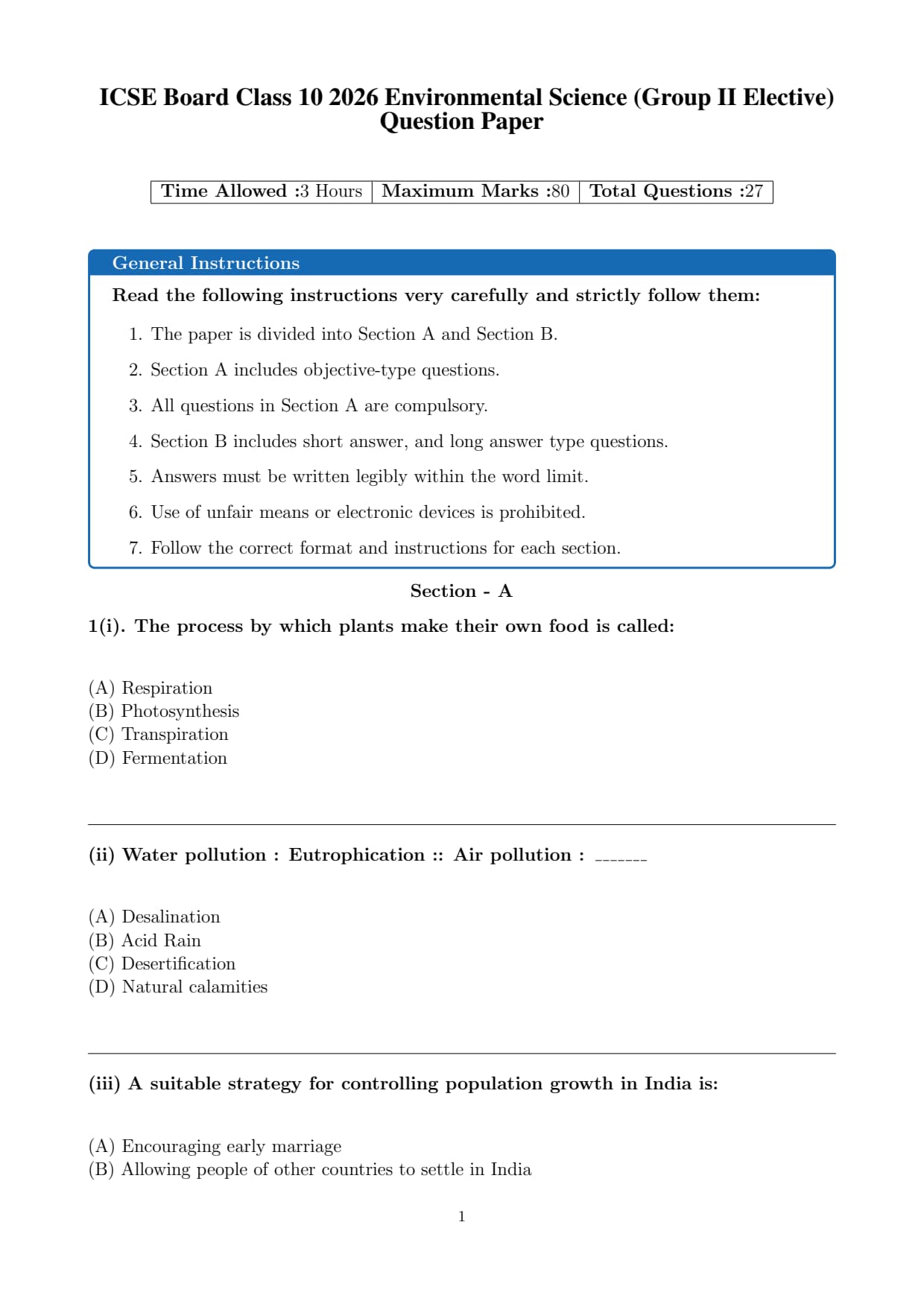

The process by which plants make their own food is called:
View Solution
The process by which plants make their own food is called photosynthesis. During this process, plants convert carbon dioxide, water, and sunlight into glucose (food) and oxygen.
Step 1: Analyzing each option.
(A) Respiration: Incorrect. Respiration is the process by which plants and animals break down glucose to release energy, not to make food.
(B) Photosynthesis: Correct. This is the process by which plants make their own food using sunlight, water, and carbon dioxide.
(C) Transpiration: Incorrect. Transpiration is the process by which water is absorbed and evaporated from the plant, not involved in making food.
(D) Fermentation: Incorrect. Fermentation is a process that occurs in some organisms to break down sugar without oxygen, not used by plants for food production.
Step 2: Conclusion.
Thus, the correct answer is (B), photosynthesis.
Final Answer: Photosynthesis. Quick Tip: Photosynthesis is the key process by which plants make their food and produce oxygen, essential for life on Earth.
Water pollution : Eutrophication :: Air pollution : _____ .
View Solution
Eutrophication is the process of nutrient enrichment in water bodies leading to pollution. Similarly, acid rain is the consequence of air pollution due to the release of sulfur dioxide and nitrogen oxides, which lead to the formation of acidic compounds.
Step 1: Analyzing each option.
(A) Desalination: Incorrect. Desalination is the process of removing salt from water, unrelated to air pollution.
(B) Acid Rain: Correct. Acid rain is a direct consequence of air pollution, caused by the emission of sulfur dioxide and nitrogen oxides.
(C) Desertification: Incorrect. Desertification is the process of land degradation, unrelated to air pollution.
(D) Natural calamities: Incorrect. Natural calamities are not directly caused by air pollution, and are not a suitable analogy.
Step 2: Conclusion.
Thus, the correct answer is (B), Acid Rain.
Final Answer: Acid Rain. Quick Tip: Acid rain is a result of air pollution, just as eutrophication is a result of water pollution.
A suitable strategy for controlling population growth in India is:
View Solution
A suitable strategy for controlling population growth in India is the implementation of family planning programs, which provide education and resources to help families manage their reproductive health.
Step 1: Analyzing each option.
(A) Encouraging early marriage: Incorrect. Early marriage is not a strategy for controlling population growth, as it may lead to higher birth rates.
(B) Allowing people of other countries to settle in India: Incorrect. This would likely increase population growth, not reduce it.
(C) Implementing family planning programs: Correct. Family planning programs help control population growth by educating people and providing resources for reproductive health.
(D) Accelerating birth rate: Incorrect. Accelerating birth rates would only worsen the issue of population growth.
Step 2: Conclusion.
Thus, the correct answer is (C), Implementing family planning programs.
Final Answer: Implementing family planning programs. Quick Tip: Family planning programs are an effective way to manage population growth by educating people on reproductive health and providing necessary resources.
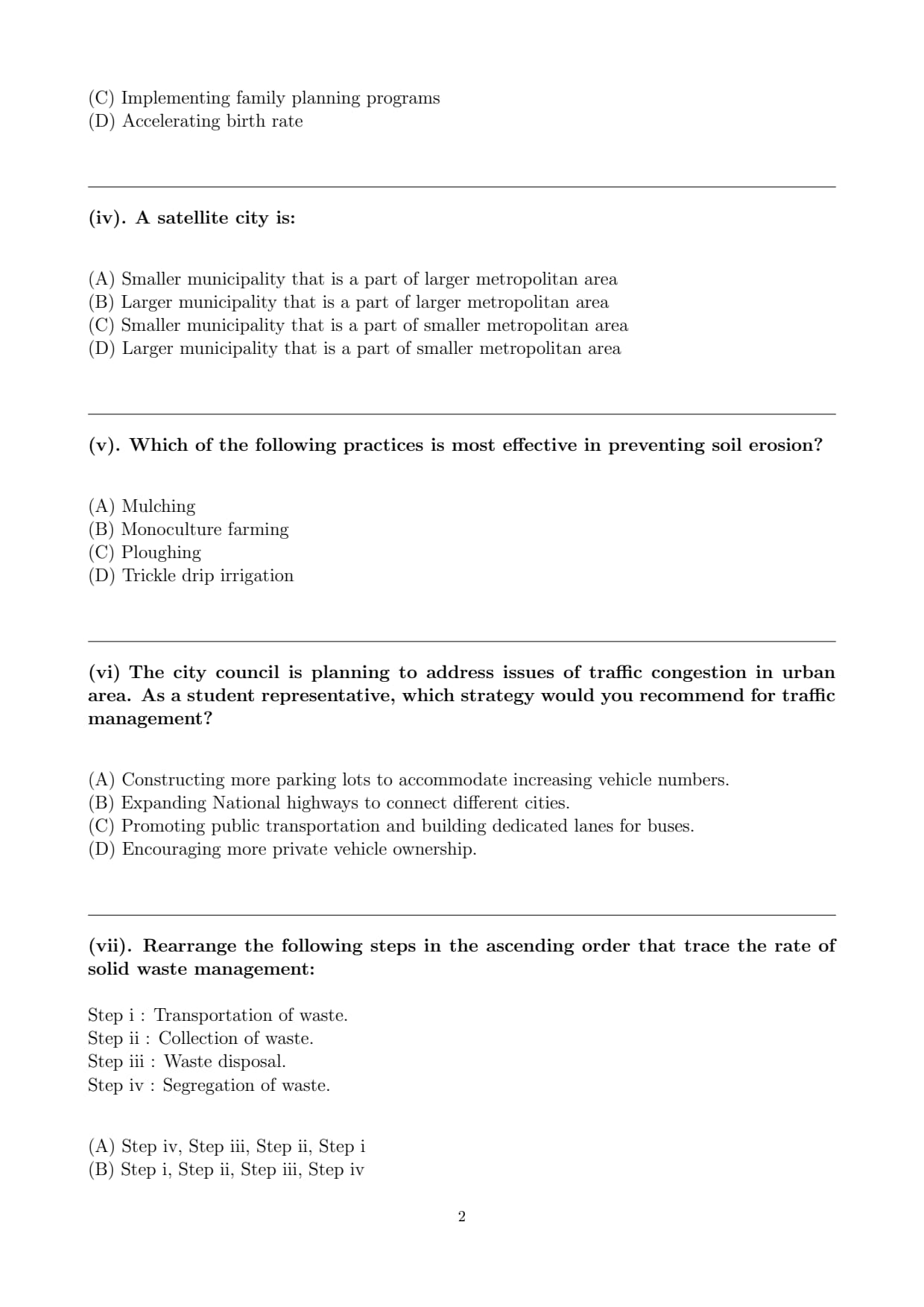
A satellite city is:
View Solution
Step 1: Understanding the term "satellite city".
A satellite city is typically a smaller city or municipality located near a large metropolitan area, often functioning as a suburban area that is closely connected to the central city in terms of economy, transportation, and other services.
Step 2: Analyzing the options.
(A) Smaller municipality that is a part of larger metropolitan area: Correct. This is the definition of a satellite city, where the smaller city is part of the larger metropolitan area.
(B) Larger municipality that is a part of larger metropolitan area: Incorrect. This is not the definition of a satellite city, as it describes a primary city rather than a satellite.
(C) Smaller municipality that is a part of smaller metropolitan area: Incorrect. This is not the typical case for a satellite city, as it should be a smaller city near a larger metropolitan area.
(D) Larger municipality that is a part of smaller metropolitan area: Incorrect. This is the opposite of the typical satellite city, which is a smaller city near a larger one.
Step 3: Conclusion.
Therefore, the correct answer is (A) Smaller municipality that is a part of larger metropolitan area.
Final Answer: Smaller municipality that is a part of larger metropolitan area. Quick Tip: A satellite city is typically a smaller city or town located near a major metropolitan area, designed to help reduce congestion in the central city.
Which of the following practices is most effective in preventing soil erosion?
View Solution
Step 1: Understanding soil erosion.
Soil erosion is the removal of the topsoil layer due to factors like wind, water, and human activity. Effective practices aim to reduce the movement of soil and protect the soil from being washed or blown away.
Step 2: Analyzing the options.
(A) Mulching: Correct. Mulching is a highly effective method for preventing soil erosion. It involves covering the soil surface with organic or inorganic materials, which helps retain moisture, protect the soil from wind and water, and reduce soil erosion.
(B) Monoculture farming: Incorrect. Monoculture farming involves growing one type of crop in a field, which can lead to soil depletion and increased erosion due to lack of plant diversity and root structure.
(C) Ploughing: Incorrect. While ploughing can help prepare the soil for planting, improper ploughing techniques can contribute to soil erosion by loosening the topsoil.
(D) Trickle drip irrigation: Incorrect. While drip irrigation conserves water, it does not directly address soil erosion, although it may help with moisture retention.
Step 3: Conclusion.
Therefore, the correct answer is (A) Mulching, as it is the most effective practice to prevent soil erosion.
Final Answer: Mulching. Quick Tip: Mulching is one of the best ways to protect the soil from erosion, as it helps maintain soil moisture, provides nutrients, and reduces the impact of rainfall.
The city council is planning to address issues of traffic congestion in urban area. As a student representative, which strategy would you recommend for traffic management?
View Solution
The best strategy for managing traffic congestion is to promote public transportation and invest in building dedicated lanes for buses. This reduces the number of private vehicles on the road and encourages more efficient use of road space.
Step 1: Analyzing each option.
(A) Constructing more parking lots to accommodate increasing vehicle numbers: Incorrect. Increasing parking spaces will only encourage more private vehicles and worsen traffic congestion in the long term.
(B) Expanding National highways to connect different cities: Incorrect. Expanding highways may help with long-distance travel, but it does not address urban traffic congestion specifically.
(C) Promoting public transportation and building dedicated lanes for buses: Correct. This solution helps reduce the number of private vehicles and provides an efficient, sustainable alternative for urban transportation.
(D) Encouraging more private vehicle ownership: Incorrect. This would increase traffic congestion rather than alleviate it.
Step 2: Conclusion.
The most effective strategy is (C), which focuses on reducing the reliance on private vehicles by promoting public transportation and providing dedicated infrastructure for buses.
Final Answer: Promoting public transportation and building dedicated lanes for buses. Quick Tip: Encouraging the use of public transportation and dedicated bus lanes is one of the most effective ways to reduce traffic congestion in urban areas.
Rearrange the following steps in the ascending order that trace the rate of solid waste management:
Step i : Transportation of waste.
Step ii : Collection of waste.
Step iii : Waste disposal.
Step iv : Segregation of waste.
View Solution
Step 1: Understanding the waste management process.
The process of solid waste management typically follows a sequence of steps:
1. First, the waste is collected.
2. Next, the waste is segregated into different categories (e.g., recyclables, non-recyclables, biodegradable, etc.).
3. Then, the waste is transported to the appropriate location (such as a disposal site or recycling facility).
4. Finally, the waste is disposed of through methods such as landfilling, incineration, or recycling.
Step 2: Analyzing the correct order.
(Step ii) Collection of waste is the first step, as it involves gathering waste from various sources.
(Step iv) Segregation of waste comes next, as it is important to separate different types of waste for proper disposal or recycling.
(Step i) Transportation of waste follows, where segregated waste is transported to disposal or recycling centers.
(Step iii) Waste disposal is the final step, where the waste is either recycled, composted, or landfilled.
Step 3: Conclusion.
Therefore, the correct order is Step ii, Step iv, Step i, Step iii, making (C) the correct answer.
Final Answer: Step ii, Step iv, Step i, Step iii. Quick Tip: Proper solid waste management involves several steps starting from waste collection, followed by segregation, transportation, and finally, disposal. Each step is crucial for effective waste management.
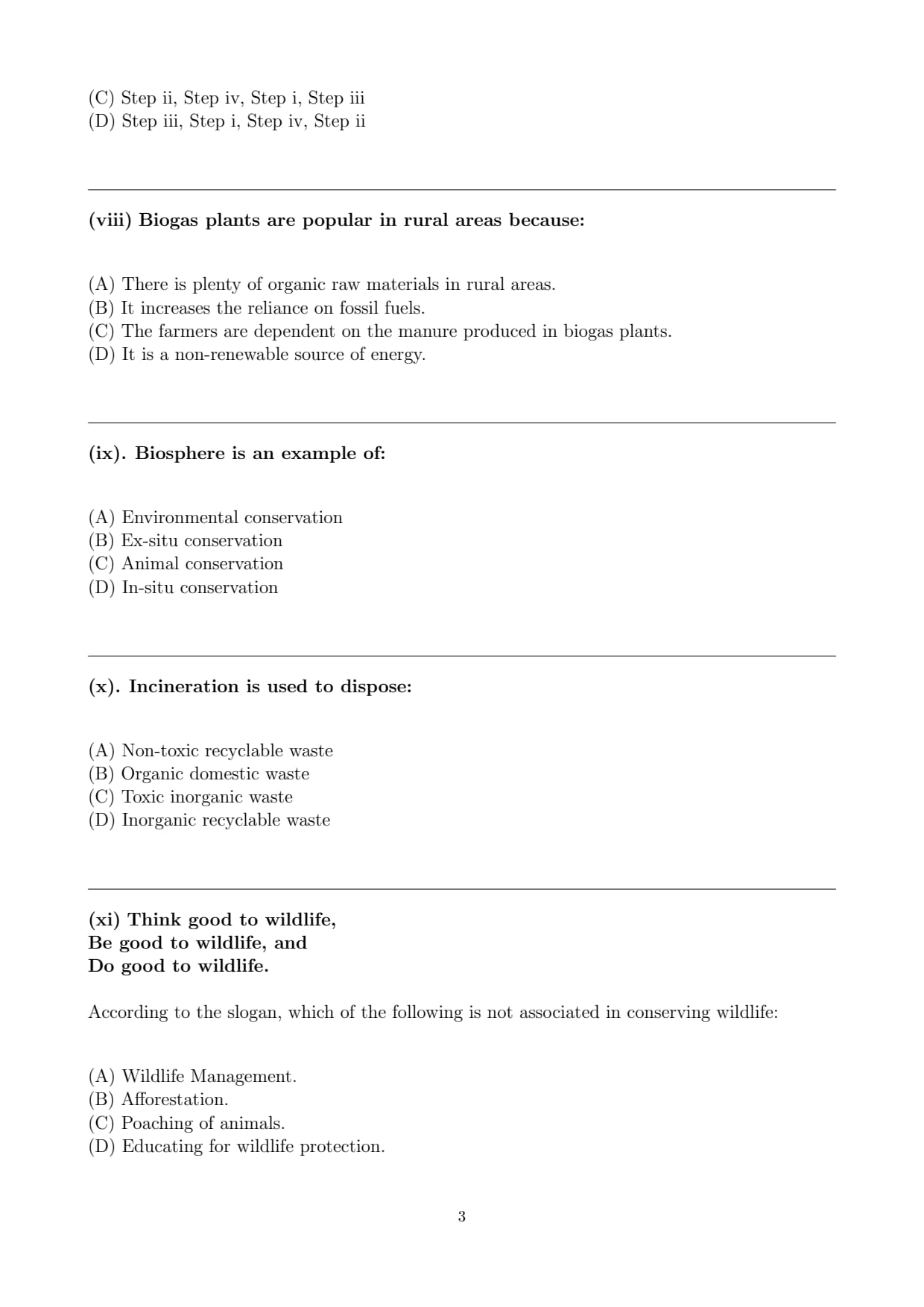
Biogas plants are popular in rural areas because:
View Solution
Biogas plants are popular in rural areas primarily because there is an abundance of organic raw materials such as animal waste, crop residues, and other organic matter that can be used for biogas production.
Step 1: Analyzing each option.
(A) There is plenty of organic raw materials in rural areas: Correct. Biogas plants thrive in rural areas because organic raw materials such as cow dung, crop waste, and other agricultural residues are readily available.
(B) It increases the reliance on fossil fuels: Incorrect. Biogas reduces reliance on fossil fuels by using renewable organic materials for energy.
(C) The farmers are dependent on the manure produced in biogas plants: Incorrect. Although biogas plants produce manure as a byproduct, the primary reason for their popularity is the energy they provide, not just the manure.
(D) It is a non-renewable source of energy: Incorrect. Biogas is a renewable source of energy, as it is produced from organic materials that can be replenished.
Step 2: Conclusion.
Therefore, the correct answer is (A), as biogas plants are popular in rural areas due to the abundance of organic raw materials.
Final Answer: There is plenty of organic raw materials in rural areas. Quick Tip: Biogas is a renewable energy source that can help reduce reliance on fossil fuels by utilizing organic materials available in rural areas.
Biosphere is an example of:
View Solution
Step 1: Understanding the biosphere and conservation.
The biosphere refers to the zone of life on Earth, encompassing land, water, and air. Conservation in this context refers to the protection and preservation of ecosystems and organisms in their natural habitats.
Step 2: Explanation of conservation methods.
- In-situ conservation refers to the conservation of species in their natural habitats, which is what the biosphere represents. It is the most effective way to protect ecosystems and species.
- Ex-situ conservation involves preserving species outside their natural habitats, such as in zoos or botanical gardens, which is not applicable to the biosphere.
- Animal conservation focuses on the protection of animal species, but it doesn't necessarily involve the entire biosphere.
- Environmental conservation is a broader term, but it does not specifically describe the biosphere.
Step 3: Conclusion.
Therefore, the correct answer is (D) In-situ conservation.
Final Answer: In-situ conservation. Quick Tip: In-situ conservation is the most effective form of conservation as it protects species in their natural environment, ensuring they continue to thrive in their ecosystems.
Incineration is used to dispose:
View Solution
Step 1: Understanding incineration.
Incineration is a waste treatment process that involves the combustion of materials at high temperatures. It is commonly used to dispose of waste that cannot be recycled or composted.
Step 2: Identifying the waste suitable for incineration.
- Non-toxic recyclable waste should be recycled, not incinerated.
- Organic domestic waste can be composted, reducing the need for incineration.
- Toxic inorganic waste is dangerous to the environment and human health, and incineration is an effective method for safely disposing of such hazardous materials.
- Inorganic recyclable waste should be recycled, not incinerated.
Step 3: Conclusion.
Therefore, the correct answer is (C) Toxic inorganic waste, as it is the most suitable type of waste for incineration.
Final Answer: Toxic inorganic waste. Quick Tip: Incineration is used for hazardous waste such as toxic inorganic materials, as it helps reduce the volume and eliminate harmful substances from the environment.
Think good to wildlife,
Be good to wildlife, and
Do good to wildlife.
According to the slogan, which of the following is not associated in conserving wildlife:
View Solution
The slogan promotes positive actions towards wildlife conservation, such as wildlife management, afforestation, and education for protection. However, poaching of animals is harmful and goes against the conservation efforts, making it the incorrect option.
Step 1: Analyzing each option.
(A) Wildlife Management: Correct. Wildlife management is a key aspect of wildlife conservation, involving the management of natural resources to ensure the survival of wildlife.
(B) Afforestation: Correct. Afforestation helps create habitats and biodiversity, which are essential for wildlife conservation.
(C) Poaching of animals: Incorrect. Poaching harms wildlife and is directly opposed to conservation efforts.
(D) Educating for wildlife protection: Correct. Education is essential in raising awareness and promoting wildlife protection.
Step 2: Conclusion.
The correct answer is (C), poaching of animals, as it is harmful and counterproductive to wildlife conservation.
Final Answer: Poaching of animals. Quick Tip: Wildlife conservation focuses on protecting and preserving wildlife, which is directly threatened by activities like poaching.
Assertion (A): Cooperation can be achieved by the International Treaties and Agreements.
Reason (R): Global pollution can be resolved by cooperation among Nations.
View Solution
The assertion (A) states that international cooperation through treaties and agreements can lead to global collaboration. The reason (R) explains that global pollution can be resolved by cooperation among nations. Since both statements are true, and (R) explains why (A) is true, the correct answer is (D).
Step 1: Analyzing each option.
(A) A is True, R is False: Incorrect. Both (A) and (R) are true.
(B) A is False, R is True: Incorrect. (A) is true, so this option is incorrect.
(C) Both A and R are True, and A is the correct explanation of R: Incorrect. (R) explains (A), not the other way around.
(D) Both A and R are True, and R is the correct explanation of A: Correct. Both (A) and (R) are true, and (R) correctly explains (A).
Step 2: Conclusion.
Thus, the correct answer is (D), as both (A) and (R) are true, and (R) explains (A).
Final Answer: Both A and R are True, and R is the correct explanation of A. Quick Tip: Cooperation through international treaties and agreements plays a crucial role in solving global issues such as pollution.
Green manure acts as a solidifying matter that:
View Solution
Step 1: Understanding green manure.
Green manure refers to plants that are grown primarily to be incorporated into the soil to improve its quality. These plants decompose and add organic matter to the soil, which helps in enhancing soil structure, increasing microbial activity, and improving soil fertility.
Step 2: How green manure affects soil.
Green manure typically helps in decreasing the acidity of the soil (i.e., increasing its pH), especially when plants like legumes are used. The decomposition of green manure adds nutrients like nitrogen to the soil, which helps neutralize acidity.
Step 3: Comparison with other options.
(A) Increases alkalinity of the soil: Incorrect. Green manure does not typically increase the alkalinity of the soil; rather, it helps to decrease acidity.
(B) Decreases alkalinity of the soil: Incorrect. Green manure does not decrease alkalinity; it has a neutralizing effect on acidity.
(C) Increases acidity of the soil: Incorrect. Green manure generally decreases the acidity of the soil, not increases it.
(D) Decreases acidity of the soil: Correct. Green manure helps to decrease the soil's acidity by improving its overall fertility and adding beneficial nutrients.
Step 4: Conclusion.
Therefore, the correct answer is (D) Decreases acidity of the soil.
Final Answer: Decreases acidity of the soil. Quick Tip: Green manure is an excellent organic method to improve soil quality by neutralizing soil acidity and providing essential nutrients.
What is the primary source of energy for the Earth?
View Solution
The Sun is the primary source of energy for the Earth. It provides energy through sunlight, which drives weather patterns, ocean currents, and supports all forms of life through photosynthesis.
Step 1: Analyzing each option.
(A) Wind: Incorrect. Wind energy is derived from solar energy, but it is not the primary source.
(B) Sun: Correct. The Sun is the ultimate source of energy for life on Earth, driving weather and ecosystems.
(C) Fossil fuels: Incorrect. Fossil fuels are derived from ancient biological material, which ultimately comes from the Sun.
(D) Water: Incorrect. Water is essential for life, but it is not the primary source of energy for the Earth.
Step 2: Conclusion.
Thus, the correct answer is (B), the Sun.
Final Answer: Sun. Quick Tip: The Sun is the primary source of energy for Earth, driving life processes and the planet's climate system.
Which gas is most responsible for global warming?
View Solution
Carbon dioxide (CO₂) is the most responsible gas for global warming. It is a greenhouse gas that traps heat in the Earth's atmosphere, contributing to the rise in global temperatures.
Step 1: Analyzing each option.
(A) Oxygen: Incorrect. Oxygen is essential for life but does not contribute significantly to global warming.
(B) Carbon dioxide: Correct. Carbon dioxide is the main greenhouse gas contributing to global warming.
(C) Nitrogen: Incorrect. Nitrogen makes up a large part of Earth's atmosphere but is not a greenhouse gas.
(D) Hydrogen: Incorrect. While hydrogen is an important element, it does not contribute to global warming.
Step 2: Conclusion.
Thus, the correct answer is (B), Carbon dioxide.
Final Answer: Carbon dioxide. Quick Tip: Carbon dioxide is the leading cause of global warming due to its ability to trap heat in the atmosphere.
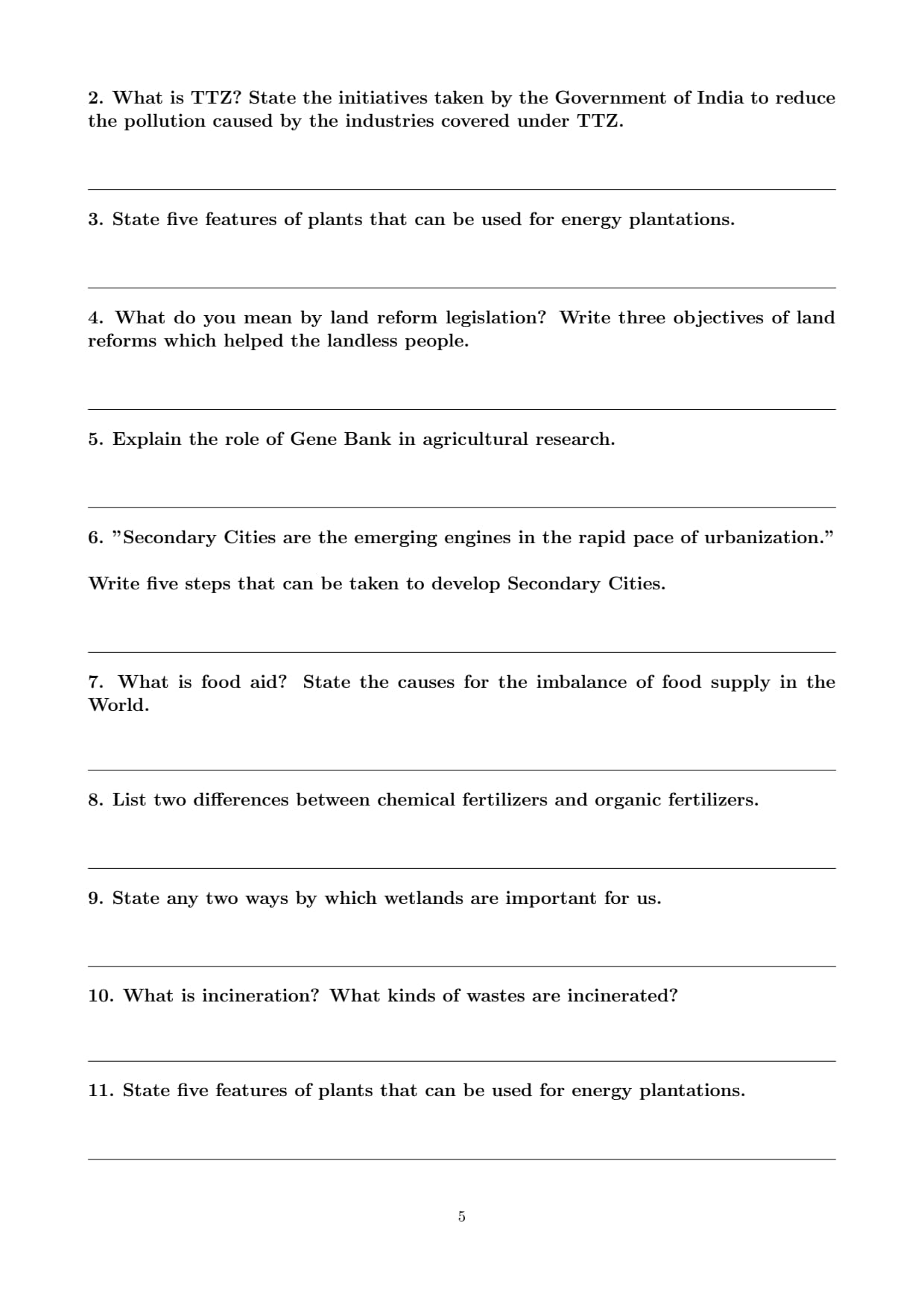
What is TTZ? State the initiatives taken by the Government of India to reduce the pollution caused by the industries covered under TTZ.
View Solution
Step 1: Definition of TTZ (Toxic Industrial Zones).
TTZ refers to the Toxic Industrial Zones, which are regions designated by the government where industries that produce hazardous waste or cause significant environmental pollution are located. These zones are primarily formed to address pollution issues caused by heavy industries and chemical factories, which often pose risks to both the environment and human health.
Step 2: Causes of Pollution in TTZ.
Industries in TTZ are known for releasing toxic pollutants into the air, water, and soil. These include gases, chemical effluents, particulate matter, and hazardous waste, which can lead to severe ecological damage and health hazards for surrounding communities.
Step 3: Initiatives by the Government of India to Reduce Pollution in TTZ.
The Government of India has implemented several initiatives to mitigate pollution from industries in TTZ areas, including:
Strict Regulatory Measures: The government has implemented stringent regulations to control the emission of pollutants from industries, including the Air (Prevention and Control of Pollution) Act, Water (Prevention and Control of Pollution) Act, and Environmental Protection Act. These laws enforce limits on pollutants and require industries to install pollution control technologies.
Pollution Control Devices: Industries are mandated to install advanced pollution control devices such as scrubbers, filters, and effluent treatment plants to minimize harmful emissions and treat industrial waste before disposal.
Green Technology Adoption: The government encourages industries in TTZ to adopt green technologies, including cleaner production processes, recycling of waste materials, and use of alternative energy sources to reduce reliance on fossil fuels.
Environment Impact Assessment (EIA): The government requires all new industries in TTZ areas to undergo an Environment Impact Assessment (EIA) before being established. The EIA ensures that industries implement effective measures to prevent or minimize environmental degradation.
Public Awareness and Participation: The government promotes public awareness programs to educate local communities about the hazards of pollution and involves them in monitoring and reporting violations of environmental standards.
Financial Incentives for Pollution Control: Financial incentives, such as subsidies and tax rebates, are provided to industries that adopt environmentally friendly practices and technologies to reduce their environmental footprint.
Step 4: Conclusion.
Through these initiatives, the Government of India aims to reduce the pollution caused by industries in TTZ, protect public health, and ensure the sustainable development of industrial sectors without compromising the environment. Quick Tip: The government’s efforts to control pollution in TTZs focus on strict regulation, adoption of green technologies, and public involvement to ensure sustainable industrial growth.
State five features of plants that can be used for energy plantations.
View Solution
Step 1: Features of Plants for Energy Plantations.
1. Fast Growth Rate: Plants that grow quickly are ideal for energy plantations, as they can be harvested sooner for energy production.
2. High Biomass Yield: Plants that produce large amounts of biomass are preferable because more biomass can be converted into energy.
3. Resilience to Harsh Conditions: Plants that can thrive in poor soil or low water conditions are suitable for energy plantations, reducing the need for intensive management.
4. Low Maintenance Requirements: Plants that require minimal care and inputs (such as fertilizers and pesticides) are more sustainable for large-scale energy plantations.
5. Ability to Absorb Carbon: Plants that are capable of absorbing and storing significant amounts of carbon dioxide help mitigate climate change while providing renewable energy sources. Quick Tip: Fast-growing, high-biomass, and resilient plants are ideal candidates for energy plantations, contributing to renewable energy production and environmental sustainability.
What do you mean by land reform legislation? Write three objectives of land reforms which helped the landless people.
View Solution
Step 1: Define Land Reform Legislation.
Land reform legislation refers to laws and policies implemented by governments to redistribute land, improve land tenure systems, and make land more accessible to the landless and marginalized groups. The objective is to achieve social justice, equitable distribution of resources, and economic development.
Step 2: Objectives of Land Reforms.
1. Redistribution of Land: The primary objective is to redistribute land from large landowners to landless individuals or farmers who do not own land, ensuring equal access to land resources.
2. Improvement in Land Tenure: Land reforms aim to provide secure land tenure to small farmers and tenants, giving them legal ownership or rights over the land they cultivate.
3. Enhancement of Agricultural Productivity: By improving land distribution and providing support to small farmers, land reforms seek to enhance agricultural productivity and help increase income levels among rural populations. Quick Tip: Land reforms are key to promoting social equity by improving land access and tenure security, which leads to better livelihoods for the landless.
Explain the role of Gene Bank in agricultural research.
View Solution
Step 1: Define Gene Bank.
A gene bank is a facility where genetic material (seeds, plant tissues, and DNA) is stored and preserved for future use. It plays a critical role in maintaining biodiversity and protecting the genetic resources of plants, animals, and microorganisms.
Step 2: Role of Gene Bank in Agricultural Research.
1. Conservation of Plant Varieties: Gene banks preserve a wide variety of plant species, including those that may be at risk of extinction due to climate change or human activities. These preserved species can be used in breeding programs to develop crops with better traits such as disease resistance, drought tolerance, and improved yields.
2. Facilitation of Crop Improvement: By providing access to genetic resources, gene banks support agricultural research aimed at improving crop quality and quantity. Researchers can use genetic material to crossbreed plants with desirable traits.
3. Protection Against Genetic Erosion: As agriculture advances, certain plant species may be neglected, leading to genetic erosion. Gene banks protect against this by storing genetic diversity for future generations.
4. Supporting Food Security: By ensuring the availability of diverse plant genetic resources, gene banks help in developing crops that can adapt to changing environmental conditions, supporting global food security. Quick Tip: Gene banks are crucial for maintaining genetic diversity, supporting agricultural research, and ensuring food security in the face of climate change.
"Secondary Cities are the emerging engines in the rapid pace of urbanization."
Write five steps that can be taken to develop Secondary Cities.
View Solution
Step 1: Infrastructure Development.
The development of basic infrastructure, such as roads, transportation systems, water supply, sanitation, and energy, is critical for the growth of secondary cities. Improved infrastructure will make these cities more attractive for investment, businesses, and residents.
Step 2: Economic Diversification.
Encouraging economic diversification in secondary cities can help reduce their dependency on a single industry. This can be done by attracting different sectors such as manufacturing, information technology, services, and tourism, which can create employment opportunities and stimulate economic growth.
Step 3: Social Infrastructure and Services.
Secondary cities need to develop robust educational institutions, healthcare facilities, and social services. Improving access to quality education and healthcare will enhance the standard of living for residents and contribute to the overall development of the city.
Step 4: Sustainable Urban Planning.
Planning and developing secondary cities in a sustainable manner is crucial. This involves the creation of green spaces, low-emission transport systems, and energy-efficient buildings. Emphasizing sustainability will ensure that secondary cities can grow while maintaining environmental and resource conservation.
Step 5: Fostering Governance and Collaboration.
Effective governance, local leadership, and community involvement are essential for the development of secondary cities. Encouraging public-private partnerships, as well as collaboration between local and national governments, will ensure that policies are implemented efficiently and that the development goals are achieved. Quick Tip: Secondary cities play a vital role in urbanization, and by focusing on infrastructure, economic diversification, social services, sustainability, and governance, they can become thriving hubs of growth.
What is food aid? State the causes for the imbalance of food supply in the World.
View Solution
Step 1: Definition of Food Aid.
Food aid refers to the transfer of food or food-related assistance, typically from one country (often a developed country) to another (usually a developing or disaster-stricken country). It is provided to address food shortages, alleviate hunger, or support nutritional needs. Food aid may take the form of direct food supplies, financial aid for purchasing food, or technical assistance to improve food production.
Step 2: Types of Food Aid.
Food aid can be categorized into several types:
Emergency Food Aid: Provided in response to humanitarian crises caused by natural disasters, conflicts, or famine.
Development Food Aid: Aimed at improving food security over the long term, such as through agricultural development projects or technical assistance.
Food for Work Programs: Providing food in exchange for labor in infrastructure or community development projects.
Food Assistance Programs: Includes support for school feeding, health programs, and food distribution.
Step 3: Causes of Imbalance of Food Supply in the World.
The imbalance of food supply in the world can be attributed to several factors, which include:
Climate Change: Changes in weather patterns, including droughts, floods, and unpredictable rainfall, have significant impacts on food production, especially in developing countries that rely heavily on agriculture.
Political Instability: Conflicts, wars, and poor governance can disrupt food production and distribution systems, leading to food shortages in affected regions.
Economic Inequality: Wealth disparity between countries and within countries leads to unequal access to food. While some countries have surplus food, others face hunger due to lack of purchasing power.
Poor Infrastructure: Inadequate transportation, storage, and distribution systems hinder the movement of food from surplus to deficit areas. This is especially a problem in many developing nations.
Population Growth: Rapid population growth in certain regions, particularly in developing countries, puts immense pressure on food production systems, leading to imbalances in supply and demand.
Food Wastage: A large amount of food is wasted at various stages of production, processing, and consumption. This waste contributes to the imbalance between food availability and need.
Market Failures: Food production and distribution are often influenced by market dynamics, such as global commodity prices, which can lead to uneven food availability, especially during times of economic crisis.
Step 4: Conclusion.
Food aid plays a crucial role in addressing immediate food shortages, but addressing the root causes of food imbalances requires tackling the broader issues of economic inequality, political instability, and environmental challenges. Quick Tip: Food aid helps to alleviate hunger during emergencies, but long-term solutions involve addressing economic, environmental, and political factors that contribute to food imbalances.
List two differences between chemical fertilizers and organic fertilizers.
View Solution
Step 1: Difference 1: Source.
- Chemical Fertilizers: These are synthetic fertilizers made from industrial chemicals. They provide specific nutrients like nitrogen, phosphorus, and potassium.
- Organic Fertilizers: These are derived from natural sources like animal manure, compost, and plant residues. They contain a variety of nutrients in a natural form.
Step 2: Difference 2: Nutrient Availability.
- Chemical Fertilizers: The nutrients in chemical fertilizers are immediately available to plants but can be washed away easily by rain or irrigation.
- Organic Fertilizers: The nutrients in organic fertilizers are slowly released into the soil, improving soil fertility over time and promoting long-term plant growth. Quick Tip: Chemical fertilizers act quickly but may harm the soil over time, while organic fertilizers improve soil health and provide gradual nourishment.
State any two ways by which wetlands are important for us.
View Solution
Step 1: Wetlands and Biodiversity.
Wetlands are crucial habitats for many species of plants, birds, and aquatic life, supporting biodiversity and maintaining ecological balance.
Step 2: Wetlands and Water Regulation.
Wetlands act as natural water filters, improving water quality by removing pollutants and also helping to regulate water flow, preventing flooding during heavy rains. Quick Tip: Wetlands provide habitat for wildlife and act as natural water regulators, improving both ecosystem health and water quality.
What is incineration? What kinds of wastes are incinerated?
View Solution
Step 1: Define Incineration.
Incineration is the process of burning waste at high temperatures in an incinerator to reduce it to ash, gas, and heat. This method is used for waste disposal and energy recovery.
Step 2: Types of Wastes Incinerated.
1. Municipal Solid Waste (MSW): Household and commercial waste, such as paper, plastics, and food waste, is often incinerated.
2. Hazardous Waste: Certain toxic and hazardous materials, such as medical waste and chemicals, can be incinerated to neutralize harmful substances.
3. Biomedical Waste: This includes waste generated from healthcare facilities, such as syringes, bandages, and other medical disposables. Quick Tip: Incineration is an efficient method of waste disposal, but it must be carefully managed to prevent harmful emissions into the environment.
State five features of plants that can be used for energy plantations.
View Solution
Step 1: Features of Plants for Energy Plantations.
1. Fast Growth Rate: Plants that grow quickly are ideal for energy plantations, as they can be harvested sooner for energy production.
2. High Biomass Yield: Plants that produce large amounts of biomass are preferable because more biomass can be converted into energy.
3. Resilience to Harsh Conditions: Plants that can thrive in poor soil or low water conditions are suitable for energy plantations, reducing the need for intensive management.
4. Low Maintenance Requirements: Plants that require minimal care and inputs (such as fertilizers and pesticides) are more sustainable for large-scale energy plantations.
5. Ability to Absorb Carbon: Plants that are capable of absorbing and storing significant amounts of carbon dioxide help mitigate climate change while providing renewable energy sources. Quick Tip: Fast-growing, high-biomass, and resilient plants are ideal candidates for energy plantations, contributing to renewable energy production and environmental sustainability.
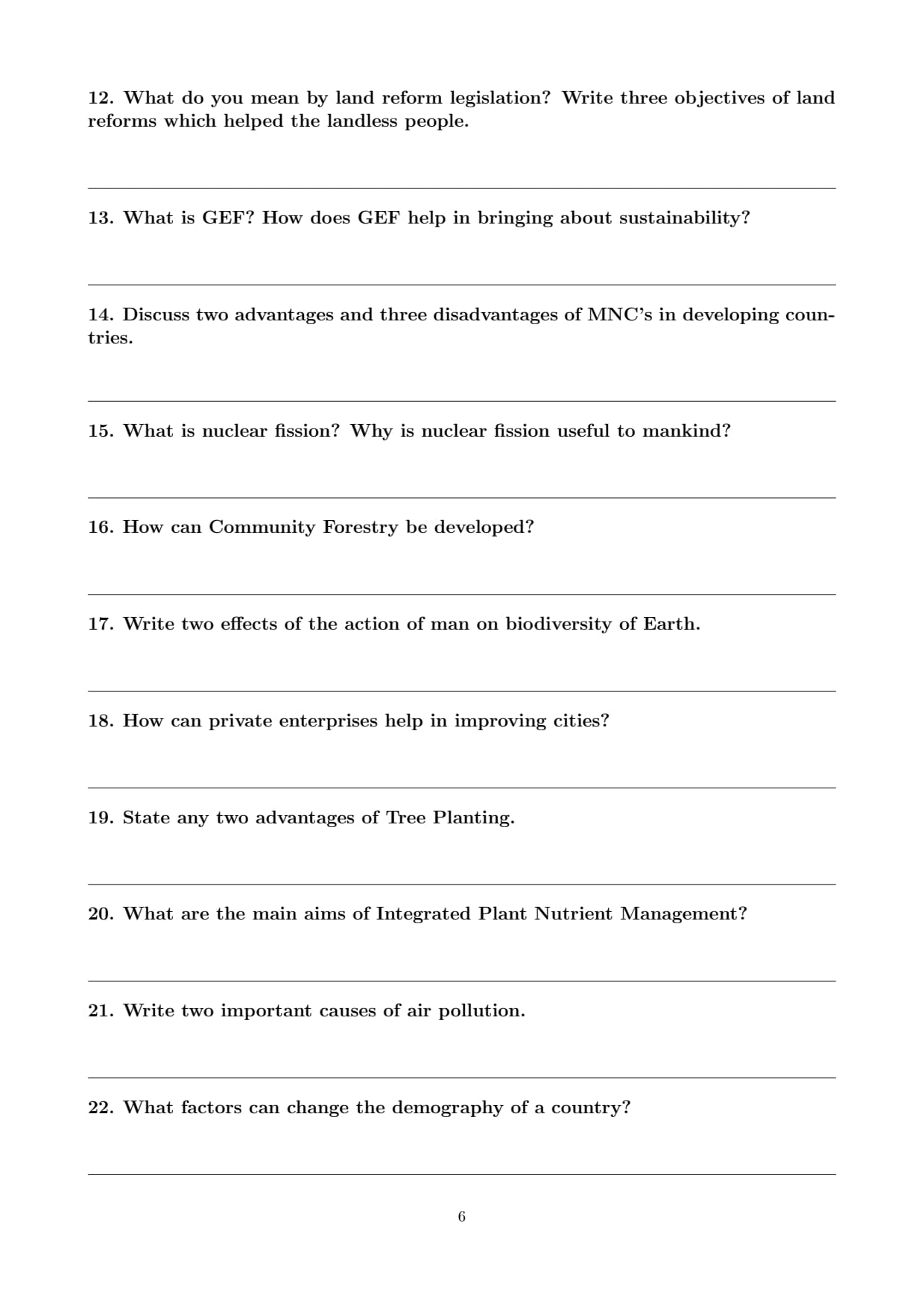
What do you mean by land reform legislation? Write three objectives of land reforms which helped the landless people.
View Solution
Step 1: Define Land Reform Legislation.
Land reform legislation refers to laws and policies implemented by governments to redistribute land, improve land tenure systems, and make land more accessible to the landless and marginalized groups. The objective is to achieve social justice, equitable distribution of resources, and economic development.
Step 2: Objectives of Land Reforms.
1. Redistribution of Land: The primary objective is to redistribute land from large landowners to landless individuals or farmers who do not own land, ensuring equal access to land resources.
2. Improvement in Land Tenure: Land reforms aim to provide secure land tenure to small farmers and tenants, giving them legal ownership or rights over the land they cultivate.
3. Enhancement of Agricultural Productivity: By improving land distribution and providing support to small farmers, land reforms seek to enhance agricultural productivity and help increase income levels among rural populations. Quick Tip: Land reforms are key to promoting social equity by improving land access and tenure security, which leads to better livelihoods for the landless.
What is GEF? How does GEF help in bringing about sustainability?
View Solution
Step 1: Define GEF.
GEF (Global Environment Facility) is an international partnership that provides financial assistance to developing countries for projects aimed at addressing global environmental issues, such as climate change, biodiversity loss, and pollution.
Step 2: GEF's Role in Sustainability.
GEF helps in bringing about sustainability by supporting projects that aim to protect the environment, promote sustainable use of resources, and encourage the adoption of eco-friendly practices. Through its funding and expertise, GEF helps countries implement sustainable solutions to environmental challenges. Quick Tip: GEF provides financial resources and technical support to developing countries for environmental conservation and sustainability projects.
Discuss two advantages and three disadvantages of MNC's in developing countries.
View Solution
Step 1: Advantages of MNCs in Developing Countries.
1. Economic Growth: MNCs create job opportunities, leading to increased employment rates, improved incomes, and overall economic growth in developing countries.
2. Technology Transfer: MNCs bring advanced technologies and management practices to developing countries, improving the efficiency of local industries.
Step 2: Disadvantages of MNCs in Developing Countries.
1. Exploitation of Labor: MNCs may exploit cheap labor in developing countries, paying low wages and offering poor working conditions.
2. Environmental Harm: The operations of MNCs can lead to environmental degradation, such as pollution and resource depletion, especially in countries with weak environmental regulations.
3. Economic Dependence: Developing countries may become overly dependent on MNCs, which can stifle local businesses and hinder the growth of domestic industries. Quick Tip: While MNCs can boost economic development in developing countries, they also pose challenges such as labor exploitation, environmental harm, and economic dependency.
What is nuclear fission? Why is nuclear fission useful to mankind?
View Solution
Step 1: Define Nuclear Fission.
Nuclear fission is the process in which the nucleus of a heavy atom, such as uranium or plutonium, splits into two smaller nuclei, releasing a large amount of energy in the form of heat. This process can occur spontaneously or when the nucleus is bombarded with neutrons.
Step 2: Importance of Nuclear Fission.
1. Energy Production: Nuclear fission is used in nuclear power plants to generate electricity, providing a significant source of energy for industrial and domestic use.
2. Medical Applications: Nuclear fission is crucial for producing isotopes used in medical imaging and cancer treatment.
3. Scientific Research: It also plays a vital role in scientific experiments and research related to nuclear energy and atomic physics. Quick Tip: Nuclear fission provides a highly efficient method for energy production, but it requires careful handling due to the potential risks associated with radiation.
How can Community Forestry be developed?
View Solution
Step 1: Define Community Forestry.
Community forestry refers to the management and use of forest resources by local communities, allowing them to play an active role in the conservation, sustainable use, and management of forests.
Step 2: Steps to Develop Community Forestry.
1. Involve Local Communities: Local communities should be involved in the planning, management, and decision-making processes of forest conservation. This ensures the protection of their interests and encourages their participation in sustainable practices.
2. Education and Awareness: Educating local populations about sustainable forest management practices and the benefits of community forestry helps in building long-term support for these initiatives.
3. Legal and Policy Support: Governments should create supportive policies and legal frameworks that empower communities to manage forests sustainably, protect their rights, and enable them to generate income through forest resources.
4. Diversify Livelihoods: Developing alternative livelihoods, such as ecotourism or forest-based products, can help reduce pressure on forest resources and increase community participation in forest conservation. Quick Tip: Community forestry promotes sustainable management of forest resources by empowering local communities and providing them with economic benefits.
Write two effects of the action of man on biodiversity of Earth.
View Solution
Step 1: Effect 1 - Habitat Destruction.
Human activities such as deforestation, urbanization, and industrialization lead to the destruction of natural habitats. This reduces the available living spaces for many species, causing a decline in biodiversity.
Step 2: Effect 2 - Pollution.
Pollution, including air, water, and soil pollution, caused by industrial waste, chemicals, and plastic disposal, has detrimental effects on ecosystems. It contaminates habitats and harms both plant and animal life, further threatening biodiversity. Quick Tip: Human actions like deforestation and pollution severely affect biodiversity, leading to the loss of species and ecosystems.
How can private enterprises help in improving cities?
View Solution
Private enterprises play a significant role in the development and improvement of cities. They contribute through various means such as investment, innovation, and resource management. Some of the ways private enterprises help in improving cities are:
Infrastructure Development: Private companies can invest in building and maintaining critical infrastructure such as roads, bridges, and public transport systems. This leads to better connectivity and smoother operations within cities.
Urban Planning and Real Estate Development: Private enterprises play a role in creating residential, commercial, and recreational spaces, contributing to urban expansion and enhancing the quality of life for city residents.
Job Creation and Economic Growth: By establishing businesses, industries, and service sectors, private enterprises generate employment opportunities, stimulating local economies and improving the standard of living for citizens.
Sustainability Initiatives: Many private companies invest in sustainable practices, such as renewable energy, waste management, and green buildings, which contribute to making cities more environmentally friendly and livable.
Technology and Innovation: Private enterprises drive technological advancements and innovations, such as smart city solutions, digital connectivity, and automation, making cities more efficient and responsive to residents’ needs.
In conclusion, private enterprises provide the necessary capital, expertise, and innovation required for transforming cities into better places to live and work. Quick Tip: Private enterprises help improve cities by investing in infrastructure, creating jobs, implementing sustainable practices, and introducing technological innovations that enhance city living.
State any two advantages of Tree Planting.
View Solution
Tree planting offers several environmental, social, and economic benefits. Two key advantages of tree planting are:
Environmental Benefits: Trees play a crucial role in improving air quality by absorbing carbon dioxide and releasing oxygen. They also help in reducing the effects of climate change by acting as carbon sinks, thus mitigating the impact of global warming. Additionally, trees help in conserving soil and preventing erosion.
Social and Health Benefits: Tree planting improves the aesthetic value of the environment, providing green spaces that promote relaxation and mental well-being. Urban green spaces with trees have been shown to reduce stress and improve the quality of life for city dwellers. Trees also provide shade and cooling effects, which can lower temperatures in urban areas, contributing to improved comfort and reduced heat stress.
In conclusion, tree planting offers both environmental and social advantages, making it an essential practice for sustainable development. Quick Tip: Tree planting not only enhances the environment but also improves the health and well-being of people by providing clean air, shade, and green spaces for relaxation.
What are the main aims of Integrated Plant Nutrient Management?
View Solution
Step 1: Introduction to Integrated Plant Nutrient Management (IPNM).
Integrated Plant Nutrient Management (IPNM) is a holistic approach to optimizing the use of plant nutrients from all sources to maintain and enhance soil fertility and productivity while minimizing the adverse effects on the environment. The approach combines the use of organic, inorganic, and biological sources of nutrients in a balanced manner to ensure sustainable agricultural production.
Step 2: Aims of IPNM.
The main aims of Integrated Plant Nutrient Management (IPNM) are:
Improvement of Soil Fertility: IPNM aims to maintain or improve the long-term soil fertility by utilizing both organic and inorganic fertilizers in a balanced and efficient way. This helps prevent the depletion of soil nutrients and maintains their availability for plant growth.
Increase in Agricultural Productivity: By optimizing nutrient supply and improving nutrient-use efficiency, IPNM helps in enhancing crop yields and productivity, contributing to food security.
Sustainability in Agriculture: The approach emphasizes the use of environmentally friendly practices that minimize nutrient losses to the environment. This includes the use of organic fertilizers, green manures, and crop rotations to reduce the dependency on chemical fertilizers.
Cost Efficiency: IPNM helps farmers reduce input costs by promoting the judicious use of fertilizers and improving nutrient-use efficiency. It also advocates the use of locally available organic sources of nutrients, reducing dependence on costly synthetic fertilizers.
Environmental Protection: The aim of IPNM is to reduce the harmful impacts of excessive fertilizer use, such as soil acidification, groundwater contamination, and eutrophication of water bodies, thereby promoting sustainable and eco-friendly farming practices.
Step 3: Conclusion.
IPNM integrates multiple nutrient sources to create a balanced and sustainable approach to fertilization. By adopting this approach, farmers can ensure optimal nutrient supply to crops, improve soil health, and contribute to environmental sustainability. Quick Tip: The main aim of IPNM is to optimize nutrient use, increase productivity, and maintain environmental sustainability by using a balanced mix of organic, inorganic, and biological nutrients.
Write two important causes of air pollution.
View Solution
Two important causes of air pollution are:
Vehicle Emissions: The combustion of fossil fuels in vehicles releases a variety of harmful gases such as carbon monoxide (CO), nitrogen oxides (NOx), and particulate matter into the atmosphere. These pollutants contribute significantly to air pollution in urban areas.
Industrial Emissions: Factories and industrial processes release large quantities of pollutants, including sulfur dioxide (SO₂), carbon dioxide (CO₂), volatile organic compounds (VOCs), and particulate matter. These emissions degrade air quality and contribute to smog and acid rain. Quick Tip: Vehicle and industrial emissions are key contributors to air pollution, and reducing these pollutants is essential for improving air quality and human health.
What factors can change the demography of a country?
View Solution
Step 1: Introduction to Demography.
Demography refers to the statistical study of populations, including the structure, distribution, and trends in population growth or decline. Various factors influence the demographic changes of a country.
Step 2: Factors that can Change the Demography of a Country.
Several factors can impact the demographic profile of a country:
Birth Rate: The number of births in a country influences its population size. A higher birth rate leads to population growth, while a declining birth rate can lead to population stagnation or decrease.
Death Rate: The number of deaths in a country also plays a key role. Improvements in healthcare, sanitation, and nutrition reduce the death rate, contributing to population growth.
Migration: Immigration (people moving into a country) and emigration (people leaving a country) are significant factors in demographic changes. Large-scale migration can lead to changes in the population size and diversity.
Government Policies: Policies that affect birth rates (such as family planning programs) or immigration (such as visa and work permit regulations) can directly impact a country’s demographic trends.
Economic Factors: Economic conditions, including employment opportunities, wages, and living standards, influence migration patterns and the decision to start or expand a family, thus affecting demographic changes.
Step 3: Conclusion.
In summary, birth rate, death rate, migration, government policies, and economic factors all play crucial roles in shaping the demographic makeup of a country. These factors together influence population growth, age distribution, and overall demographic trends. Quick Tip: Demographic changes are influenced by a combination of factors including birth and death rates, migration, and government policies, each playing a unique role in shaping a country's population.
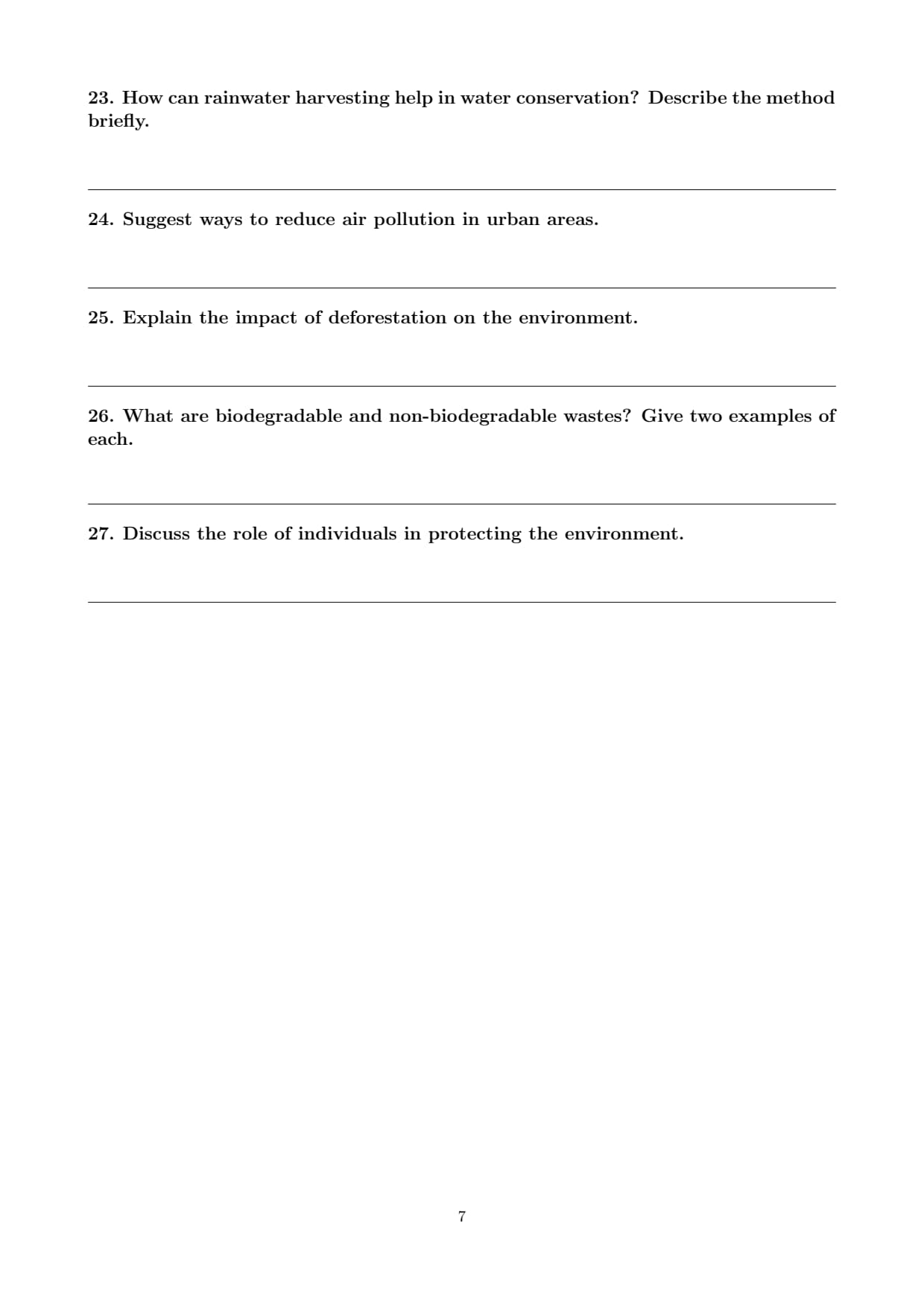
How can rainwater harvesting help in water conservation? Describe the method briefly.
View Solution
Step 1: Define Rainwater Harvesting.
Rainwater harvesting is the process of collecting and storing rainwater for future use, such as for irrigation, drinking water, or other domestic purposes.
Step 2: Benefits of Rainwater Harvesting.
1. Water Conservation: It reduces dependence on groundwater and municipal water supplies, conserving natural water resources.
2. Reduces Flooding: Collecting rainwater prevents it from flowing into storm drains, reducing the risk of flooding in urban areas.
3. Saves Energy: By reducing the need for water treatment and transportation, rainwater harvesting helps conserve energy.
Step 3: Method of Rainwater Harvesting.
1. Collection: Rainwater is collected from rooftops or other surfaces.
2. Filtration: The collected rainwater is filtered to remove debris and impurities.
3. Storage: The filtered water is stored in tanks or underground reservoirs for later use. Quick Tip: Rainwater harvesting is a sustainable and cost-effective method of conserving water, especially in areas with irregular rainfall.
Suggest ways to reduce air pollution in urban areas.
View Solution
Step 1: Reduce Emissions from Vehicles.
1. Promote Public Transportation: Encouraging the use of public transport reduces the number of private vehicles on the road, decreasing air pollution.
2. Encourage Electric Vehicles: Using electric vehicles (EVs) helps reduce emissions from traditional gasoline-powered vehicles.
Step 2: Improve Industrial Emissions.
1. Adopt Cleaner Technologies: Industries should adopt cleaner production technologies and use filters to reduce harmful emissions.
2. Enforce Strict Regulations: Governments should enforce stricter pollution control laws for industries to limit their environmental impact.
Step 3: Increase Green Spaces.
1. Plant More Trees: Increasing the number of trees in urban areas helps absorb CO2 and other pollutants, improving air quality.
2. Develop Green Roofs and Walls: Green roofs and vertical gardens help filter air pollutants and provide cooler environments. Quick Tip: Reducing emissions from vehicles, adopting cleaner industrial technologies, and increasing green spaces are key strategies to combat air pollution.
Explain the impact of deforestation on the environment.
View Solution
Step 1: Definition of Deforestation.
Deforestation is the large-scale removal of forests, primarily for agricultural expansion, urban development, and logging activities.
Step 2: Impact of Deforestation.
1. Loss of Biodiversity: Deforestation leads to habitat loss, threatening plant and animal species, and reducing biodiversity.
2. Climate Change: Forests play a critical role in carbon sequestration. Their removal contributes to increased carbon dioxide levels in the atmosphere, exacerbating global warming.
3. Disruption of the Water Cycle: Trees help in the water cycle by absorbing and releasing water. Their removal can disrupt rainfall patterns and lead to droughts or floods.
4. Soil Erosion: Trees prevent soil erosion by stabilizing the soil with their roots. Without trees, soil becomes loose and is prone to erosion, affecting agriculture and water quality. Quick Tip: Deforestation leads to environmental imbalances, contributing to climate change, loss of biodiversity, and disruption of ecosystems.
What are biodegradable and non-biodegradable wastes? Give two examples of each.
View Solution
Step 1: Define Biodegradable Wastes.
Biodegradable wastes are organic materials that can be broken down by microorganisms such as bacteria and fungi into simpler substances, thus returning to the environment without causing pollution.
Step 2: Examples of Biodegradable Wastes.
1. Food Waste: Organic food scraps, such as vegetable peels, fruits, and leftovers, can be decomposed by bacteria and fungi.
2. Wood: Wood, when exposed to microorganisms, decomposes over time, making it biodegradable.
Step 3: Define Non-Biodegradable Wastes.
Non-biodegradable wastes are materials that cannot be broken down by natural processes or microorganisms. These wastes persist in the environment, causing pollution and environmental damage.
Step 4: Examples of Non-Biodegradable Wastes.
1. Plastic: Plastics do not decompose naturally and can remain in the environment for hundreds of years.
2. Metal Cans: Metal cans, such as those used for food or beverages, are non-biodegradable and can take a long time to decompose. Quick Tip: Biodegradable wastes are easily decomposed by natural processes, while non-biodegradable wastes persist in the environment, contributing to pollution.
Discuss the role of individuals in protecting the environment.
View Solution
Step 1: Individual Actions for Environmental Protection.
1. Reducing Waste: Individuals can reduce waste by recycling, reusing items, and composting organic waste, minimizing landfill waste and pollution.
2. Energy Conservation: Reducing energy consumption by using energy-efficient appliances, turning off lights when not in use, and using renewable energy sources helps reduce environmental degradation.
3. Sustainable Transportation: Using public transport, carpooling, biking, or walking reduces the carbon footprint associated with personal vehicles.
4. Supporting Sustainable Products: Individuals can support products that are environmentally friendly and produced through sustainable methods, such as organic foods and eco-friendly packaging.
Step 2: Collective Responsibility.
When individuals take responsibility for their actions and adopt sustainable practices, the collective effort can make a significant impact in protecting the environment. Quick Tip: Every individual has a role in reducing environmental impact through sustainable practices, creating a positive ripple effect for future generations.



Comments