KCET 2026 Biology Question Paper is available for download here. KEA conducted KCET 2026 Biology exam on April 24 in Shift 2 from 2.30 PM to 3.50 PM.

  • KCET Biology Question Paper consists of 60 questions to be attempted in 80 minutes.
  • Each correct answer will get you 1 mark and there is no negative marking for incorrect answers.

Candidates can download KCET 2026 Biology Question Paper with Answer Key and Solution PDF from the links provided below.

KCET 2026 Biology Question Paper with Solution PDF

KEAM 2026 Biology Question Paper Download PDF Check Solution
KCET 2026 Biology Question Paper with Solutions

Question 1:

A chromosome with an extremely short and a very long arm is called ________.

  • (1) Metacentric
  • (2) Telocentric
  • (3) Acrocentric
  • (4) Submetacentric

Question 2:

The following statements are the steps in the catalytic action of an enzyme. Arrange them in correct sequence.

a) The active site of the enzyme, now in close proximity of the substrate, breaks the chemical bonds of the substrate and the new enzyme product complex is formed.

b) The substrate binds tightly to the enzyme, inducing a change in the active site of the enzyme.

c) The enzyme releases the products of the reaction and the free enzyme is ready to bind to another molecule of the substrate.

d) The substrate binds to the active site of the enzyme.

  • (1) c, a, b, d
  • (2) d, b, a, c
  • (3) a, b, c, d
  • (4) d, c, b, a

Question 3:

A diploid cell which has 8 chromosomes undergoes meiosis and produces 4 daughter cells. What is the number of chromosomes present in each daughter cell formed at the end of meiosis-I?

  • (1) 8 chromosomes
  • (2) 4 chromosomes
  • (3) 16 chromosomes
  • (4) 32 chromosomes

Question 4:

Cellulose is an important structural component in plants which is made up of

  • (1) Fructose
  • (2) Galactose
  • (3) Glucose
  • (4) Sucrose

Question 5:

In a healthy individual, the Glomerular Filtration Rate (GFR) is ________.

  • (1) 125 ml/minute
  • (2) 125 ml/hour
  • (3) 126 ml/minute
  • (4) 125 ml/second

Question 6:

A hormone that initiates flowering and synchronising fruit set in pineapples is ________.

  • (1) Ethylene
  • (2) Abscissic Acid
  • (3) Auxins
  • (4) Gibberellins

Question 7:

Identify the incorrect statement regarding respiratory system in man.

  • (1) Lungs are covered by double-layered membrane called pleura.
  • (2) The alveoli are surrounded by rich blood capillaries.
  • (3) The trachea, bronchi and bronchioles are supported by 'O' shaped cartilaginous rings.
  • (4) The right lung is slightly larger than the left lung.

Question 8:

Consider the following statements with respect to ECG [Electrocardiogram] and choose the correct answer.

Statement I : 'P' wave represents the depolarisation of ventricles.

Statement II : 'T' wave represents the repolarisation of ventricles.

  • (1) Statement I and Statement II are wrong.
  • (2) Statement I is correct but Statement II is wrong.
  • (3) Statement I is wrong but Statement II is correct.
  • (4) Statement I and Statement II are correct.

Question 9:

Aldosterone from adrenal cortex stimulates the reabsorption of water and Na\(^+\) from ________.

  • (1) Proximal Convoluted Tubule (PCT)
  • (2) Ascending limb of loop of Henle
  • (3) Distal Convoluted Tubule (DCT)
  • (4) Descending limb of loop of Henle

Question 10:

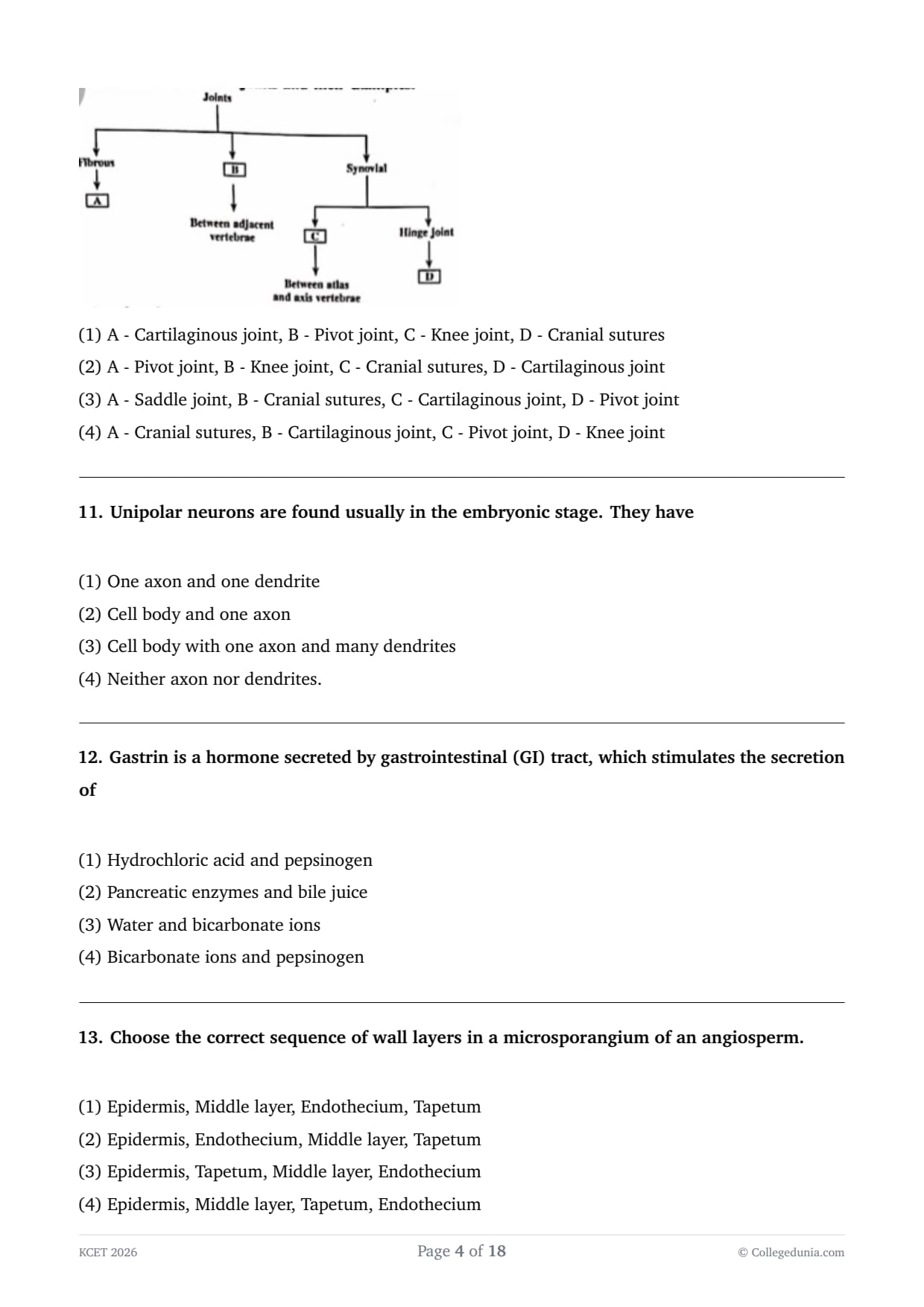
Observe the flowchart with reference to joints and their examples.

  • (1) A - Cartilaginous joint, B - Pivot joint, C - Knee joint, D - Cranial sutures
  • (2) A - Pivot joint, B - Knee joint, C - Cranial sutures, D - Cartilaginous joint
  • (3) A - Saddle joint, B - Cranial sutures, C - Cartilaginous joint, D - Pivot joint
  • (4) A - Cranial sutures, B - Cartilaginous joint, C - Pivot joint, D - Knee joint

Question 11:

Unipolar neurons are found usually in the embryonic stage. They have

  • (1) One axon and one dendrite
  • (2) Cell body and one axon
  • (3) Cell body with one axon and many dendrites
  • (4) Neither axon nor dendrites.

Question 12:

Gastrin is a hormone secreted by gastrointestinal (GI) tract, which stimulates the secretion of

  • (1) Hydrochloric acid and pepsinogen
  • (2) Pancreatic enzymes and bile juice
  • (3) Water and bicarbonate ions
  • (4) Bicarbonate ions and pepsinogen

Question 13:

Choose the correct sequence of wall layers in a microsporangium of an angiosperm.

  • (1) Epidermis, Middle layer, Endothecium, Tapetum
  • (2) Epidermis, Endothecium, Middle layer, Tapetum
  • (3) Epidermis, Tapetum, Middle layer, Endothecium
  • (4) Epidermis, Middle layer, Tapetum, Endothecium

Question 14:

Which of the following statement is/are correct for cleistogamous flowers?

a) They have exposed anthers and stigma

b) They produce assured seed set

c) They need pollinators for pollination

d) Variations in traits are not seen in next generation

  • (1) Only Statement (b) is correct
  • (2) Statements (a) and (c) are correct
  • (3) Statements (b) and (d) are correct
  • (4) Statements (b) and (c) are correct

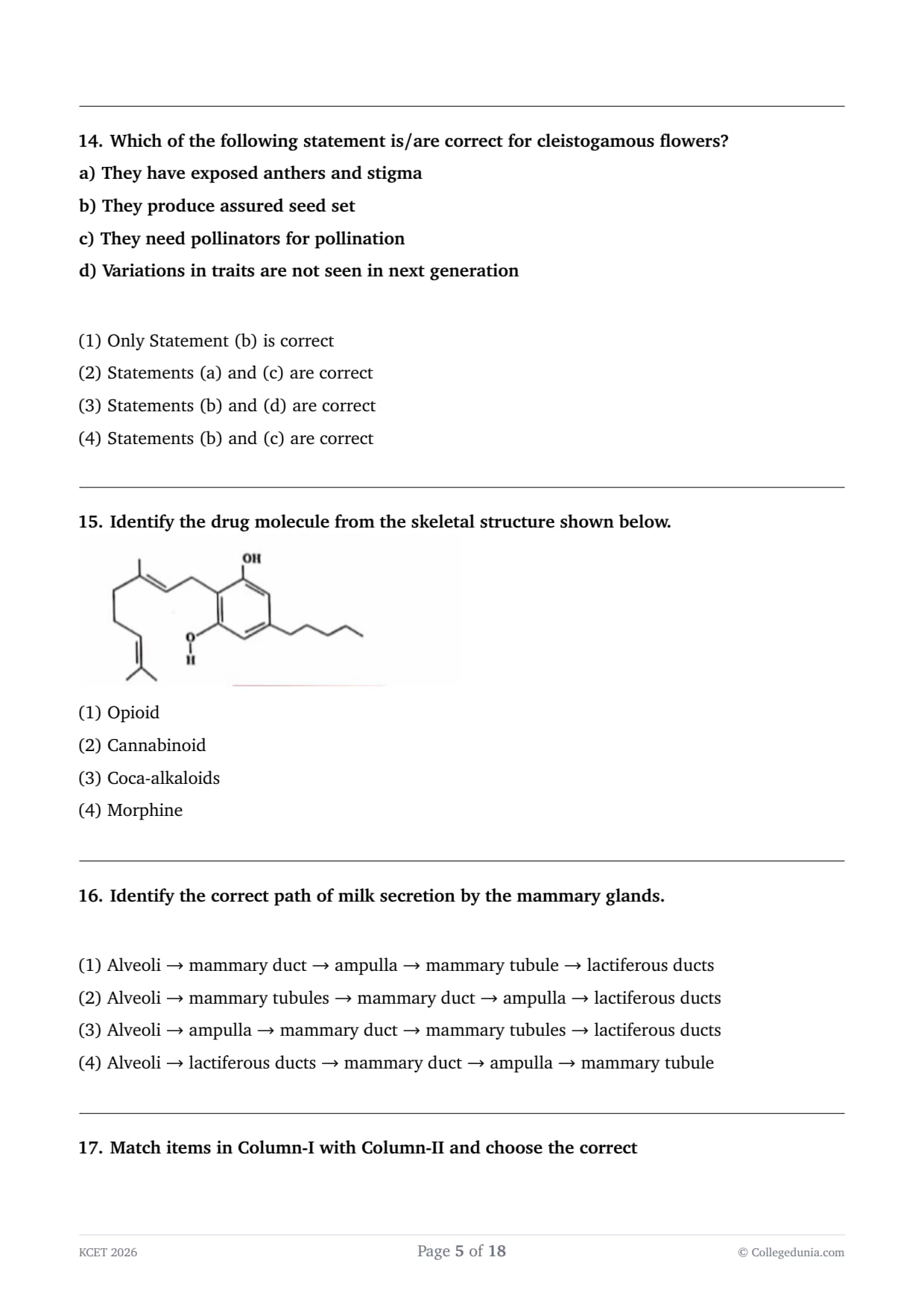
Question 15:

Identify the drug molecule from the skeletal structure shown below.

  • (1) Opioid
  • (2) Cannabinoid
  • (3) Coca-alkaloids
  • (4) Morphine

Question 16:

Identify the correct path of milk secretion by the mammary glands.

  • (1) Alveoli \(\rightarrow\) mammary duct \(\rightarrow\) ampulla \(\rightarrow\) mammary tubule \(\rightarrow\) lactiferous ducts
  • (2) Alveoli \(\rightarrow\) mammary tubules \(\rightarrow\) mammary duct \(\rightarrow\) ampulla \(\rightarrow\) lactiferous ducts
  • (3) Alveoli \(\rightarrow\) ampulla \(\rightarrow\) mammary duct \(\rightarrow\) mammary tubules \(\rightarrow\) lactiferous ducts
  • (4) Alveoli \(\rightarrow\) lactiferous ducts \(\rightarrow\) mammary duct \(\rightarrow\) ampulla \(\rightarrow\) mammary tubule

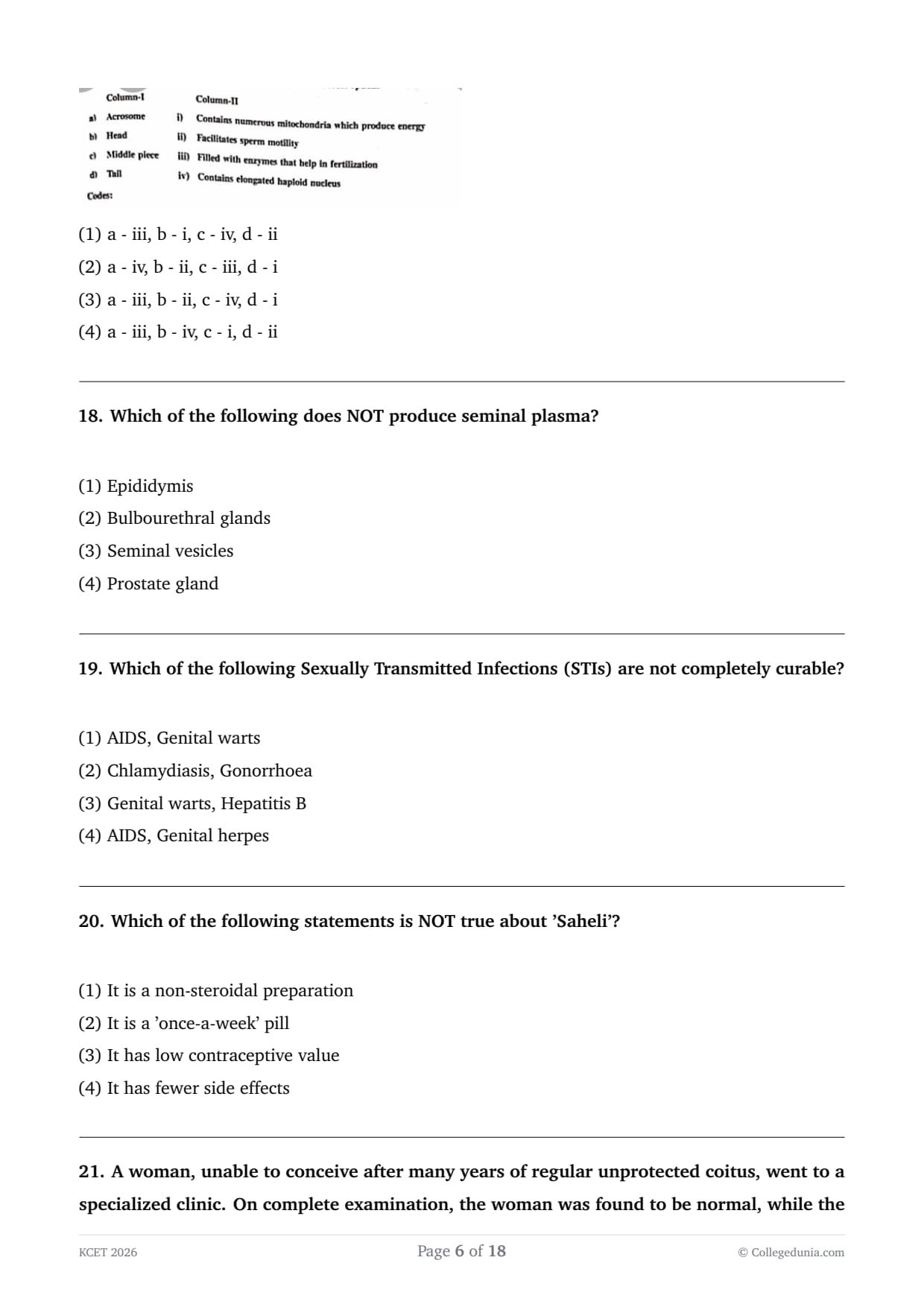
Question 17:

Match items in Column-I with Column-II and choose the correct

  • (1) a - iii, b - i, c - iv, d - ii
  • (2) a - iv, b - ii, c - iii, d - i
  • (3) a - iii, b - ii, c - iv, d - i
  • (4) a - iii, b - iv, c - i, d - ii

Question 18:

Which of the following does NOT produce seminal plasma?

  • (1) Epididymis
  • (2) Bulbourethral glands
  • (3) Seminal vesicles
  • (4) Prostate gland

Question 19:

Which of the following Sexually Transmitted Infections (STIs) are not completely curable?

  • (1) AIDS, Genital warts
  • (2) Chlamydiasis, Gonorrhoea
  • (3) Genital warts, Hepatitis B
  • (4) AIDS, Genital herpes

Question 20:

Which of the following statements is NOT true about 'Saheli'?

  • (1) It is a non-steroidal preparation
  • (2) It is a 'once-a-week' pill
  • (3) It has low contraceptive value
  • (4) It has fewer side effects

Question 21:

A woman, unable to conceive after many years of regular unprotected coitus, went to a specialized clinic. On complete examination, the woman was found to be normal, while the male partner was diagnosed with Infertility and was unable to inseminate the female due to low sperm count. Suggest the appropriate Assisted Reproductive Technology (ART).

  • (1) ZIFT -- Zygote Intra Fallopian Transfer
  • (2) IUI -- Intra Uterine Insemination
  • (3) AI -- Artificial Insemination
  • (4) GIFT -- Gamete Intra Fallopian Transfer

Question 22:

The genotypes of husband and wife are \( I^A I^B \) and \( I^A I^O \). Among the blood groups of their children, how many different genotypes and phenotypes are possible?

  • (1) 4 genotypes and 4 phenotypes
  • (2) 4 genotypes and 3 phenotypes
  • (3) 3 genotypes and 4 phenotypes
  • (4) 2 genotypes and 3 phenotypes

Question 23:

The classical example of point mutation is

  • (1) Haemophilia
  • (2) Sickle cell anaemia
  • (3) Cystic fibrosis
  • (4) Phenyl ketonuria

Question 24:

Read the following statements.

Statement I : In a typical test cross, an organism showing a dominant phenotype is crossed with the recessive parent.

Statement II : The ratio of organisms showing dominant and recessive traits in F\(_{1}\) generation of a test cross indicates that the organism with unknown genotype is homozygous dominant.

Choose the correct option.

  • (1) Both Statement I and Statement II are true
  • (2) Both Statement I and Statement II are false
  • (3) Statement I is true but Statement II is false
  • (4) Statement I is false but Statement II is true

Question 25:

Thalassemia and Sickle cell anaemia are due to a problem in globin molecule synthesis. Select the correct statement.

  • (1) Sickle cell anaemia is due to a quantitative problem of globin molecule.
  • (2) Both are due to qualitative defects in globin chain synthesis.
  • (3) Both are due to quantitative defects in globin chain synthesis.
  • (4) Thalassemia is due to less synthesis of globin molecules.

Question 26:

Who amongst the following scientist/s had no contribution in the development of the double-helix model for the structure of DNA?

  • (1) Maurice Wilkins
  • (2) Rosalind Franklin
  • (3) Meselson and Stahl
  • (4) Erwin Chargaff

Question 27:

In a DNA molecule, cytosine is 28%. Calculate the percentage of adenine.

  • (1) 56%
  • (2) 36%
  • (3) 22%
  • (4) 18%

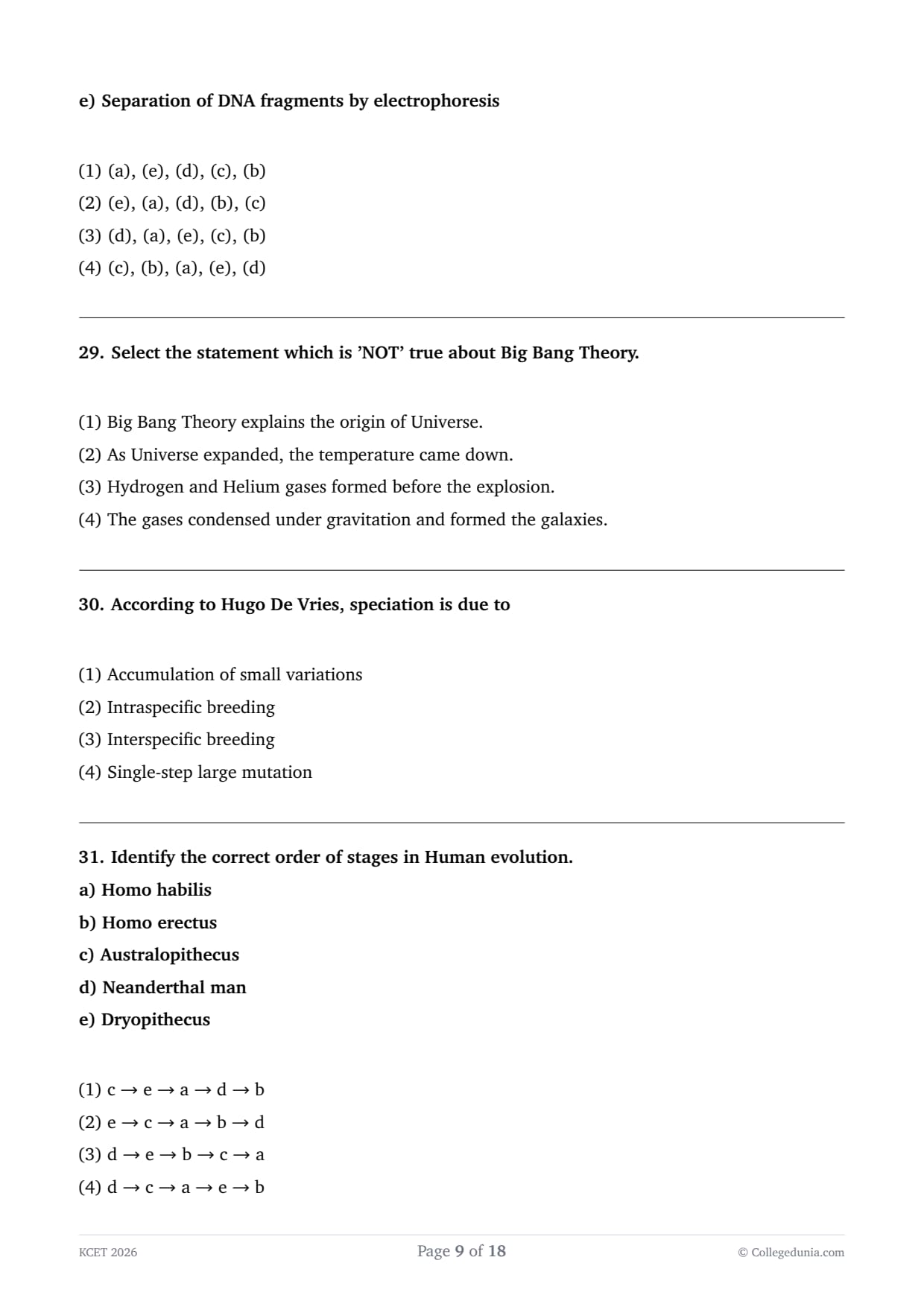
Question 28:

Arrange the below given steps of DNA fingerprinting in sequence by selecting the appropriate option.

a) Digestion of DNA by restriction endonucleases

b) Autoradiography

c) Blotting of DNA fragments to nitrocellulose membrane

d) Isolation of DNA

e) Separation of DNA fragments by electrophoresis

  • (1) (a), (e), (d), (c), (b)
  • (2) (e), (a), (d), (b), (c)
  • (3) (d), (a), (e), (c), (b)
  • (4) (c), (b), (a), (e), (d)

Question 29:

Select the statement which is 'NOT' true about Big Bang Theory.

  • (1) Big Bang Theory explains the origin of Universe.
  • (2) As Universe expanded, the temperature came down.
  • (3) Hydrogen and Helium gases formed before the explosion.
  • (4) The gases condensed under gravitation and formed the galaxies.

Question 30:

According to Hugo De Vries, speciation is due to

  • (1) Accumulation of small variations
  • (2) Intraspecific breeding
  • (3) Interspecific breeding
  • (4) Single-step large mutation

Question 31:

Identify the correct order of stages in Human evolution.

a) Homo habilis

b) Homo erectus

c) Australopithecus

d) Neanderthal man

e) Dryopithecus

  • (1) c \(\rightarrow\) e \(\rightarrow\) a \(\rightarrow\) d \(\rightarrow\) b
  • (2) e \(\rightarrow\) c \(\rightarrow\) a \(\rightarrow\) b \(\rightarrow\) d
  • (3) d \(\rightarrow\) e \(\rightarrow\) b \(\rightarrow\) c \(\rightarrow\) a
  • (4) d \(\rightarrow\) c \(\rightarrow\) a \(\rightarrow\) e \(\rightarrow\) b

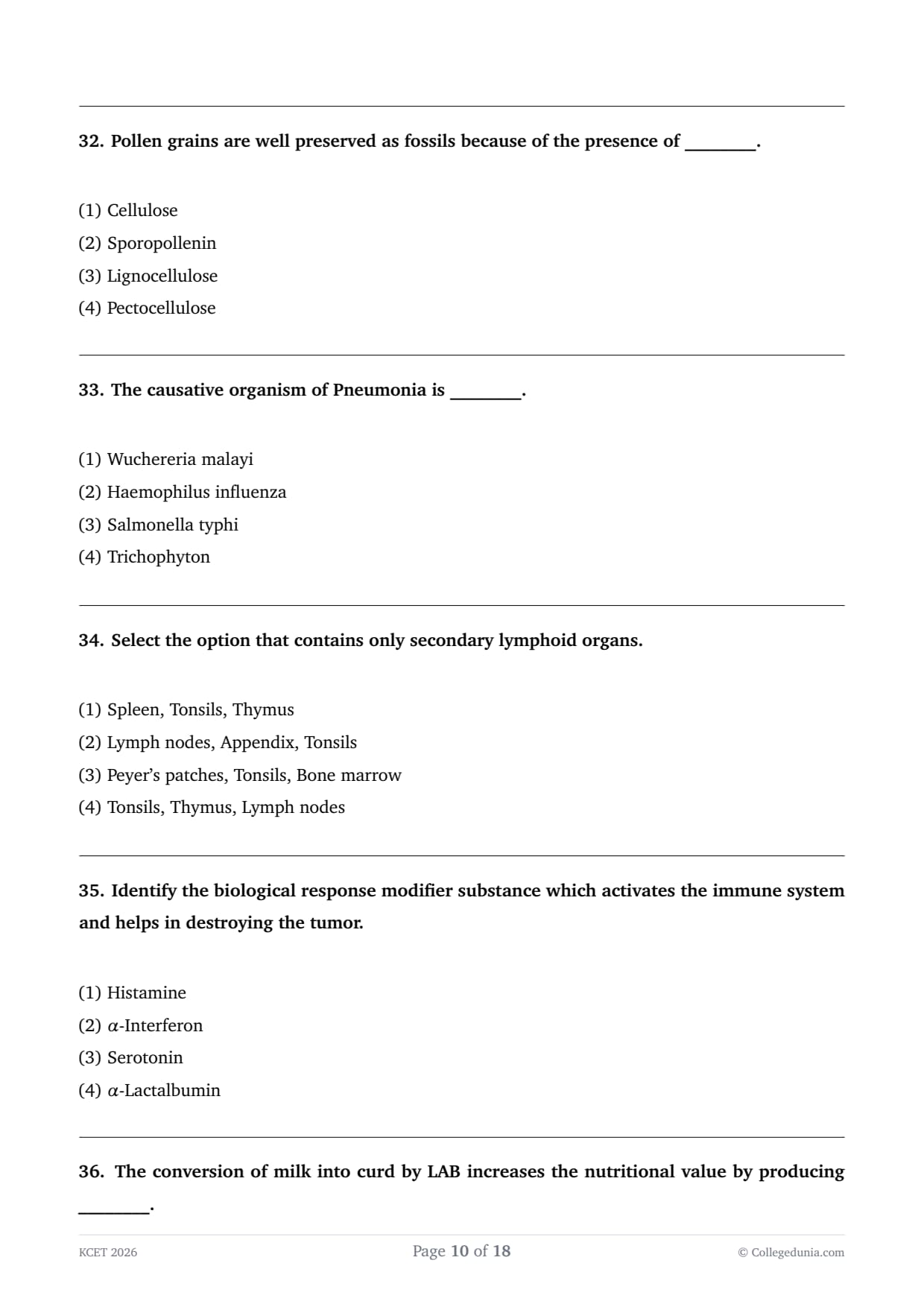
Question 32:

Pollen grains are well preserved as fossils because of the presence of ________.

  • (1) Cellulose
  • (2) Sporopollenin
  • (3) Lignocellulose
  • (4) Pectocellulose

Question 33:

The causative organism of Pneumonia is ________.

  • (1) Wuchereria malayi
  • (2) Haemophilus influenza
  • (3) Salmonella typhi
  • (4) Trichophyton

Question 34:

Select the option that contains only secondary lymphoid organs.

  • (1) Spleen, Tonsils, Thymus
  • (2) Lymph nodes, Appendix, Tonsils
  • (3) Peyer's patches, Tonsils, Bone marrow
  • (4) Tonsils, Thymus, Lymph nodes

Question 35:

Identify the biological response modifier substance which activates the immune system and helps in destroying the tumor.

  • (1) Histamine
  • (2) \(\alpha\)-Interferon
  • (3) Serotonin
  • (4) \(\alpha\)-Lactalbumin

Question 36:

The conversion of milk into curd by LAB increases the nutritional value by producing ________.

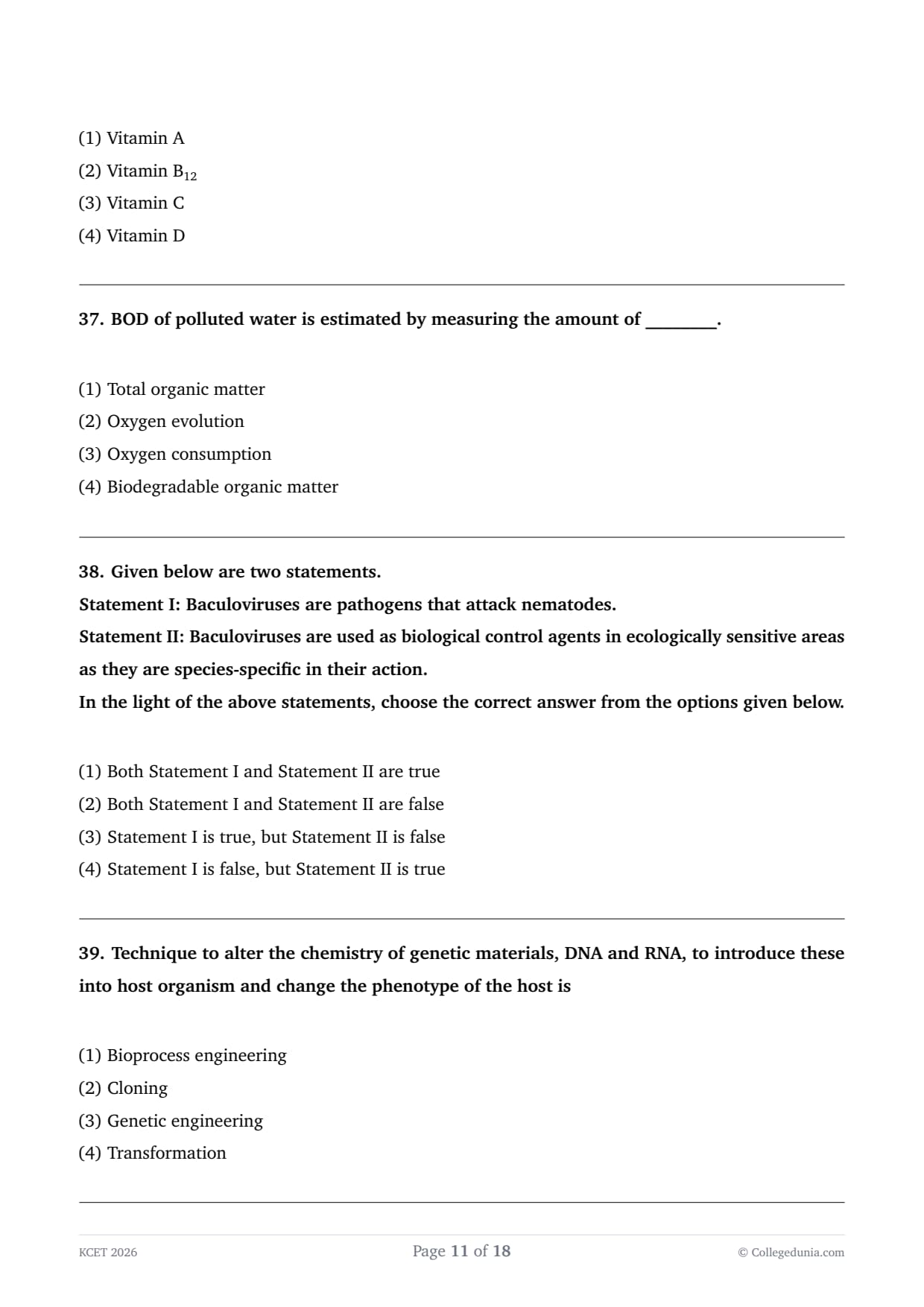
  • (1) Vitamin A
  • (2) Vitamin B\(_{12}\)
  • (3) Vitamin C
  • (4) Vitamin D

Question 37:

BOD of polluted water is estimated by measuring the amount of ________.

  • (1) Total organic matter
  • (2) Oxygen evolution
  • (3) Oxygen consumption
  • (4) Biodegradable organic matter

Question 38:

Given below are two statements.

Statement I: Baculoviruses are pathogens that attack nematodes.

Statement II: Baculoviruses are used as biological control agents in ecologically sensitive areas as they are species-specific in their action.

In the light of the above statements, choose the correct answer from the options given below.

  • (1) Both Statement I and Statement II are true
  • (2) Both Statement I and Statement II are false
  • (3) Statement I is true, but Statement II is false
  • (4) Statement I is false, but Statement II is true

Question 39:

Technique to alter the chemistry of genetic materials, DNA and RNA, to introduce these into host organism and change the phenotype of the host is

  • (1) Bioprocess engineering
  • (2) Cloning
  • (3) Genetic engineering
  • (4) Transformation

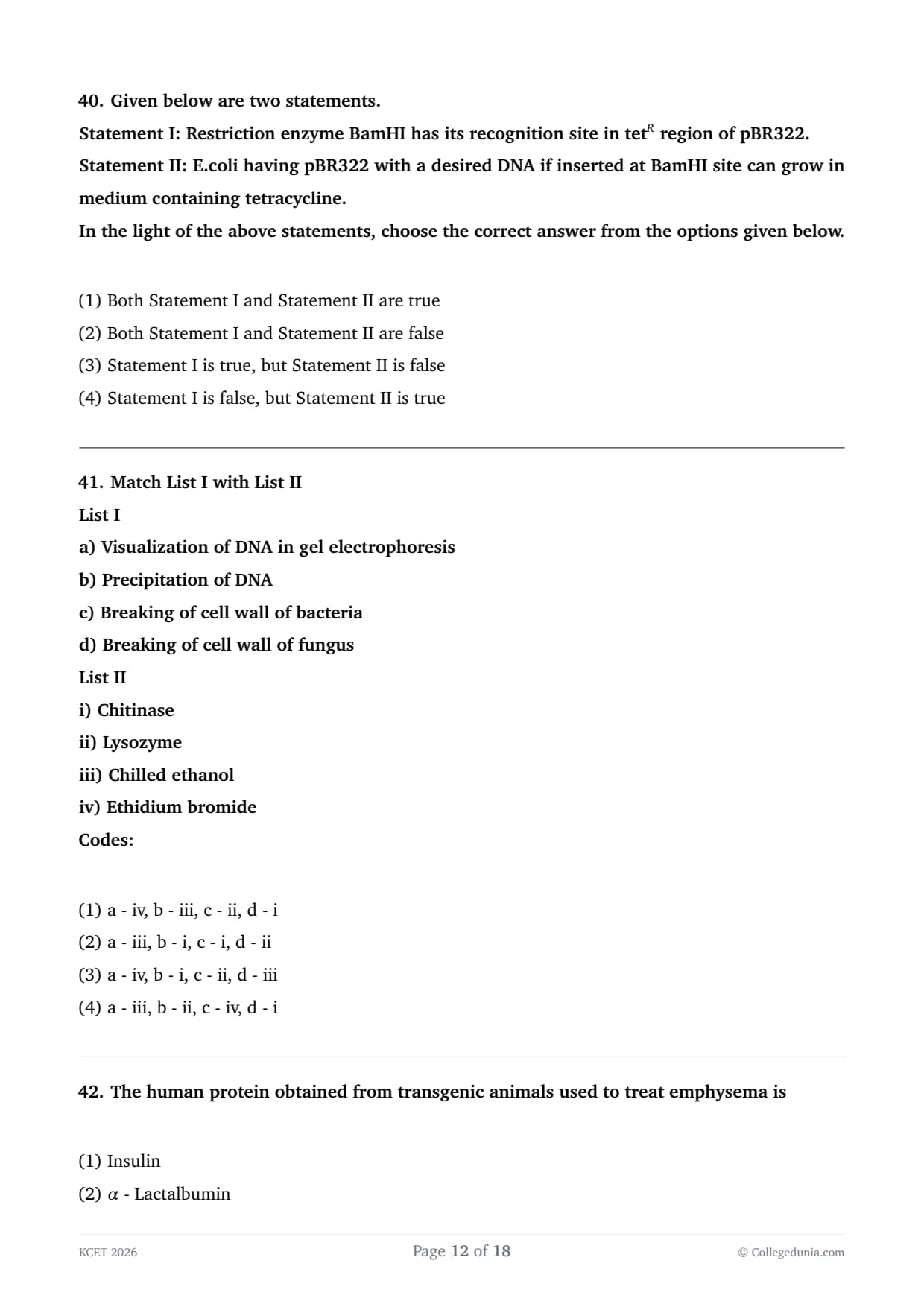
Question 40:

Given below are two statements.

Statement I: Restriction enzyme BamHI has its recognition site in tet\(^{R}\) region of pBR322.

Statement II: E.coli having pBR322 with a desired DNA if inserted at BamHI site can grow in medium containing tetracycline.

In the light of the above statements, choose the correct answer from the options given below.

  • (1) Both Statement I and Statement II are true
  • (2) Both Statement I and Statement II are false
  • (3) Statement I is true, but Statement II is false
  • (4) Statement I is false, but Statement II is true

Question 41:

Match List I with List II

List I

a) Visualization of DNA in gel electrophoresis

b) Precipitation of DNA

c) Breaking of cell wall of bacteria

d) Breaking of cell wall of fungus

List II

i) Chitinase

ii) Lysozyme

iii) Chilled ethanol

iv) Ethidium bromide

Codes:

  • (1) a - iv, b - iii, c - ii, d - i
  • (2) a - iii, b - i, c - i, d - ii
  • (3) a - iv, b - i, c - ii, d - iii
  • (4) a - iii, b - ii, c - iv, d - i

Question 42:

The human protein obtained from transgenic animals used to treat emphysema is

  • (1) Insulin
  • (2) \(\alpha\) - Lactalbumin
  • (3) \(\alpha\) - 1 antitrypsin
  • (4) \(\beta\) - Lactalbumin

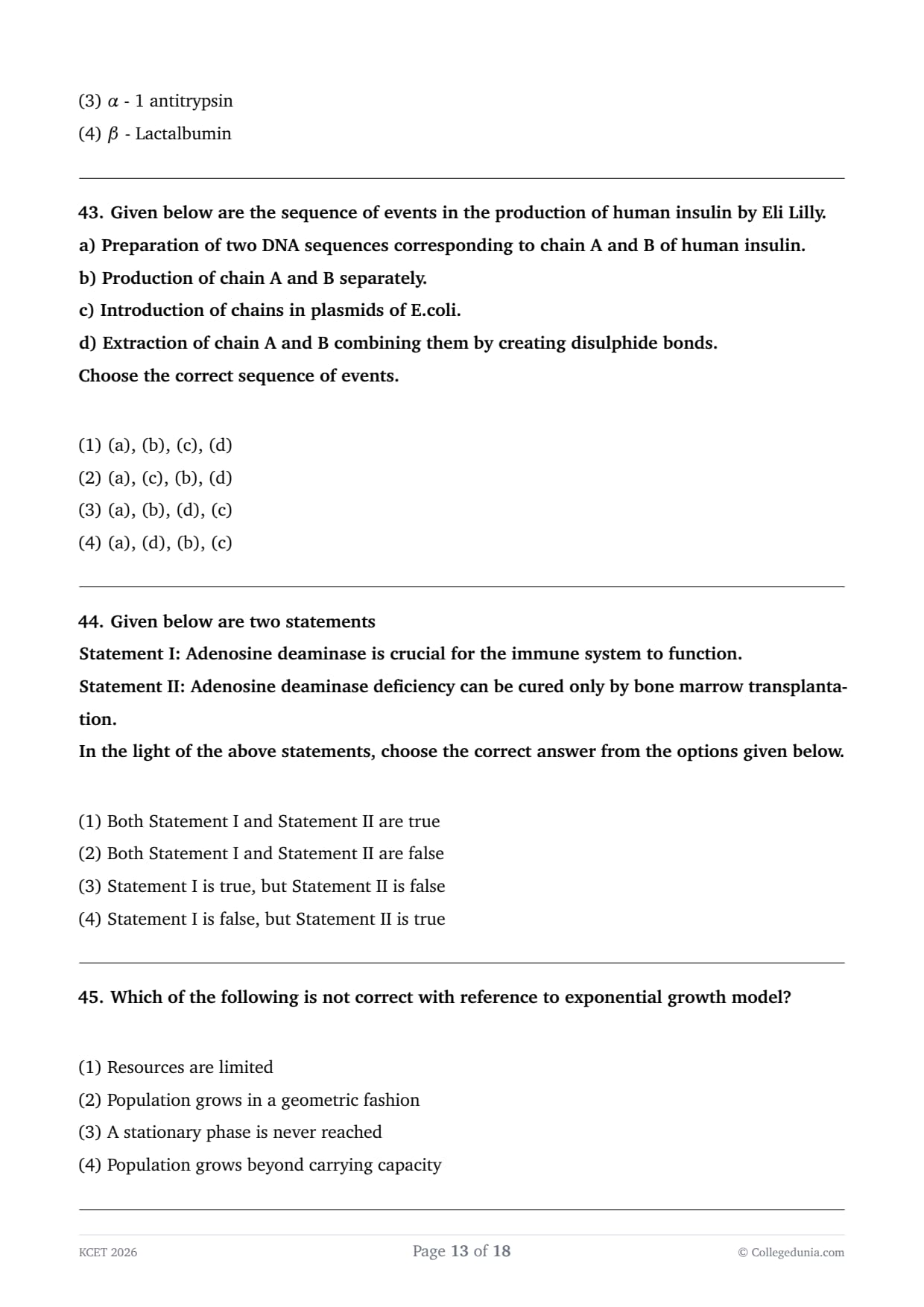
Question 43:

Given below are the sequence of events in the production of human insulin by Eli Lilly.

a) Preparation of two DNA sequences corresponding to chain A and B of human insulin.

b) Production of chain A and B separately.

c) Introduction of chains in plasmids of E.coli.

d) Extraction of chain A and B combining them by creating disulphide bonds.

Choose the correct sequence of events.

  • (1) (a), (b), (c), (d)
  • (2) (a), (c), (b), (d)
  • (3) (a), (b), (d), (c)
  • (4) (a), (d), (b), (c)

Question 44:

Given below are two statements

Statement I: Adenosine deaminase is crucial for the immune system to function.

Statement II: Adenosine deaminase deficiency can be cured only by bone marrow transplantation.

In the light of the above statements, choose the correct answer from the options given below.

  • (1) Both Statement I and Statement II are true
  • (2) Both Statement I and Statement II are false
  • (3) Statement I is true, but Statement II is false
  • (4) Statement I is false, but Statement II is true

Question 45:

Which of the following is not correct with reference to exponential growth model?

  • (1) Resources are limited
  • (2) Population grows in a geometric fashion
  • (3) A stationary phase is never reached
  • (4) Population grows beyond carrying capacity

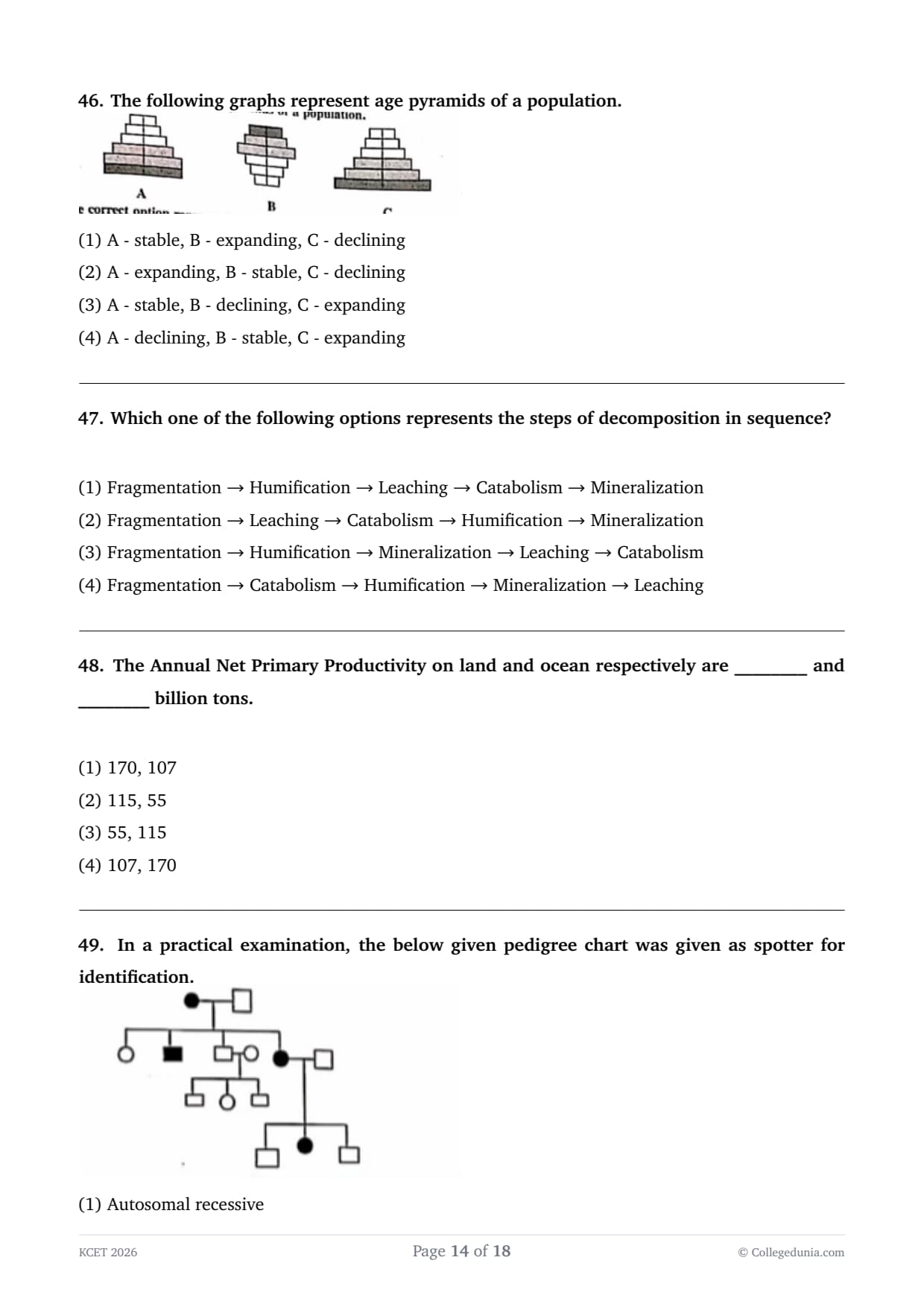
Question 46:

The following graphs represent age pyramids of a population.

  • (1) A - stable, B - expanding, C - declining
  • (2) A - expanding, B - stable, C - declining
  • (3) A - stable, B - declining, C - expanding
  • (4) A - declining, B - stable, C - expanding

Question 47:

Which one of the following options represents the steps of decomposition in sequence?

  • (1) Fragmentation \(\rightarrow\) Humification \(\rightarrow\) Leaching \(\rightarrow\) Catabolism \(\rightarrow\) Mineralization
  • (2) Fragmentation \(\rightarrow\) Leaching \(\rightarrow\) Catabolism \(\rightarrow\) Humification \(\rightarrow\) Mineralization
  • (3) Fragmentation \(\rightarrow\) Humification \(\rightarrow\) Mineralization \(\rightarrow\) Leaching \(\rightarrow\) Catabolism
  • (4) Fragmentation \(\rightarrow\) Catabolism \(\rightarrow\) Humification \(\rightarrow\) Mineralization \(\rightarrow\) Leaching

Question 48:

The Annual Net Primary Productivity on land and ocean respectively are ________ and ________ billion tons.

  • (1) 170, 107
  • (2) 115, 55
  • (3) 55, 115
  • (4) 107, 170

Question 49:

In a practical examination, the below given pedigree chart was given as spotter for identification.

  • (1) Autosomal recessive
  • (2) Autosomal dominant
  • (3) Sex-linked dominant
  • (4) Sex-linked recessive

Question 50:

Given below are two statements.

Statement I: There is less species biodiversity in tropical latitudes than in temperate region

Statement II: Tropical environments unlike temperate ones are less seasonal, relatively more constant and predictable.

In the light of the above statements, choose the correct answer from the options given below.

  • (1) Both Statement I and Statement II are true
  • (2) Both Statement I and Statement II are false
  • (3) Statement I is true, but Statement II is false
  • (4) Statement I is false, but Statement II is true

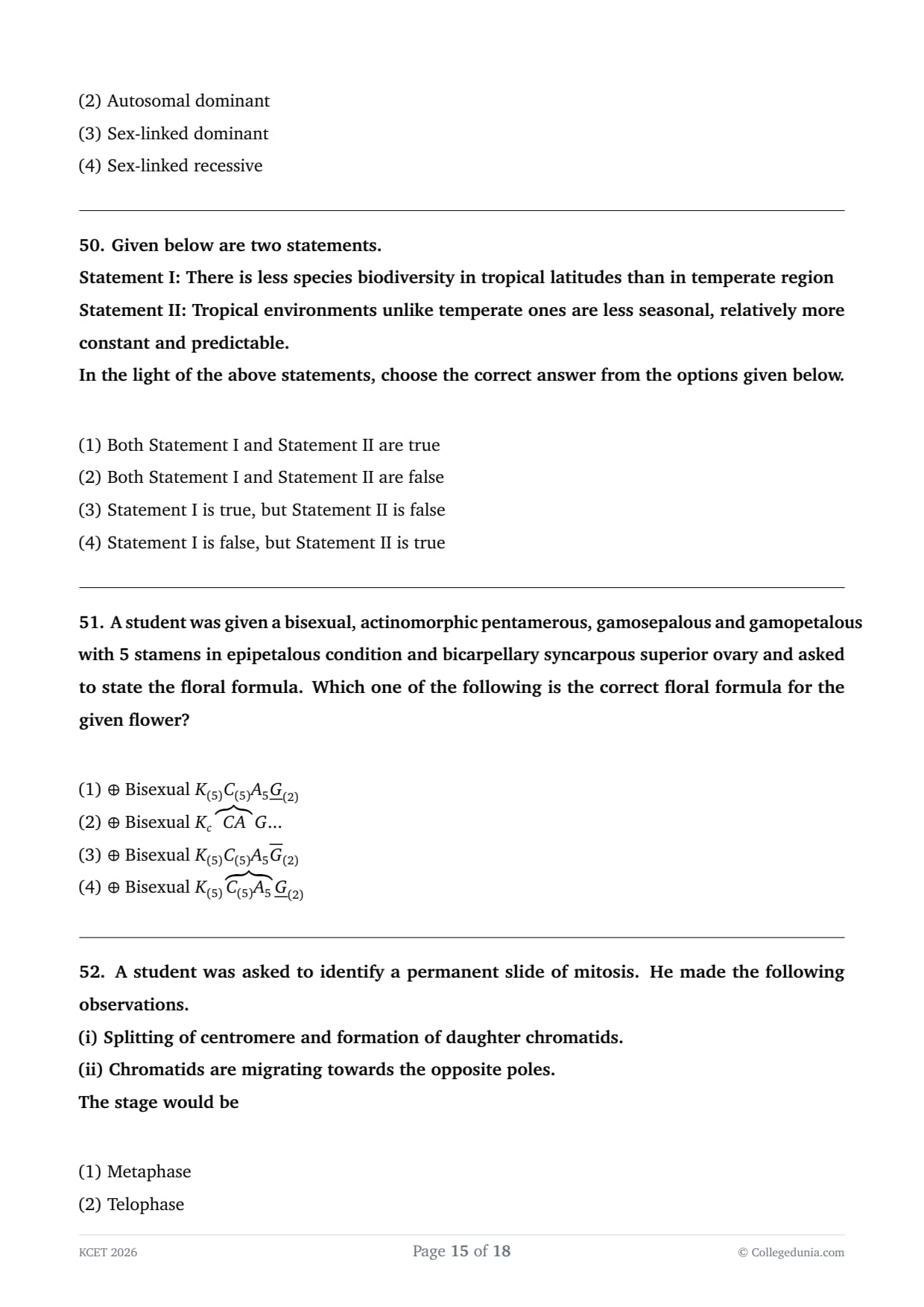
Question 51:

A student was given a bisexual, actinomorphic pentamerous, gamosepalous and gamopetalous with 5 stamens in epipetalous condition and bicarpellary syncarpous superior ovary and asked to state the floral formula. Which one of the following is the correct floral formula for the given flower?

  • (1) \(\oplus\) \(Bisexual\) \(K_{(5)} C_{(5)} A_{5} G_{(2)}\)
  • (2) \(\oplus\) \(Bisexual\) \(K_c \overbrace{C A} G...\)
  • (3) \(\oplus\) \(Bisexual\) \(K_{(5)} C_{(5)} A_{5} \overline{G}_{(2)}\)
  • (4) \(\oplus\) \(Bisexual\) \(K_{(5)} \overbrace{C_{(5)} A_{5}} G_{(2)}\)

Question 52:

A student was asked to identify a permanent slide of mitosis. He made the following observations.

(i) Splitting of centromere and formation of daughter chromatids.

(ii) Chromatids are migrating towards the opposite poles.

The stage would be

  • (1) Metaphase
  • (2) Telophase
  • (3) Anaphase
  • (4) Prophase

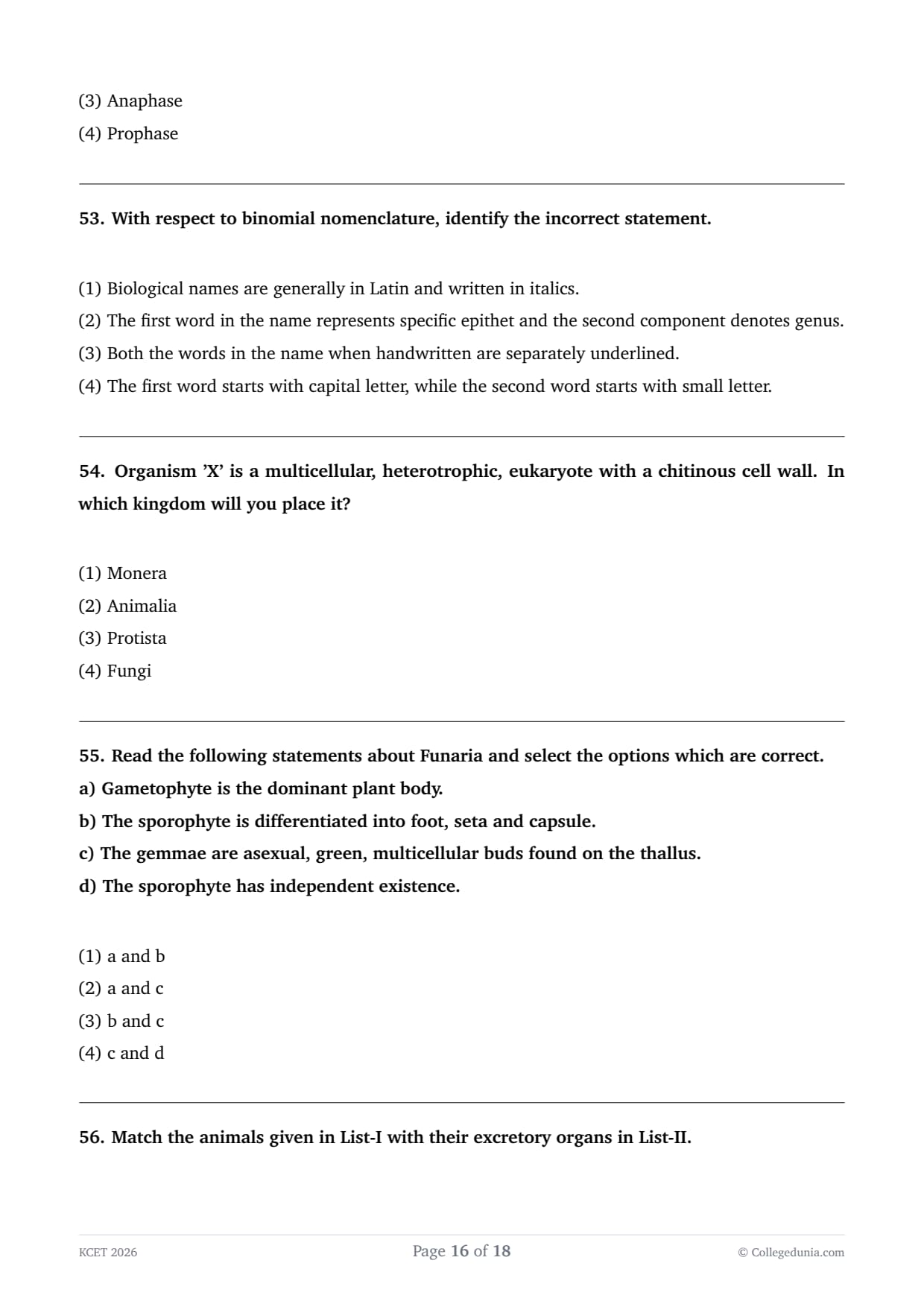
Question 53:

With respect to binomial nomenclature, identify the incorrect statement.

  • (1) Biological names are generally in Latin and written in italics.
  • (2) The first word in the name represents specific epithet and the second component denotes genus.
  • (3) Both the words in the name when handwritten are separately underlined.
  • (4) The first word starts with capital letter, while the second word starts with small letter.

Question 54:

Organism 'X' is a multicellular, heterotrophic, eukaryote with a chitinous cell wall. In which kingdom will you place it?

  • (1) Monera
  • (2) Animalia
  • (3) Protista
  • (4) Fungi

Question 55:

Read the following statements about Funaria and select the options which are correct.

a) Gametophyte is the dominant plant body.

b) The sporophyte is differentiated into foot, seta and capsule.

c) The gemmae are asexual, green, multicellular buds found on the thallus.

d) The sporophyte has independent existence.

  • (1) a and b
  • (2) a and c
  • (3) b and c
  • (4) c and d

Question 56:

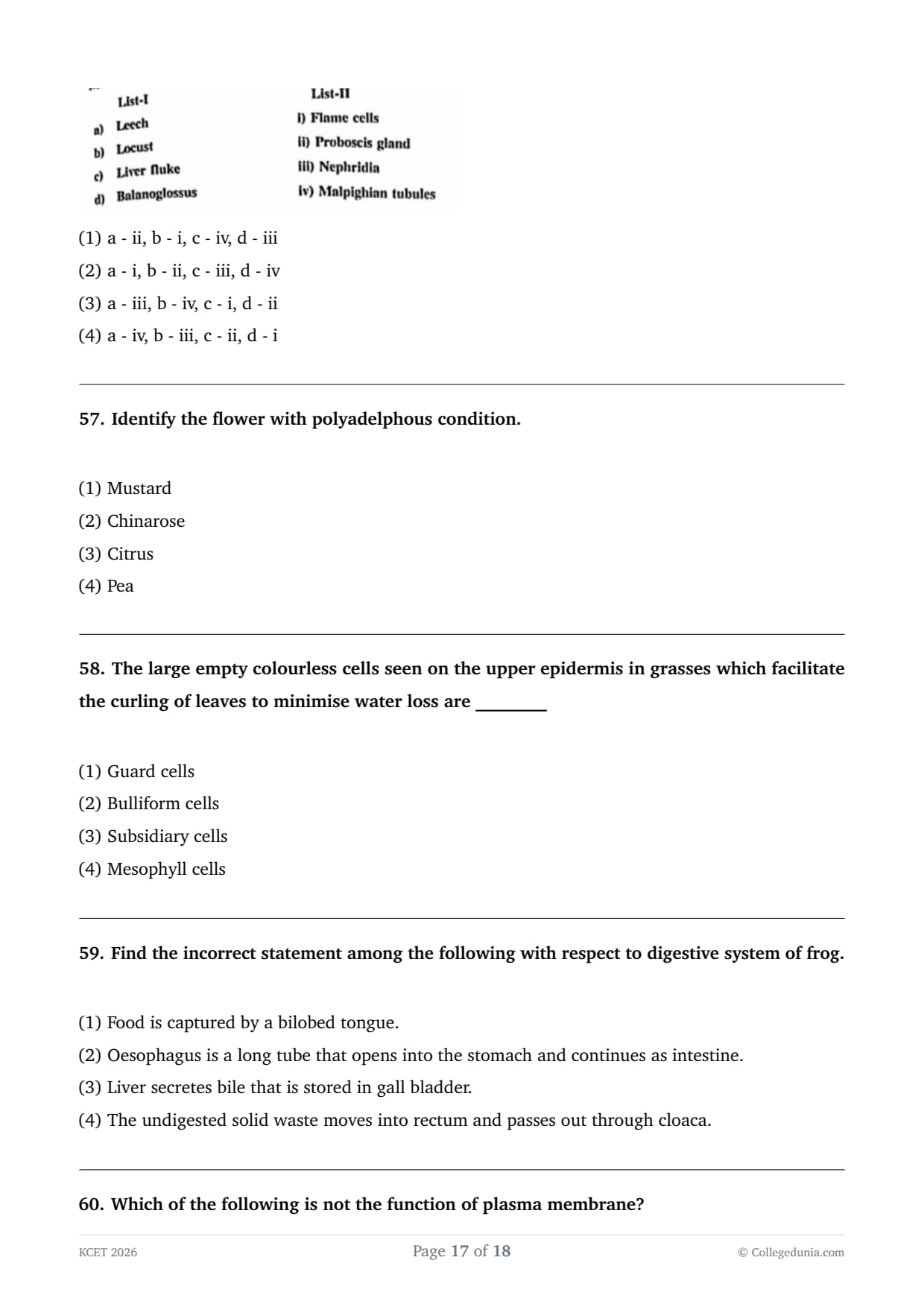
Match the animals given in List-I with their excretory organs in List-II.

  • (1) a - ii, b - i, c - iv, d - iii
  • (2) a - i, b - ii, c - iii, d - iv
  • (3) a - iii, b - iv, c - i, d - ii
  • (4) a - iv, b - iii, c - ii, d - i

Question 57:

Identify the flower with polyadelphous condition.

  • (1) Mustard
  • (2) Chinarose
  • (3) Citrus
  • (4) Pea

Question 58:

The large empty colourless cells seen on the upper epidermis in grasses which facilitate the curling of leaves to minimise water loss are ________

  • (1) Guard cells
  • (2) Bulliform cells
  • (3) Subsidiary cells
  • (4) Mesophyll cells

Question 59:

Find the incorrect statement among the following with respect to digestive system of frog.

  • (1) Food is captured by a bilobed tongue.
  • (2) Oesophagus is a long tube that opens into the stomach and continues as intestine.
  • (3) Liver secretes bile that is stored in gall bladder.
  • (4) The undigested solid waste moves into rectum and passes out through cloaca.

Question 60:

Which of the following is not the function of plasma membrane?

  • (1) Endocytosis
  • (2) Formation of intercellular junctions
  • (3) Secretion
  • (4) DNA synthesis

KCET 2026 Biology: Expected Section-Wise Weightage

Topic Weightage Expected Number of Questions
Human Physiology 25% 10
Plant Physiology 20% 8
Genetics and Evolution 25% 10
Ecology and Environment 15% 6
Cell Biology 10% 4
Biotechnology 5% 2

KCET 2026 Biology Expected Questions