




GUJCET 2026 Biology Question Paper with Solution PDF is available for download here. The GSEB conducted the GUJCET 2026 Exam for Biology in the Second Shift in PBT mode.
The GUJCET Biology Question Paper 2026 includes 40 questions to be completed in 1 hour. As per the Marking Scheme +1 mark for every correct answer and -0.25 marks will be deducted for every wrong answer
GUJCET 2026 Biology Question Paper with Solution PDF
| GUJCET 2026 Biology Question Paper | Download PDF | Check Solution |
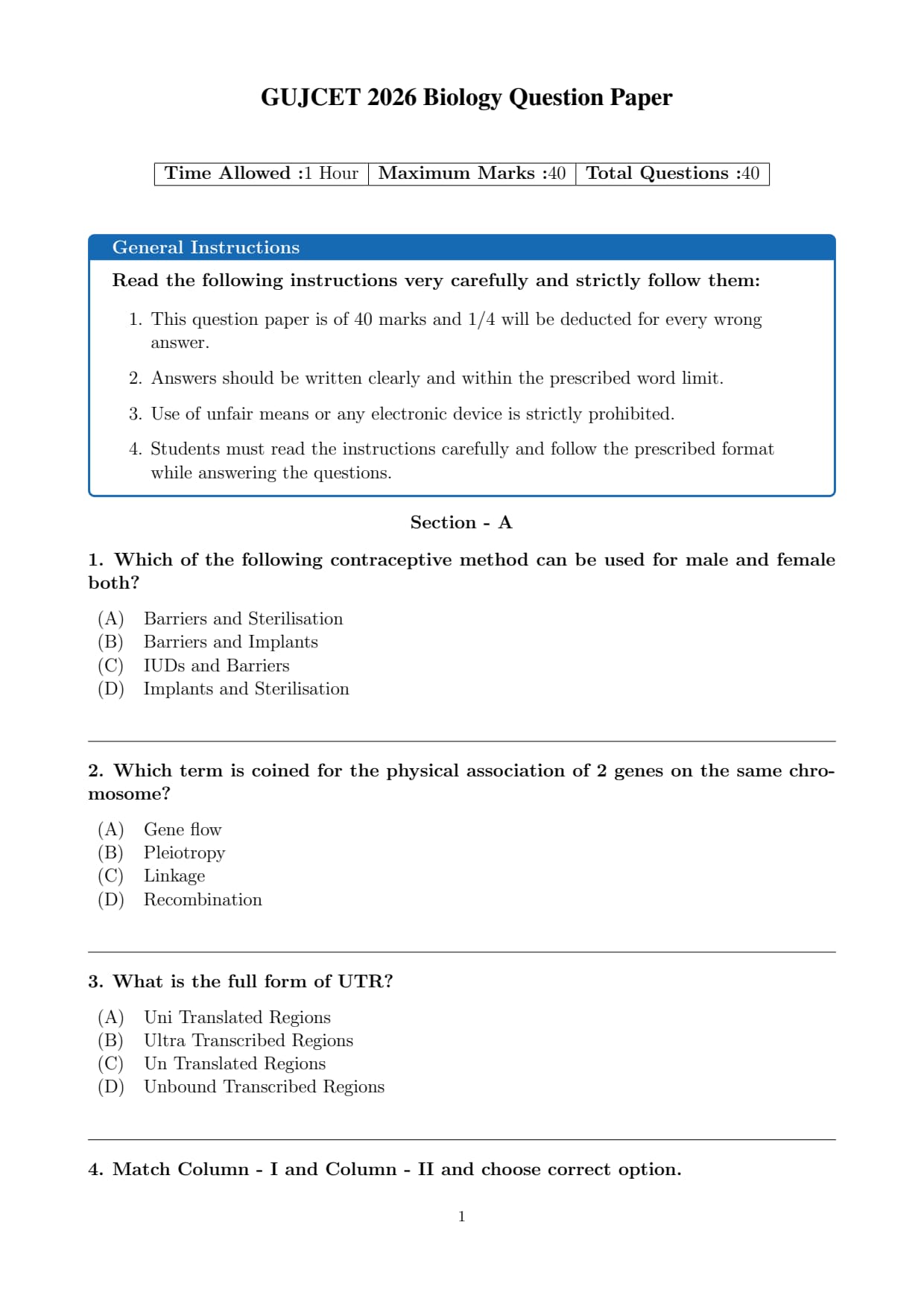
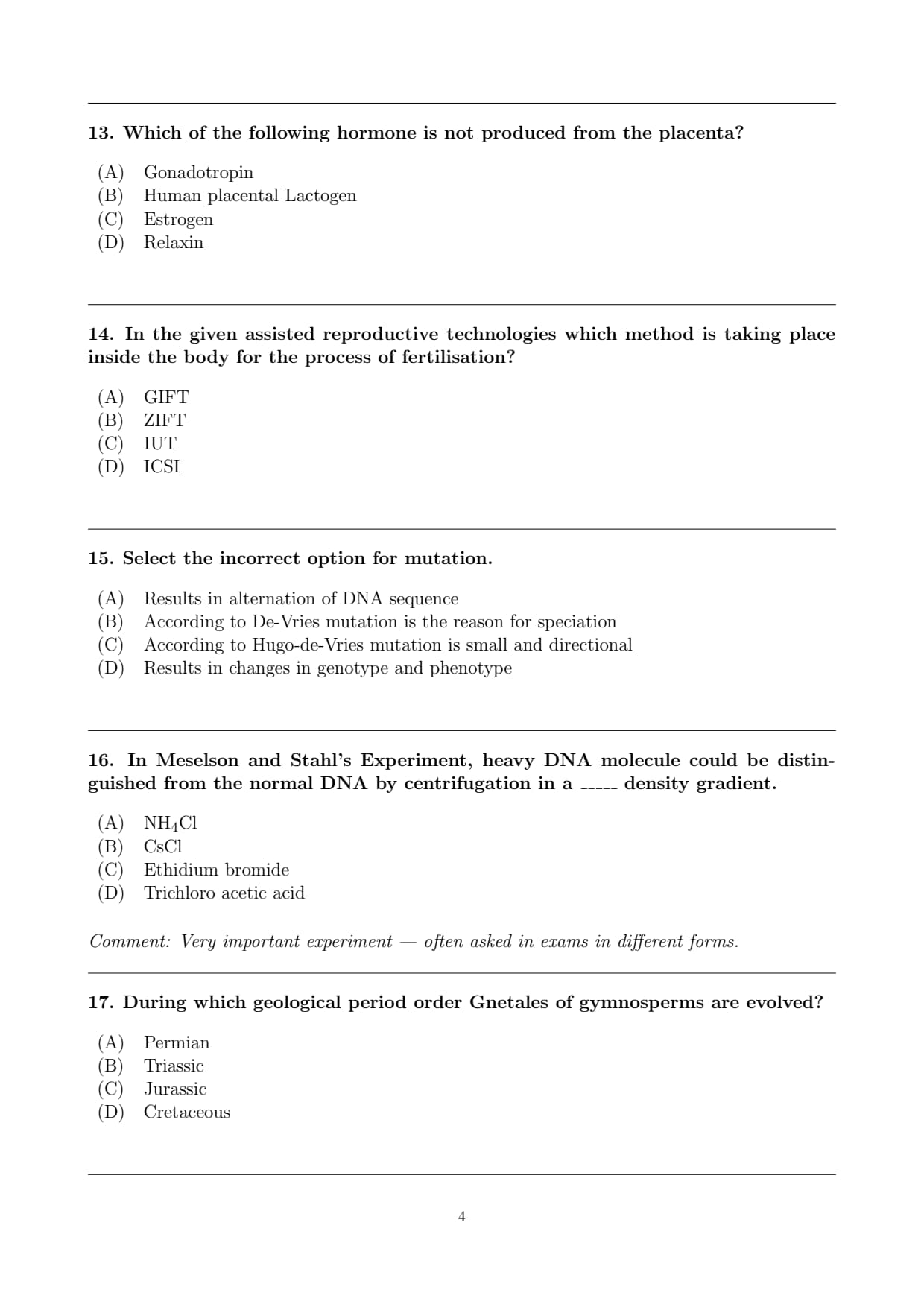
Which of the following contraceptive method can be used for male and female both?
(A) Barriers and Sterilisation
(B) Barriers and Implants
(C) IUDs and Barriers
(D) Implants and Sterilisation
View Solution
Step 1: Understand Barrier Methods
Barrier methods are contraceptive techniques that physically prevent sperm from reaching the ovum. These include condoms (male) and diaphragms/cervical caps (female). Hence, barrier methods are applicable to both males and females.
Step 2: Understand Sterilisation
Sterilisation is a permanent method of contraception. In males, it is called vasectomy, and in females, it is called tubectomy. Since both genders have their respective procedures, sterilisation is applicable to both.
Step 3: Evaluate Other Options
Implants and IUDs are used only in females and cannot be used by males.
Final Answer: (A) Quick Tip: Barrier and sterilisation methods are the only contraceptive methods applicable to both males and females.
Which term is coined for the physical association of 2 genes on the same chromosome?
(A) Gene flow
(B) Pleiotropy
(C) Linkage
(D) Recombination
View Solution
Step 1: Define Linkage
Linkage refers to the phenomenon where two or more genes are located close to each other on the same chromosome and tend to be inherited together during meiosis.
Step 2: Understand Why It Happens
Since linked genes are physically close, the chances of crossing over between them are low, so they are transmitted together to the next generation.
Step 3: Eliminate Other Options
Gene flow refers to movement of genes between populations. Pleiotropy means one gene affects multiple traits. Recombination involves exchange of genetic material.
Final Answer: (C) Quick Tip: Linkage = genes close together on the same chromosome inherited together.
What is the full form of UTR?
(A) Uni Translated Regions
(B) Ultra Transcribed Regions
(C) Un Translated Regions
(D) Unbound Transcribed Regions
View Solution
Step 1: Definition of UTR
UTR stands for Untranslated Regions. These are sections of mRNA that are transcribed from DNA but are not translated into proteins.
Step 2: Types of UTR
There are two types: 5' UTR and 3' UTR. These regions play important roles in regulation of translation, mRNA stability, and localization.
Step 3: Importance
Although they do not code for proteins, UTRs are essential for controlling gene expression and ensuring proper protein synthesis.
Final Answer: (C) Quick Tip: UTR = Untranslated but functionally important regions of mRNA.
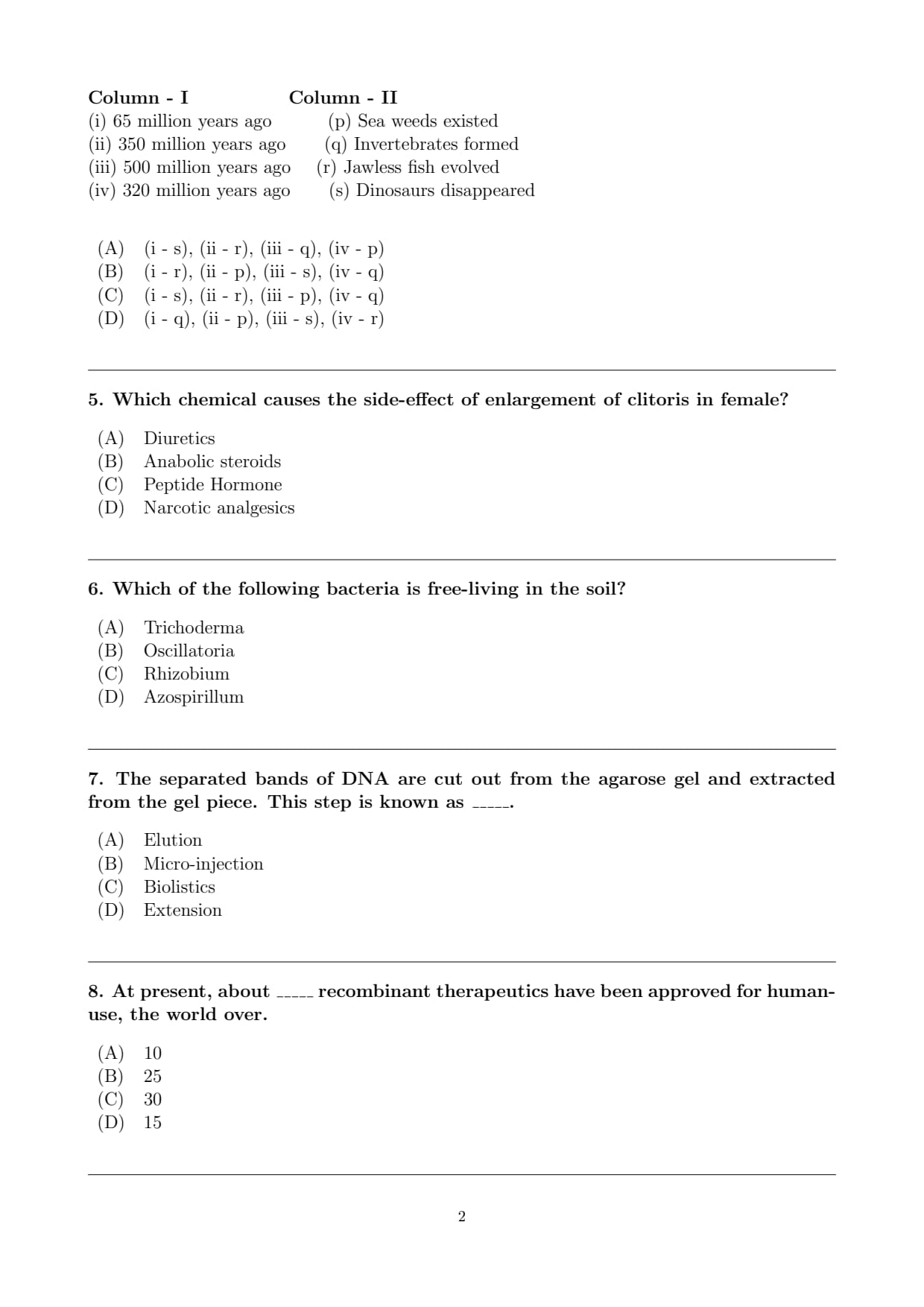
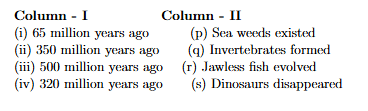
Match Column - I and Column - II and choose correct option.
(A) (i - s), (ii - r), (iii - q), (iv - p)
(B) (i - r), (ii - p), (iii - s), (iv - q)
(C) (i - s), (ii - r), (iii - p), (iv - q)
(D) (i - q), (ii - p), (iii - s), (iv - r)
View Solution
Step 1: Identify Key Events
65 million years ago marks the extinction of dinosaurs.
350 million years ago corresponds to evolution of jawless fishes.
500 million years ago marks the rise of early invertebrates.
320 million years ago corresponds to the existence of sea weeds.
Step 2: Match Correctly
(i) \(\rightarrow\) (s), (ii) \(\rightarrow\) (r), (iii) \(\rightarrow\) (q), (iv) \(\rightarrow\) (p)
Step 3: Choose Option
This matching corresponds to option (A).
Final Answer: (A) Quick Tip: Memorize evolutionary timeline: Invertebrates \(\rightarrow\) Fish \(\rightarrow\) Plants \(\rightarrow\) Dinosaurs extinction.
Which chemical causes the side-effect of enlargement of clitoris in female?
(A) Diuretics
(B) Anabolic steroids
(C) Peptide Hormone
(D) Narcotic analgesics
View Solution
Step 1: Understand Anabolic Steroids
Anabolic steroids are synthetic derivatives of testosterone, the male sex hormone. These substances promote muscle growth and development of male secondary sexual characteristics.
Step 2: Effect on Females
When females use anabolic steroids, they may develop masculine traits such as deepening of voice, increased body hair, and enlargement of the clitoris (clitoromegaly).
Step 3: Eliminate Other Options
Diuretics regulate fluid balance, peptide hormones regulate body functions, and narcotic analgesics relieve pain. None of these cause such masculinizing effects.
Final Answer: (B) Quick Tip: Anabolic steroids mimic testosterone → cause masculinization effects in females.
Which of the following bacteria is free-living in the soil?
(A) Trichoderma
(B) Oscillatoria
(C) Rhizobium
(D) Azospirillum
View Solution
Step 1: Identify Free-Living Bacteria
Free-living bacteria are those that do not require a host organism and can survive independently in soil.
Step 2: Analyze Options
Trichoderma is a fungus, not a bacterium. Oscillatoria is a cyanobacterium but not primarily known as a nitrogen-fixing soil bacterium. Rhizobium is symbiotic and lives in root nodules of legumes.
Step 3: Correct Choice
Azospirillum is a free-living nitrogen-fixing bacterium found in soil and is associated with plant roots but does not form true symbiotic nodules.
Final Answer: (D) Quick Tip: Azospirillum = free-living nitrogen fixer; Rhizobium = symbiotic.
The separated bands of DNA are cut out from the agarose gel and extracted from the gel piece. This step is known as _____.
(A) Elution
(B) Micro-injection
(C) Biolistics
(D) Extension
View Solution
Step 1: Understand Gel Electrophoresis
In gel electrophoresis, DNA fragments are separated based on size by moving through an agarose gel under an electric field.
Step 2: Extraction Process
After separation, the desired DNA band is cut from the gel and purified. This process of recovering DNA from the gel is called elution.
Step 3: Eliminate Other Options
Micro-injection and biolistics are methods of gene transfer, while extension refers to DNA synthesis during PCR.
Final Answer: (A) Quick Tip: Elution = extraction of DNA from gel after electrophoresis.
At present, about _____ recombinant therapeutics have been approved for human-use, the world over.
(A) 10
(B) 25
(C) 30
(D) 15
View Solution
Step 1: Understand Recombinant Therapeutics
Recombinant therapeutics are medicines produced using recombinant DNA technology, such as insulin, growth hormone, and vaccines.
Step 2: NCERT Reference
According to standard biology references (NCERT), approximately 30 recombinant therapeutics have been approved for human use globally.
Step 3: Importance
These therapeutics have revolutionized treatment for diseases like diabetes, cancer, and hormonal disorders.
Final Answer: (C) Quick Tip: Remember: NCERT fact → Around 30 recombinant therapeutics approved.
In a forest, there are initially 100 deer. Over certain period 30 are born and 10 die. Assuming food is abundant and predators are few. Calculate the intrinsic rate of natural increase for that population.
(A) 0.4
(B) 0.18
(C) 0.2
(D) 0.015
View Solution
Step 1: Formula for Intrinsic Rate of Increase
The intrinsic rate of increase (r) is calculated as: \[ r = \frac{Births - Deaths}{Initial Population} \]
Step 2: Substitute Values
Births = 30, Deaths = 10, Initial population = 100 \[ r = \frac{30 - 10}{100} = \frac{20}{100} = 0.2 \]
Step 3: Interpretation
This indicates a positive growth rate under favorable environmental conditions.
Final Answer: (C) Quick Tip: Intrinsic rate (r) = (B − D)/N → quick formula for population growth.
In the given statements, select the correct option for the process of decomposition.
Statements:
(1) Moist environment favour decomposition.
(2) Low temperature and anaerobiosis inhibit decomposition.
(3) Decomposition is slower, if detritus is rich in nitrogen.
(4) Decomposition is quicker if detritus is rich in chitin.
(5) Warm environment favour decomposition.
(A) 1, 2, 3, 5 are true
(B) 1, 2, 5 are true
(C) 3, 4, 5 are true
(D) 1, 5 are true
View Solution
Step 1: Analyze Each Statement
(1) Moist conditions enhance microbial activity → True.
(2) Low temperature and lack of oxygen slow decomposition → True.
(3) Nitrogen-rich detritus decomposes faster, not slower → False.
(4) Chitin is resistant to decomposition → slows process → False.
(5) Warm conditions favour microbial growth → True.
Step 2: Select Correct Combination
Correct statements are (1), (2), and (5).
Final Answer: (B) Quick Tip: Decomposition is fastest in warm, moist, oxygen-rich conditions.
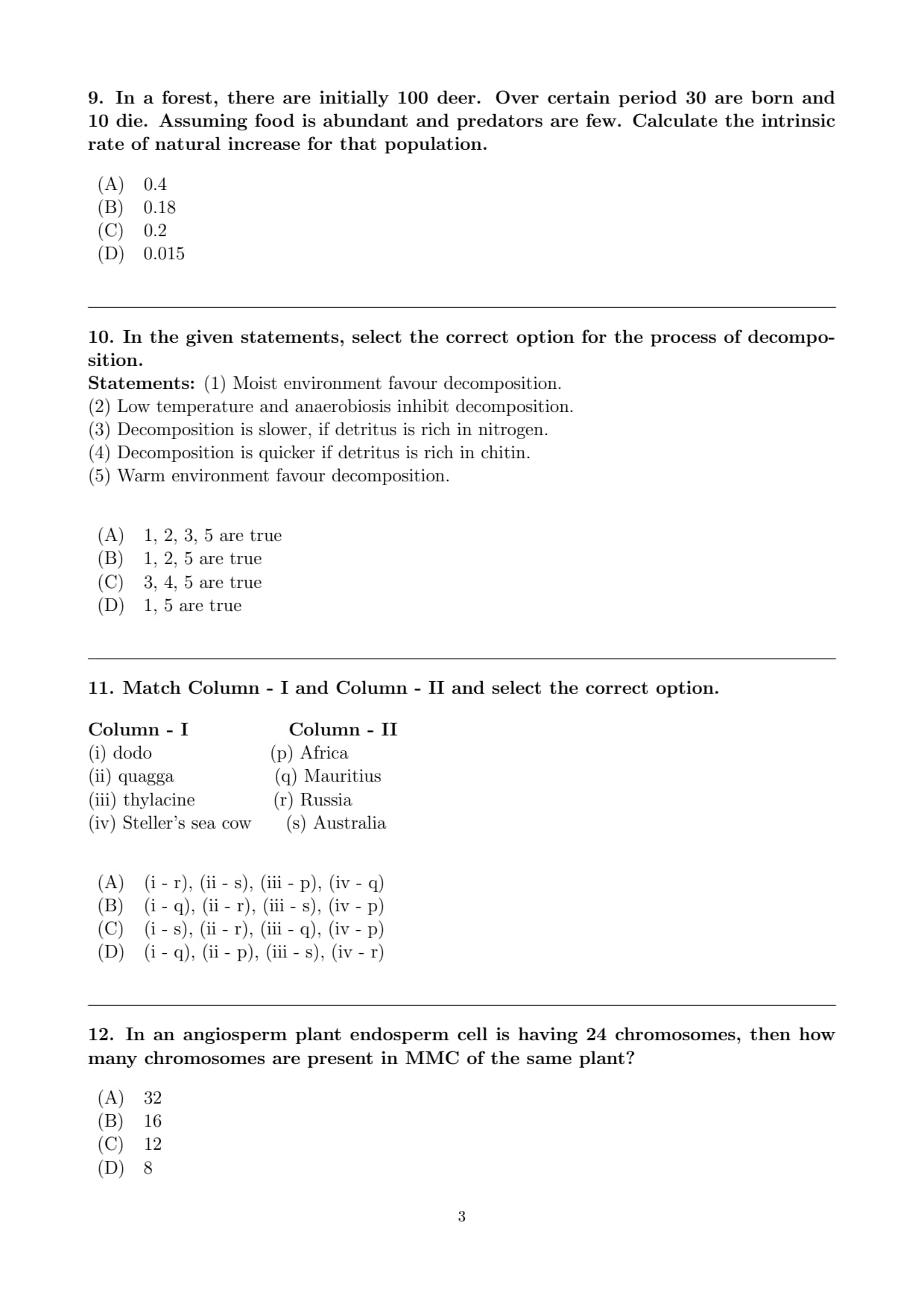
Match Column - I and Column - II and select the correct option.
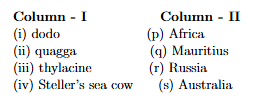
(A) (i - r), (ii - s), (iii - p), (iv - q)
(B) (i - q), (ii - r), (iii - s), (iv - p)
(C) (i - s), (ii - r), (iii - q), (iv - p)
(D) (i - q), (ii - p), (iii - s), (iv - r)
View Solution
Step 1: Identify Species Origins
Dodo was native to Mauritius.
Quagga was found in Africa.
Thylacine (Tasmanian tiger) lived in Australia.
Steller’s sea cow was found near Russia (Bering Sea region).
Step 2: Match Correctly
(i) \(\rightarrow\) (q), (ii) \(\rightarrow\) (p), (iii) \(\rightarrow\) (s), (iv) \(\rightarrow\) (r)
Step 3: Choose Option
This corresponds to option (D).
Final Answer: (D) Quick Tip: Extinct species locations are commonly asked → memorize dodo (Mauritius), thylacine (Australia).
In an angiosperm plant endosperm cell is having 24 chromosomes, then how many chromosomes are present in MMC of the same plant?
(A) 32
(B) 16
(C) 12
(D) 8
View Solution
Step 1: Understand Endosperm
Endosperm in angiosperms is triploid (3n), formed by fusion of one male gamete (n) with two polar nuclei (n + n).
Step 2: Calculate Haploid Number
Given: Endosperm = 24 chromosomes (3n) \[ 3n = 24 \Rightarrow n = 8 \]
Step 3: Determine MMC Chromosomes
Megaspore Mother Cell (MMC) is diploid (2n): \[ 2n = 2 \times 8 = 16 \]
Final Answer: (B) Quick Tip: Endosperm = 3n → find n → MMC = 2n.
Which of the following hormone is not produced from the placenta?
(A) Gonadotropin
(B) Human placental Lactogen
(C) Estrogen
(D) Relaxin
View Solution
Step 1: Placental Hormones
The placenta produces several hormones such as human chorionic gonadotropin (hCG), human placental lactogen (hPL), estrogen, and relaxin.
Step 2: Analyze Option A
The term "gonadotropin" is a general term referring to hormones like FSH and LH, which are secreted by the pituitary gland, not the placenta.
Step 3: Clarification
Although hCG is a gonadotropin, the option given is generic "gonadotropin", which typically refers to pituitary hormones, hence considered incorrect here.
Final Answer: (A) Quick Tip: Placenta secretes hCG, hPL, estrogen, relaxin — but not FSH/LH.
In the given assisted reproductive technologies which method is taking place inside the body for the process of fertilisation?
(A) GIFT
(B) ZIFT
(C) IUT
(D) ICSI
View Solution
Step 1: Understand GIFT
GIFT (Gamete Intra-Fallopian Transfer) involves transfer of gametes (sperm and ovum) into the fallopian tube, where fertilisation occurs naturally inside the body.
Step 2: Compare Other Techniques
ZIFT involves transfer of zygote (fertilisation already done in vitro).
IUT involves embryo transfer into uterus.
ICSI involves injection of sperm into ovum in laboratory.
Step 3: Key Concept
Only GIFT allows fertilisation to occur inside the female body (in vivo).
Final Answer: (A) Quick Tip: GIFT = fertilisation inside body; IVF methods = fertilisation outside body.
Select the incorrect option for mutation.
(A) Results in alternation of DNA sequence
(B) According to De-Vries mutation is the reason for speciation
(C) According to Hugo-de-Vries mutation is small and directional
(D) Results in changes in genotype and phenotype
View Solution
Step 1: Understand Mutation
Mutation refers to sudden heritable changes in the DNA sequence.
Step 2: De Vries Theory
Hugo de Vries proposed that mutations are large, sudden, and discontinuous changes that lead to evolution.
Step 3: Identify Incorrect Statement
Option (C) states mutation is small and directional, which contradicts De Vries’ theory.
Step 4: Verify Other Options
All other options correctly describe mutation.
Final Answer: (C) Quick Tip: De Vries → mutations are large, sudden, and random (not small/directional).
In Meselson and Stahl's Experiment, heavy DNA molecule could be distinguished from the normal DNA by centrifugation in a _____ density gradient.
(A) NH\(_4\)Cl
(B) CsCl
(C) Ethidium bromide
(D) Trichloro acetic acid
View Solution
Step 1: Experiment Overview
Meselson and Stahl demonstrated semi-conservative replication of DNA using isotopes of nitrogen (\(^{15}\)N and \(^{14}\)N).
Step 2: Role of CsCl
They used Cesium chloride (CsCl) density gradient centrifugation to separate DNA based on density differences.
Step 3: Principle
Heavy DNA (with \(^{15}\)N) forms a band at a different position than light DNA (\(^{14}\)N), allowing clear distinction.
Final Answer: (B) Quick Tip: Meselson–Stahl experiment → CsCl density gradient centrifugation.
During which geological period order Gnetales of gymnosperms are evolved?
(A) Permian
(B) Triassic
(C) Jurassic
(D) Cretaceous
View Solution
Step 1: Understand Gnetales
Gnetales are a group of gymnosperms that show some advanced features similar to angiosperms.
Step 2: Geological Timeline
According to evolutionary records, Gnetales appeared during the Cretaceous period.
Step 3: Eliminate Other Options
Permian, Triassic, and Jurassic periods correspond to earlier evolutionary stages.
Final Answer: (D) Quick Tip: Gnetales → advanced gymnosperms → Cretaceous period.
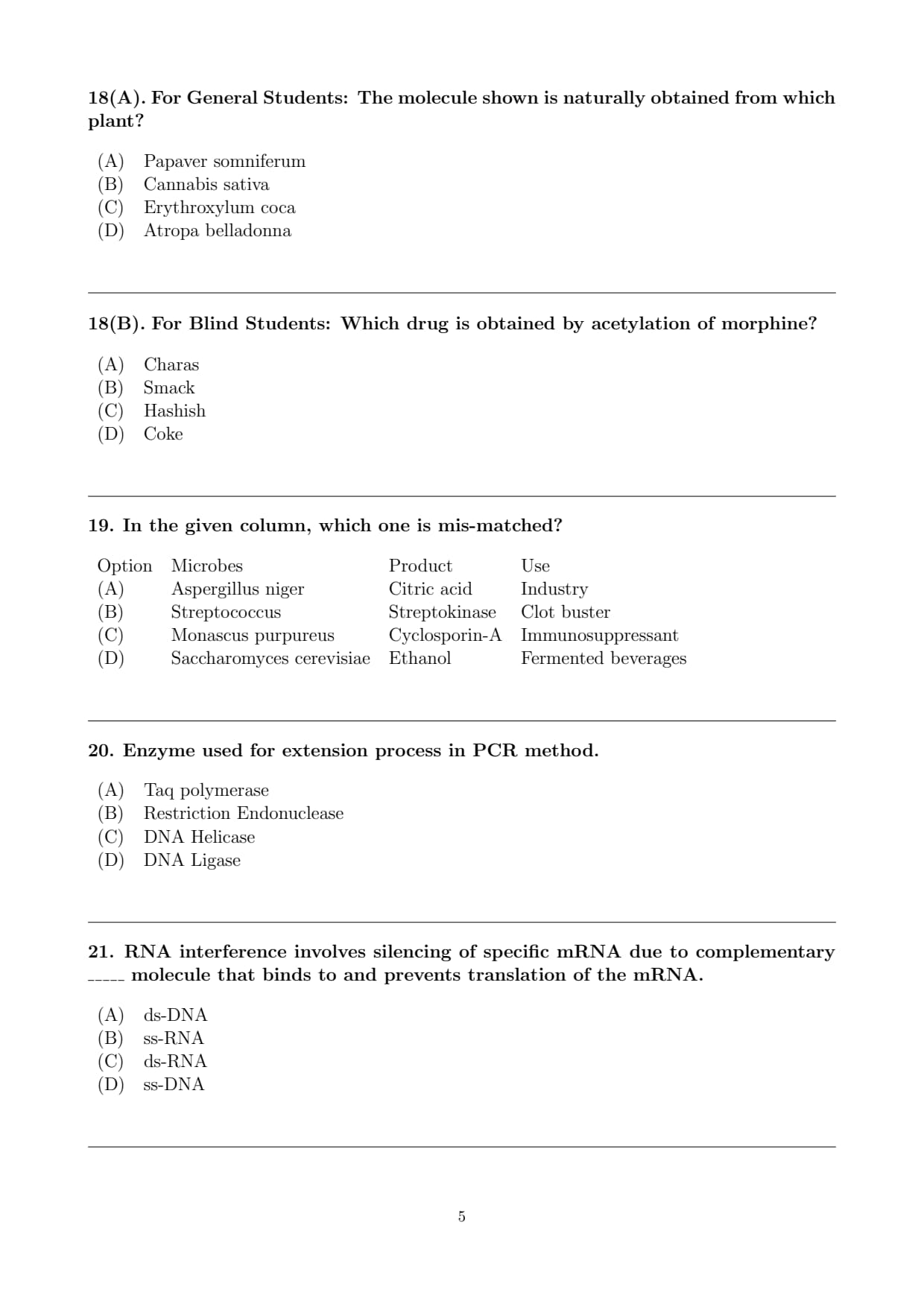
For General Students: The molecule shown is naturally obtained from which plant?
(A) Papaver somniferum
(B) Cannabis sativa
(C) Erythroxylum coca
(D) Atropa belladonna
View Solution
Step 1: Identify the Compound
The given structure corresponds to cannabinoids, which are chemical compounds found in cannabis.
Step 2: Source Plant
Cannabinoids are naturally obtained from Cannabis sativa.
Step 3: Eliminate Other Options
Papaver somniferum produces opium.
Erythroxylum coca produces cocaine.
Atropa belladonna produces atropine.
Final Answer: (B) Quick Tip: Cannabis → cannabinoids; Poppy → morphine; Coca → cocaine.
For Blind Students: Which drug is obtained by acetylation of morphine?
(A) Charas
(B) Smack
(C) Hashish
(D) Coke
View Solution
Step 1: Understand Morphine Derivatives
Morphine undergoes acetylation to form diacetylmorphine.
Step 2: Common Name
Diacetylmorphine is commonly known as heroin or smack.
Step 3: Eliminate Other Options
Charas and hashish are cannabis products, while coke refers to cocaine.
Final Answer: (B) Quick Tip: Morphine + acetylation → heroin (smack).
In the given column, which one is mis-matched?
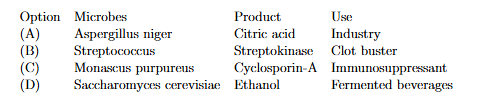
Correct Answer: (C)
View Solution
Step 1: Verify Each Pair
(A) Correct → Citric acid by Aspergillus niger.
(B) Correct → Streptokinase used as clot buster.
(D) Correct → Yeast produces ethanol.
Step 2: Identify Error
Cyclosporin-A is actually produced by Trichoderma polysporum, not Monascus purpureus.
Final Answer: (C) Quick Tip: Monascus → statins; Trichoderma → cyclosporin-A.
Enzyme used for extension process in PCR method.
(A) Taq polymerase
(B) Restriction Endonuclease
(C) DNA Helicase
(D) DNA Ligase
View Solution
Step 1: PCR Steps
PCR involves denaturation, annealing, and extension.
Step 2: Role of Taq Polymerase
Taq polymerase is a heat-stable enzyme that synthesizes DNA during the extension phase.
Step 3: Other Options
Restriction enzymes cut DNA, helicase unwinds DNA, ligase joins fragments.
Final Answer: (A) Quick Tip: PCR extension step → Taq polymerase.
RNA interference involves silencing of specific mRNA due to complementary _____ molecule that binds to and prevents translation of the mRNA.
(A) ds-DNA
(B) ss-RNA
(C) ds-RNA
(D) ss-DNA
View Solution
Step 1: Define RNA Interference
RNA interference (RNAi) is a biological process where gene expression is silenced.
Step 2: Mechanism
Double-stranded RNA (dsRNA) binds to complementary mRNA and leads to its degradation, preventing protein synthesis.
Final Answer: (C) Quick Tip: RNAi → dsRNA binds mRNA → gene silencing.
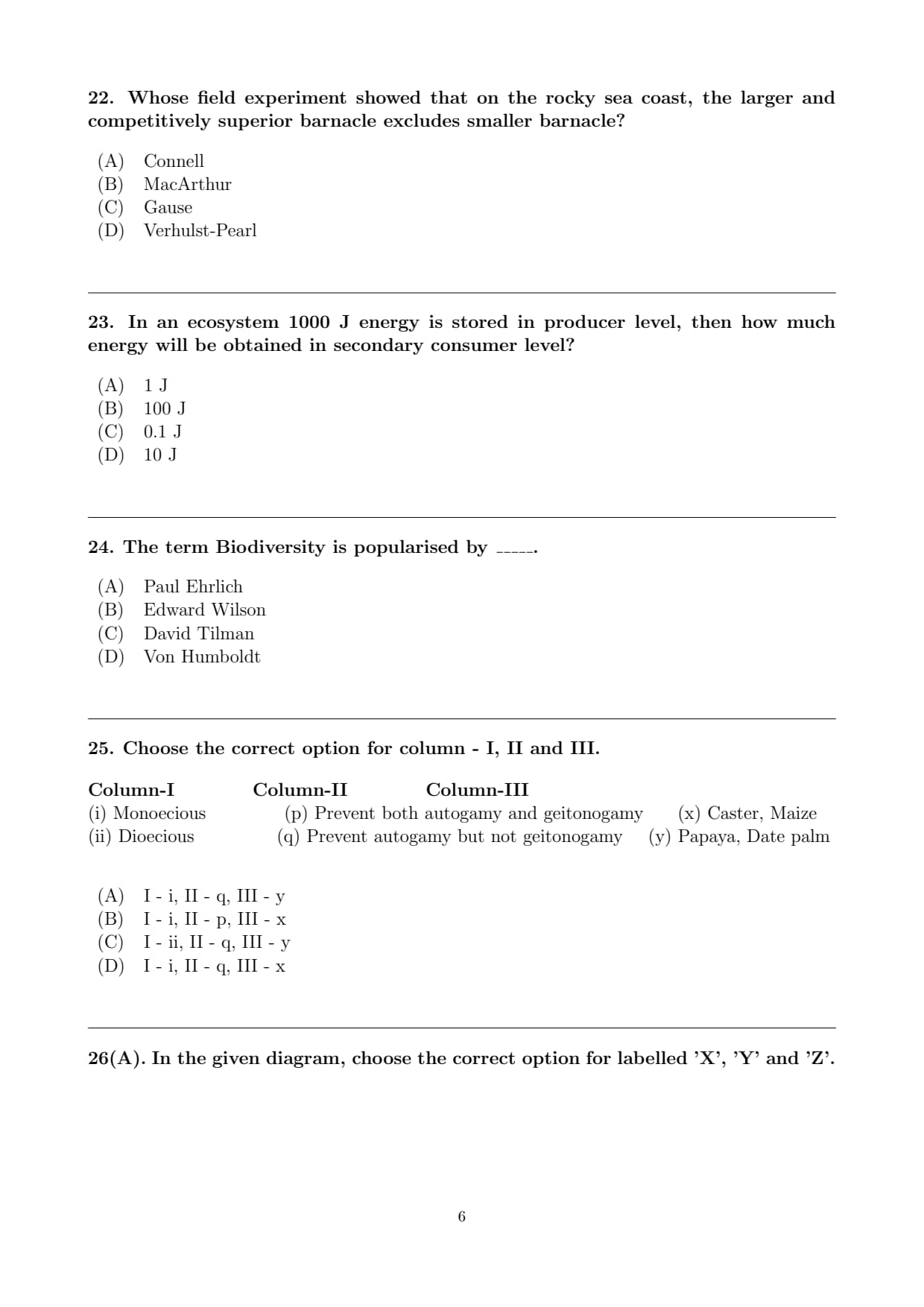
Whose field experiment showed that on the rocky sea coast, the larger and competitively superior barnacle excludes smaller barnacle?
(A) Connell
(B) MacArthur
(C) Gause
(D) Verhulst-Pearl
View Solution
Step 1: Study Description
Connell conducted experiments on barnacles in intertidal zones.
Step 2: Observation
He observed that larger barnacles outcompete and exclude smaller ones from their habitat.
Step 3: Concept
This demonstrates competitive exclusion principle in natural ecosystems.
Final Answer: (A) Quick Tip: Connell → barnacle experiment → competitive exclusion.
In an ecosystem 1000 J energy is stored in producer level, then how much energy will be obtained in secondary consumer level?
(A) 1 J
(B) 100 J
(C) 0.1 J
(D) 10 J
View Solution
Step 1: Apply 10% Law of Energy Transfer
According to Lindeman’s 10% law, only 10% of energy is transferred from one trophic level to the next.
Step 2: Calculate Energy Flow
Producer = 1000 J
Primary consumer = 10% of 1000 = 100 J
Secondary consumer = 10% of 100 = 10 J
Step 3: Interpretation
Energy decreases significantly at each trophic level due to heat loss and metabolic activities.
Final Answer: (D) Quick Tip: 10% law → multiply by 0.1 at each trophic level.
The term Biodiversity is popularised by _____.
(A) Paul Ehrlich
(B) Edward Wilson
(C) David Tilman
(D) Von Humboldt
View Solution
Step 1: Identify Key Scientist
Edward O. Wilson is known for promoting the concept of biodiversity.
Step 2: Contribution
He emphasized conservation of species diversity and ecosystem importance globally.
Final Answer: (B) Quick Tip: Edward Wilson = Father of Biodiversity.
Choose the correct option for column - I, II and III.
Column-I Column-III
(i) Monoecious (p) Prevent both autogamy and geitonogamy (x) Caster, Maize
(ii) Dioecious (q) Prevent autogamy but not geitonogamy (y) Papaya, Date palm
(A) I - i, II - q, III - y
(B) I - i, II - p, III - x
(C) I - ii, II - q, III - y
(D) I - i, II - q, III - x
View Solution
Step 1: Monoecious Plants
Monoecious plants have both male and female flowers on the same plant → prevents autogamy but allows geitonogamy.
Step 2: Dioecious Plants
Dioecious plants have separate male and female plants → prevents both autogamy and geitonogamy.
Step 3: Examples
Caster and maize are monoecious plants.
Final Answer: (D) Quick Tip: Monoecious → same plant; Dioecious → separate plants.
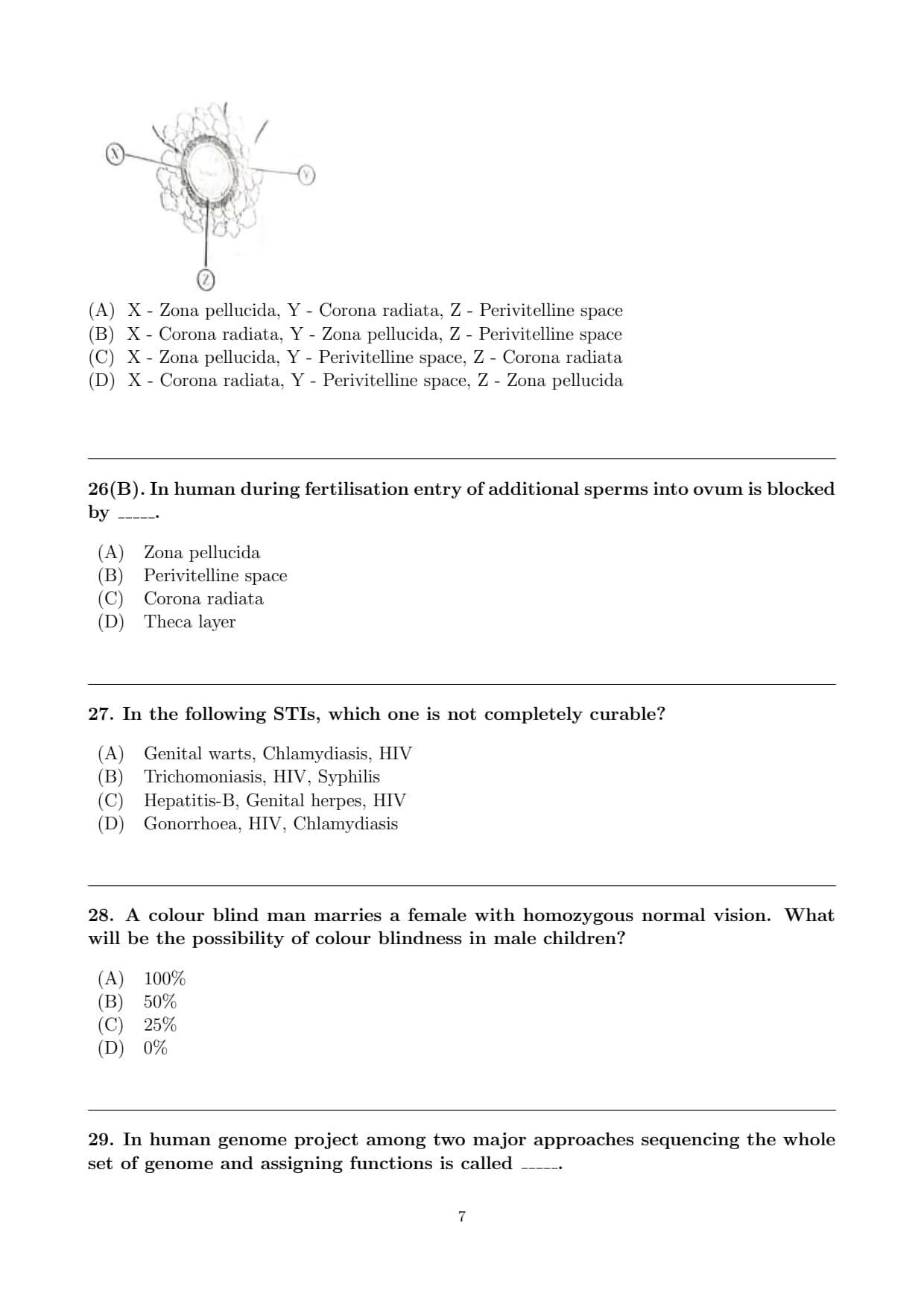
In the given diagram, choose the correct option for labelled 'X', 'Y' and 'Z'.
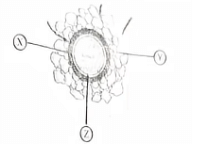
(A) X - Zona pellucida, Y - Corona radiata, Z - Perivitelline space
(B) X - Corona radiata, Y - Zona pellucida, Z - Perivitelline space
(C) X - Zona pellucida, Y - Perivitelline space, Z - Corona radiata
(D) X - Corona radiata, Y - Perivitelline space, Z - Zona pellucida
View Solution
Step 1: Outer Layer
Corona radiata surrounds the ovum externally.
Step 2: Middle Layer
Zona pellucida is a thick glycoprotein layer around the oocyte.
Step 3: Inner Space
Perivitelline space lies between zona pellucida and plasma membrane.
Final Answer: (A) Quick Tip: Order: Corona radiata → Zona pellucida → Perivitelline space.
In human during fertilisation entry of additional sperms into ovum is blocked by _____.
(A) Zona pellucida
(B) Perivitelline space
(C) Corona radiata
(D) Theca layer
View Solution
Step 1: Concept of Polyspermy
Polyspermy refers to entry of more than one sperm into the ovum, which must be prevented for normal development.
Step 2: Role of Zona Pellucida
After one sperm enters, zona pellucida undergoes structural changes (zona reaction) that prevent entry of additional sperms.
Step 3: Eliminate Other Options
Corona radiata helps sperm entry, not blocking. Perivitelline space is just a gap. Theca layer is part of follicle.
Final Answer: (A) Quick Tip: Zona pellucida → blocks polyspermy (very important concept).
In the following STIs, which one is not completely curable?
(A) Genital warts, Chlamydiasis, HIV
(B) Trichomoniasis, HIV, Syphilis
(C) Hepatitis-B, Genital herpes, HIV
(D) Gonorrhoea, HIV, Chlamydiasis
View Solution
Step 1: Curable vs Non-curable
Bacterial infections like gonorrhoea and chlamydia are curable with antibiotics.
Step 2: Viral STIs
Viral infections such as HIV, Hepatitis-B, and Genital herpes are not completely curable.
Step 3: Select Option
Option (C) contains only non-curable diseases.
Final Answer: (C) Quick Tip: Viral STIs → not curable; Bacterial STIs → curable.
A colour blind man marries a female with homozygous normal vision. What will be the possibility of colour blindness in male children?
(A) 100%
(B) 50%
(C) 25%
(D) 0%
View Solution
Step 1: Understand Inheritance
Colour blindness is an X-linked recessive trait.
Step 2: Parental Genotype
Male (colour blind) = X\(^c\)Y
Female (normal homozygous) = X\(^C\)X\(^C\)
Step 3: Male Children
Male child receives Y from father and X from mother → X\(^C\)Y (normal).
Final Answer: (D) Quick Tip: Sons get X from mother → check mother’s genotype only.
In human genome project among two major approaches sequencing the whole set of genome and assigning functions is called _____.
(A) Bioinformatics
(B) Sequence Annotation
(C) Expressed Sequence Tags
(D) Single nucleotide polymorphism
View Solution
Step 1: Genome Sequencing
Human genome project involved sequencing DNA and identifying genes.
Step 2: Annotation
Assigning functions to identified sequences is called sequence annotation.
Final Answer: (B) Quick Tip: Sequencing = reading DNA; Annotation = assigning function.
In natural selection, more individuals acquire value other than the mean character value, which indicates _____.
(A) Stabilising
(B) Stabilising directional both
(C) Disruptive
(D) Directional
View Solution
Step 1: Types of Natural Selection
Stabilising → favors average traits.
Disruptive → favors extremes.
Directional → shifts population toward one extreme.
Step 2: Interpretation
When individuals move away from mean toward one side → directional selection.
Final Answer: (D) Quick Tip: Directional selection → shift of mean toward one extreme.
Snake venom antibody is the antibody prepared against snake venom is the example of which type of immunisation?
(A) Active immunity
(B) Auto immunity
(C) Passive immunity
(D) Allergies
View Solution
Step 1: Understand Passive Immunity
Passive immunity involves transfer of ready-made antibodies into the body.
Step 2: Snake Venom Case
Antivenom contains pre-formed antibodies produced in another organism and injected into patient.
Step 3: Conclusion
Since antibodies are directly provided → passive immunity.
Final Answer: (C) Quick Tip: Passive immunity = ready-made antibodies (instant protection).
Which group of microbes are acting as bio control agents?
(A) Baculo virus, Oscillatoria, Rhizobium
(B) Azotobacter, Trichoderma, Glomus
(C) Trichoderma, Baculo virus, Bacillus thuringiensis
(D) Azospirillum, Anabaena, Bacillus thuringiensis
View Solution
Step 1: Define Biocontrol Agents
Biocontrol agents are organisms used to control pests and diseases biologically.
Step 2: Identify Correct Group
Trichoderma → fungal biocontrol agent.
Baculovirus → controls insect pests.
Bacillus thuringiensis (Bt) → insecticidal bacteria.
Final Answer: (C) Quick Tip: Bt, Baculovirus, Trichoderma = key biocontrol agents.
What is the correct nomenclature for restriction enzyme - I, obtained from Bacillus amyloliquefaciens H?
(A) Bam HI
(B) Bac HI
(C) Baam HI
(D) Bam IH
View Solution
Step 1: Naming Rule
Restriction enzymes are named from organism:
First letter (genus) + next two letters (species) + strain.
Step 2: Apply Rule
Bacillus amyloliquefaciens → Bam
Strain H → H
Roman numeral I → first enzyme
Final Answer: (A) Quick Tip: Naming = Genus + species + strain + number → BamHI.
In which kind of population interaction, one species is harmed whereas the other is unaffected?
(A) Competition
(B) Amensalism
(C) Commensalism
(D) Parasitism
View Solution
Step 1: Define Interactions
Competition → both harmed.
Commensalism → one benefits, other unaffected.
Parasitism → one benefits, other harmed.
Amensalism → one harmed, other unaffected.
Step 2: Match Condition
Given condition matches amensalism.
Final Answer: (B) Quick Tip: Amensalism = (-, 0) interaction.
Which two parts of the different plants can be fused for the formation of new plant in somatic hybridisation?
(A) Pollen grain
(B) Male - female gamete
(C) Protoplast
(D) Eggs
View Solution
Step 1: Define Somatic Hybridisation
It involves fusion of somatic cells from different plants.
Step 2: Role of Protoplast
Protoplasts are cells without cell wall and can fuse easily.
Step 3: Conclusion
Fusion of protoplasts forms hybrid cells.
Final Answer: (C) Quick Tip: Somatic hybridisation = fusion of protoplasts.
Sparrow eats seeds. After wards it eats insects. In which trophic level, sparrow belongs in both situations respectively?
(A) Primary - Secondary
(B) Tertiary - Quaternary
(C) Secondary - Tertiary
(D) Primary - Tertiary
View Solution
Step 1: When Sparrow Eats Seeds
Seeds are producers → sparrow acts as primary consumer.
Step 2: When Sparrow Eats Insects
Insects are primary consumers → sparrow becomes secondary consumer.
Final Answer: (A) Quick Tip: Plant eater → primary; animal eater → secondary.
Oxygen available from the nature belongs to which biodiversity conservation category?
(A) Narrowly utilitarian
(B) Intangible benefits
(C) Broadly utilitarian
(D) Ethical
View Solution
Step 1: Broadly Utilitarian Values
These include ecosystem services like oxygen production, pollination, climate regulation.
Step 2: Oxygen Role
Oxygen is essential for life and provided by plants → ecosystem service.
Final Answer: (C) Quick Tip: Ecosystem services → broadly utilitarian values.
Assertion (A): Geitonogamy is genetically similar to autogamy.
Reason (R): In geitonogamy pollen grains come from the same plant.
(A) A and R both are correct, R is correct explanation of A
(B) A and R both are correct, R is not correct explanation
(C) A is correct but R is wrong
(D) A is wrong but R is correct
View Solution
Step 1: Analyze Assertion
Geitonogamy involves transfer of pollen between different flowers of same plant → genetically similar to autogamy.
Step 2: Analyze Reason
Pollen comes from same plant → no genetic variation.
Step 3: Relation
Reason correctly explains why it is genetically similar.
Final Answer: (A) Quick Tip: Same plant → no variation → like self-pollination.
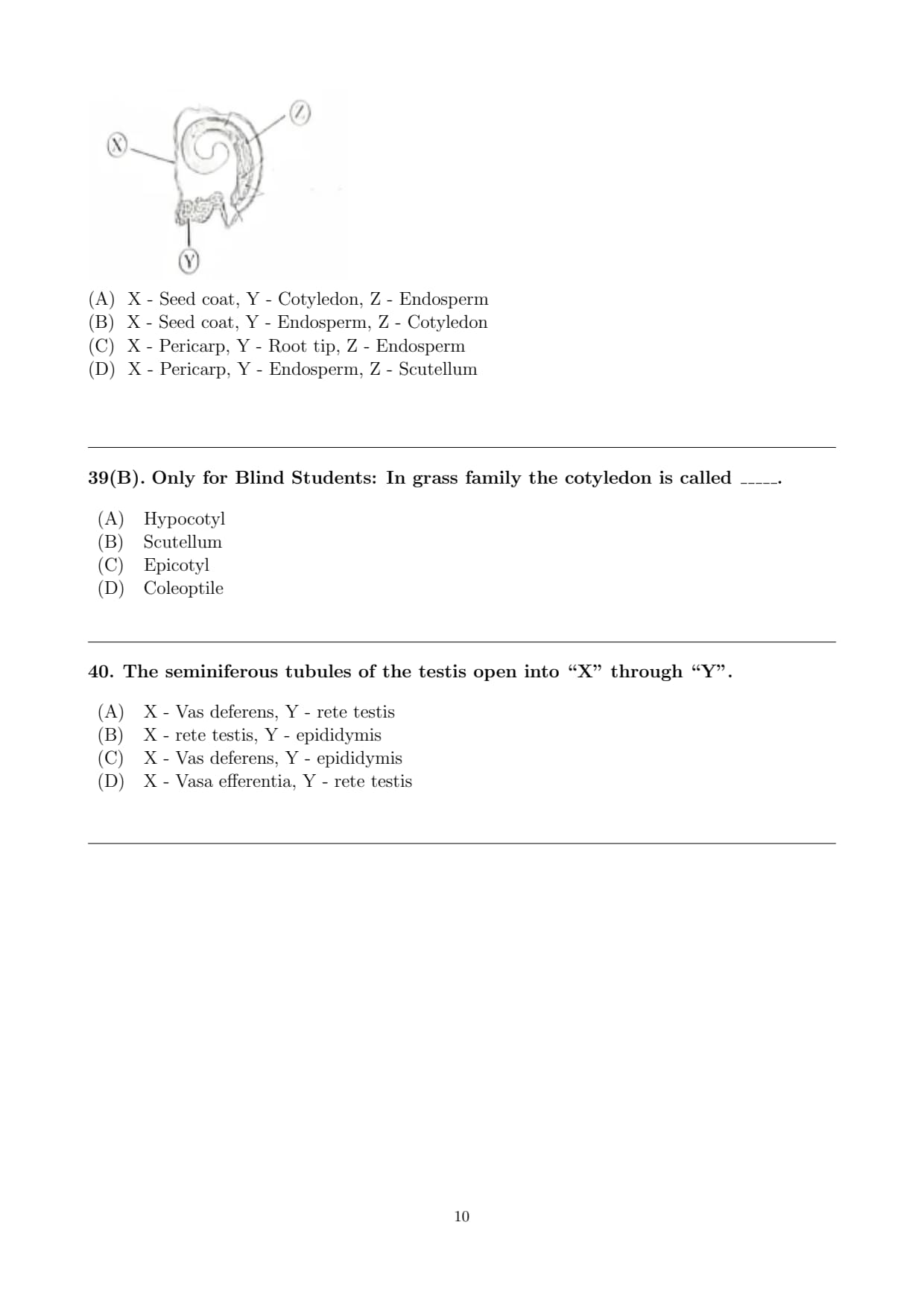
Identify 'X', 'Y' and 'Z' from the given diagram.
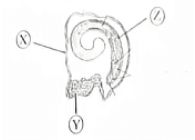
(A) X - Seed coat, Y - Cotyledon, Z - Endosperm
(B) X - Seed coat, Y - Endosperm, Z - Cotyledon
(C) X - Pericarp, Y - Root tip, Z - Endosperm
(D) X - Pericarp, Y - Endosperm, Z - Scutellum
View Solution
Step 1: Outer Layer
Seed coat protects the seed.
Step 2: Endosperm
Large food storage tissue in monocots.
Step 3: Cotyledon
Small structure (scutellum) absorbs nutrients.
Final Answer: (B) Quick Tip: Monocot seed → Endosperm large, cotyledon small.
Only for Blind Students: In grass family the cotyledon is called _____.
(A) Hypocotyl
(B) Scutellum
(C) Epicotyl
(D) Coleoptile
View Solution
Step 1: Grass Seed Structure
In monocots, cotyledon is modified into scutellum.
Final Answer: (B) Quick Tip: Monocot cotyledon = Scutellum.
The seminiferous tubules of the testis open into “X” through “Y”.
(A) X - Vas deferens, Y - rete testis
(B) X - rete testis, Y - epididymis
(C) X - Vas deferens, Y - epididymis
(D) X - Vasa efferentia, Y - rete testis
View Solution
Step 1: Pathway
Seminiferous tubules → rete testis → vasa efferentia → epididymis.
Step 2: Match
They open into vasa efferentia through rete testis.
Final Answer: (D) Quick Tip: Flow: Seminiferous → rete testis → vasa efferentia.



Comments