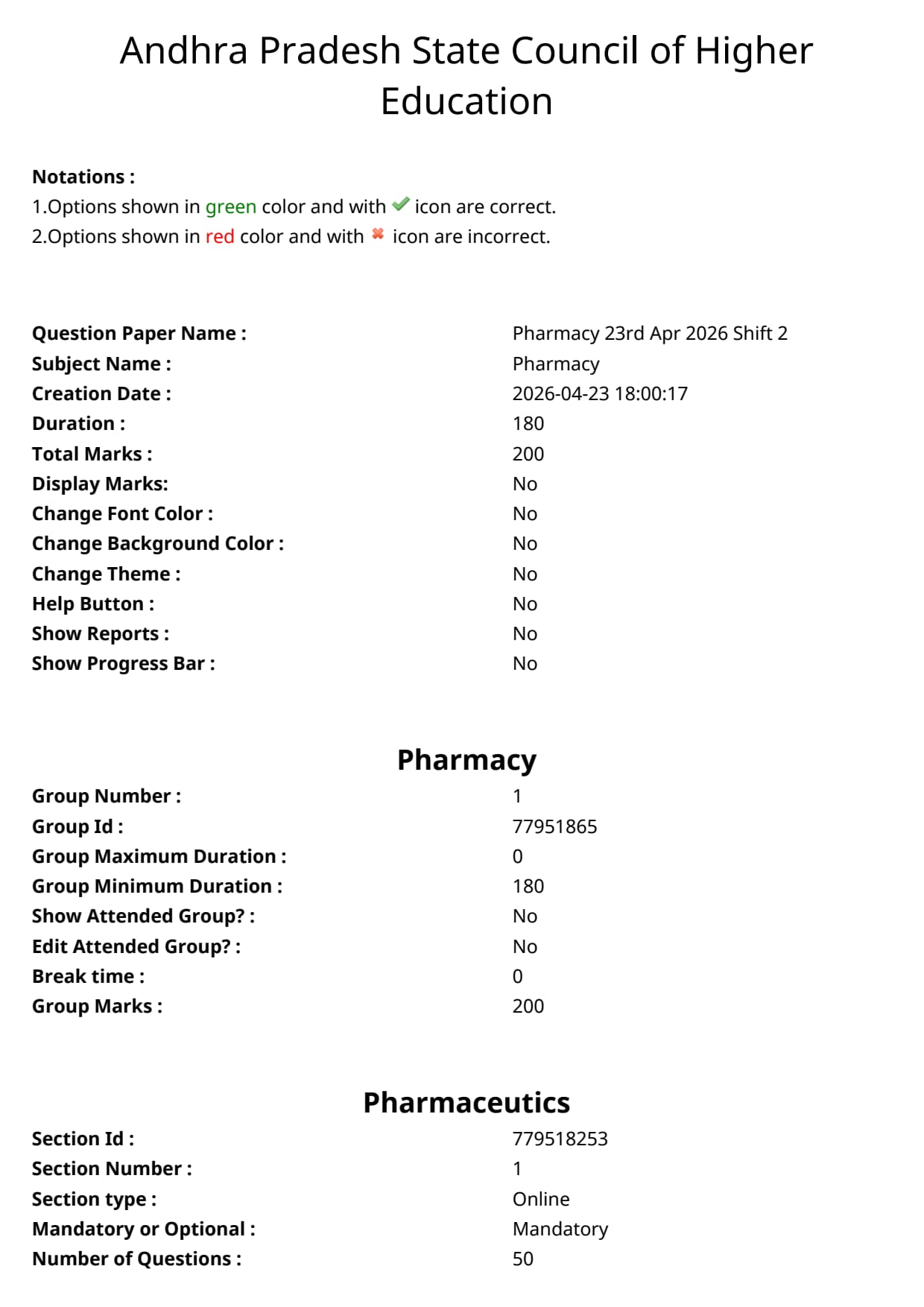
AP ECET 2026 Pharmacy Question Paper is available for download here. JNTU Anantapur on behalf of APSCHE conducted AP ECET 2026 Pharmacy exam on April 23 in Shift 2 from 2 PM to 5 PM. AP ECET is a state-level entrance exam conducted online for Diploma Holders and for B.Sc Holders and for admission into lateral entry for Engineering Courses.
- AP ECET Pharmacy Question Paper consists of 200 questions divided into 4 sections- Pharmaceutics, Pharmaceutical Chemistry, Pharmacognosy and Pharmacology with 50 questions each.
- Each correct answer answer carries 1 mark and there is no negative marking for incorrect answer.
Candidates can download AP ECET 2026 Pharmacy Question Paper with Answer Key and Solution PDF from the links provided below.
AP ECET 2026 Pharmacy Question Paper with Solutions
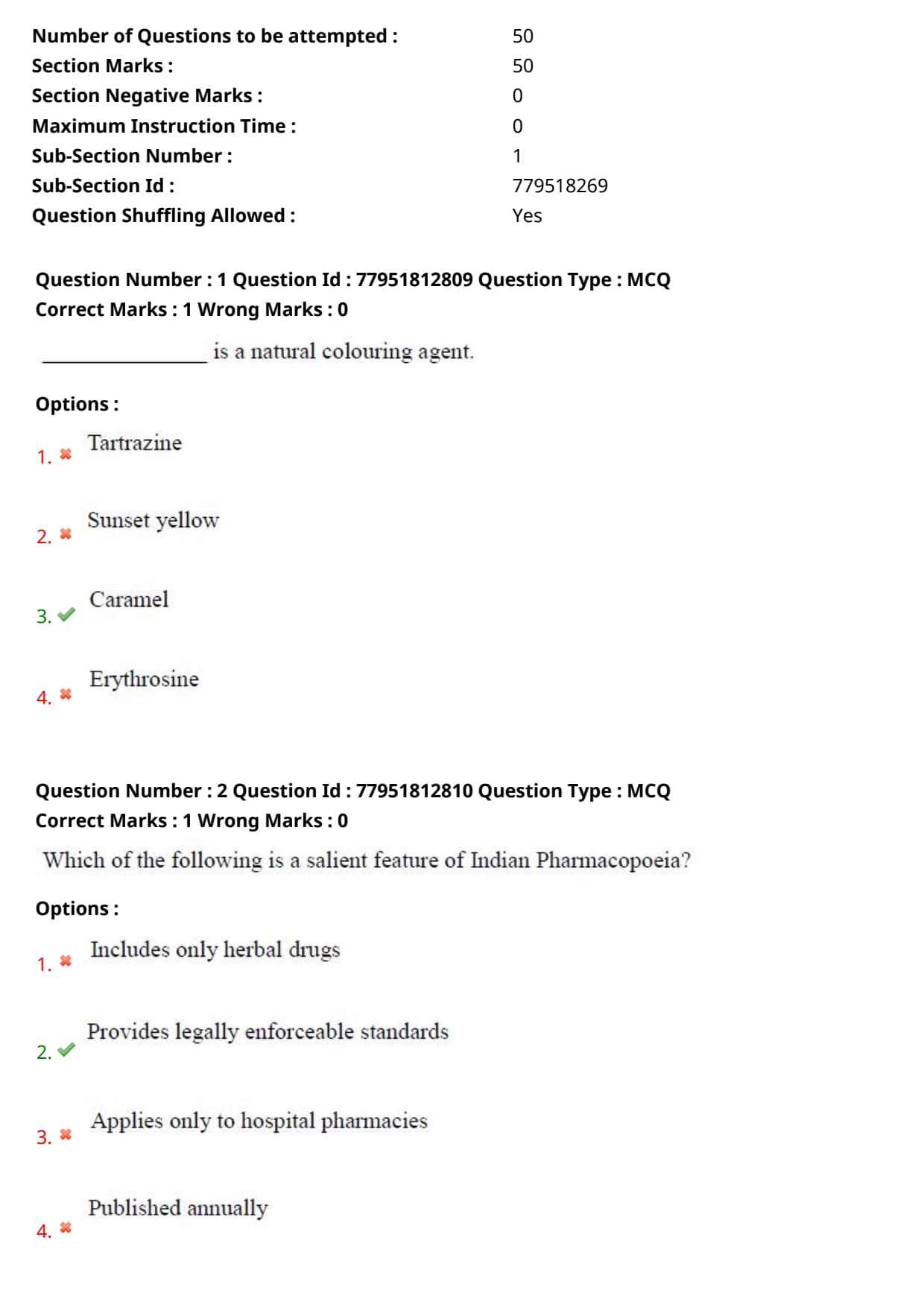
Question 1:
_________ is a natural colouring agent.
- (A) Tartrazine
- (B) Sunset yellow
- (C) Caramel
- (D) Erythrosine
Question 2:
Which of the following is a salient feature of Indian Pharmacopoeia?
- (A) Includes only herbal drugs
- (B) Provides legally enforceable standards
- (C) Applies only to hospital pharmacies
- (D) Published annually
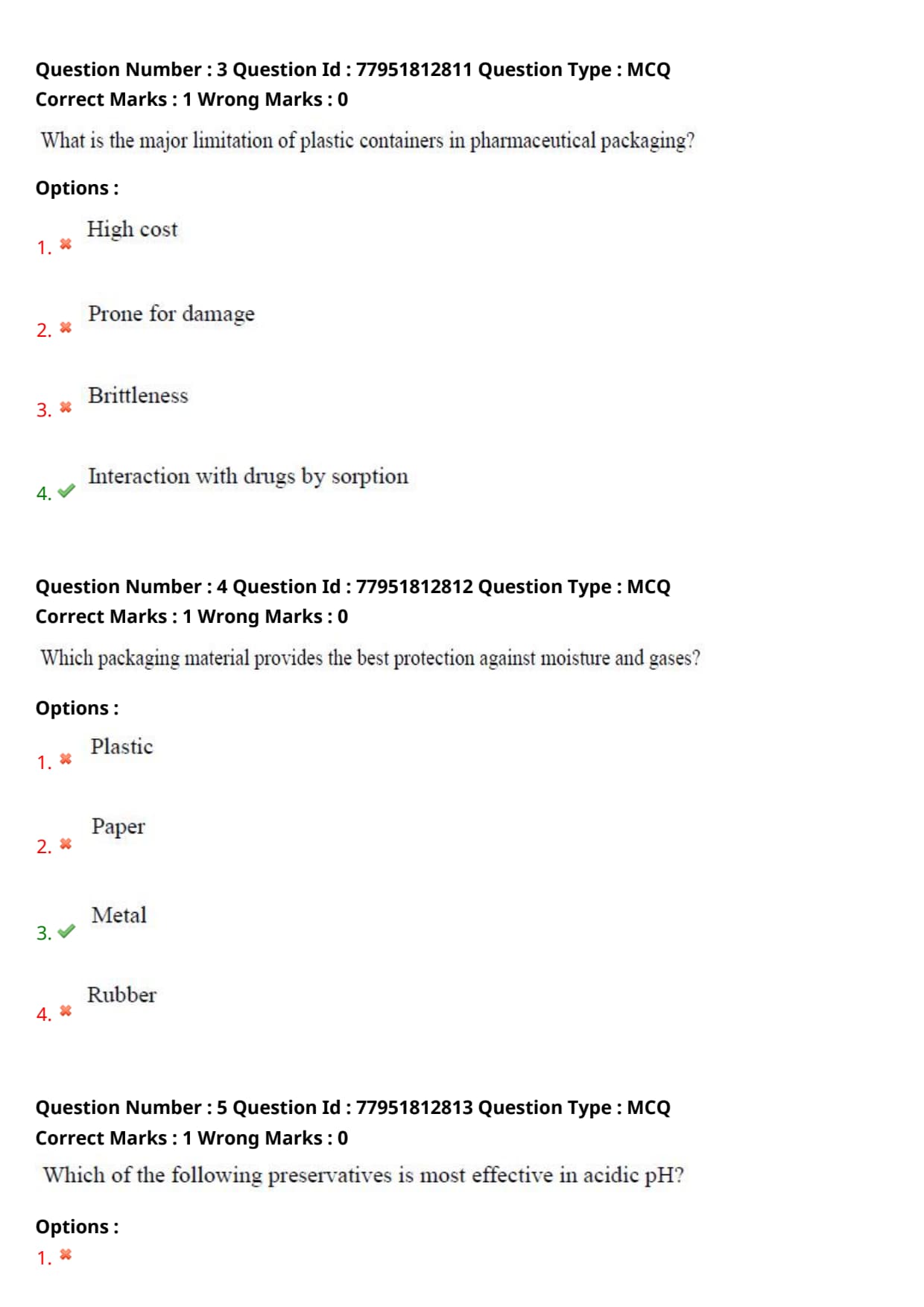
Question 3:
What is the major limitation of plastic containers in pharmaceutical packaging?
- (A) High cost
- (B) Prone for damage
- (C) Brittleness
- (D) Interaction with drugs by sorption
Question 4:
Which packaging material provides the best protection against moisture and gases?
- (A) Plastic
- (B) Paper
- (C) Metal
- (D) Rubber
Question 5:
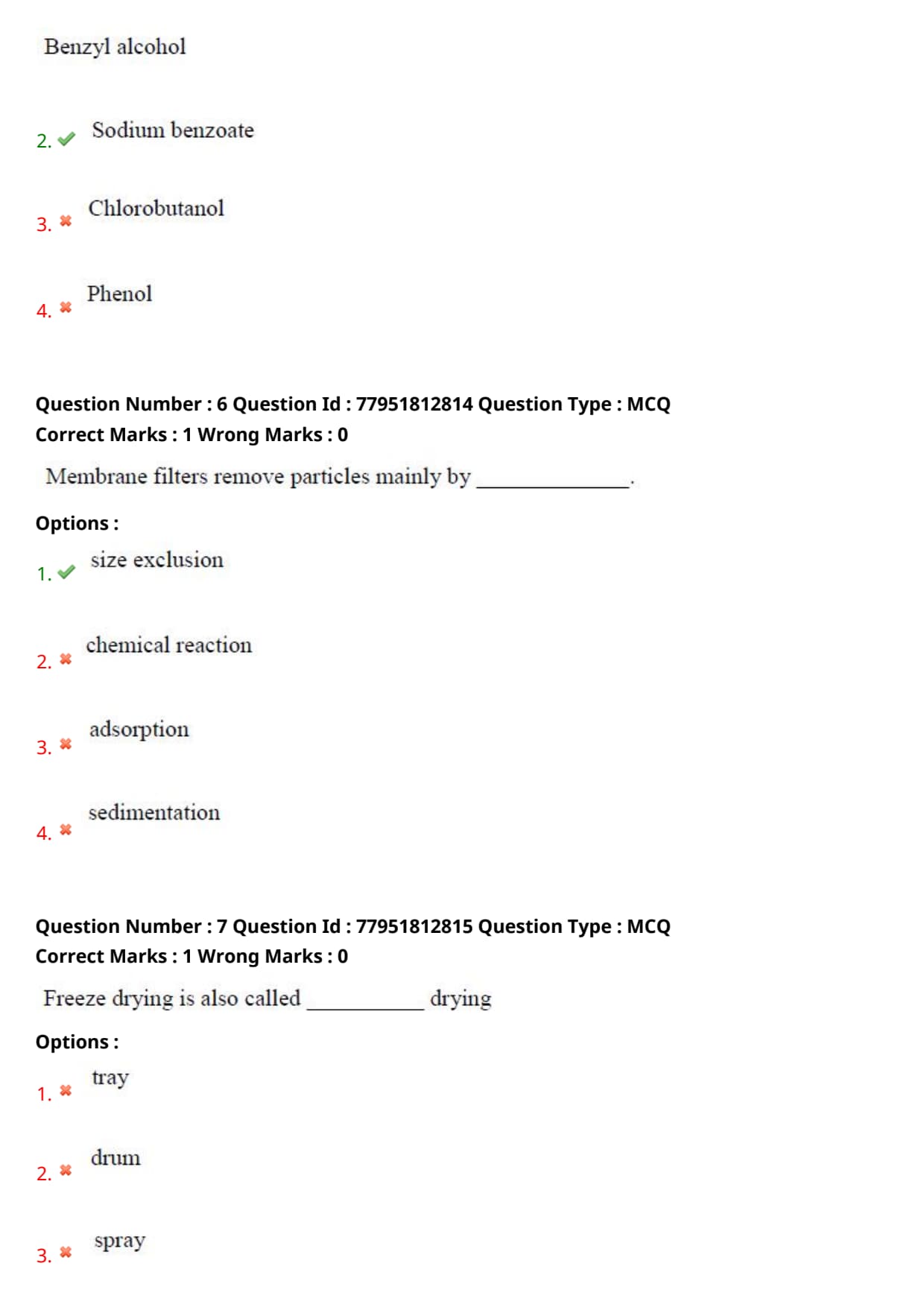
Which of the following preservatives is most effective in acidic pH?
- (A) Benzyl alcohol
- (B) Sodium benzoate
- (C) Chlorobutanol
- (D) Phenol
Question 6:
Membrane filters remove particles mainly by _________.
- (A) Size exclusion
- (B) Chemical reaction
- (C) Adsorption
- (D) Sedimentation
Question 7:
Freeze drying is also called _________ drying.
- (A) Tray
- (B) Drum
- (C) Spray
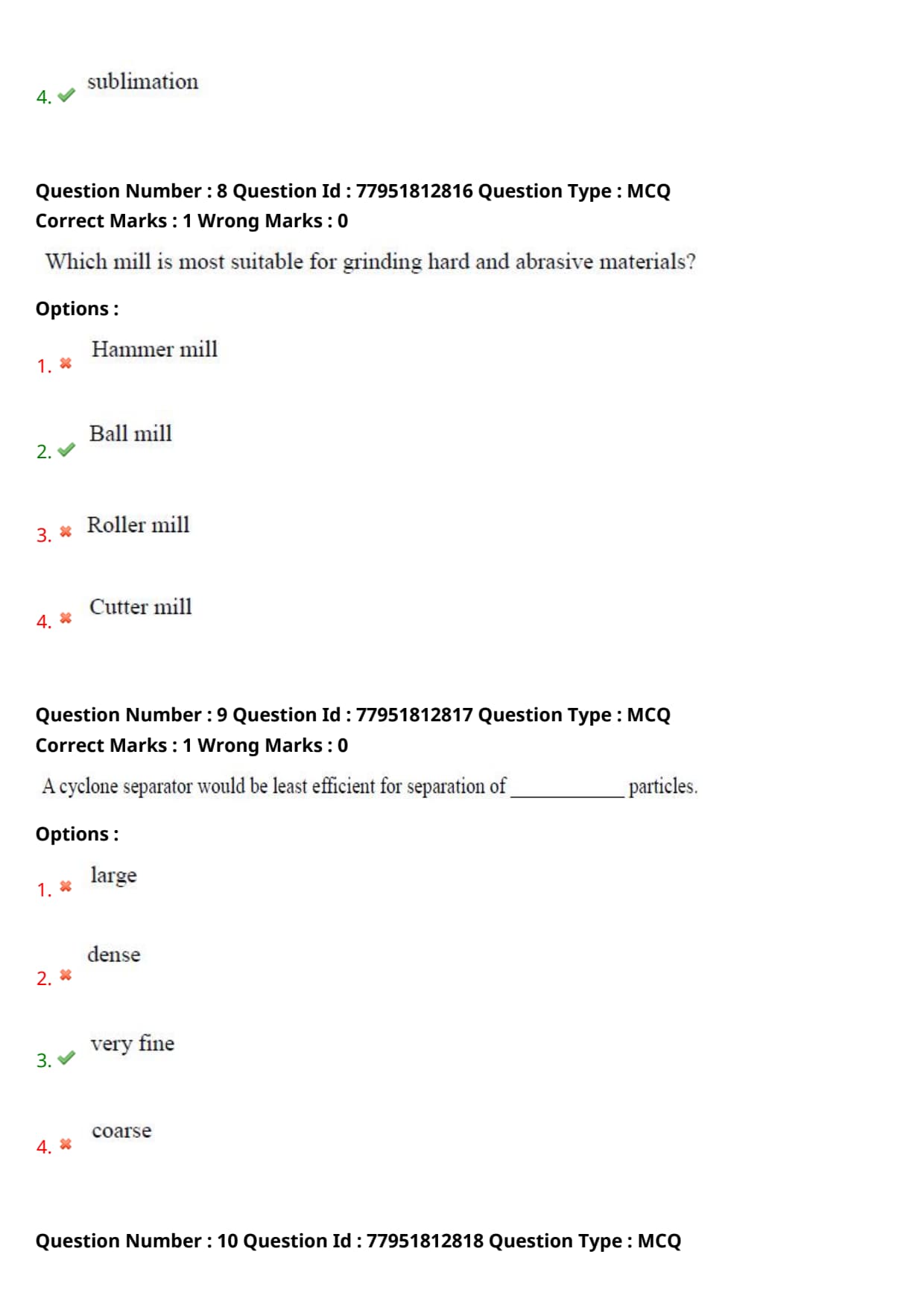
- (D) Sublimation
Question 8:
Which mill is most suitable for grinding hard and abrasive materials?
- (A) Hammer mill
- (B) Ball mill
- (C) Roller mill
- (D) Cutter mill
Question 9:
A cyclone separator would be least efficient for separation of _________ particles.
- (A) Large
- (B) Dense
- (C) Very fine
- (D) Coarse
Question 10:
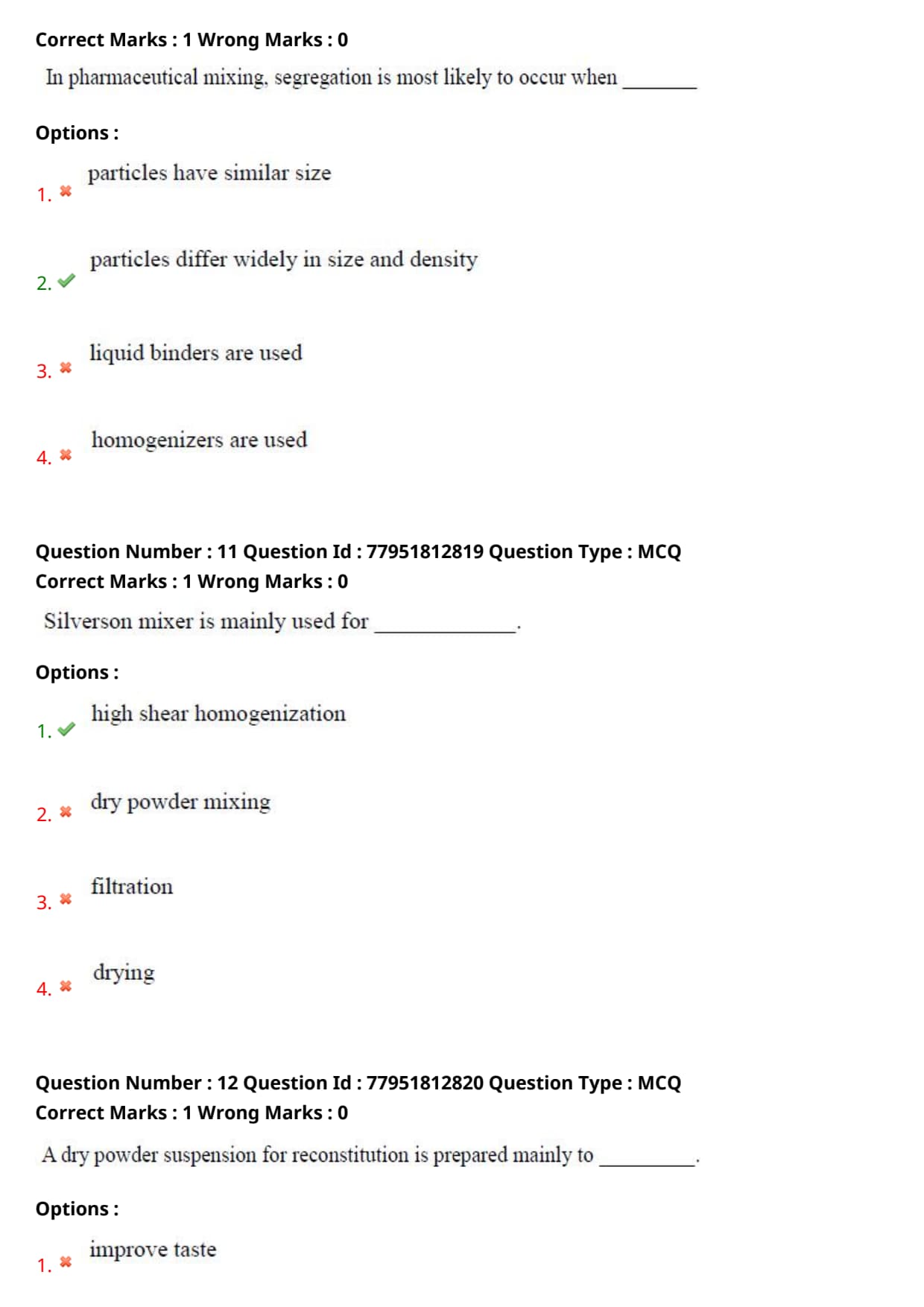
In pharmaceutical mixing, segregation is most likely to occur when _________.
- (A) Particles have similar size
- (B) Particles differ widely in size and density
- (C) Liquid binders are used
- (D) Homogenizers are used
Question 11:
Silverson mixer is mainly used for _________.
- (A) High shear homogenization
- (B) Dry powder mixing
- (C) Filtration
- (D) Drying
Question 12:
A dry powder suspension for reconstitution is prepared mainly to _________.
- (A) Improve taste
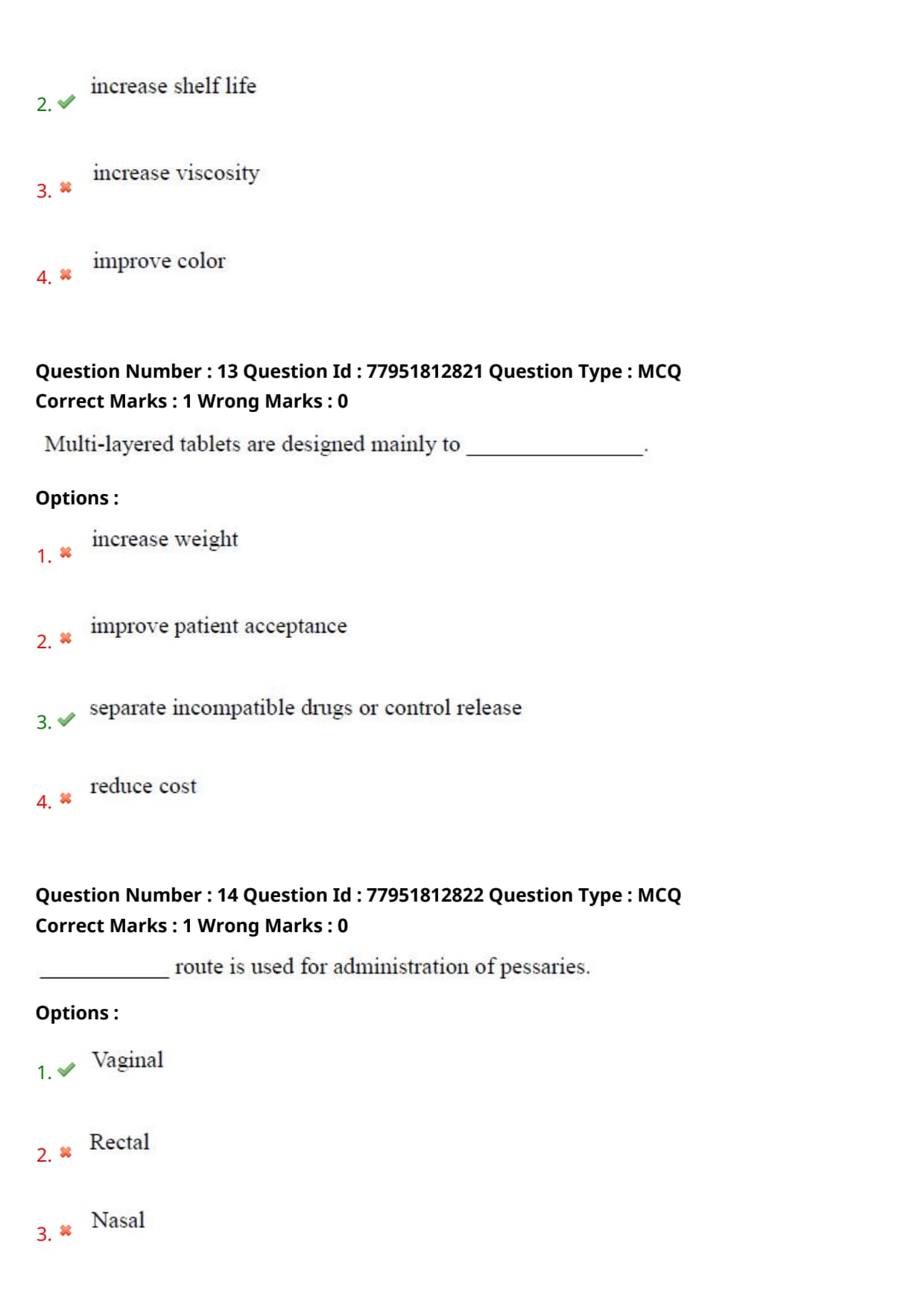
- (B) Increase shelf life
- (C) Increase viscosity
- (D) Improve color
Question 13:
Multi-layered tablets are designed mainly to _________.
- (A) Increase weight
- (B) Improve patient acceptance
- (C) Separate incompatible drugs or control release
- (D) Reduce cost
Question 14:
_________ route is used for administration of pessaries.
- (A) Vaginal
- (B) Rectal
- (C) Nasal
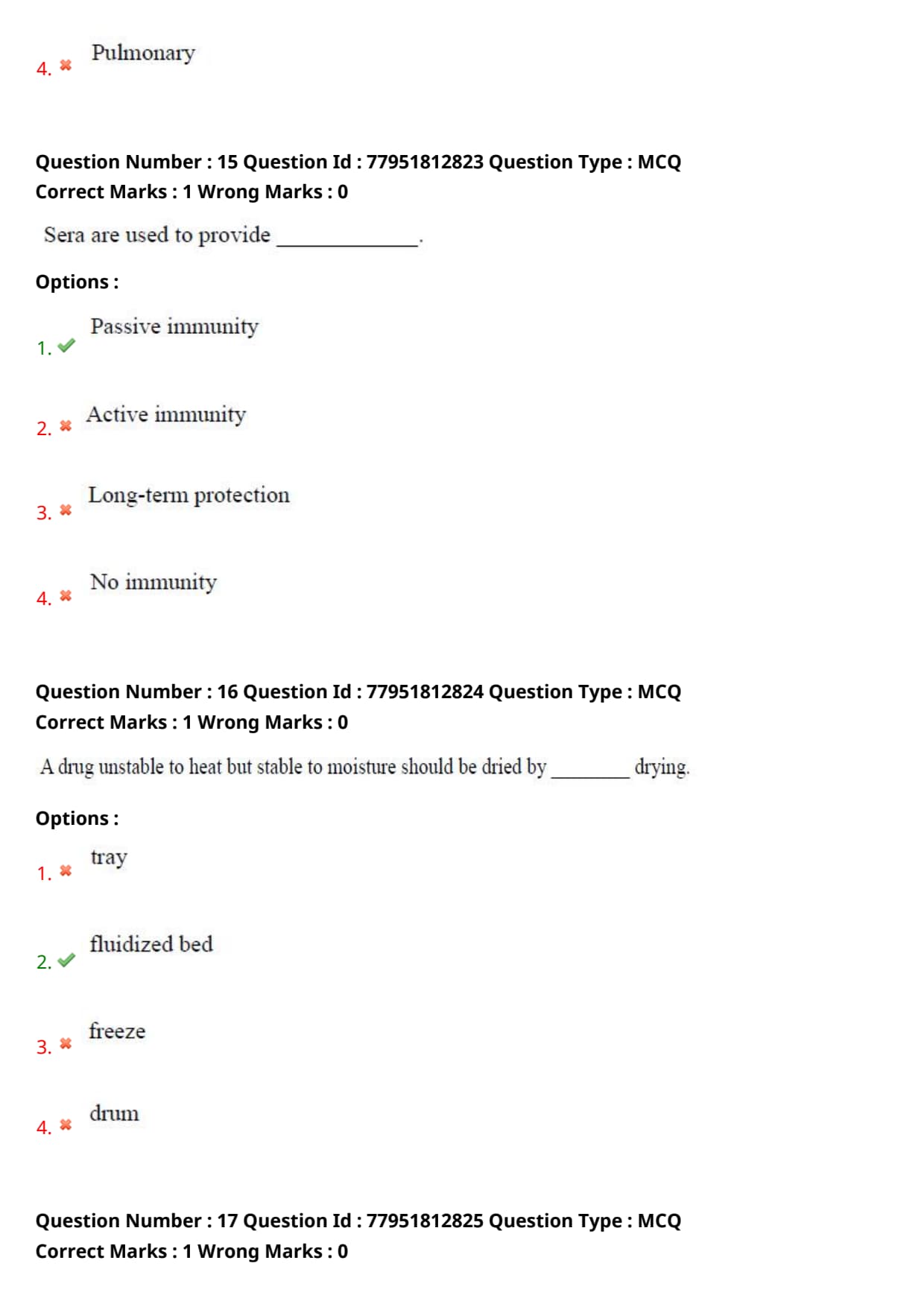
- (D) Pulmonary
Question 15:
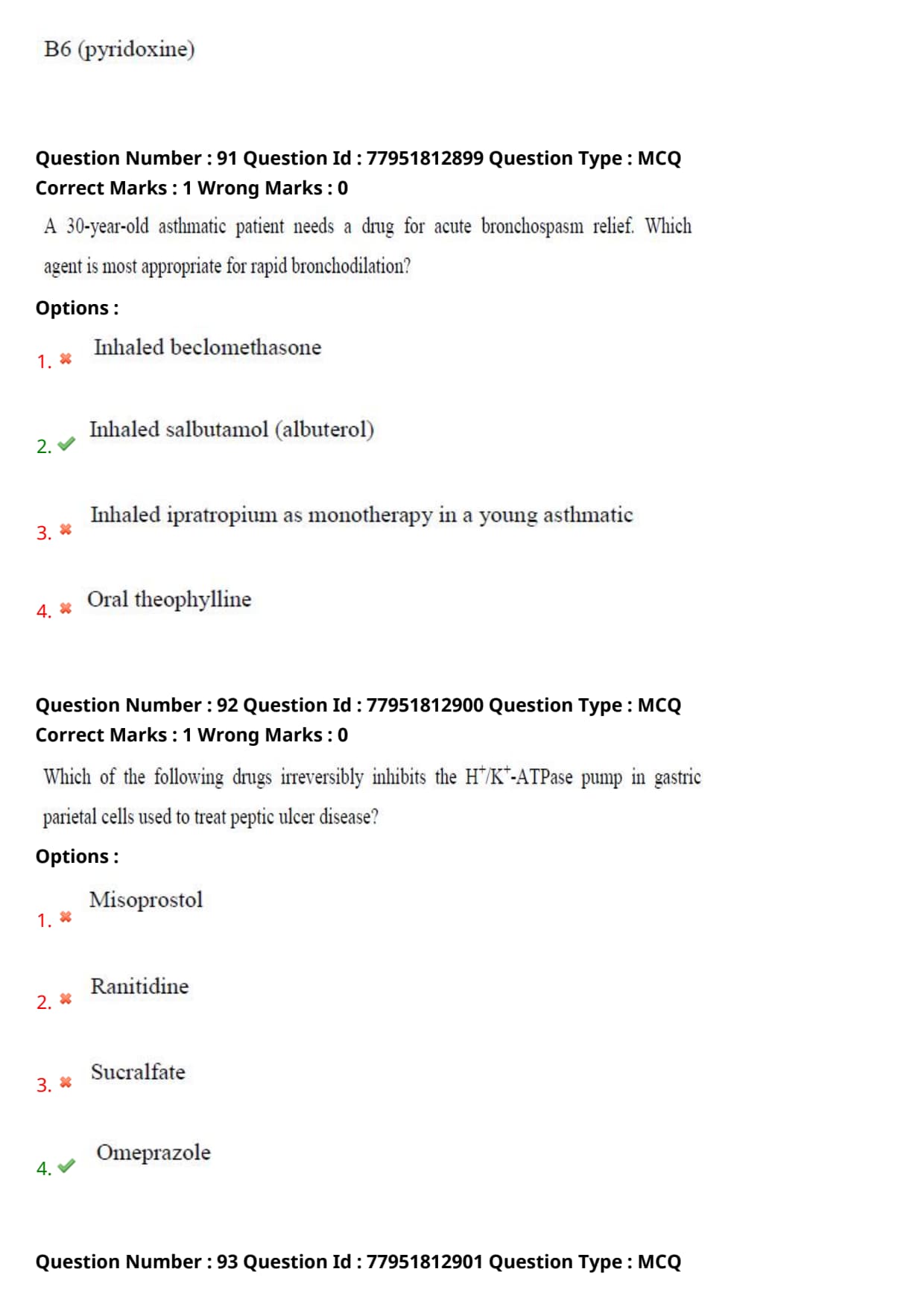
Sera are used to provide _________.
- (A) Passive immunity
- (B) Active immunity
- (C) Long-term protection
- (D) No immunity
Question 16:
A drug unstable to heat but stable to moisture should be dried by _________ drying.
- (A) Tray
- (B) Fluidized bed
- (C) Freeze
- (D) Drum
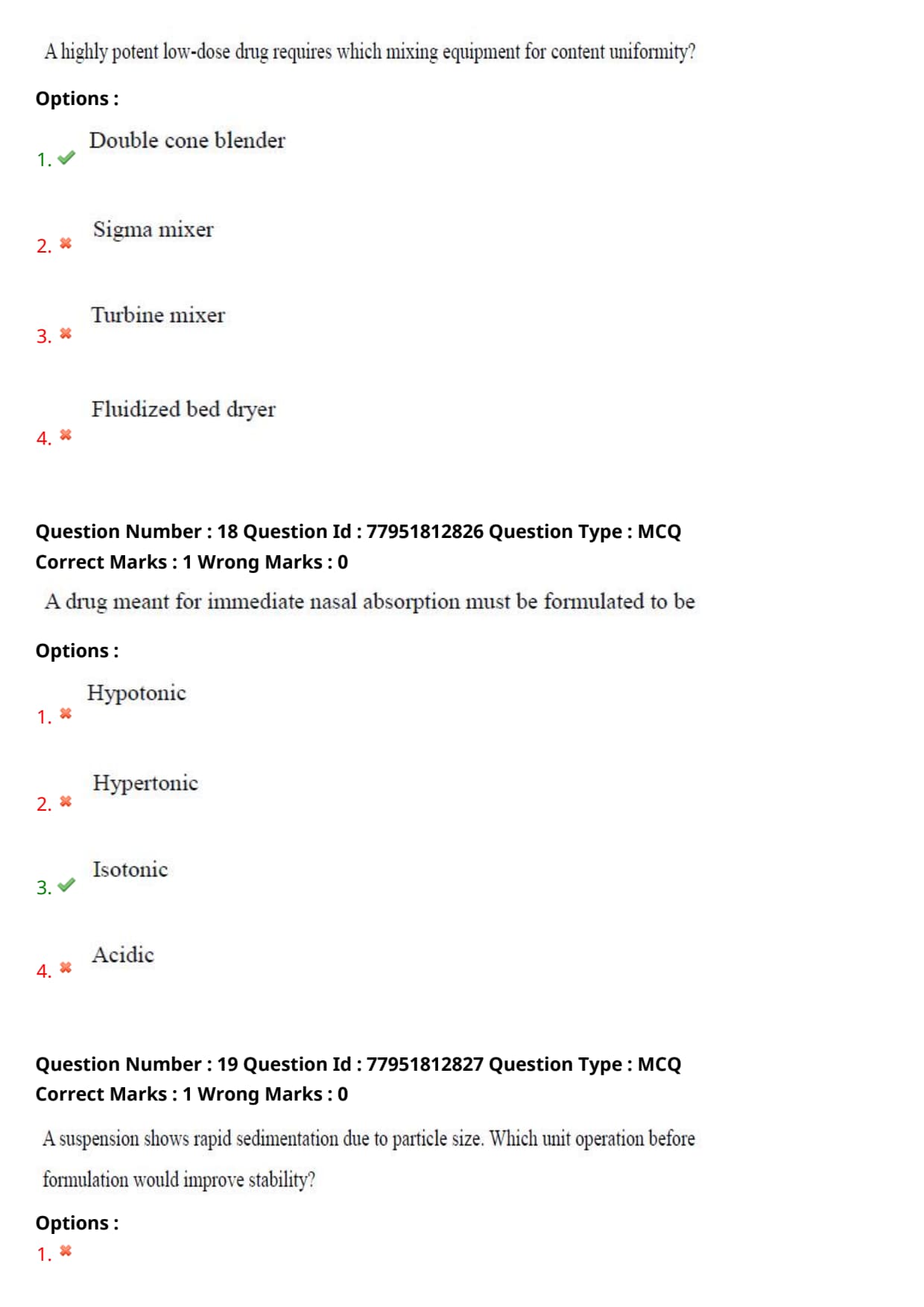
Question 17:
A highly potent low-dose drug requires which mixing equipment for content uniformity?
- (A) Double cone blender
- (B) Sigma mixer
- (C) Turbine mixer
- (D) Fluidized bed dryer
Question 18:
A drug meant for immediate nasal absorption must be formulated to be _________.
- (A) Hypotonic
- (B) Hypertonic
- (C) Isotonic
- (D) Acidic
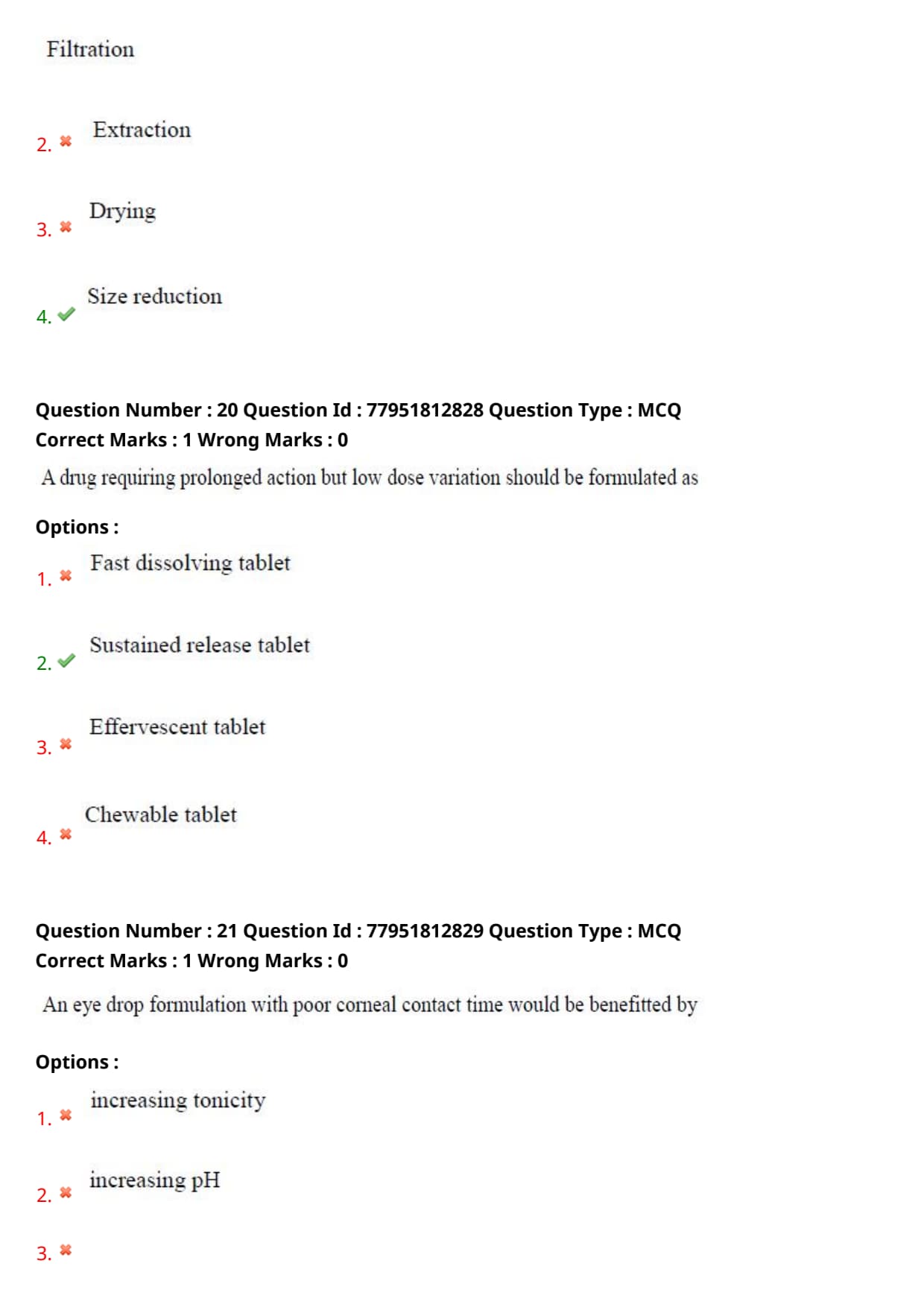
Question 19:
A suspension shows rapid sedimentation due to particle size. Which unit operation before formulation would improve stability?
- (A) Filtration
- (B) Extraction
- (C) Drying
- (D) Size reduction
Question 20:
A drug requiring prolonged action but low dose variation should be formulated as _________.
- (A) Fast dissolving tablet
- (B) Sustained release tablet
- (C) Effervescent tablet
- (D) Chewable tablet
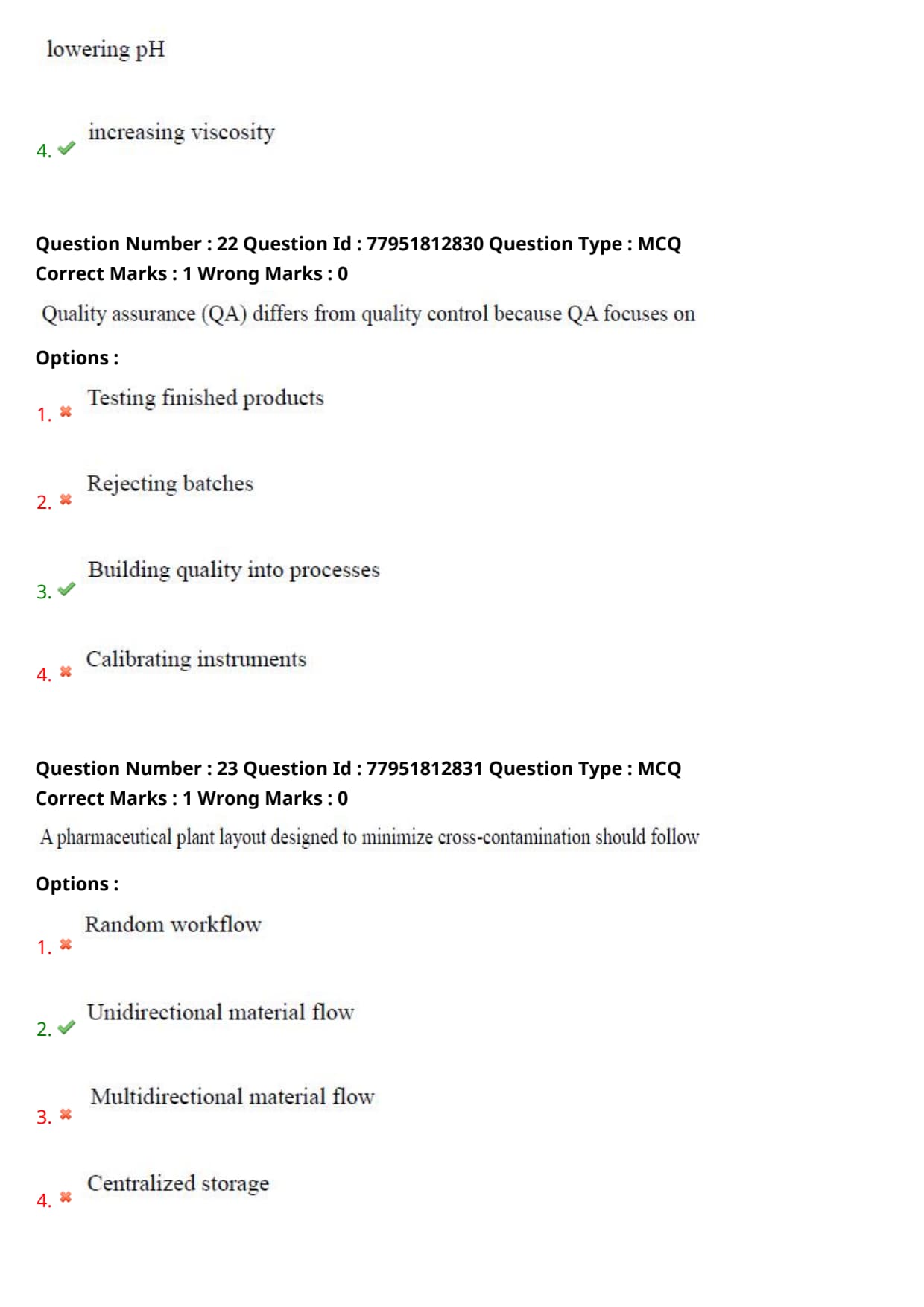
Question 21:
An eye drop formulation with poor corneal contact time would be benefited by _________.
- (A) Increasing tonicity
- (B) Increasing pH
- (C) Lowering pH
- (D) Increasing viscosity
Question 22:
Quality assurance (QA) differs from quality control because QA focuses on _________.
- (A) Testing finished products
- (B) Rejecting batches
- (C) Building quality into processes
- (D) Calibrating instruments
Question 23:
A pharmaceutical plant layout designed to minimize cross-contamination should follow _________.
- (A) Random workflow
- (B) Unidirectional material flow
- (C) Multidirectional material flow
- (D) Centralized storage
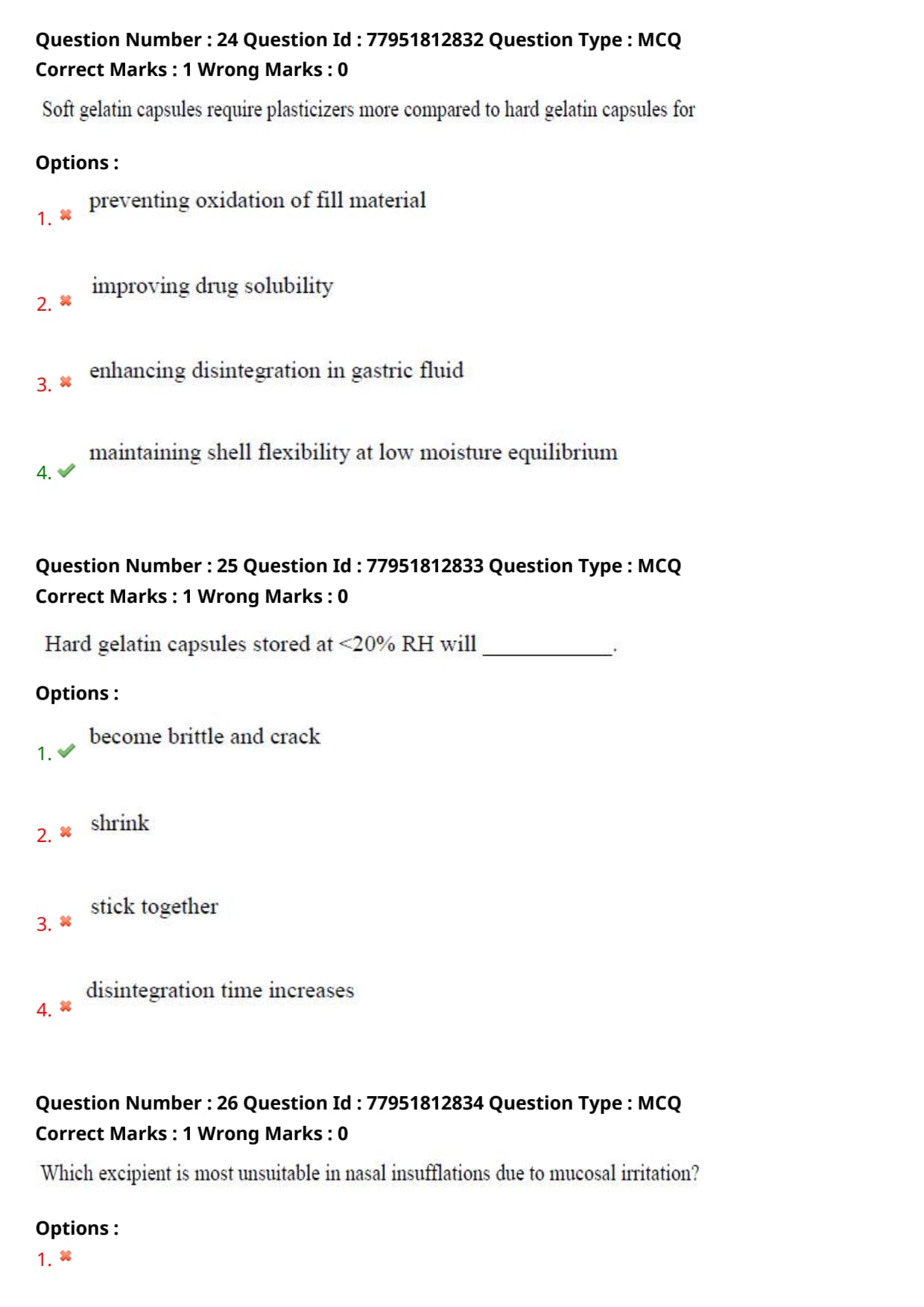
Question 24:
Soft gelatin capsules require plasticizers more compared to hard gelatin capsules for _________.
- (A) Preventing oxidation of fill material
- (B) Improving drug solubility
- (C) Enhancing disintegration in gastric fluid
- (D) Maintaining shell flexibility at low moisture equilibrium
Question 25:
Hard gelatin capsules stored at \(<20%\) RH will _________.
- (A) Become brittle and crack
- (B) Shrink
- (C) Stick together
- (D) Disintegration time increases
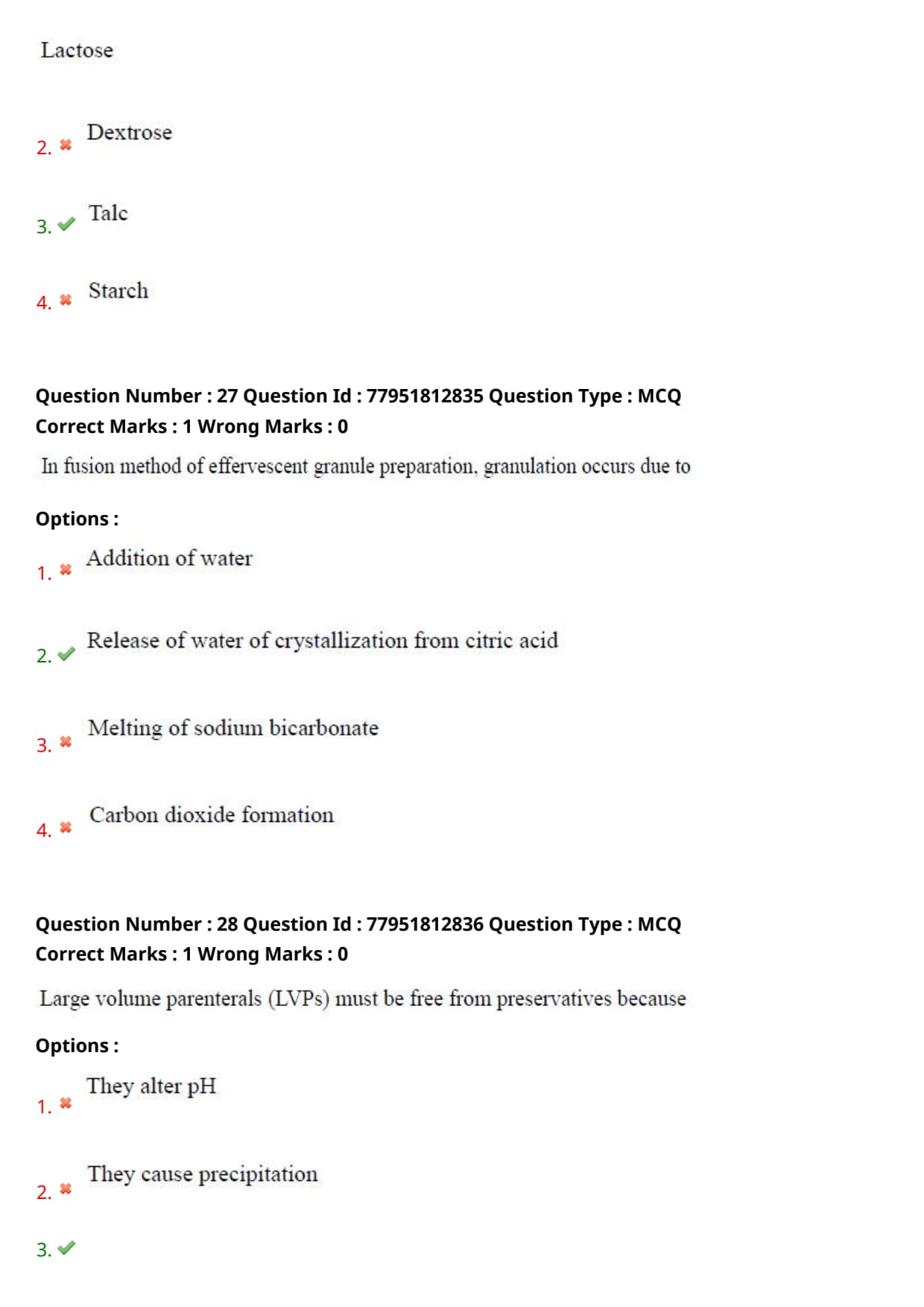
Question 26:
Which excipient is most unsuitable in nasal insufflations due to mucosal irritation?
- (A) Lactose
- (B) Dextrose
- (C) Talc
- (D) Starch
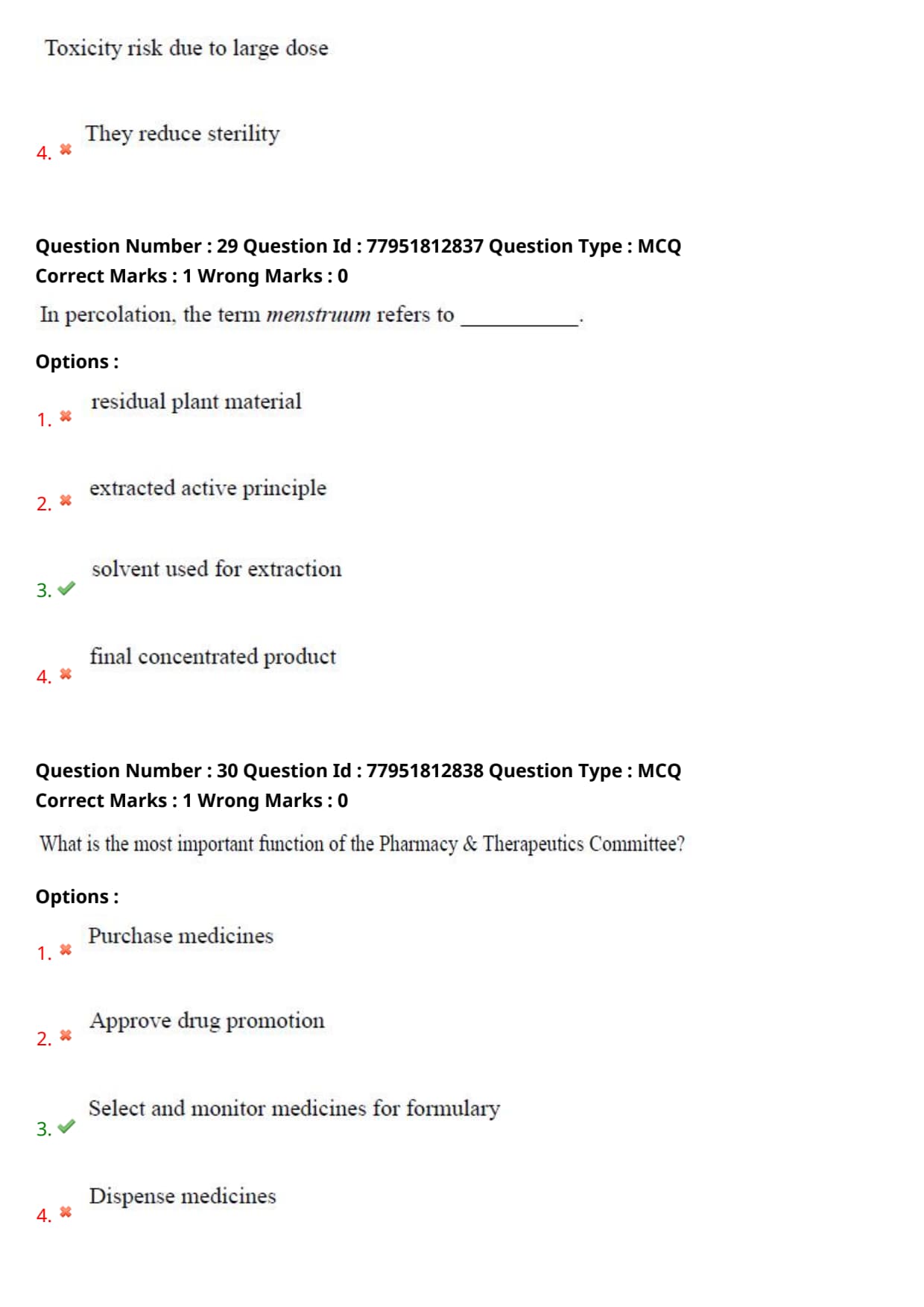
Question 27:
In fusion method of effervescent granule preparation, granulation occurs due to _________.
- (A) Addition of water
- (B) Release of water of crystallization from citric acid
- (C) Melting of sodium bicarbonate
- (D) Carbon dioxide formation
Question 28:
Large volume parenterals (LVPs) must be free from preservatives because _________.
- (A) They alter pH
- (B) They cause precipitation
- (C) Toxicity risk due to large dose
- (D) They reduce sterility
Question 29:
In percolation, the term menstruum refers to _________.
- (A) Residual plant material
- (B) Extracted active principle
- (C) Solvent used for extraction
- (D) Final concentrated product
Question 30:
What is the most important function of the Pharmacy and Therapeutics Committee?
- (A) Purchase medicines
- (B) Approve drug promotion
- (C) Select and monitor medicines for formulary
- (D) Dispense medicines
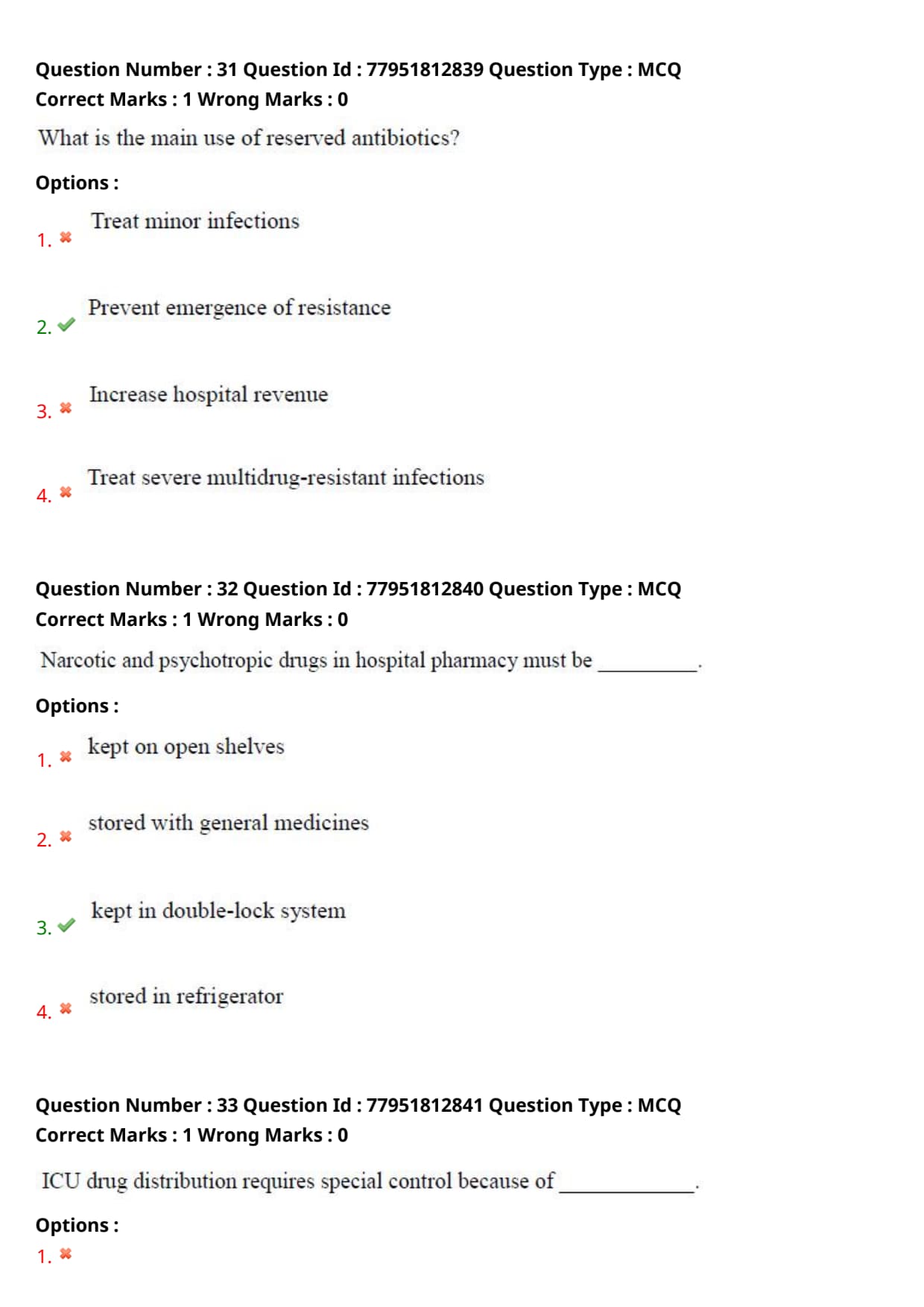
Question 31:
What is the main use of reserved antibiotics?
- (A) Treat minor infections
- (B) Prevent emergence of resistance
- (C) Increase hospital revenue
- (D) Treat severe multidrug-resistant infections
Question 32:
Narcotic and psychotropic drugs in hospital pharmacy must be _________.
- (A) Kept on open shelves
- (B) Stored with general medicines
- (C) Kept in double-lock system
- (D) Stored in refrigerator
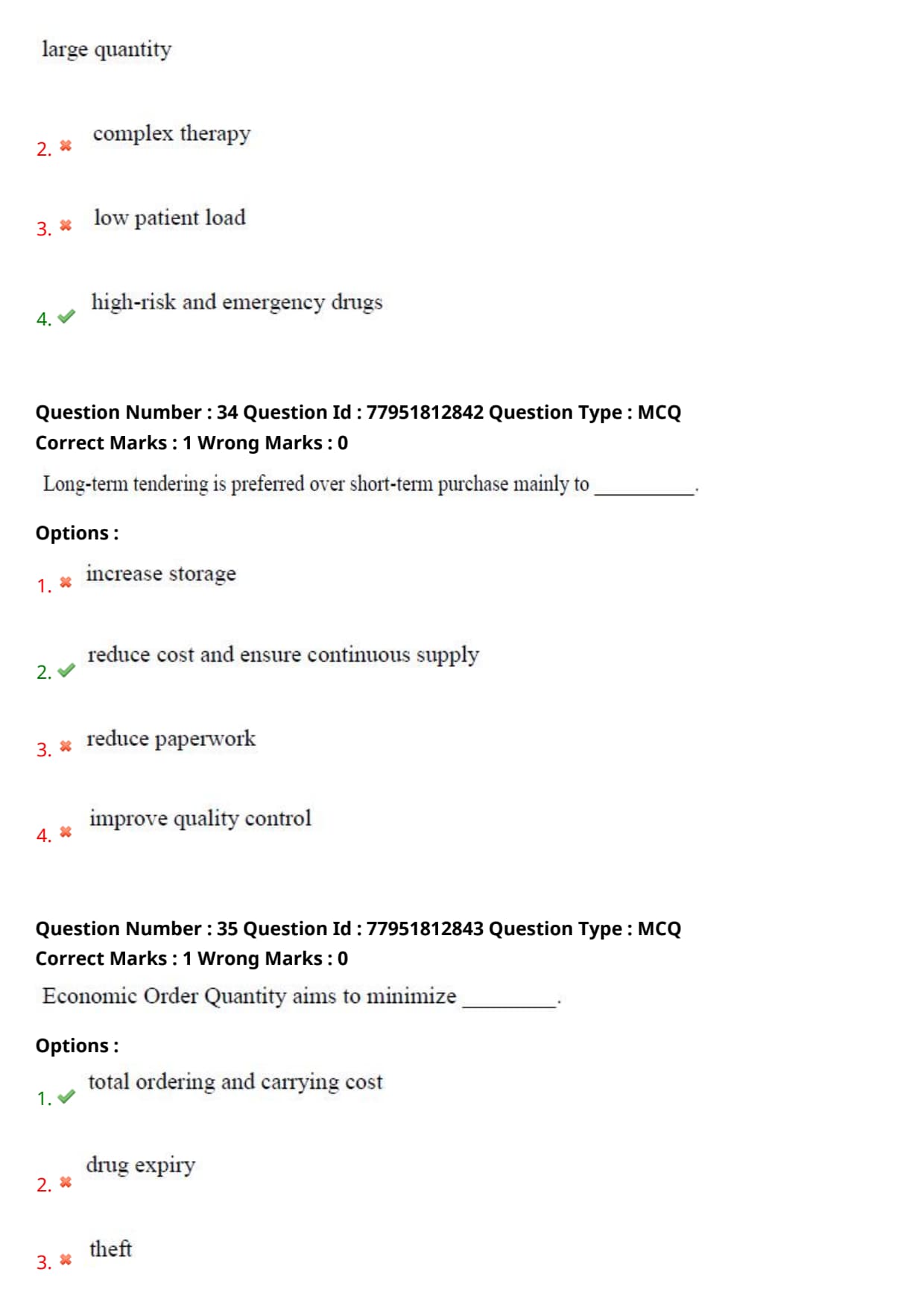
Question 33:
ICU drug distribution requires special control because of _________.
- (A) Large quantity
- (B) Complex therapy
- (C) Low patient load
- (D) High-risk and emergency drugs
Question 34:
Long-term tendering is preferred over short-term purchase mainly to _________.
- (A) Increase storage
- (B) Reduce cost and ensure continuous supply
- (C) Reduce paperwork
- (D) Improve quality control
Question 35:
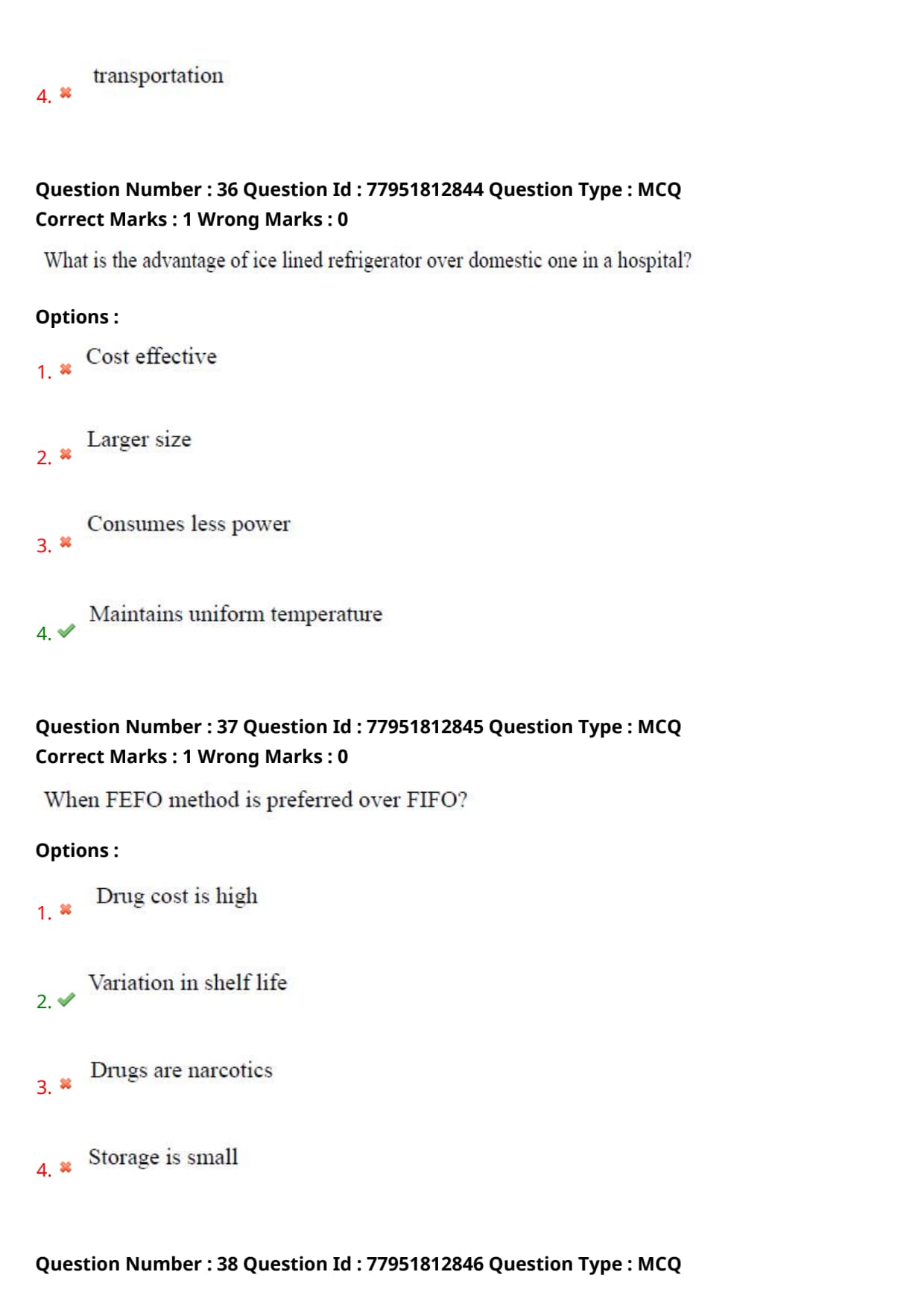
Economic Order Quantity aims to minimize _________.
- (A) Total ordering and carrying cost
- (B) Drug expiry
- (C) Theft
- (D) Transportation
Question 36:
What is the advantage of ice lined refrigerator over domestic one in a hospital?
- (A) Cost effective
- (B) Larger size
- (C) Consumes less power
- (D) Maintains uniform temperature
Question 37:
When FEFO method is preferred over FIFO?
- (A) Drug cost is high
- (B) Variation in shelf life
- (C) Drugs are narcotics
- (D) Storage is small
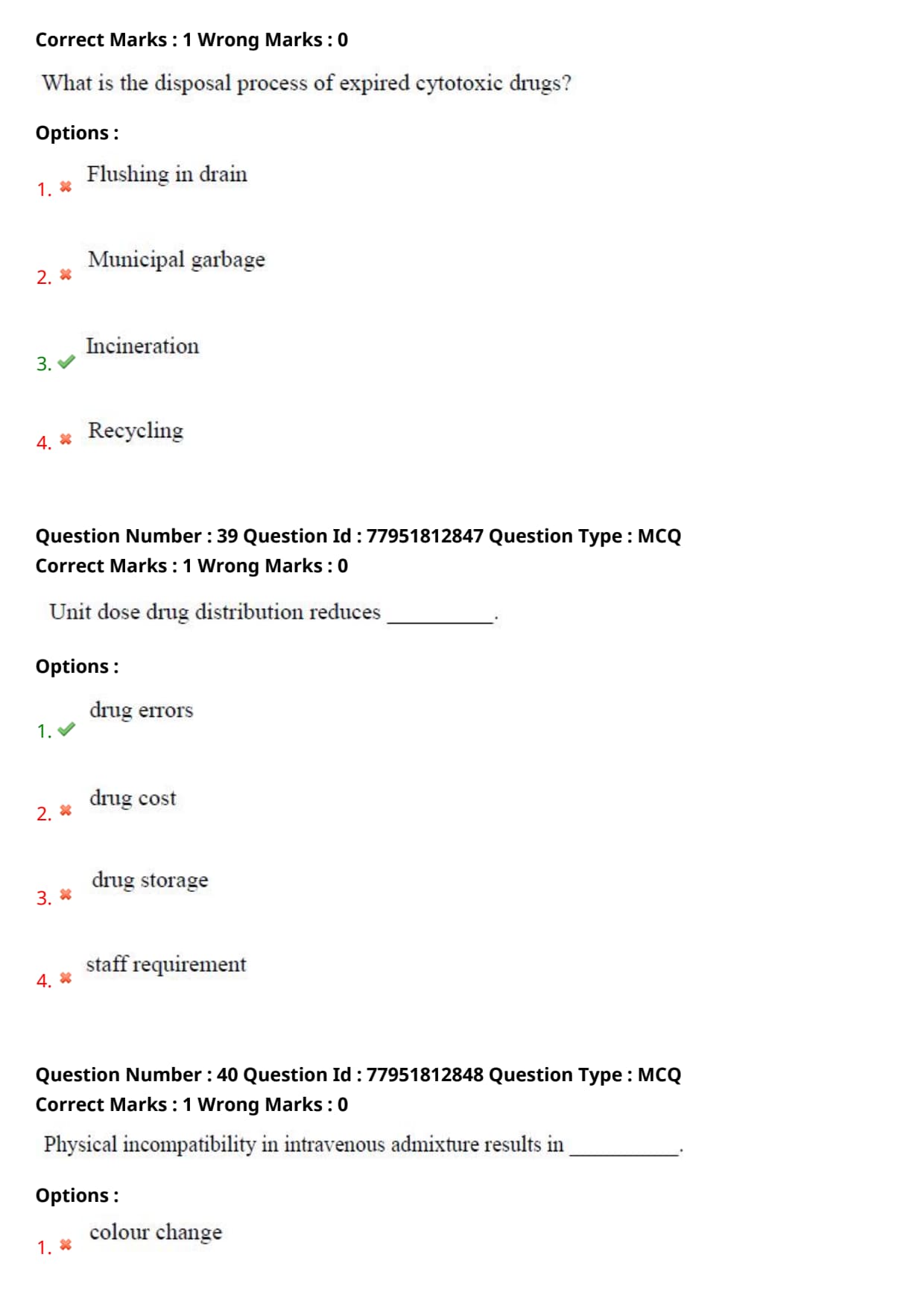
Question 38:
What is the disposal process of expired cytotoxic drugs?
- (A) Flushing in drain
- (B) Municipal garbage
- (C) Incineration
- (D) Recycling
Question 39:
Unit dose drug distribution reduces _________.
- (A) Drug errors
- (B) Drug cost
- (C) Drug storage
- (D) Staff requirement
Question 40:
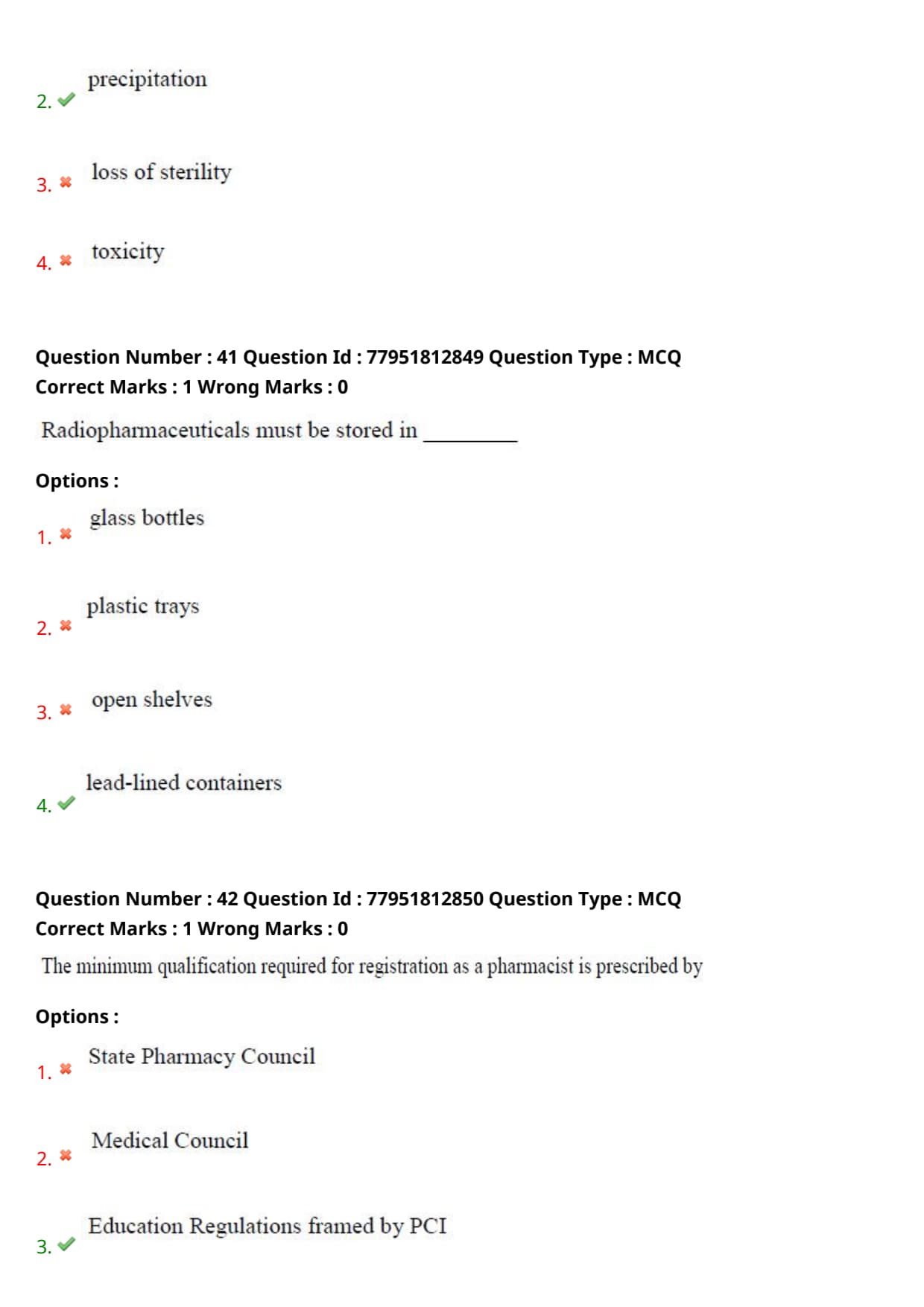
Physical incompatibility in intravenous admixture results in _________.
- (A) Colour change
- (B) Precipitation
- (C) Loss of sterility
- (D) Toxicity
Question 41:
Radiopharmaceuticals must be stored in _________.
- (A) Glass bottles
- (B) Plastic trays
- (C) Open shelves
- (D) Lead-lined containers
Question 42:
The minimum qualification required for registration as a pharmacist is prescribed by _________.
- (A) State Pharmacy Council
- (B) Medical Council
- (C) Education Regulations framed by PCI
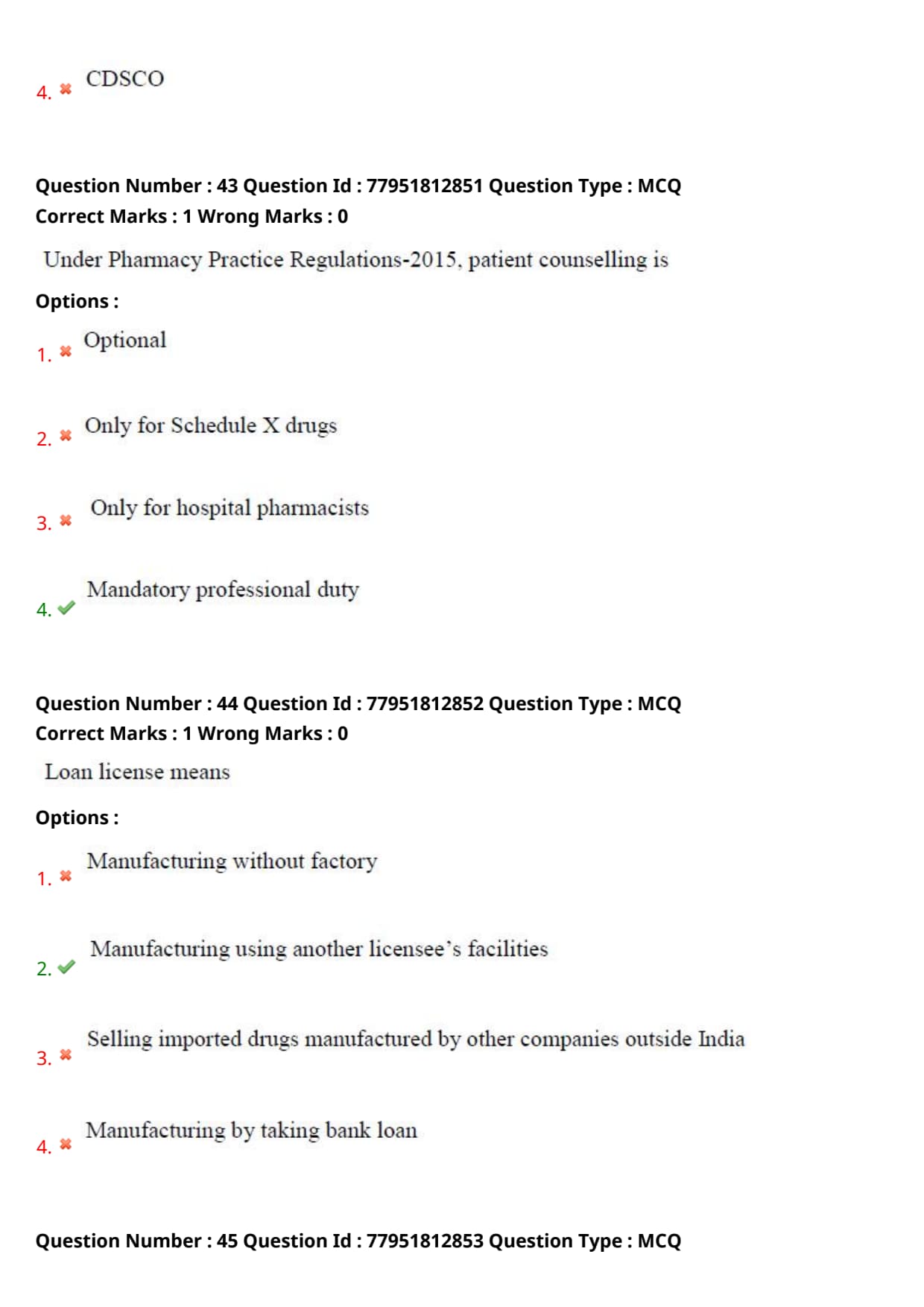
- (D) CDSCO
Question 43:
Under Pharmacy Practice Regulations-2015, patient counselling is _________.
- (A) Optional
- (B) Only for Schedule X drugs
- (C) Only for hospital pharmacists
- (D) Mandatory professional duty
Question 44:
Loan license means _________.
- (A) Manufacturing without factory
- (B) Manufacturing using another licensee's facilities
- (C) Selling imported drugs manufactured by other companies outside India
- (D) Manufacturing by taking bank loan
Question 45:
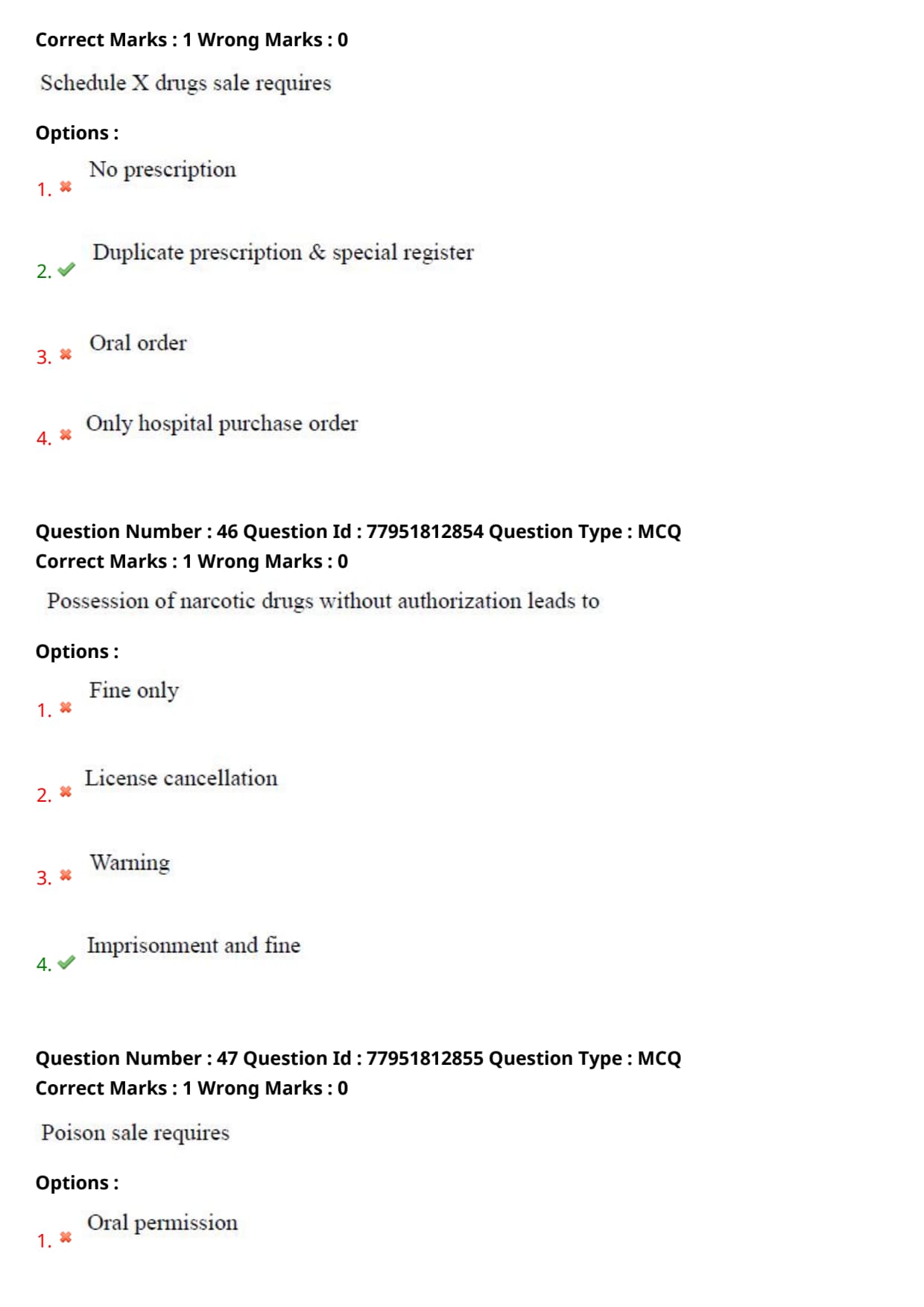
Schedule X drugs sale requires _________.
- (A) No prescription
- (B) Duplicate prescription and special register
- (C) Oral order
- (D) Only hospital purchase order
Question 46:
Possession of narcotic drugs without authorization leads to _________.
- (A) Fine only
- (B) License cancellation
- (C) Warning
- (D) Imprisonment and fine
Question 47:
Poison sale requires _________.
- (A) Oral permission
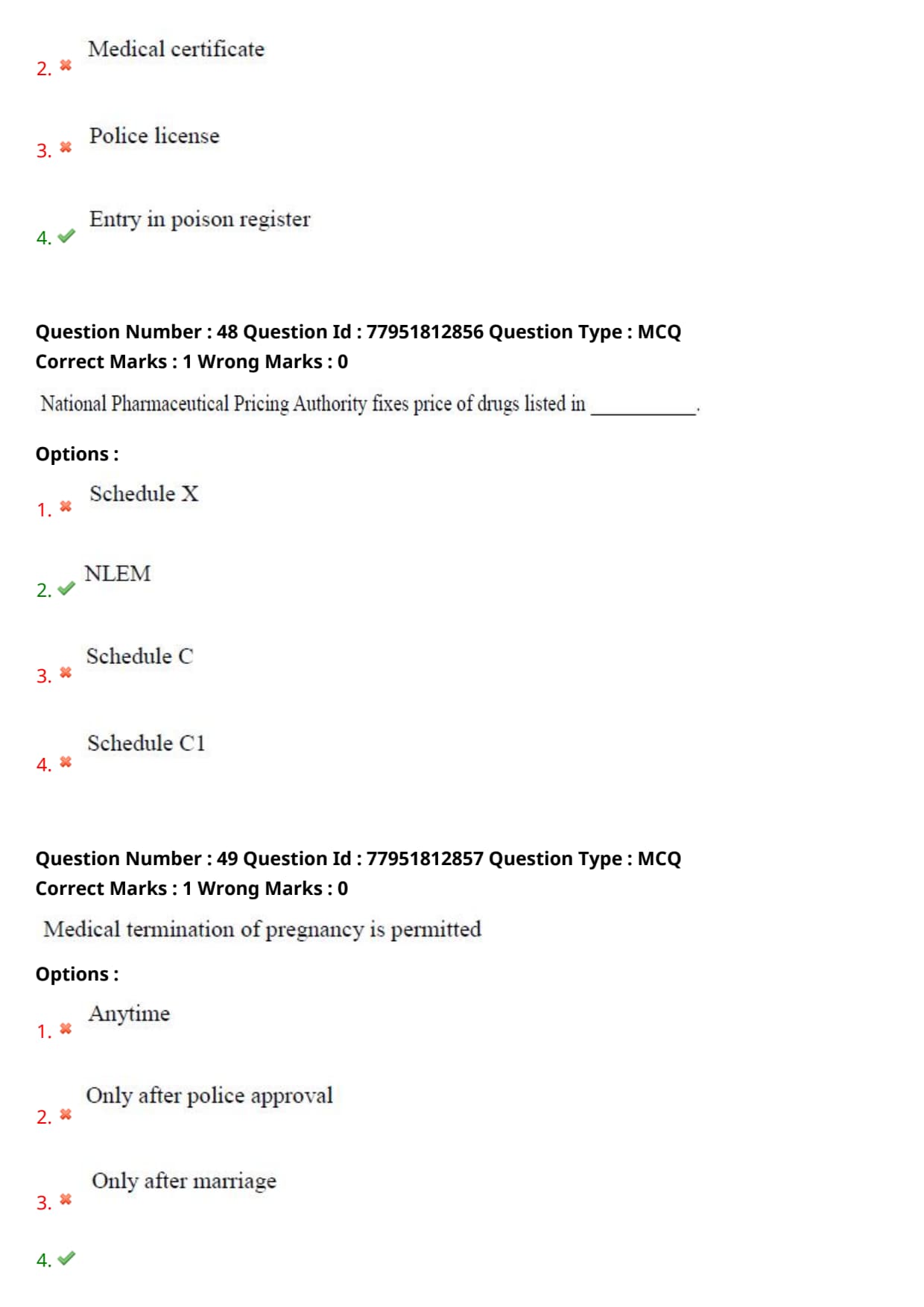
- (B) Medical certificate
- (C) Police license
- (D) Entry in poison register
Question 48:
National Pharmaceutical Pricing Authority fixes price of drugs listed in _________.
- (A) Schedule X
- (B) NLEM
- (C) Schedule C
- (D) Schedule C1
Question 49:
Medical termination of pregnancy is permitted _________.
- (A) Anytime
- (B) Only after police approval
- (C) Only after marriage
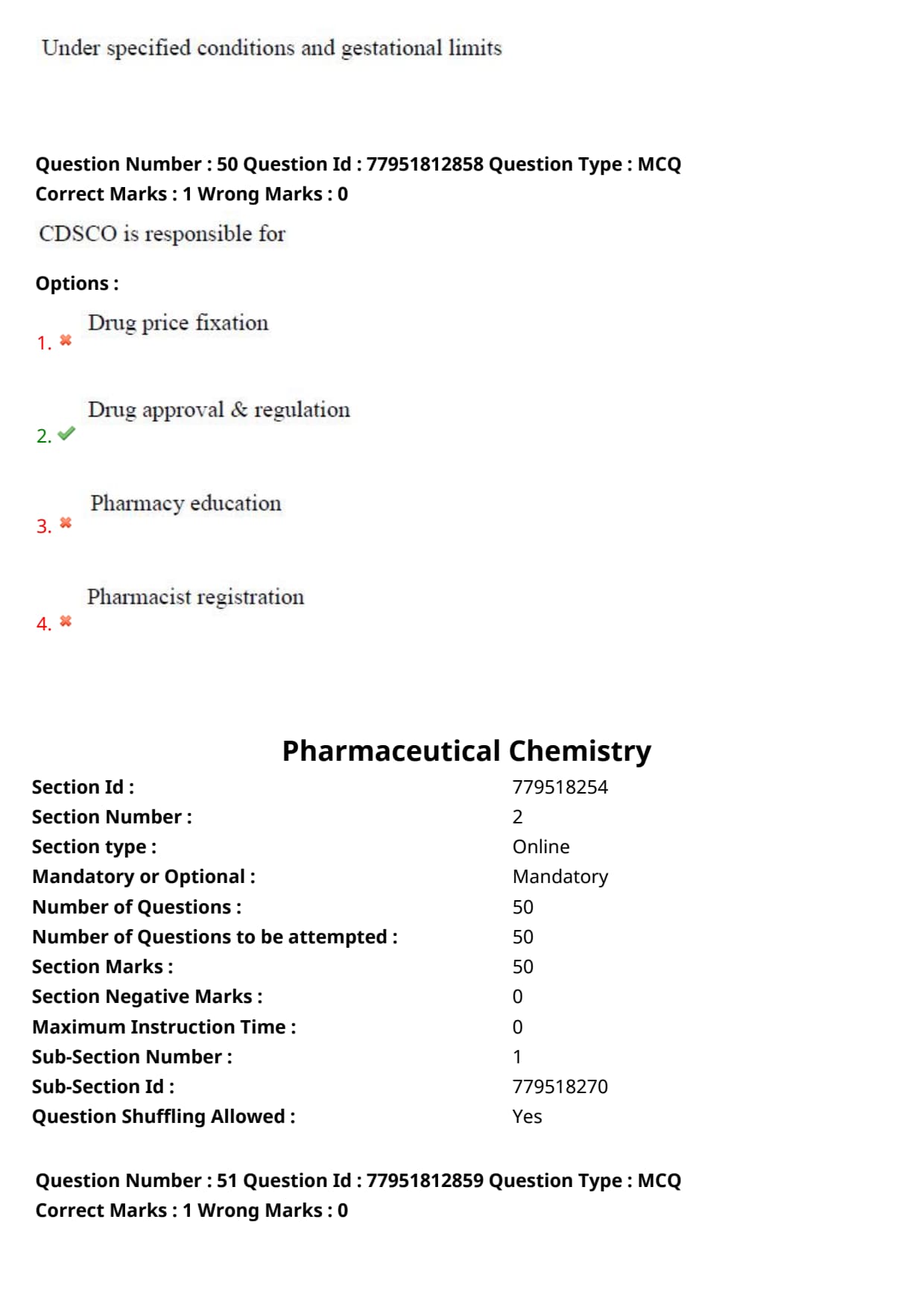
- (D) Under specified conditions and gestational limits
Question 50:
CDSCO is responsible for _________.
- (A) Drug price fixation
- (B) Drug approval and regulation
- (C) Pharmacy education
- (D) Pharmacist registration
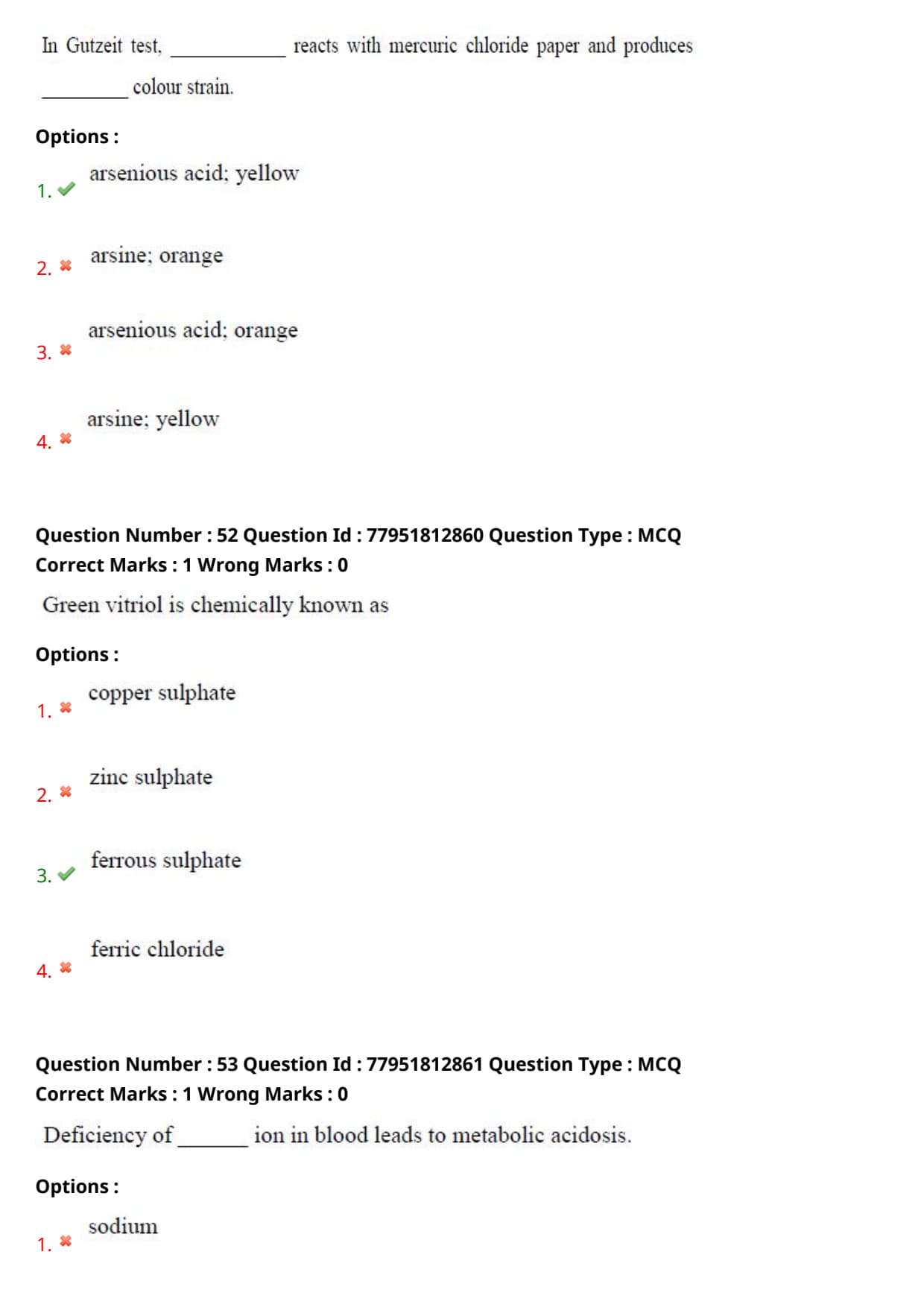
Question 51:
In Gutzeit test, _________ reacts with mercuric chloride paper and produces _________ colour stain.
- (A) Arsenious acid; yellow
- (B) Arsine; orange
- (C) Arsenious acid; orange
- (D) Arsine; yellow
Question 52:
Green vitriol is chemically known as
- (A) Copper sulphate
- (B) Zinc sulphate
- (C) Ferrous sulphate
- (D) Ferric chloride
Question 53:
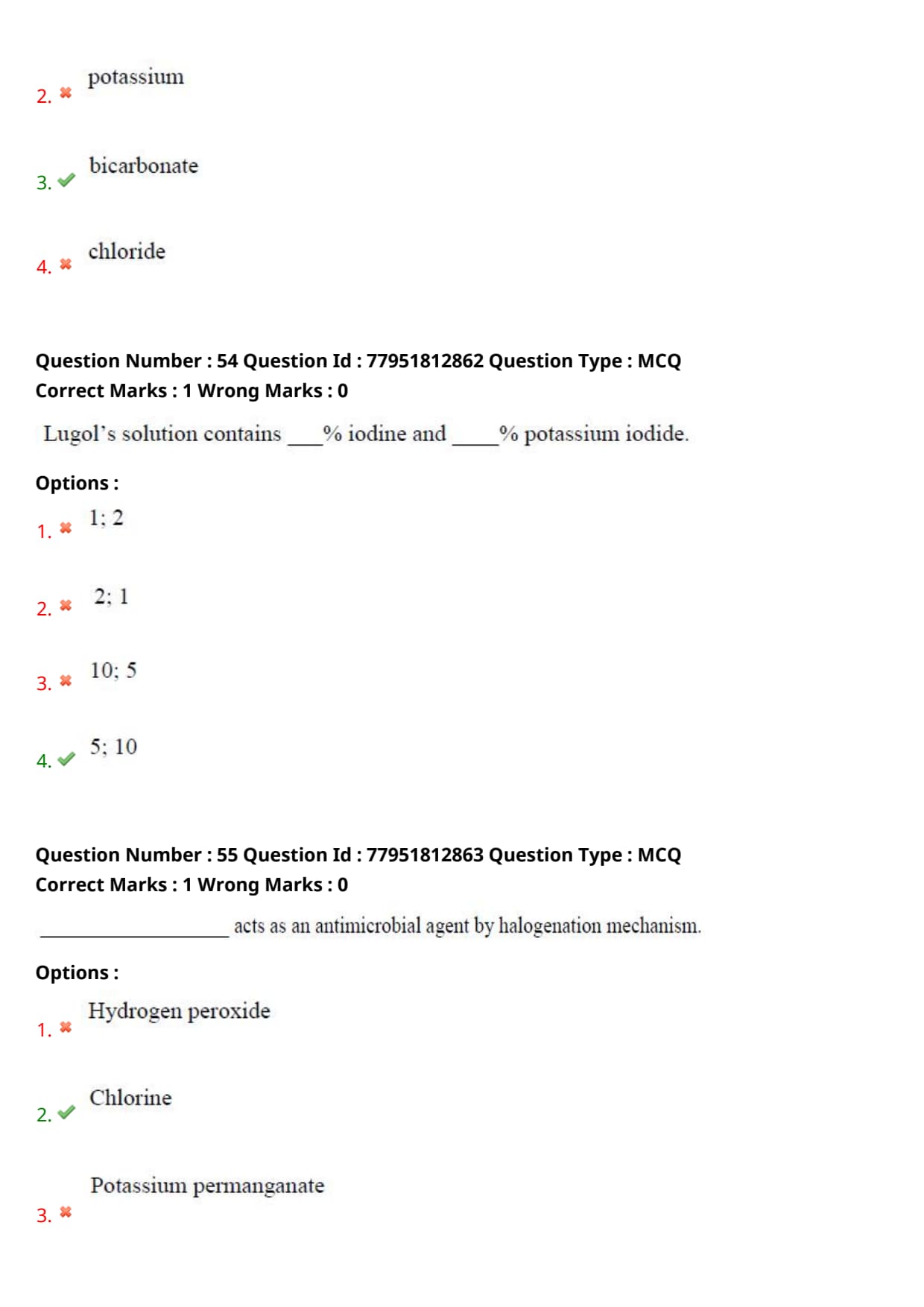
Deficiency of _________ ion in blood leads to metabolic acidosis.
- (A) Sodium
- (B) Potassium
- (C) Bicarbonate
- (D) Chloride
Question 54:
Lugol's solution contains _______ % iodine and _______ % potassium iodide.
- (A) 1; 2
- (B) 2; 1
- (C) 10; 5
- (D) 5; 10
Question 55:
_________ acts as an antimicrobial agent by halogenation mechanism.
- (A) Hydrogen peroxide
- (B) Chlorine
- (C) Potassium permanganate
- (D) Boric acid
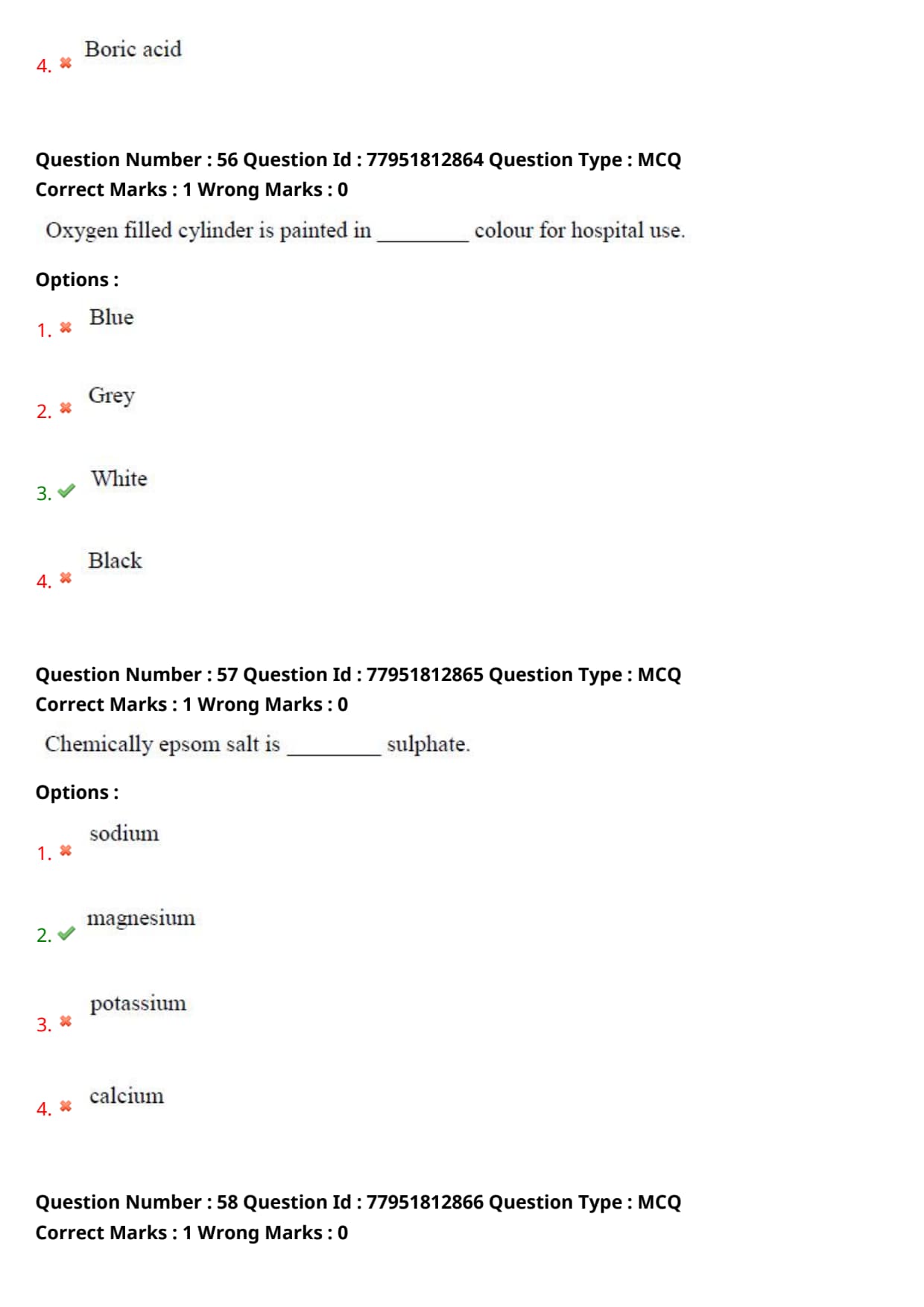
Question 56:
Oxygen filled cylinder is painted in _________ colour for hospital use.
- (A) Blue
- (B) Grey
- (C) White
- (D) Black
Question 57:
Chemically epsom salt is _________ sulphate.
- (A) Sodium
- (B) Magnesium
- (C) Potassium
- (D) Calcium
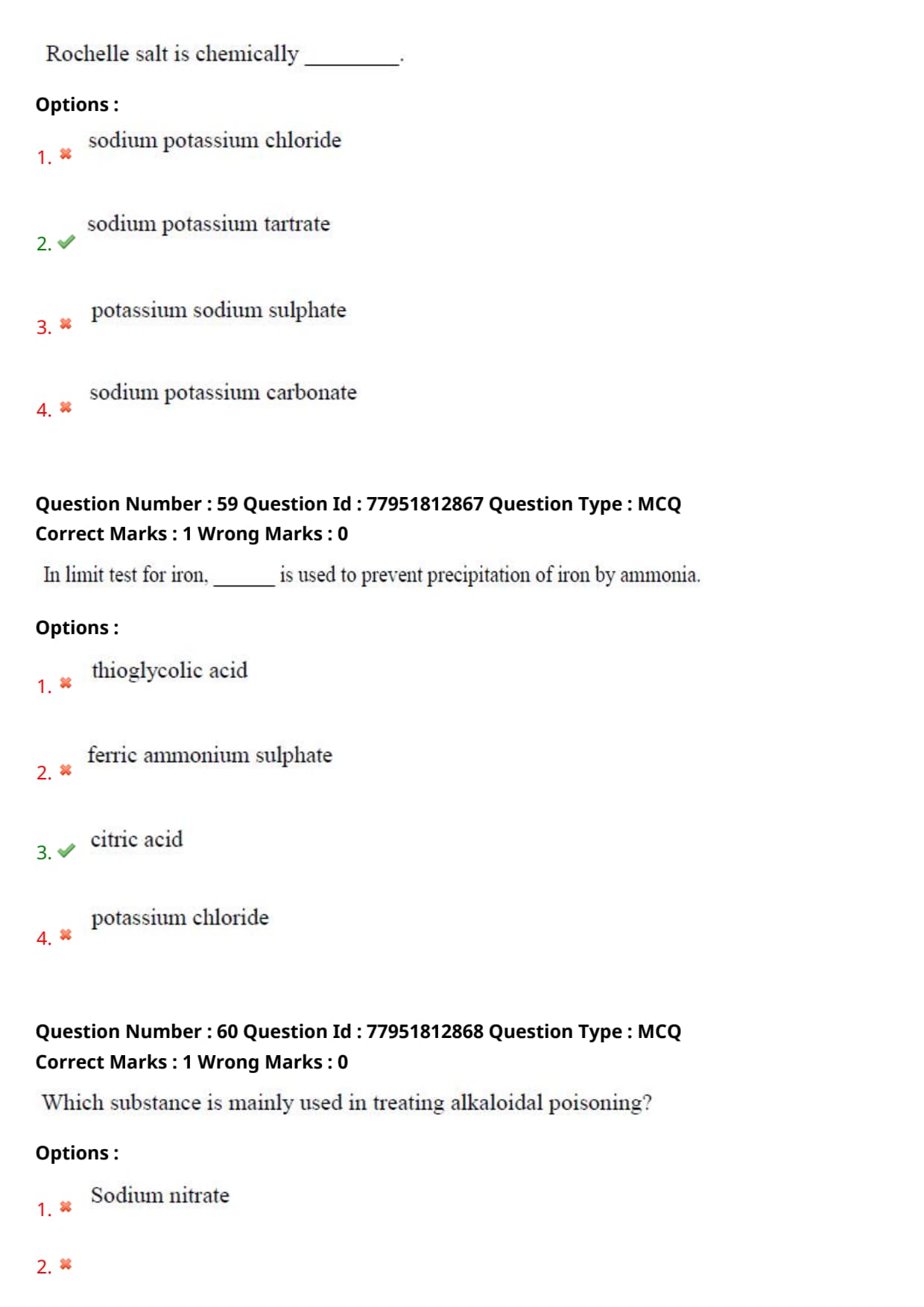
Question 58:
Rochelle salt is chemically _________.
- (A) Sodium potassium chloride
- (B) Sodium potassium tartrate
- (C) Potassium sodium sulphate
- (D) Sodium potassium carbonate
Question 59:
In limit test for iron, _________ is used to prevent precipitation of iron by ammonia.
- (A) Thioglycolic acid
- (B) Ferric ammonium sulphate
- (C) Citric acid
- (D) Potassium chloride
Question 60:
Which substance is mainly used in treating alkaloidal poisoning?
- (A) Sodium nitrate
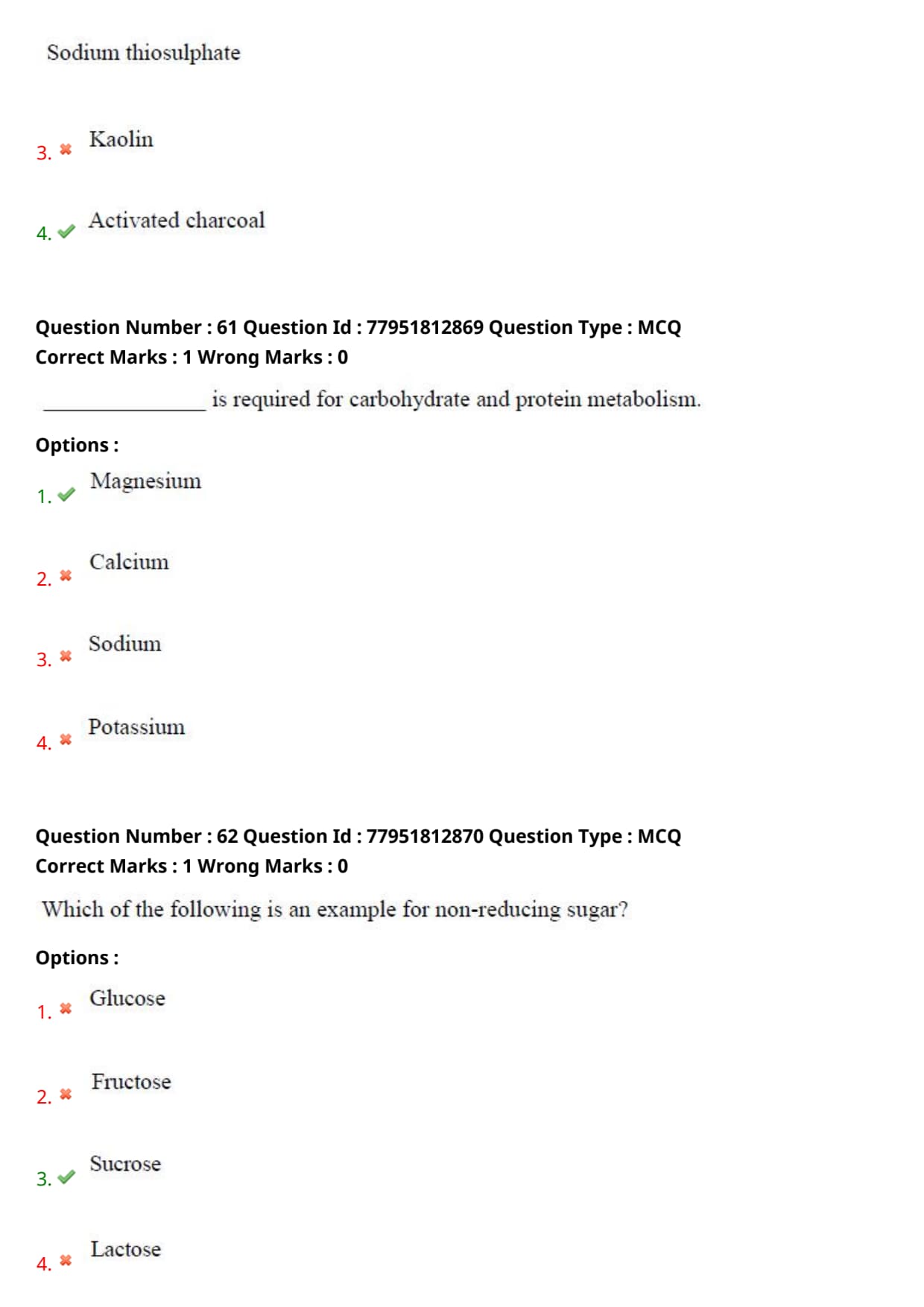
- (B) Sodium thiosulphate
- (C) Kaolin
- (D) Activated charcoal
Question 61:
_________ is required for carbohydrate and protein metabolism.
- (A) Magnesium
- (B) Calcium
- (C) Sodium
- (D) Potassium
Question 62:
Which of the following is an example for non-reducing sugar?
- (A) Glucose
- (B) Fructose
- (C) Sucrose
- (D) Lactose
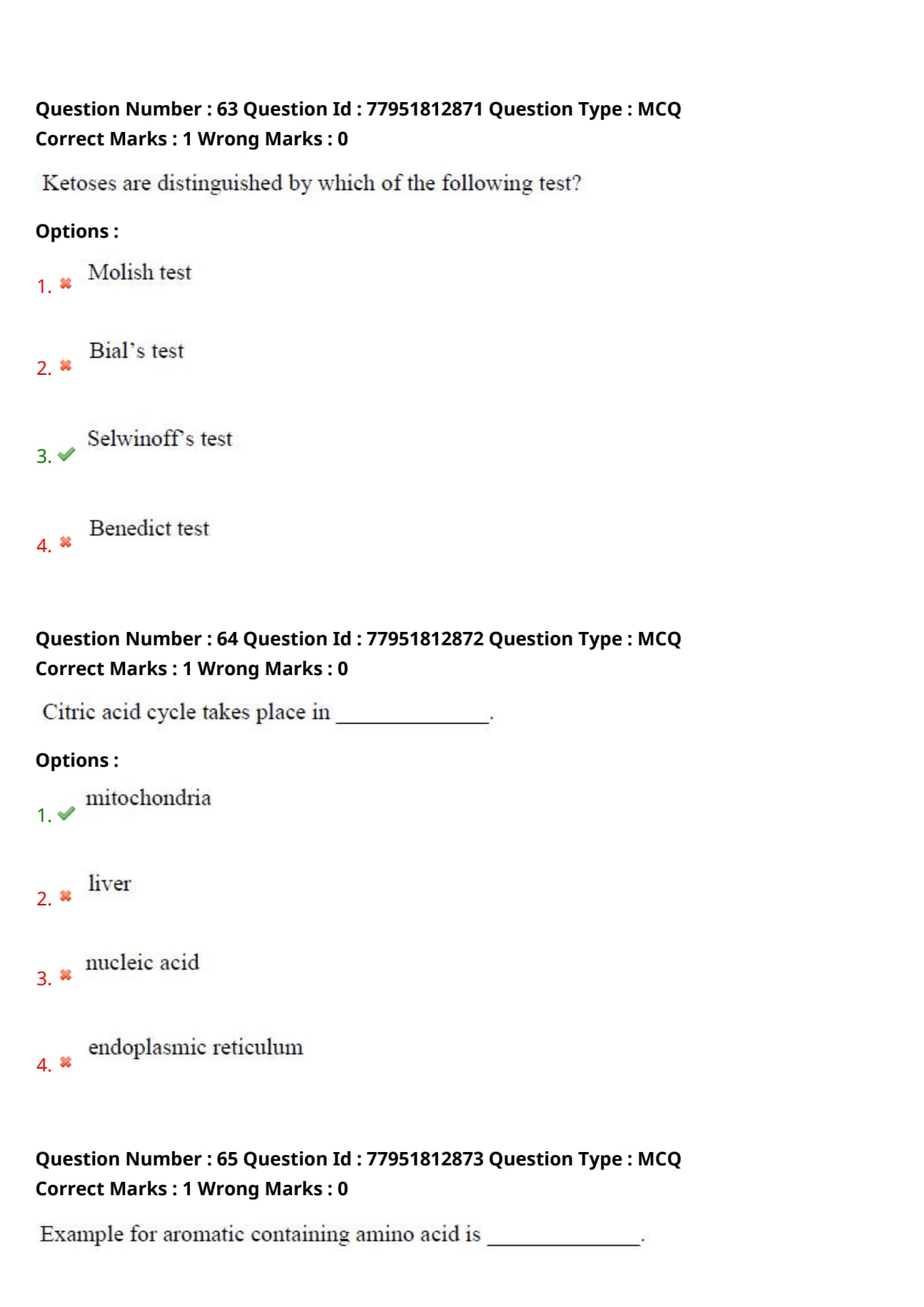
Question 63:
Ketoses are distinguished by which of the following test?
- (A) Molisch test
- (B) Bial's test
- (C) Seliwanoff's test
- (D) Benedict test
Question 64:
Citric acid cycle takes place in _________.
- (A) Cytoplasm
- (B) Nucleus
- (C) Mitochondria
- (D) Ribosome
Question 65:
The end product of glycolysis under aerobic condition is _________.
- (A) Lactic acid
- (B) Pyruvic acid
- (C) Acetyl CoA
- (D) Citric acid
Question 66:
The vitamin required for blood coagulation is _________.
- (A) Vitamin A
- (B) Vitamin B
- (C) Vitamin C
- (D) Vitamin K
Question 67:
Deficiency of vitamin C causes _________.
- (A) Rickets
- (B) Scurvy
- (C) Beriberi
- (D) Night blindness
Question 68:
The biological catalyst present in living cells is called _________.
- (A) Hormone
- (B) Enzyme
- (C) Vitamin
- (D) Mineral
Question 69:
The protein part of an enzyme is called _________.
- (A) Apoenzyme
- (B) Coenzyme
- (C) Holoenzyme
- (D) Cofactor
Question 70:
The process of conversion of glucose to glycogen is called _________.
- (A) Glycolysis
- (B) Glycogenesis
- (C) Glycogenolysis
- (D) Gluconeogenesis
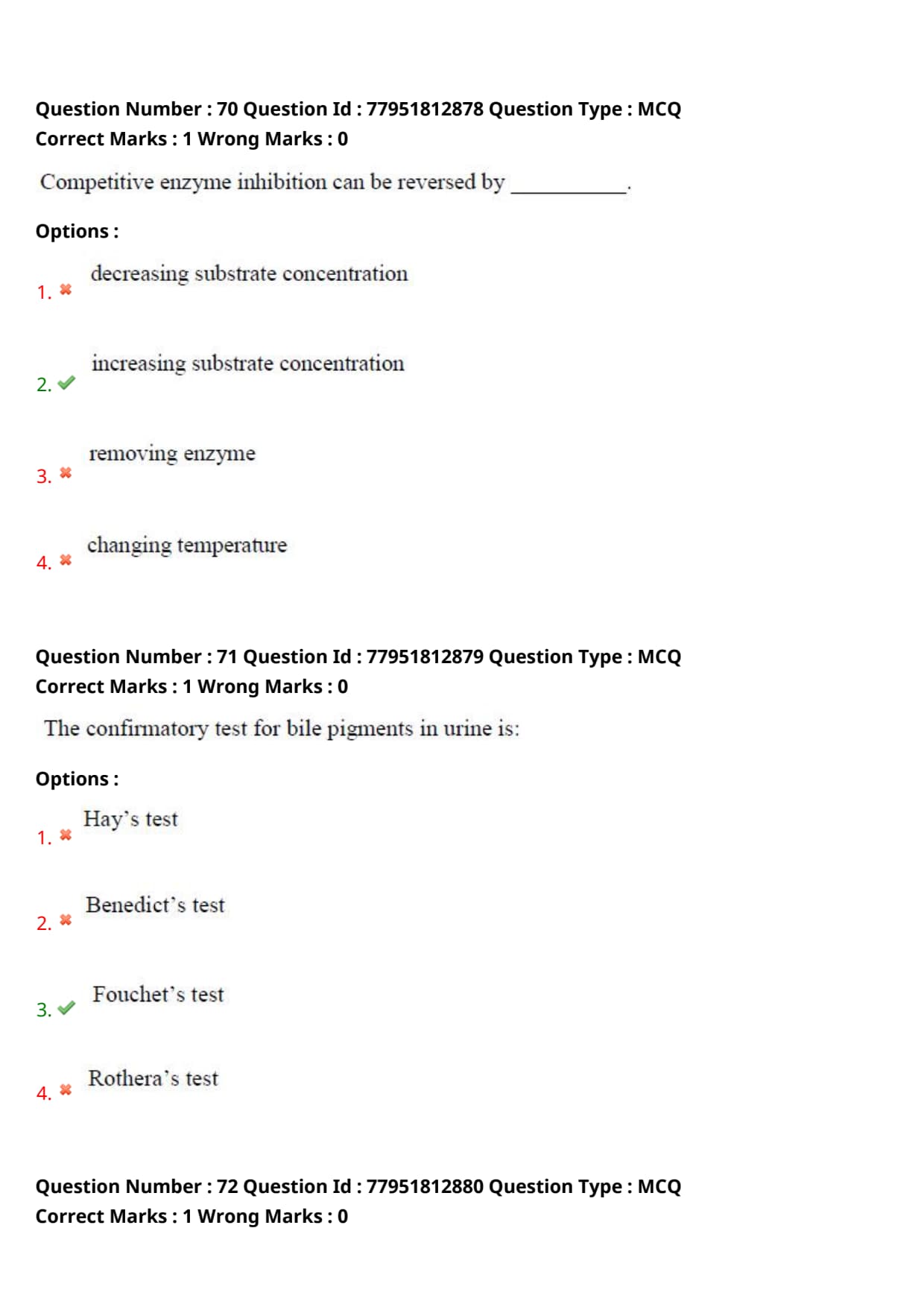
Question 71:
The confirmatory test for bile pigments in urine is:
- (A) Hay's test
- (B) Benedict's test
- (C) Fouchet's test
- (D) Rothera's test
Question 72:
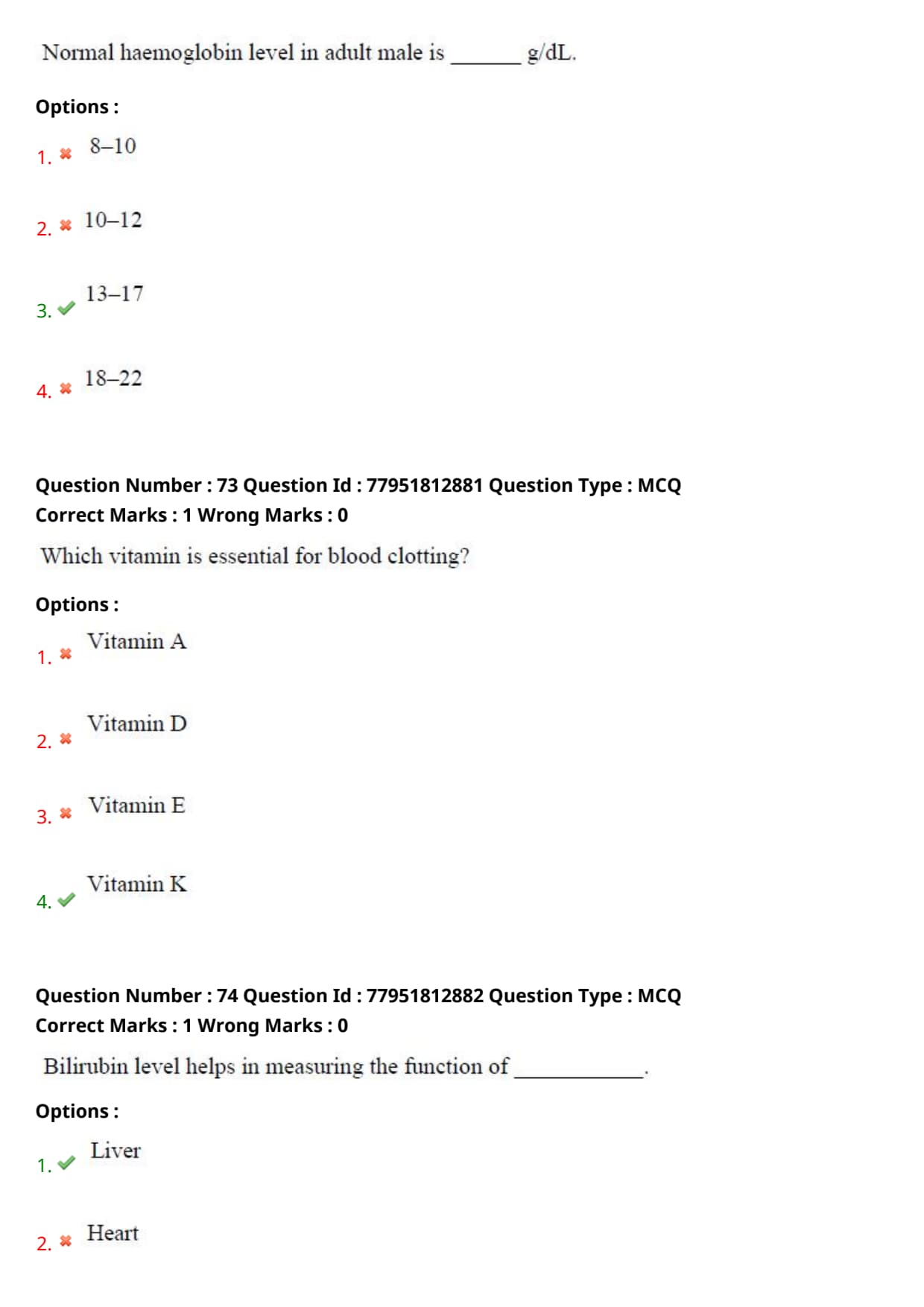
Normal haemoglobin level in adult male is _________ g/dL.
- (A) \(8-10\)
- (B) \(10-12\)
- (C) \(13-17\)
- (D) \(18-22\)
Question 73:
Which vitamin is essential for blood clotting?
- (A) Vitamin A
- (B) Vitamin D
- (C) Vitamin E
- (D) Vitamin K
Question 74:
Bilirubin level helps in measuring the function of _________.
- (A) Liver
- (B) Heart
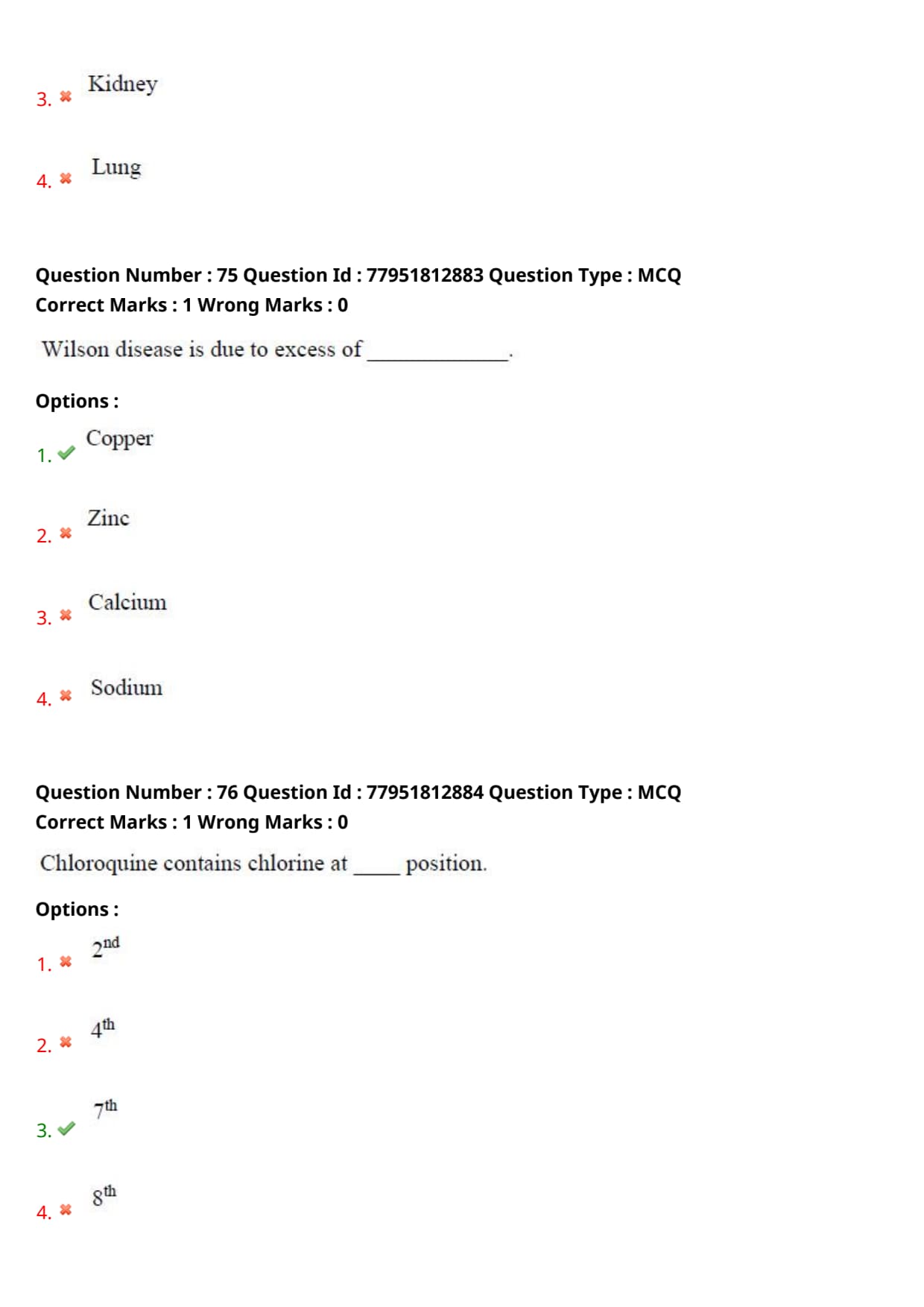
- (C) Kidney
- (D) Lung
Question 75:
Wilson disease is due to excess of _________.
- (A) Copper
- (B) Zinc
- (C) Calcium
- (D) Sodium
Question 76:
Chloroquine contains chlorine at _________ position.
- (A) \(2^{nd}\)
- (B) \(4^{th}\)
- (C) \(7^{th}\)
- (D) \(8^{th}\)
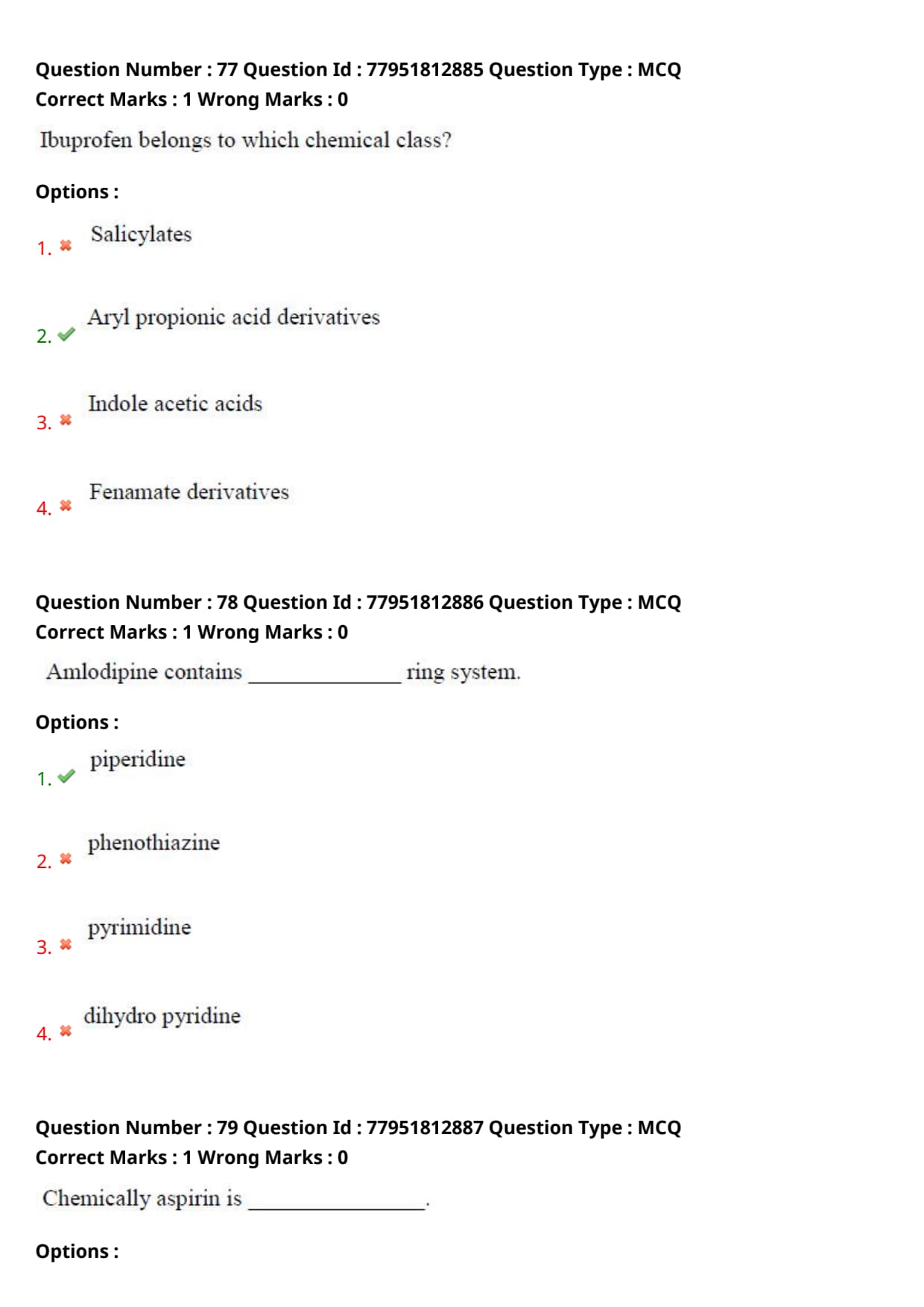
Question 77:
Ibuprofen belongs to which chemical class?
- (A) Salicylates
- (B) Aryl propionic acid derivatives
- (C) Indole acetic acids
- (D) Fenamate derivatives
Question 78:
Amlodipine contains _________ ring system.
- (A) Piperidine
- (B) Phenothiazine
- (C) Pyrimidine
- (D) Dihydropyridine
Question 79:
Chemically aspirin is _________.
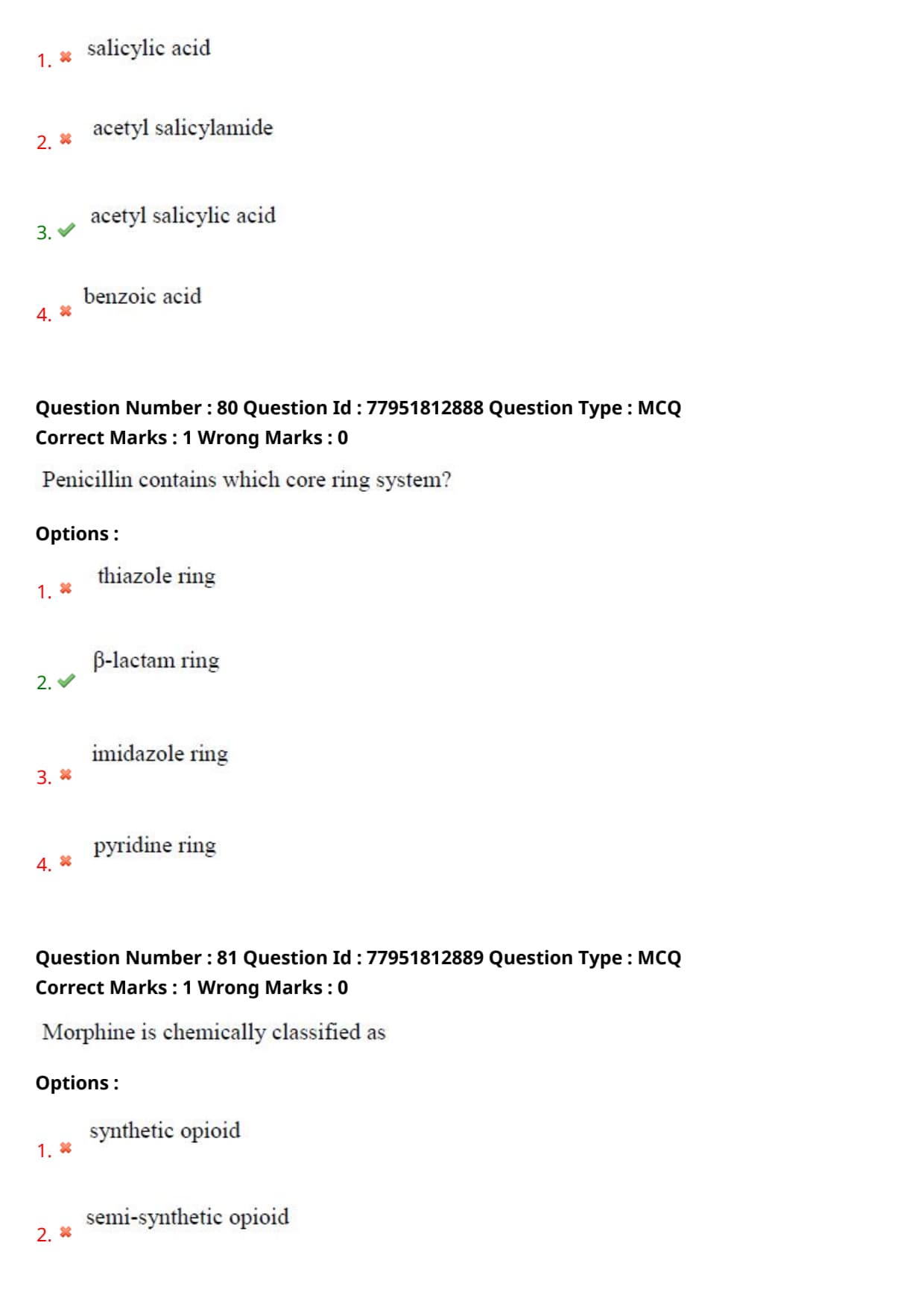
- (A) Salicylic acid
- (B) Acetyl salicylamide
- (C) Acetyl salicylic acid
- (D) Benzoic acid
Question 80:
Penicillin contains which core ring system?
- (A) Thiazole ring
- (B) \(\beta\)-lactam ring
- (C) Imidazole ring
- (D) Pyridine ring
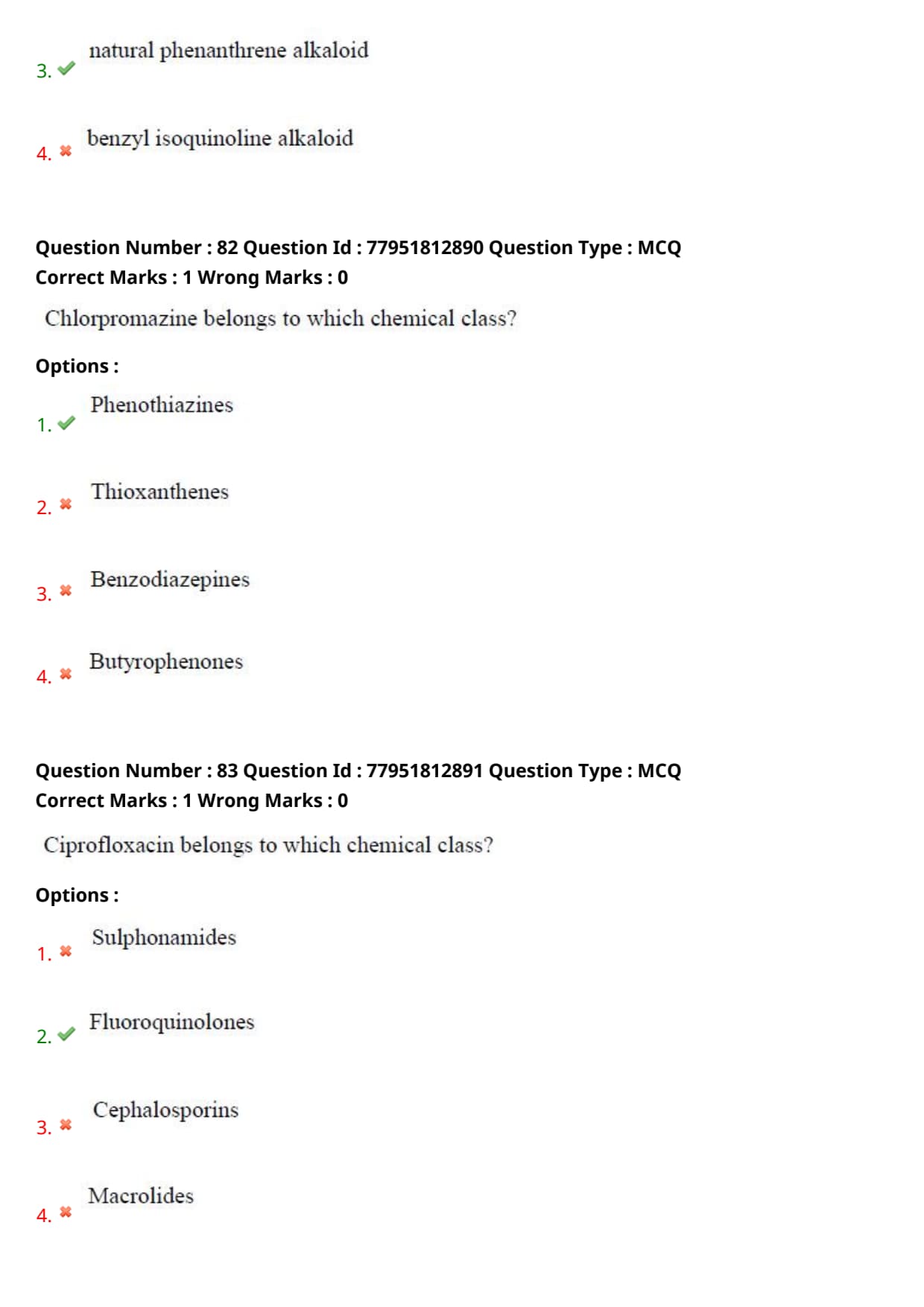
Question 81:
Morphine is chemically classified as
- (A) Synthetic opioid
- (B) Semi-synthetic opioid
- (C) Natural phenanthrene alkaloid
- (D) Benzyl isoquinoline alkaloid
Question 82:
Chlorpromazine belongs to which chemical class?
- (A) Phenothiazines
- (B) Thioxanthenes
- (C) Benzodiazepines
- (D) Butyrophenones
Question 83:
Ciprofloxacin belongs to which chemical class?
- (A) Sulphonamides
- (B) Fluoroquinolones
- (C) Cephalosporins
- (D) Macrolides
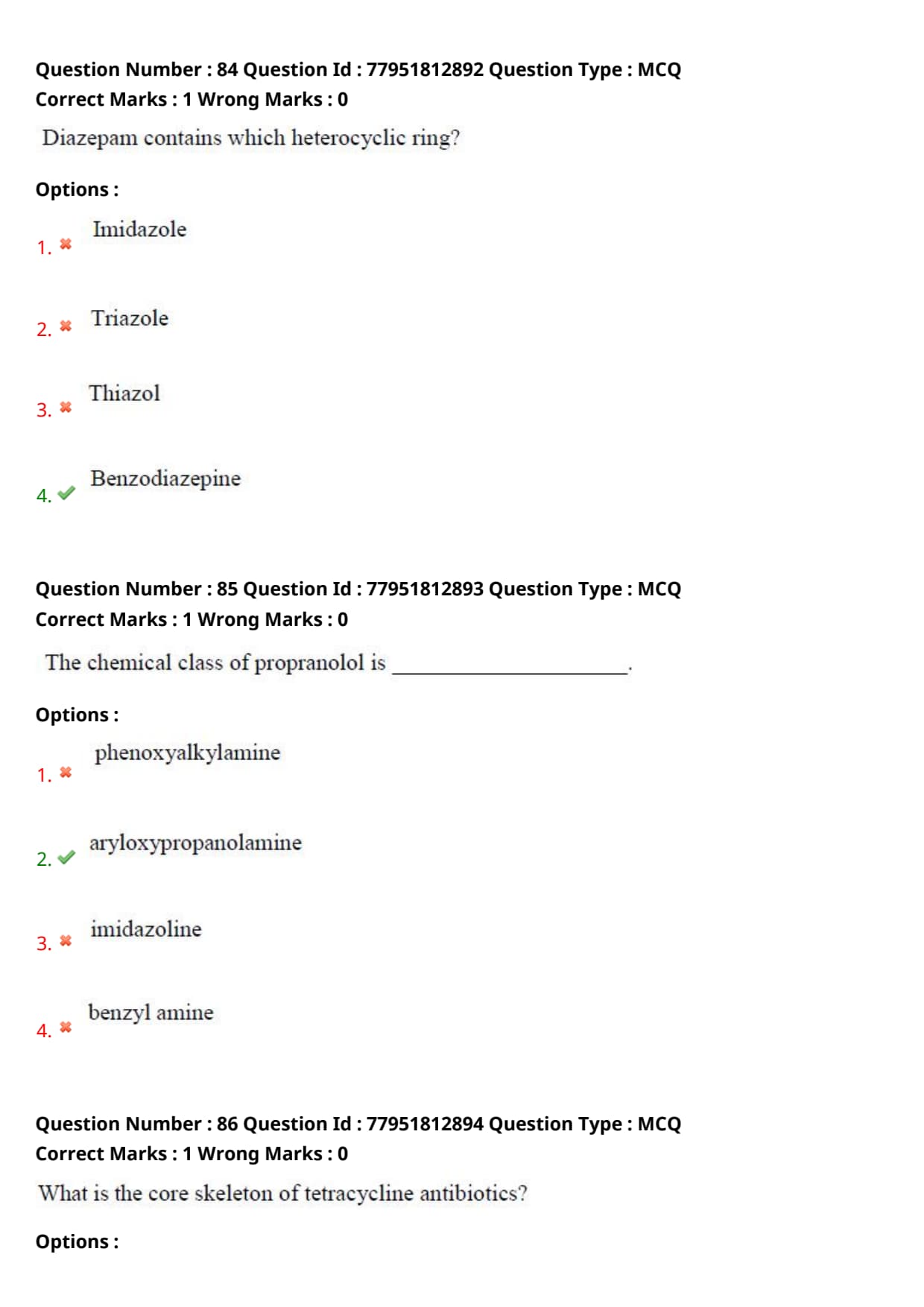
Question 84:
Diazepam contains which heterocyclic ring?
- (A) Imidazole
- (B) Triazole
- (C) Thiazole
- (D) Benzodiazepine
Question 85:
The chemical class of propranolol is _________.
- (A) Phenoxyalkylamine
- (B) Aryloxypropanolamine
- (C) Imidazoline
- (D) Benzyl amine
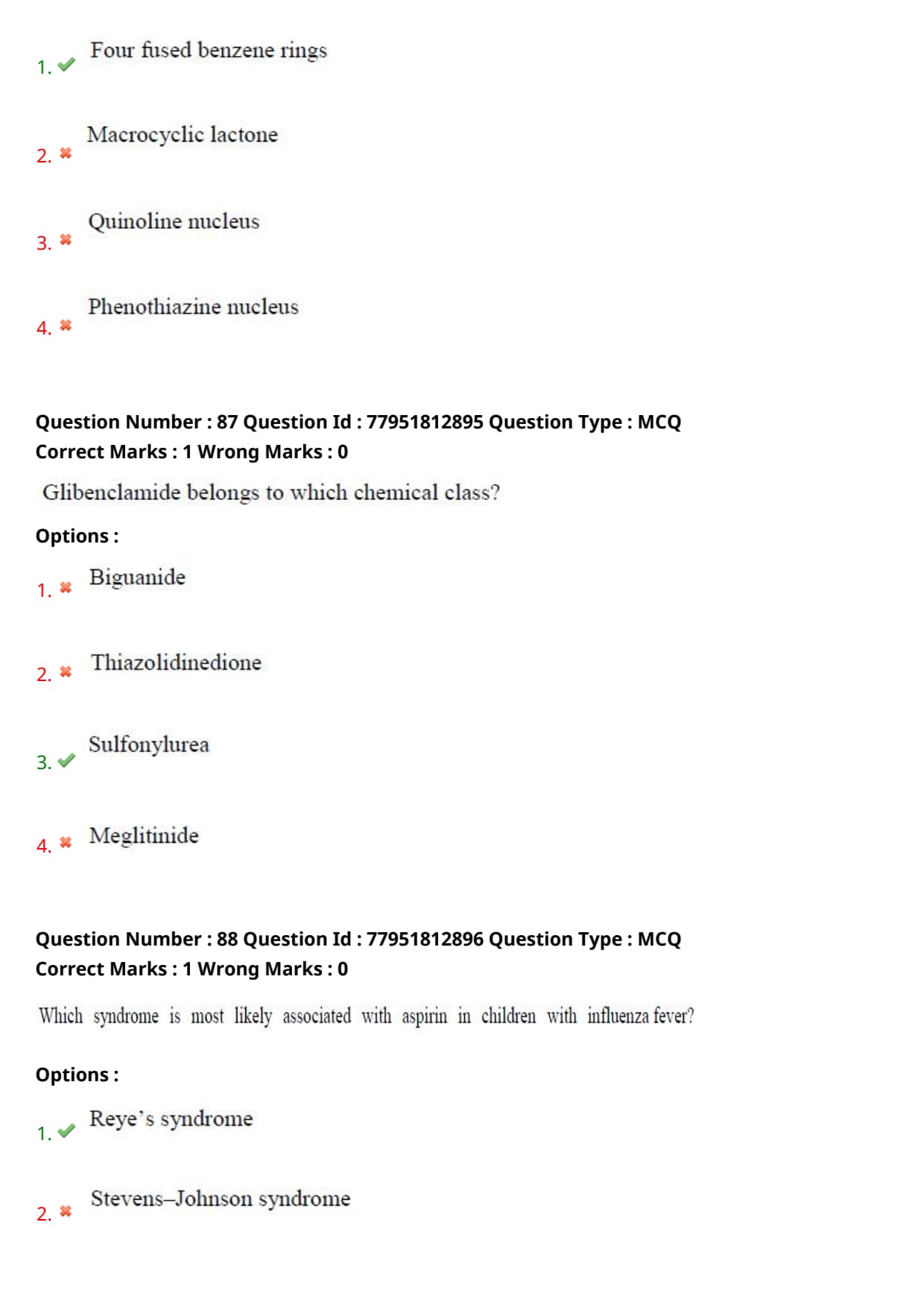
Question 86:
What is the core skeleton of tetracycline antibiotics?
- (A) Four fused benzene rings
- (B) Macrocyclic lactone
- (C) Quinoline nucleus
- (D) Phenothiazine nucleus
Question 87:
Glibenclamide belongs to which chemical class?
- (A) Biguanide
- (B) Thiazolidinedione
- (C) Sulfonylurea
- (D) Meglitinide
Question 88:
Which syndrome is most likely associated with aspirin in children with influenza fever?
- (A) Reye's syndrome
- (B) Stevens--Johnson syndrome
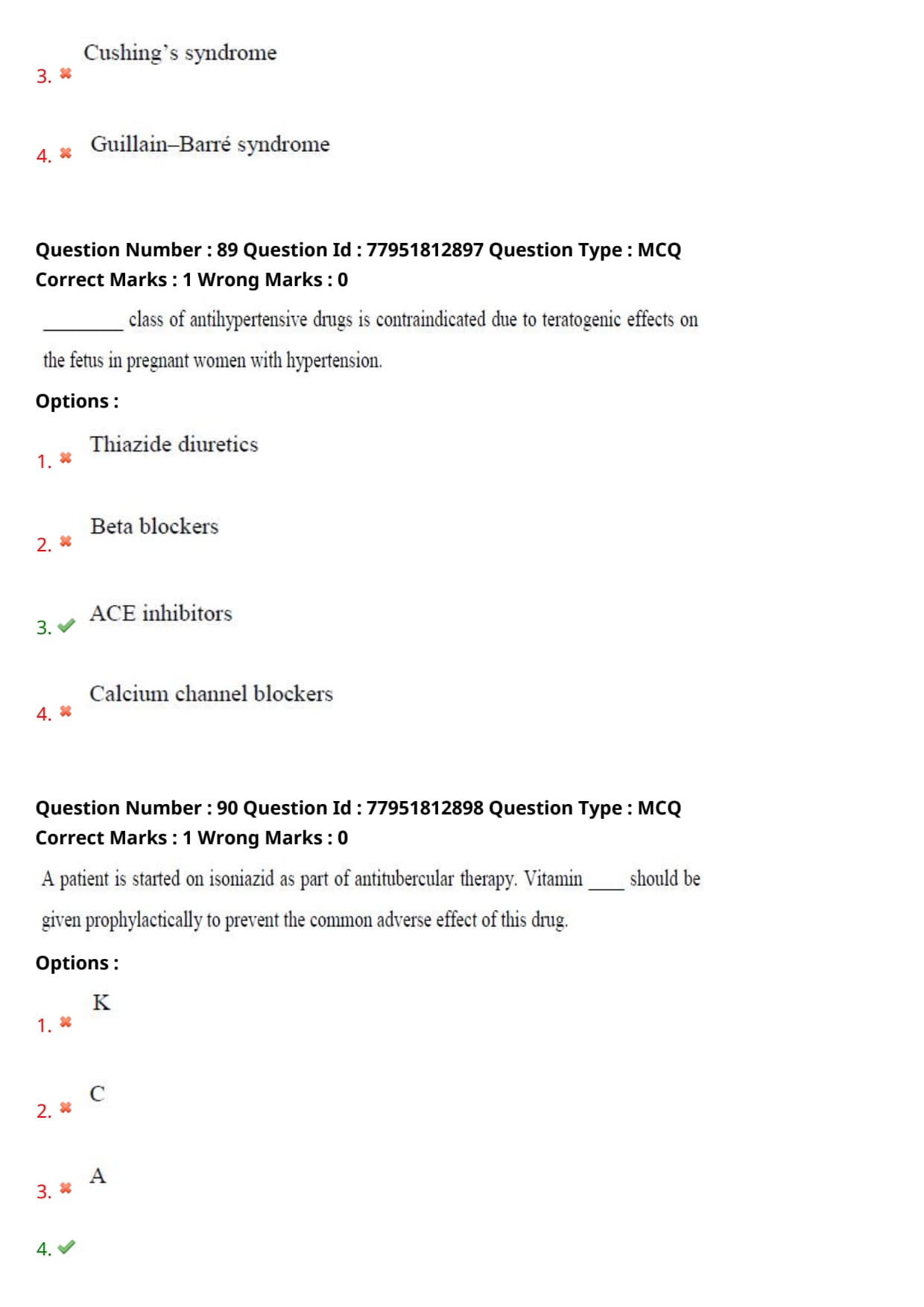
- (C) Cushing's syndrome
- (D) Guillain--Barré syndrome
Question 89:
_________ class of antihypertensive drugs is contraindicated due to teratogenic effects on the fetus in pregnant women with hypertension.
- (A) Thiazide diuretics
- (B) Beta blockers
- (C) ACE inhibitors
- (D) Calcium channel blockers
Question 90:
A patient is started on isoniazid as part of antitubercular therapy. Vitamin _________ should be given prophylactically to prevent the common adverse effect of this drug.
- (A) K
- (B) C
- (C) A
- (D) B\(_6\)
Question 91:
A 30-year-old asthmatic patient needs a drug for acute bronchospasm relief. Which agent is most appropriate for rapid bronchodilation?
- (A) Inhaled beclomethasone
- (B) Inhaled salbutamol (albuterol)
- (C) Inhaled ipratropium as monotherapy in a young asthmatic
- (D) Oral theophylline
Question 92:
Which of the following drugs irreversibly inhibits the \(H^+/K^+\)-ATPase pump in gastric parietal cells used to treat peptic ulcer disease?
- (A) Misoprostol
- (B) Ranitidine
- (C) Sucralfate
- (D) Omeprazole
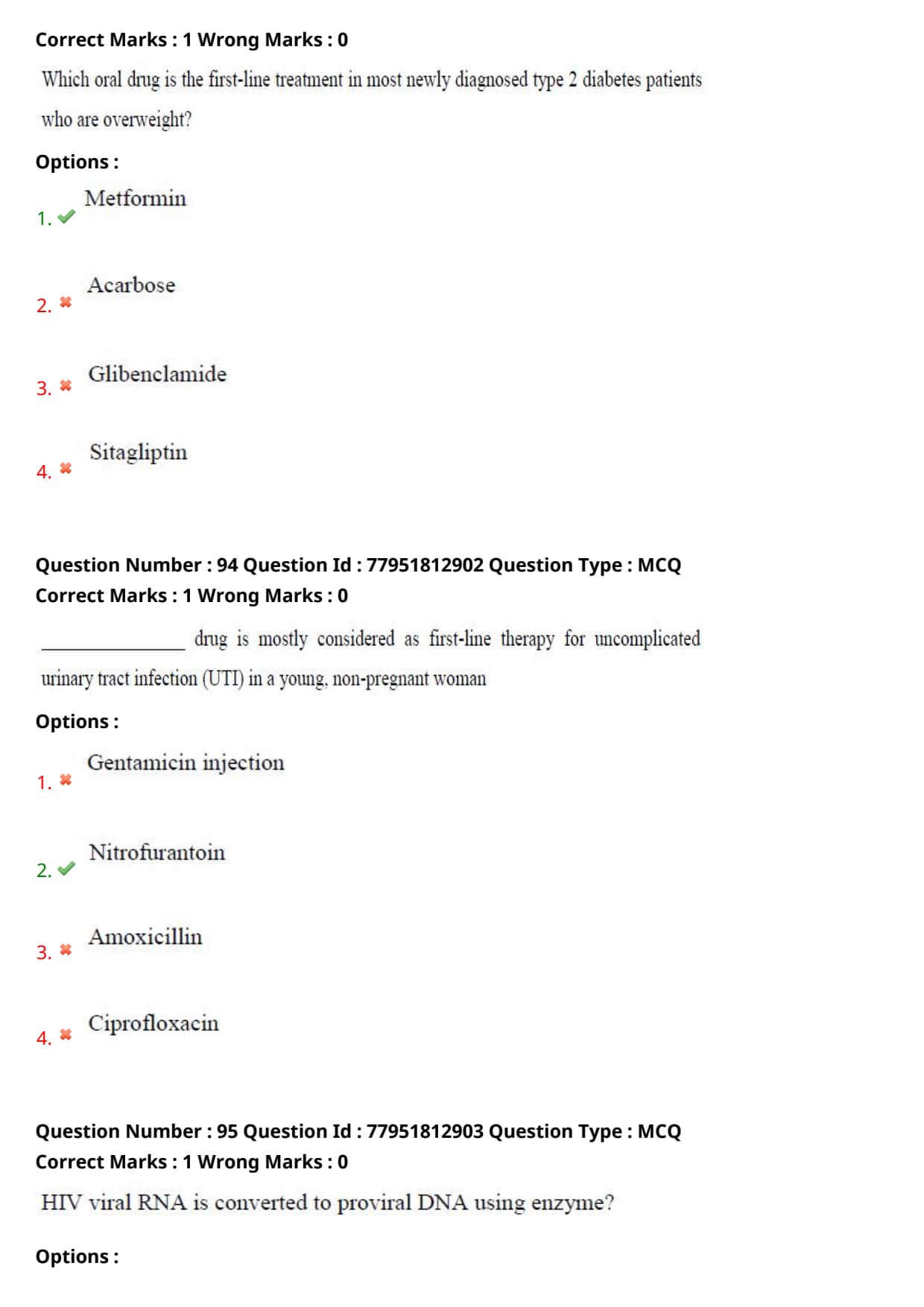
Question 93:
Which oral drug is the first-line treatment in most newly diagnosed type 2 diabetes patients who are overweight?
- (A) Metformin
- (B) Acarbose
- (C) Glibenclamide
- (D) Sitagliptin
Question 94:
_________ drug is mostly considered as first-line therapy for uncomplicated urinary tract infection (UTI) in a young, non-pregnant woman.
- (A) Gentamicin injection
- (B) Nitrofurantoin
- (C) Amoxicillin
- (D) Ciprofloxacin
Question 95:
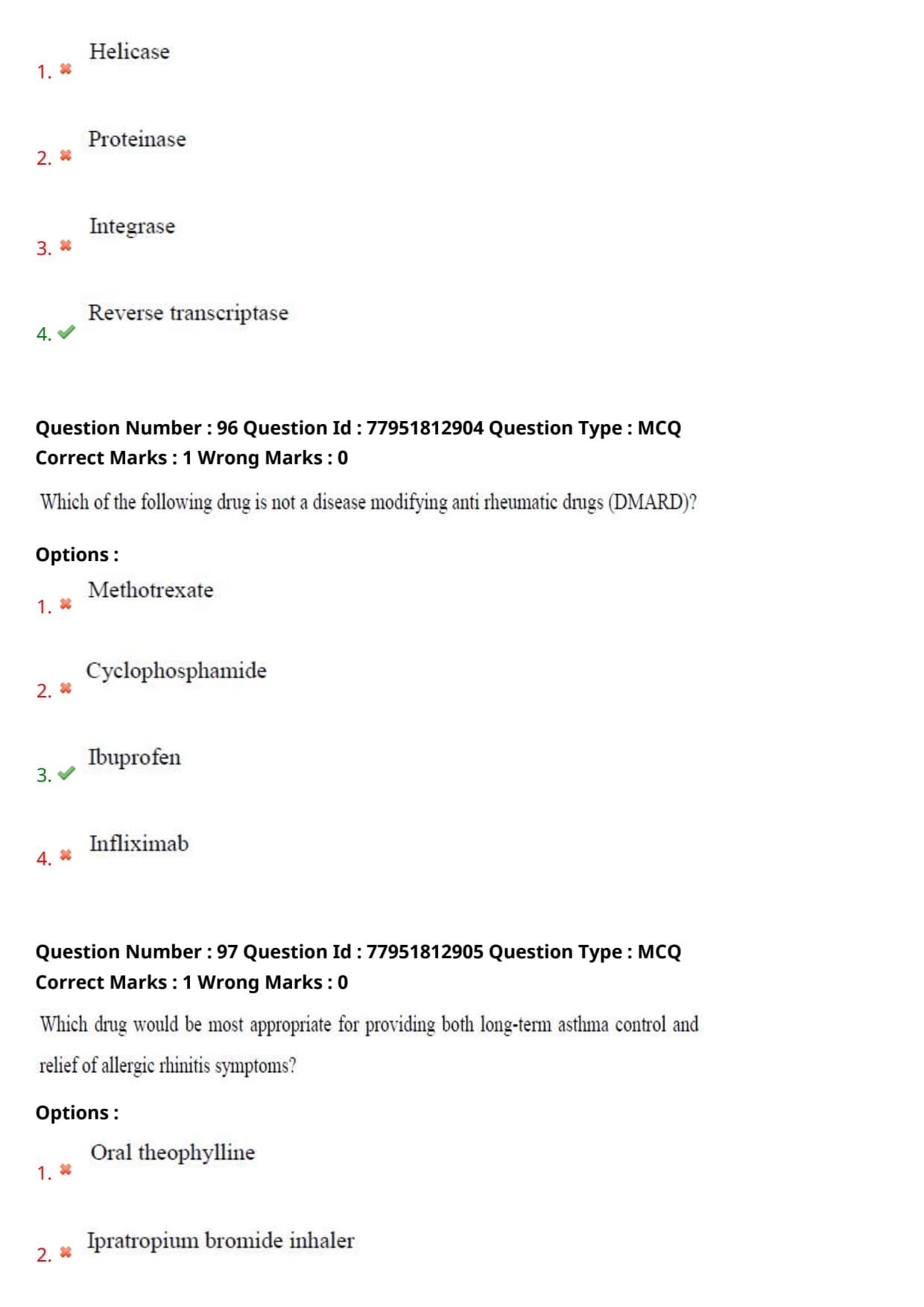
HIV viral RNA is converted to proviral DNA using enzyme?
- (A) Helicase
- (B) Proteinase
- (C) Integrase
- (D) Reverse transcriptase
Question 96:
Which of the following drug is not a disease modifying anti rheumatic drug (DMARD)?
- (A) Methotrexate
- (B) Cyclophosphamide
- (C) Ibuprofen
- (D) Infliximab
Question 97:
Which drug would be most appropriate for providing both long-term asthma control and relief of allergic rhinitis symptoms?
- (A) Oral theophylline
- (B) Ipratropium bromide inhaler
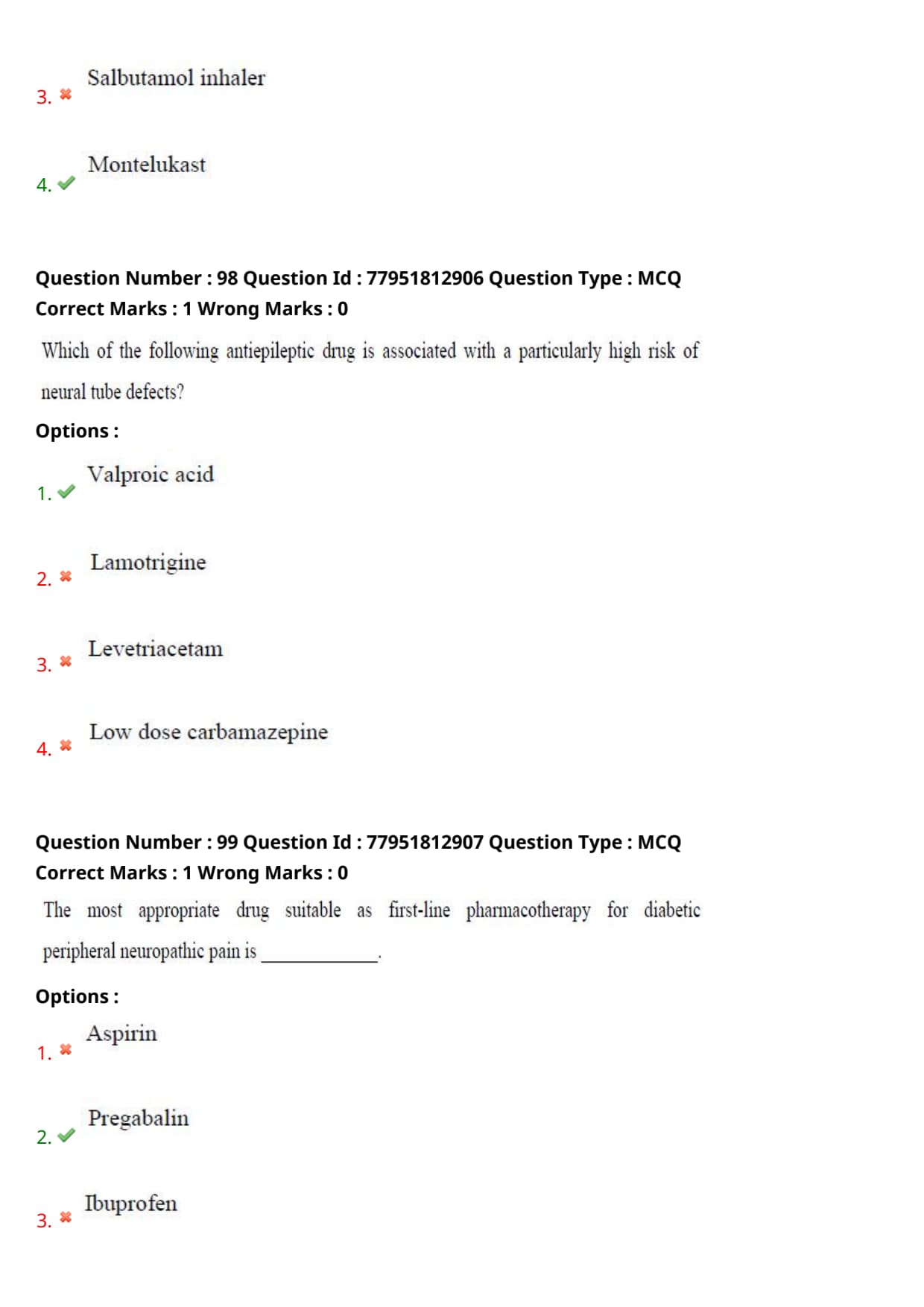
- (C) Salbutamol inhaler
- (D) Montelukast
Question 98:
Which of the following antiepileptic drug is associated with a particularly high risk of neural tube defects?
- (A) Valproic acid
- (B) Lamotrigine
- (C) Levetiracetam
- (D) Low dose carbamazepine
Question 99:
The most appropriate drug suitable as first-line pharmacotherapy for diabetic peripheral neuropathic pain is _________.
- (A) Aspirin
- (B) Pregabalin
- (C) Ibuprofen
- (D) Acetaminophen
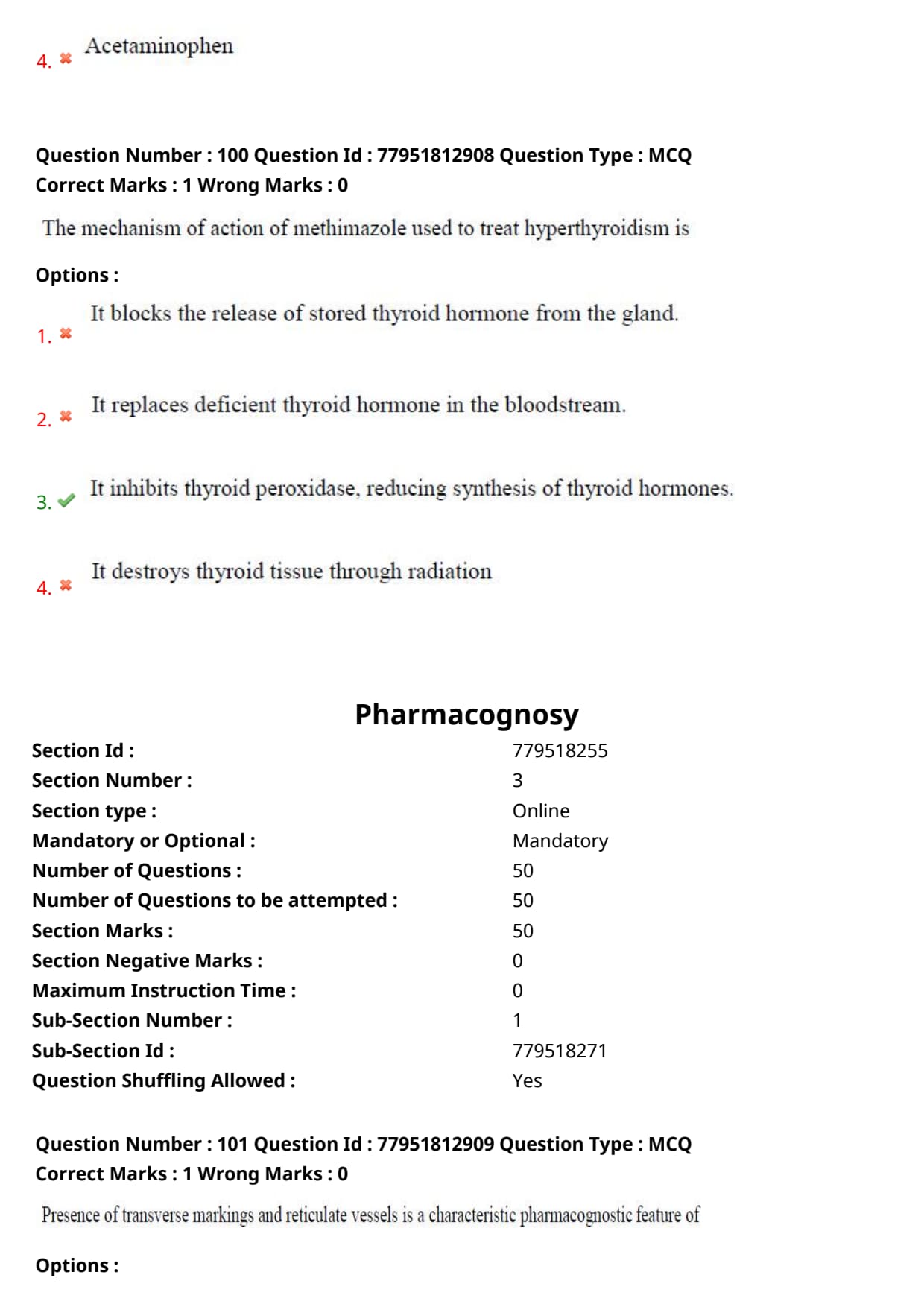
Question 100:
The mechanism of action of methimazole used to treat hyperthyroidism is
- (A) It blocks the release of stored thyroid hormone from the gland.
- (B) It replaces deficient thyroid hormone in the bloodstream.
- (C) It inhibits thyroid peroxidase, reducing synthesis of thyroid hormones.
- (D) It destroys thyroid tissue through radiation.
Question 101:
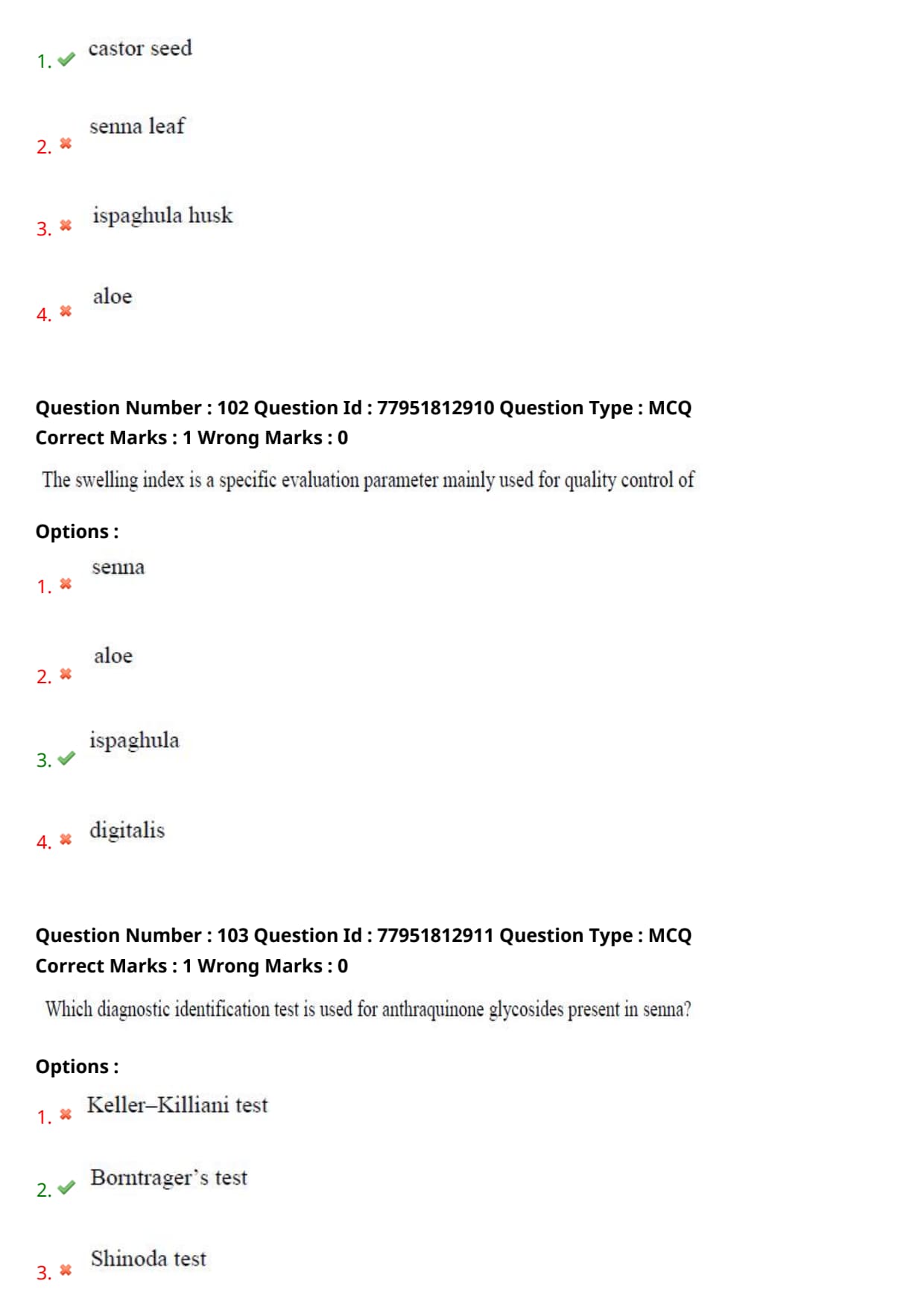
Presence of transverse markings and reticulate vessels is a characteristic pharmacognostic feature of
- (A) Castor seed
- (B) Senna leaf
- (C) Ispaghula husk
- (D) Aloe
Question 102:
The swelling index is a specific evaluation parameter mainly used for quality control of
- (A) Senna
- (B) Aloe
- (C) Ispaghula
- (D) Digitalis
Question 103:
Which diagnostic identification test is used for anthraquinone glycosides present in senna?
- (A) Keller--Killiani test
- (B) Borntrager's test
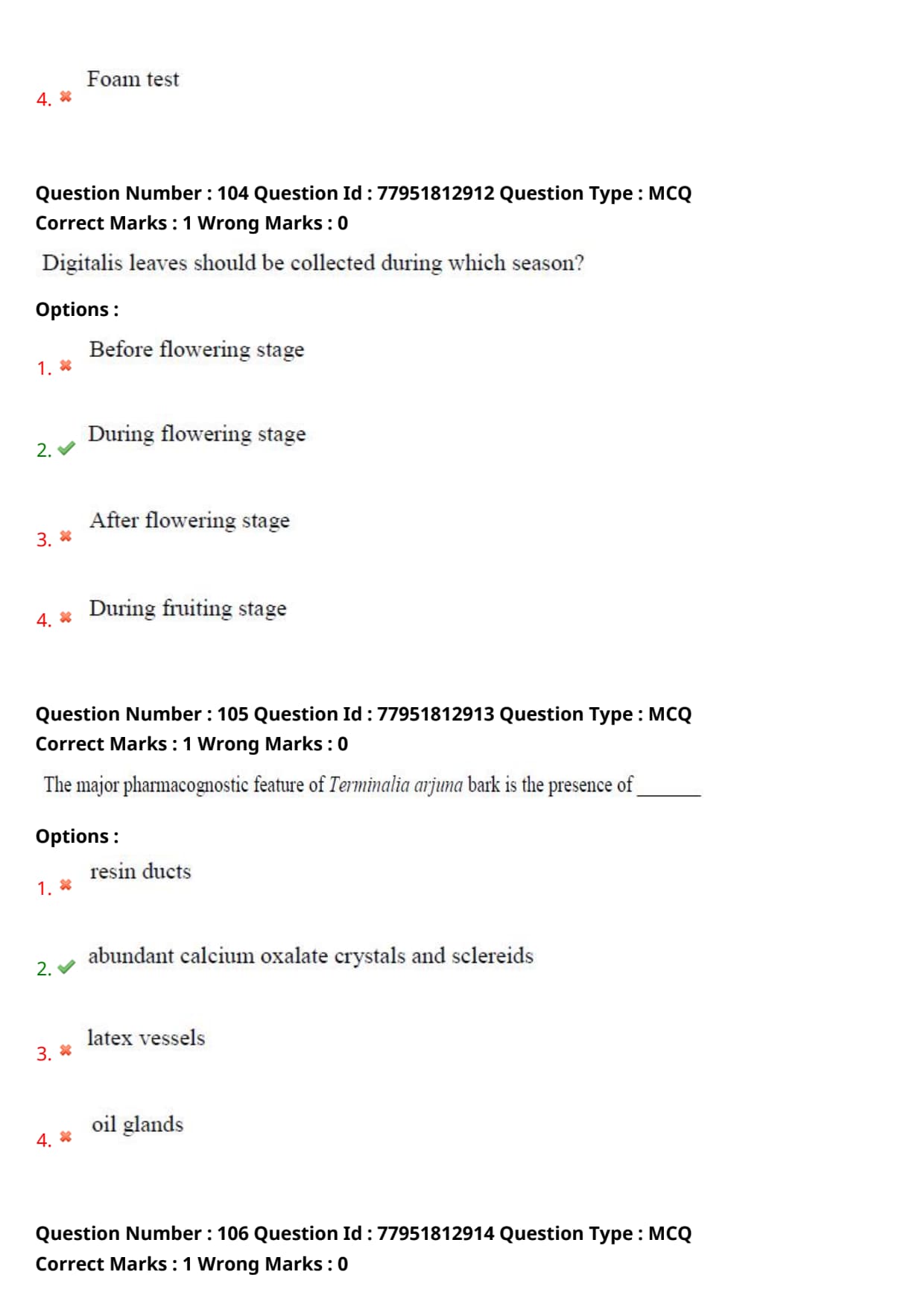
- (C) Shinoda test
- (D) Foam test
Question 104:
Digitalis leaves should be collected during which season?
- (A) Before flowering stage
- (B) During flowering stage
- (C) After flowering stage
- (D) During fruiting stage
Question 105:
The major pharmacognostic feature of Terminalia arjuna bark is the presence of _________.
- (A) Resin ducts
- (B) Abundant calcium oxalate crystals and sclereids
- (C) Latex vessels
- (D) Oil glands
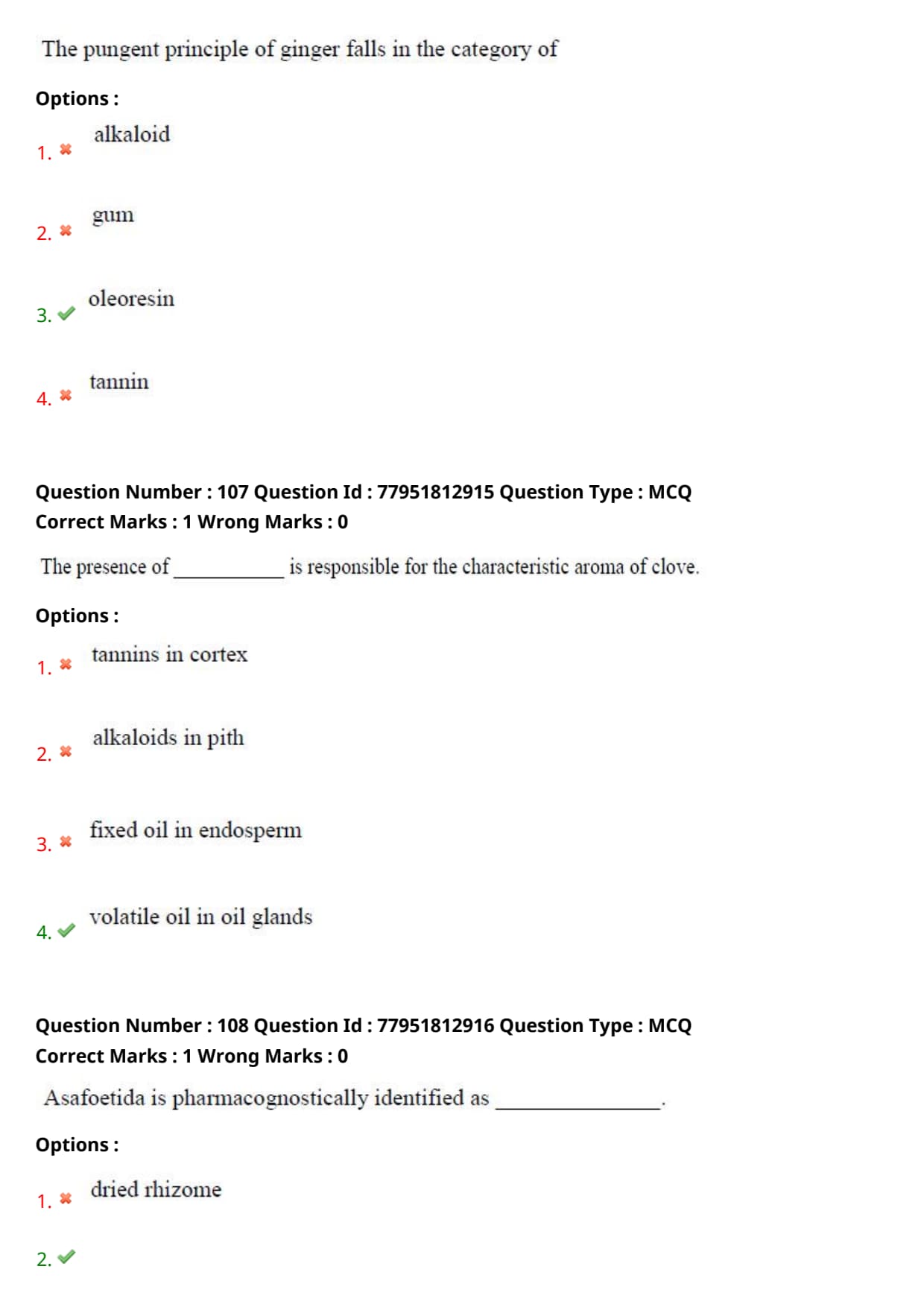
Question 106:
The pungent principle of ginger falls in the category of
- (A) Alkaloid
- (B) Gum
- (C) Oleoresin
- (D) Tannin
Question 107:
The presence of _________ is responsible for the characteristic aroma of clove.
- (A) Tannins in cortex
- (B) Alkaloids in pith
- (C) Fixed oil in endosperm
- (D) Volatile oil in oil glands
Question 108:
Asafoetida is pharmacognostically identified as _________.
- (A) Dried rhizome
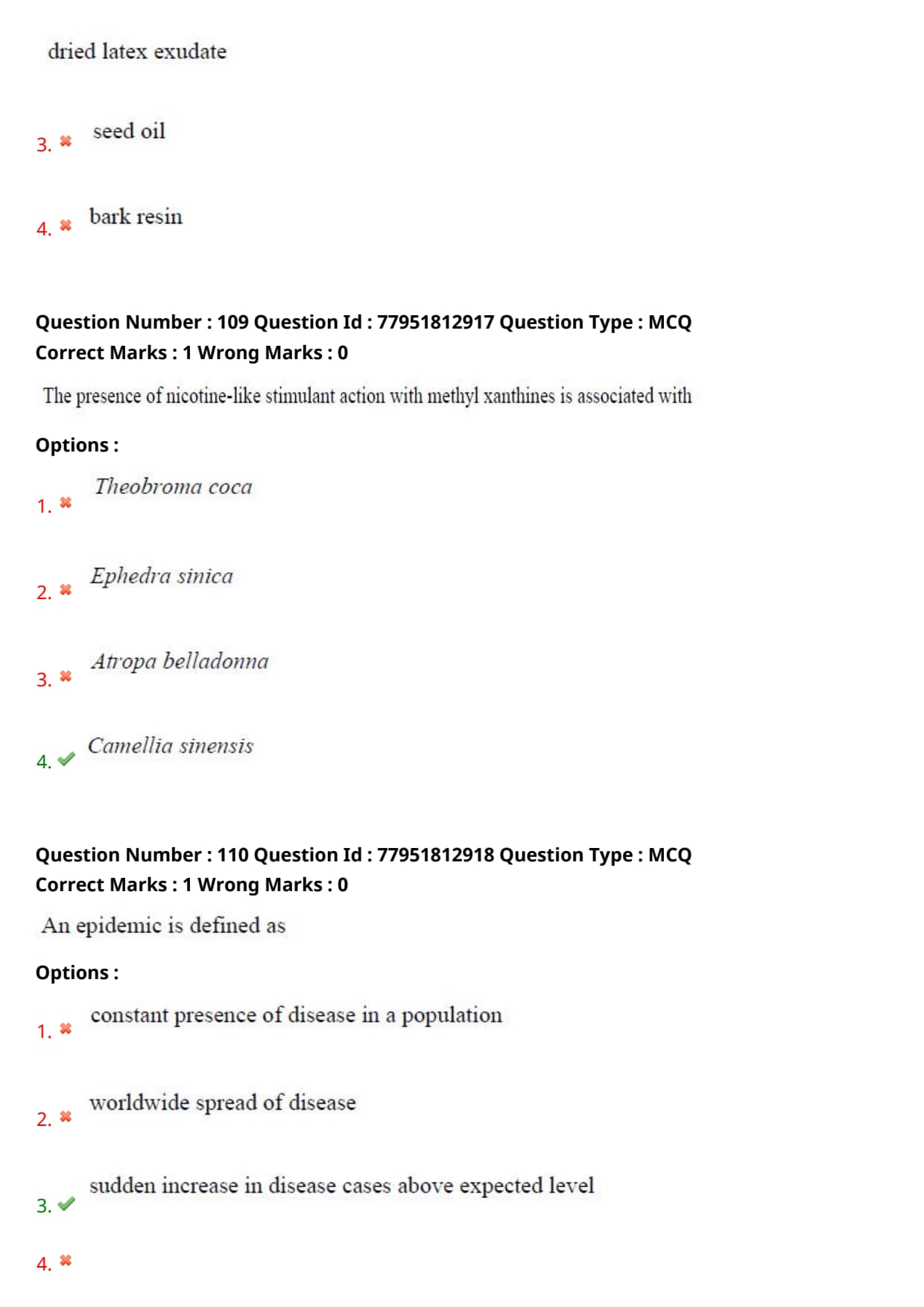
- (B) Dried latex exudate
- (C) Seed oil
- (D) Bark resin
Question 109:
The presence of nicotine-like stimulant action with methyl xanthines is associated with
- (A) Theobroma coca
- (B) Ephedra sinica
- (C) Atropa belladonna
- (D) Camellia sinensis
Question 110:
An epidemic is defined as
- (A) Constant presence of disease in a population
- (B) Worldwide spread of disease
- (C) Sudden increase in disease cases above expected level
- (D) Occurrence of rare disease
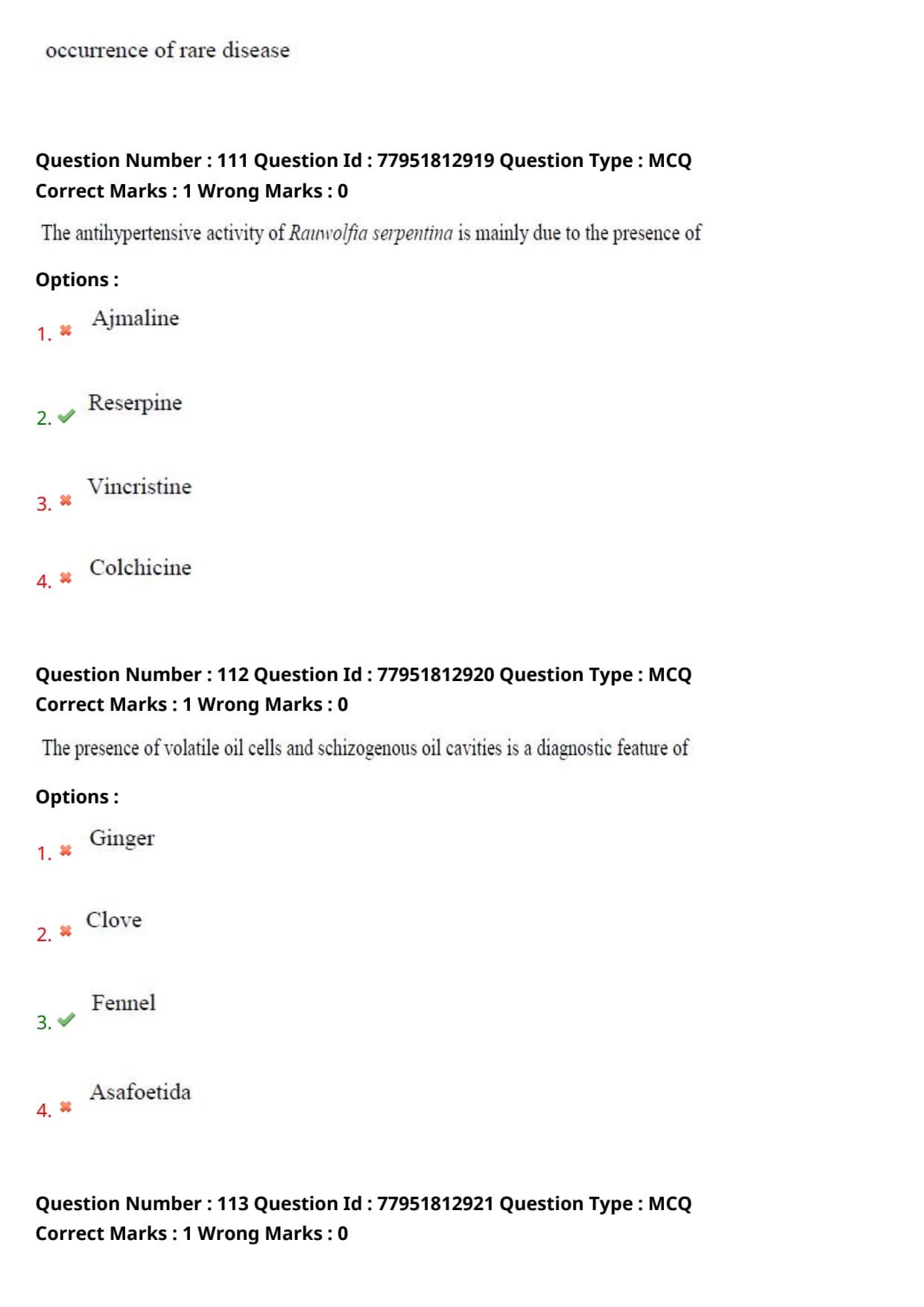
Question 111:
The antihypertensive activity of Rauwolfia serpentina is mainly due to the presence of
- (A) Ajmaline
- (B) Reserpine
- (C) Vincristine
- (D) Colchicine
Question 112:
The presence of volatile oil cells and schizogenous oil cavities is a diagnostic feature of
- (A) Ginger
- (B) Clove
- (C) Fennel
- (D) Asafoetida
Question 113:
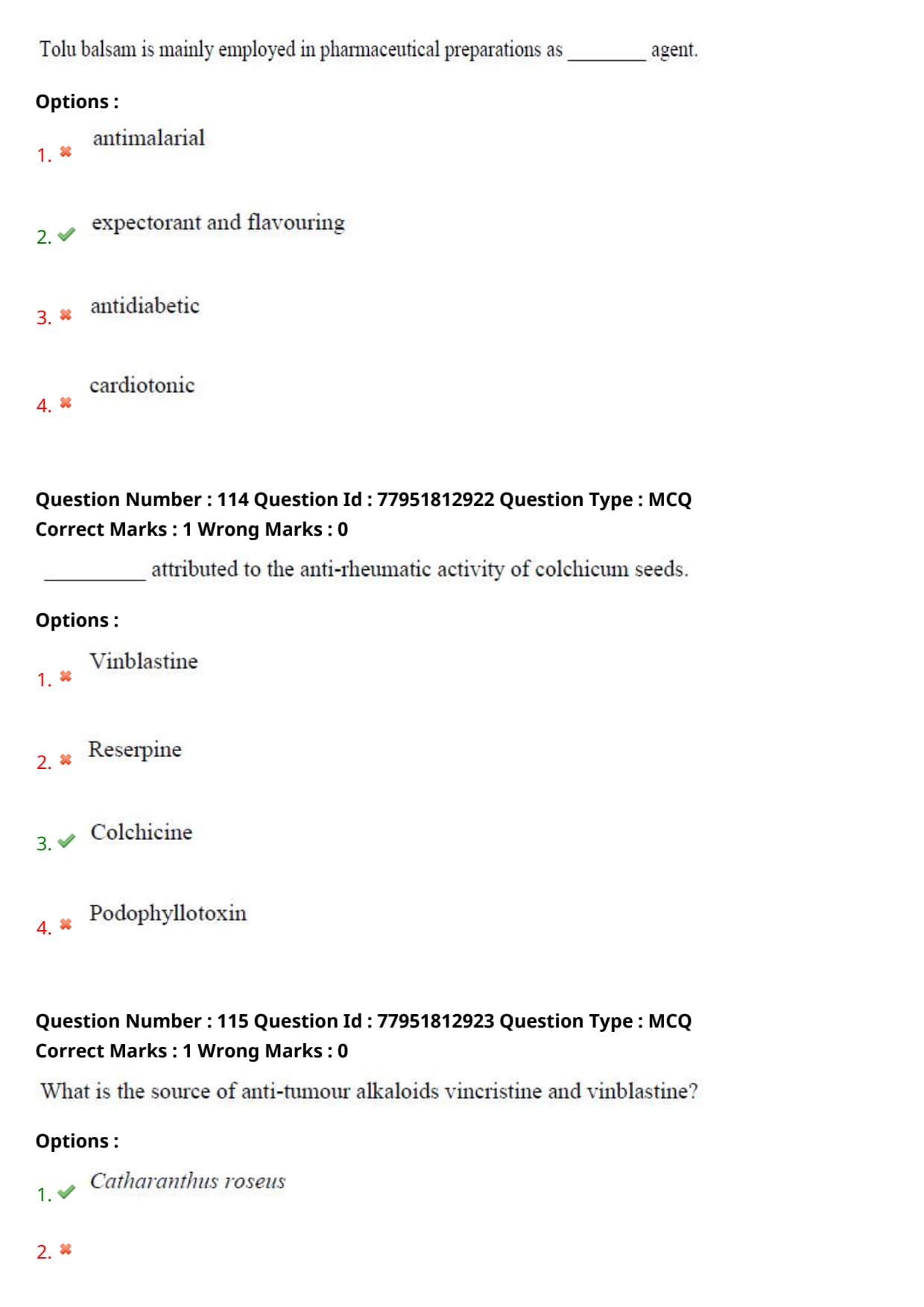
Tolu balsam is mainly employed in pharmaceutical preparations as _________ agent.
- (A) Antimalarial
- (B) Expectorant and flavouring
- (C) Antidiabetic
- (D) Cardiotonic
Question 114:
_________ attributed to the anti-rheumatic activity of colchicum seeds.
- (A) Vinblastine
- (B) Reserpine
- (C) Colchicine
- (D) Podophyllotoxin
Question 115:
What is the source of anti-tumour alkaloids vincristine and vinblastine?
- (A) Catharanthus roseus
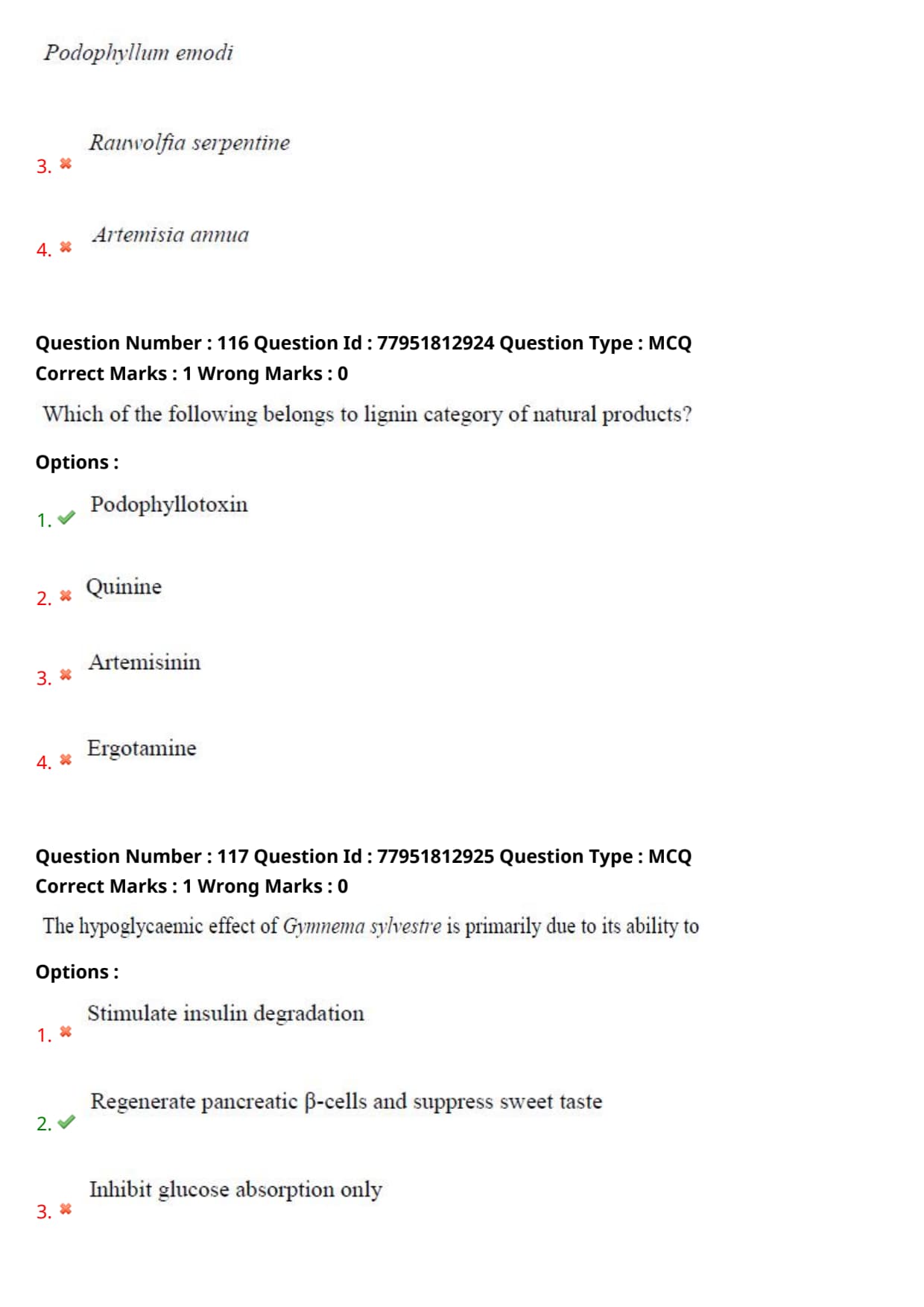
- (B) Podophyllum emodi
- (C) Rauwolfia serpentina
- (D) Artemisia annua
Question 116:
Which of the following belongs to lignin category of natural products?
- (A) Podophyllotoxin
- (B) Quinine
- (C) Artemisinin
- (D) Ergotamine
Question 117:
The hypoglycaemic effect of Gymnema sylvestre is primarily due to its ability to
- (A) Stimulate insulin degradation
- (B) Regenerate pancreatic \(\beta\)-cells and suppress sweet taste
- (C) Inhibit glucose absorption only
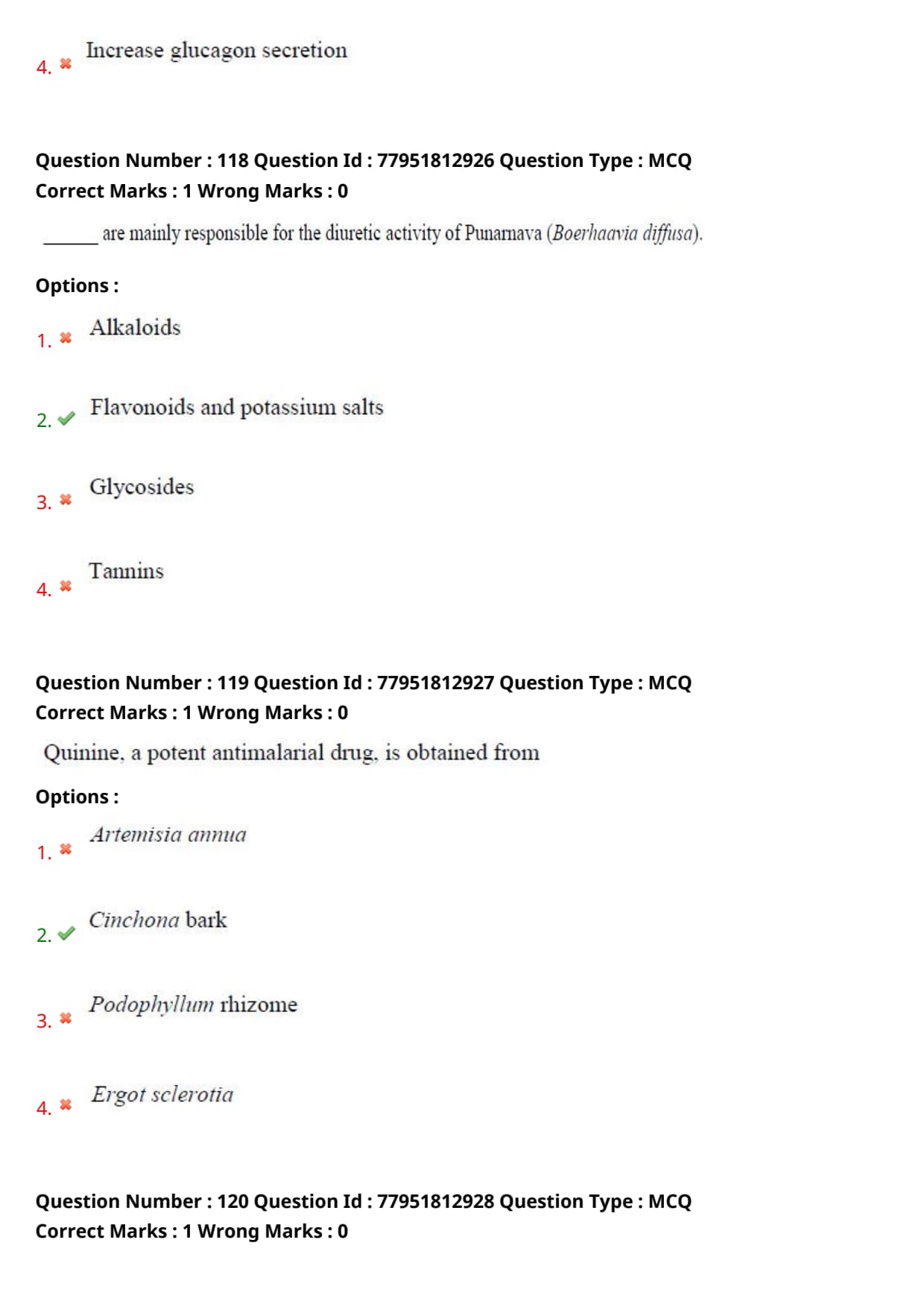
- (D) Increase glucagon secretion
Question 118:
_________ are mainly responsible for the diuretic activity of Punarnava \((Boerhaavia diffusa)\).
- (A) Alkaloids
- (B) Flavonoids and potassium salts
- (C) Glycosides
- (D) Tannins
Question 119:
Quinine, a potent antimalarial drug, is obtained from
- (A) Artemisia annua
- (B) Cinchona bark
- (C) Podophyllum rhizome
- (D) Ergot sclerotia
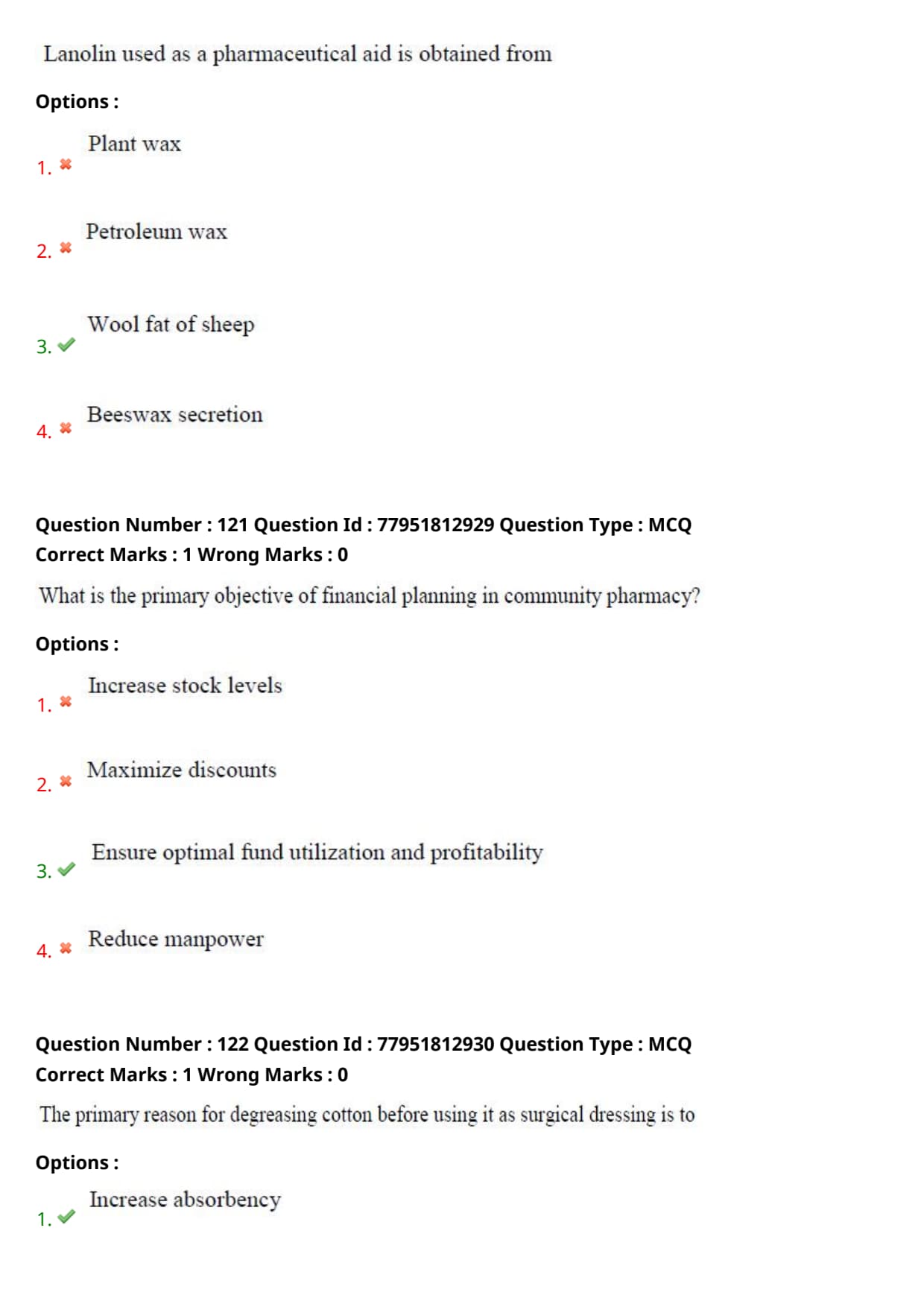
Question 120:
Lanolin used as a pharmaceutical aid is obtained from
- (A) Plant wax
- (B) Petroleum wax
- (C) Wool fat of sheep
- (D) Beeswax secretion
Question 121:
What is the primary objective of financial planning in community pharmacy?
- (A) Increase stock levels
- (B) Maximize discounts
- (C) Ensure optimal fund utilization and profitability
- (D) Reduce manpower
Question 122:
The primary reason for degreasing cotton before using it as surgical dressing is to
- (A) Increase absorbency
- (B) Improve tensile strength
- (C) Enhance colour
- (D) Reduce fibre length
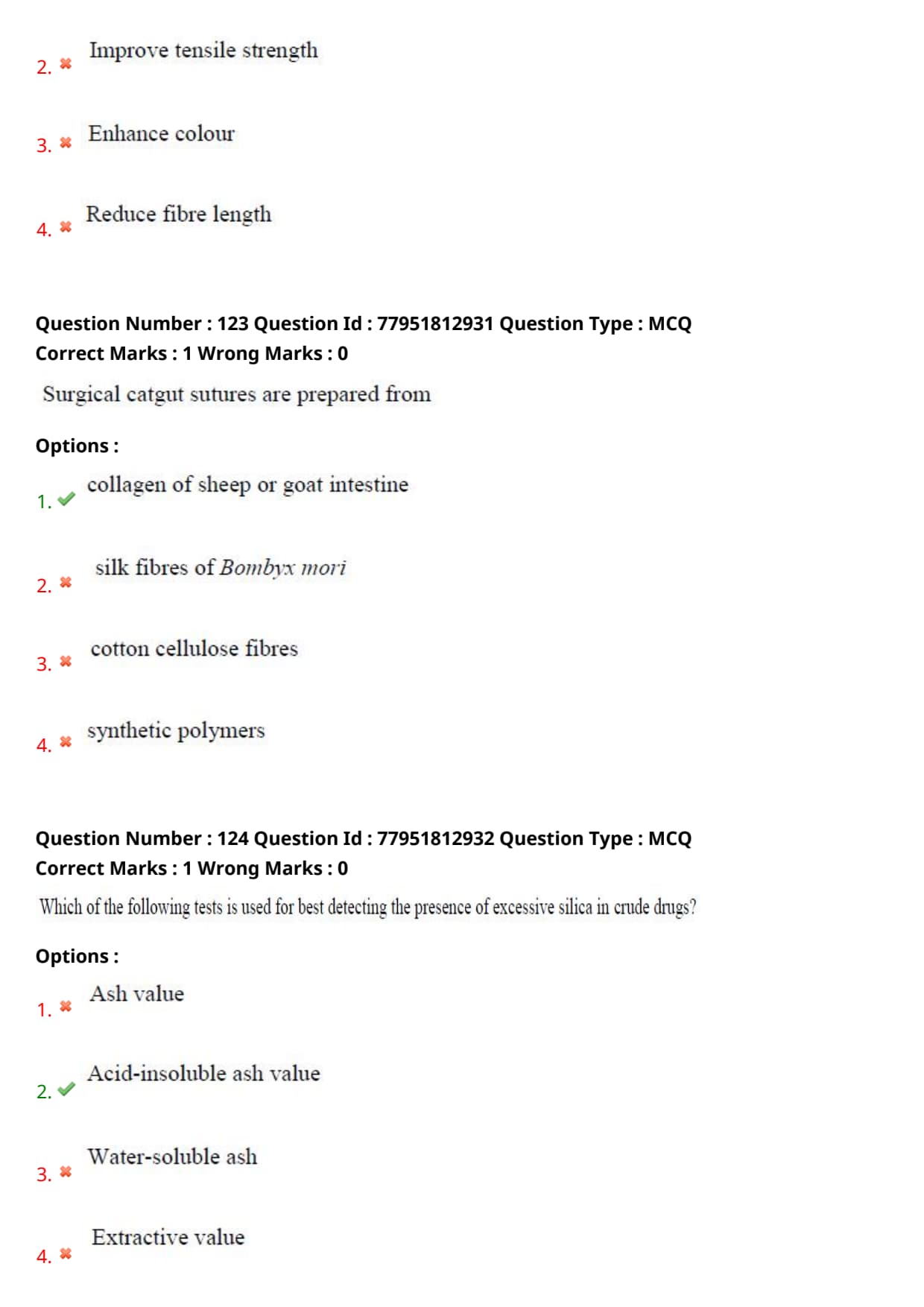
Question 123:
Surgical catgut sutures are prepared from
- (A) Collagen of sheep or goat intestine
- (B) Silk fibres of Bombyx mori
- (C) Cotton cellulose fibres
- (D) Synthetic polymers
Question 124:
Which of the following tests is used for best detecting the presence of excessive silica in crude drugs?
- (A) Ash value
- (B) Acid-insoluble ash value
- (C) Water-soluble ash
- (D) Extractive value
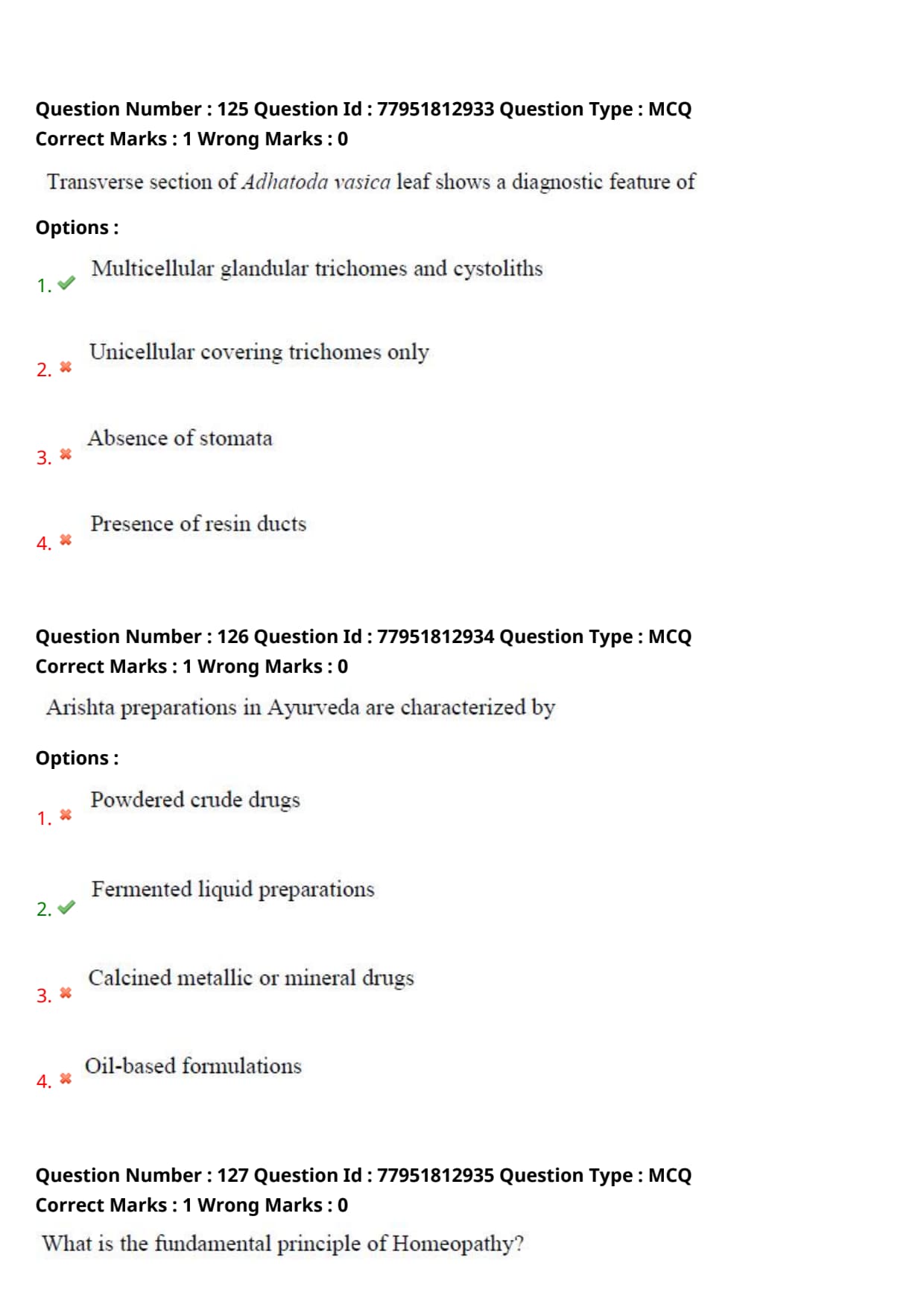
Question 125:
Transverse section of Adhatoda vasica leaf shows a diagnostic feature of
- (A) Multicellular glandular trichomes and cystoliths
- (B) Unicellular covering trichomes only
- (C) Absence of stomata
- (D) Presence of resin ducts
Question 126:
Arishta preparations in Ayurveda are characterized by
- (A) Powdered crude drugs
- (B) Fermented liquid preparations
- (C) Calcined metallic or mineral drugs
- (D) Oil-based formulations
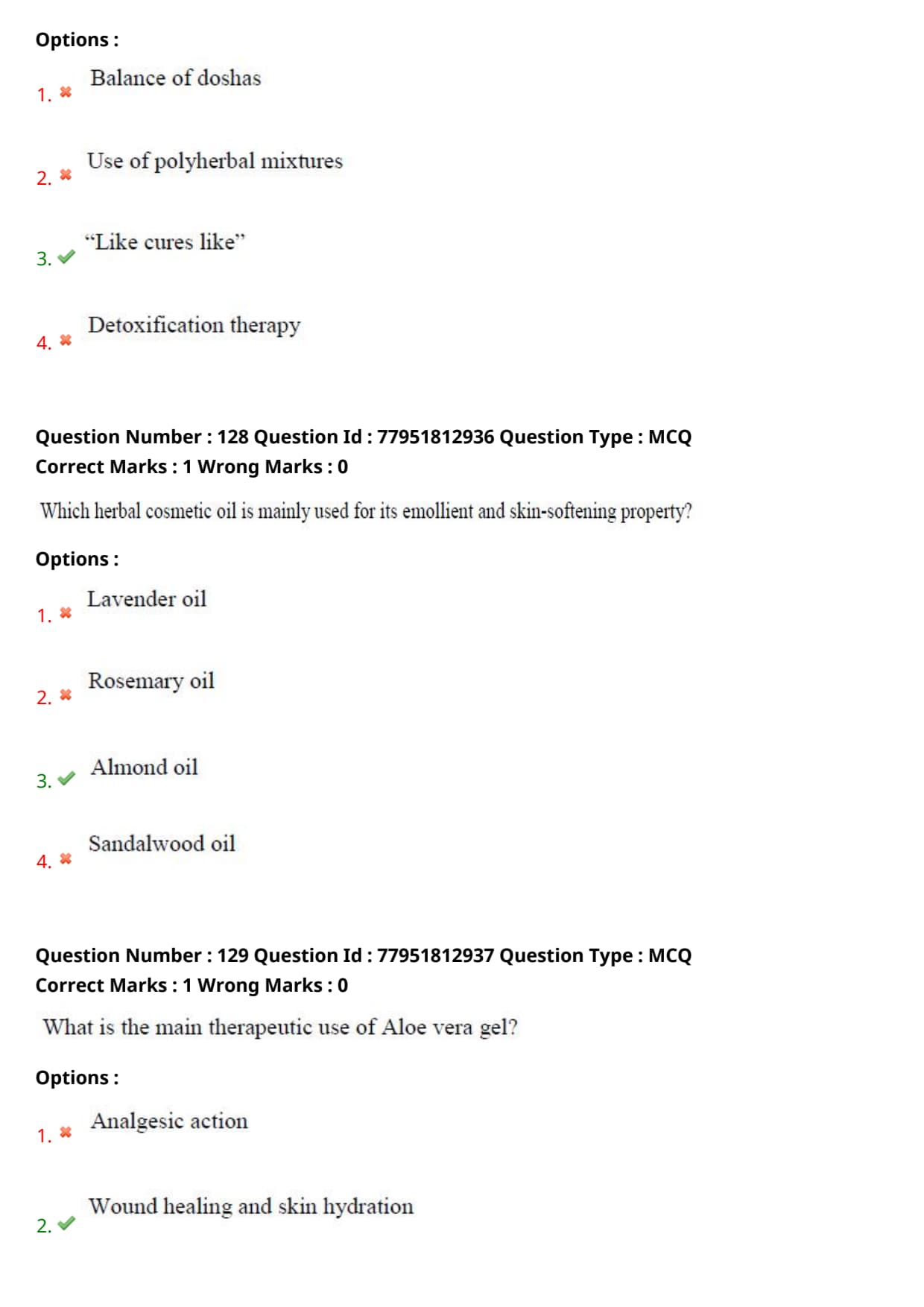
Question 127:
What is the fundamental principle of Homeopathy?
- (A) Balance of doshas
- (B) Use of polyherbal mixtures
- (C) ``Like cures like''
- (D) Detoxification therapy
Question 128:
Which herbal cosmetic oil is mainly used for its emollient and skin-softening property?
- (A) Lavender oil
- (B) Rosemary oil
- (C) Almond oil
- (D) Sandalwood oil
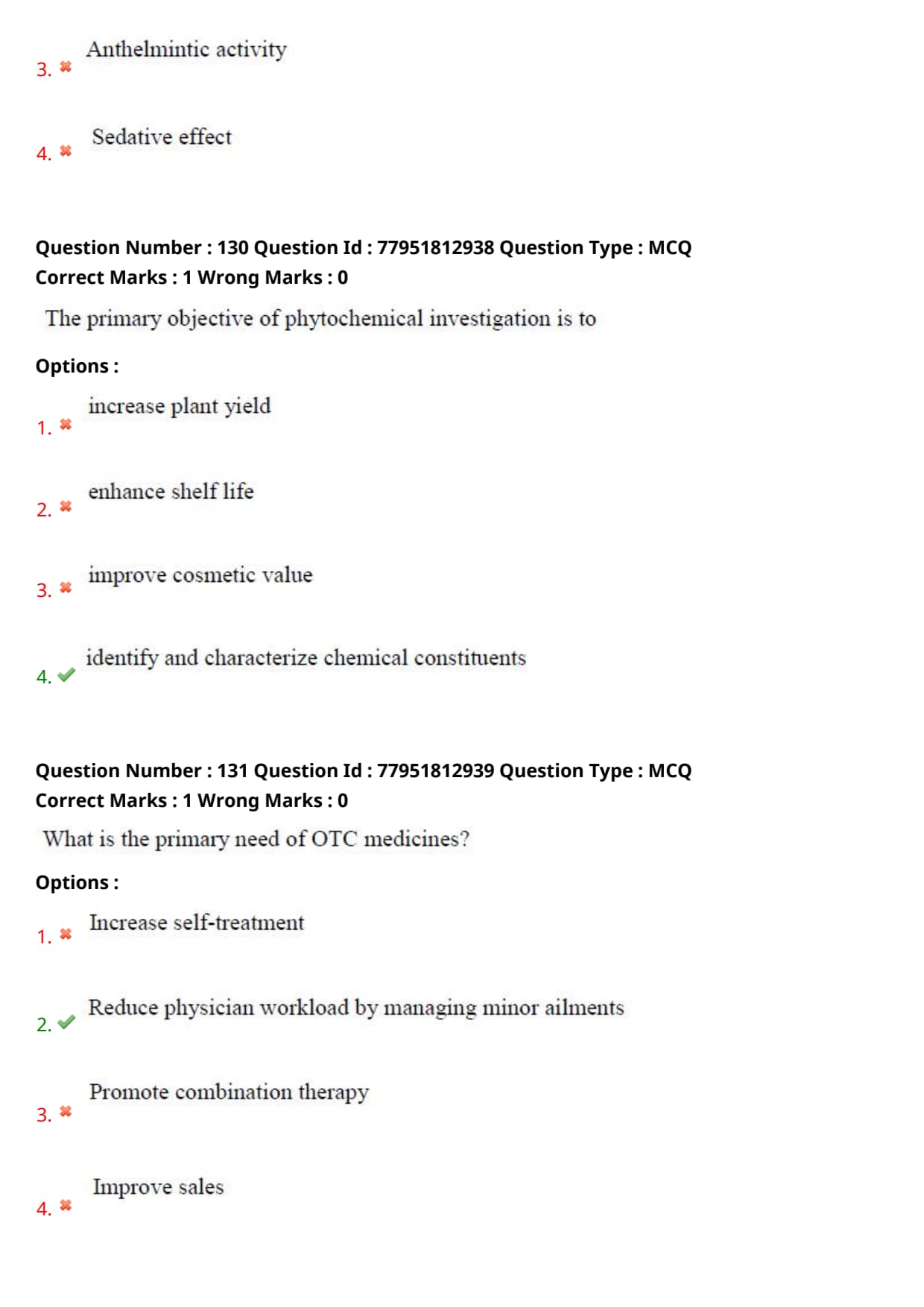
Question 129:
What is the main therapeutic use of Aloe vera gel?
- (A) Analgesic action
- (B) Wound healing and skin hydration
- (C) Anthelmintic activity
- (D) Sedative effect
Question 130:
The primary objective of phytochemical investigation is to
- (A) Increase plant yield
- (B) Enhance shelf life
- (C) Improve cosmetic value
- (D) Identify and characterize chemical constituents
Question 131:
What is the primary need of OTC medicines?
- (A) Increase self-treatment
- (B) Reduce physician workload by managing minor ailments
- (C) Promote combination therapy
- (D) Improve sales
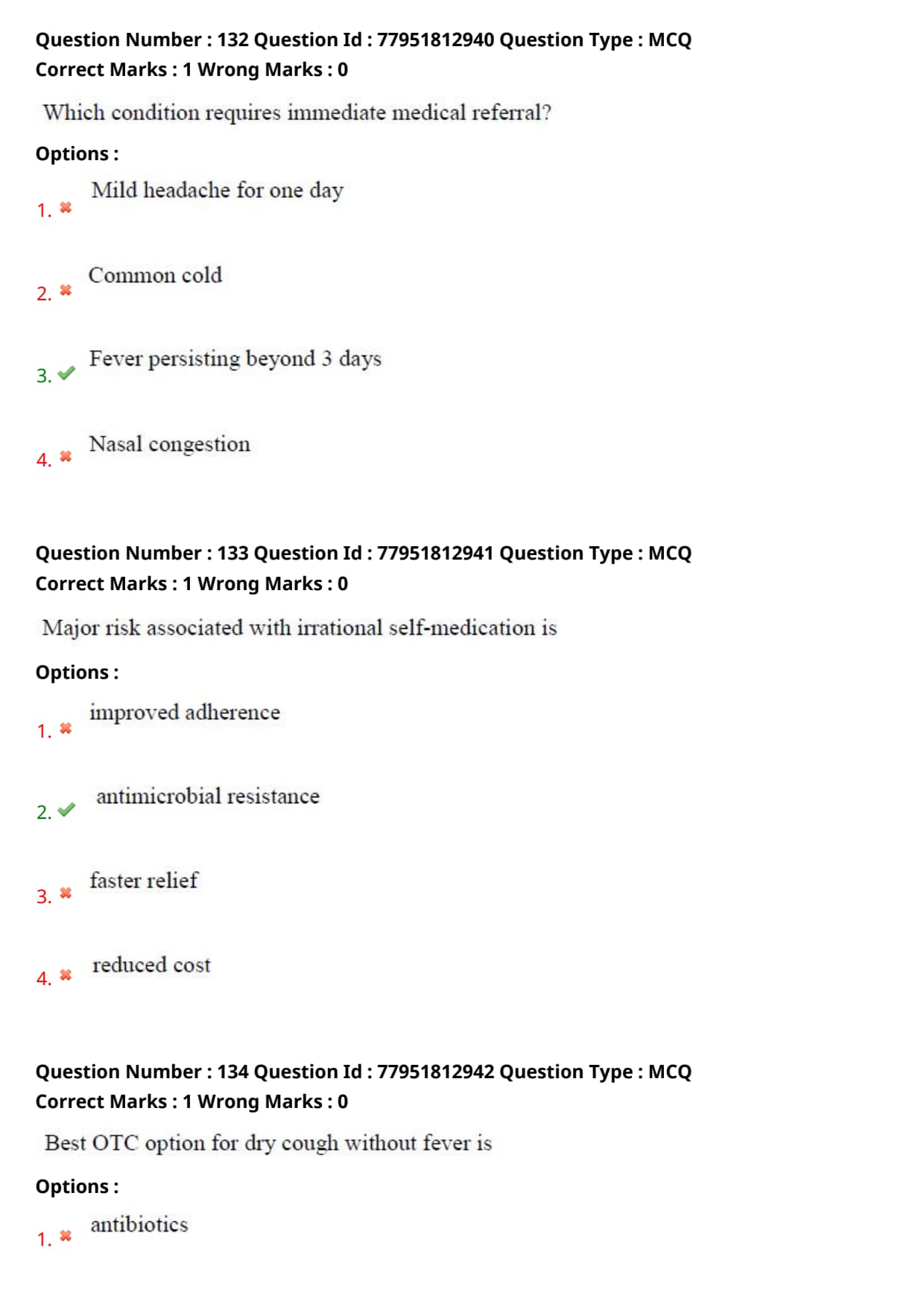
Question 132:
Which condition requires immediate medical referral?
- (A) Mild headache for one day
- (B) Common cold
- (C) Fever persisting beyond 3 days
- (D) Nasal congestion
Question 133:
Major risk associated with irrational self-medication is
- (A) Improved adherence
- (B) Antimicrobial resistance
- (C) Faster relief
- (D) Reduced cost
Question 134:
Best OTC option for dry cough without fever is
- (A) Antibiotics
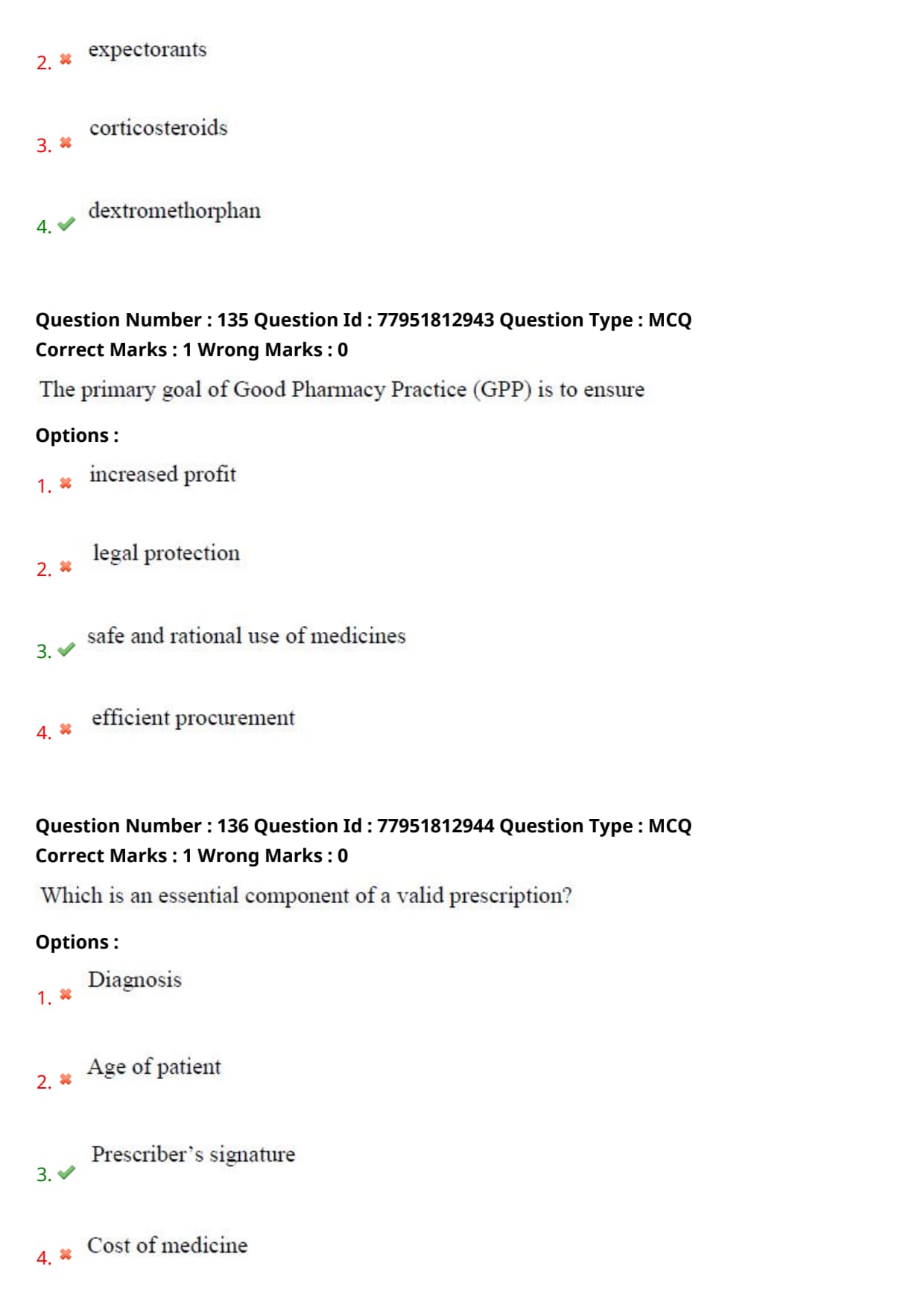
- (B) Expectorants
- (C) Corticosteroids
- (D) Dextromethorphan
Question 135:
The primary goal of Good Pharmacy Practice (GPP) is to ensure
- (A) Increased profit
- (B) Legal protection
- (C) Safe and rational use of medicines
- (D) Efficient procurement
Question 136:
Which is an essential component of a valid prescription?
- (A) Diagnosis
- (B) Age of patient
- (C) Prescriber's signature
- (D) Cost of medicine
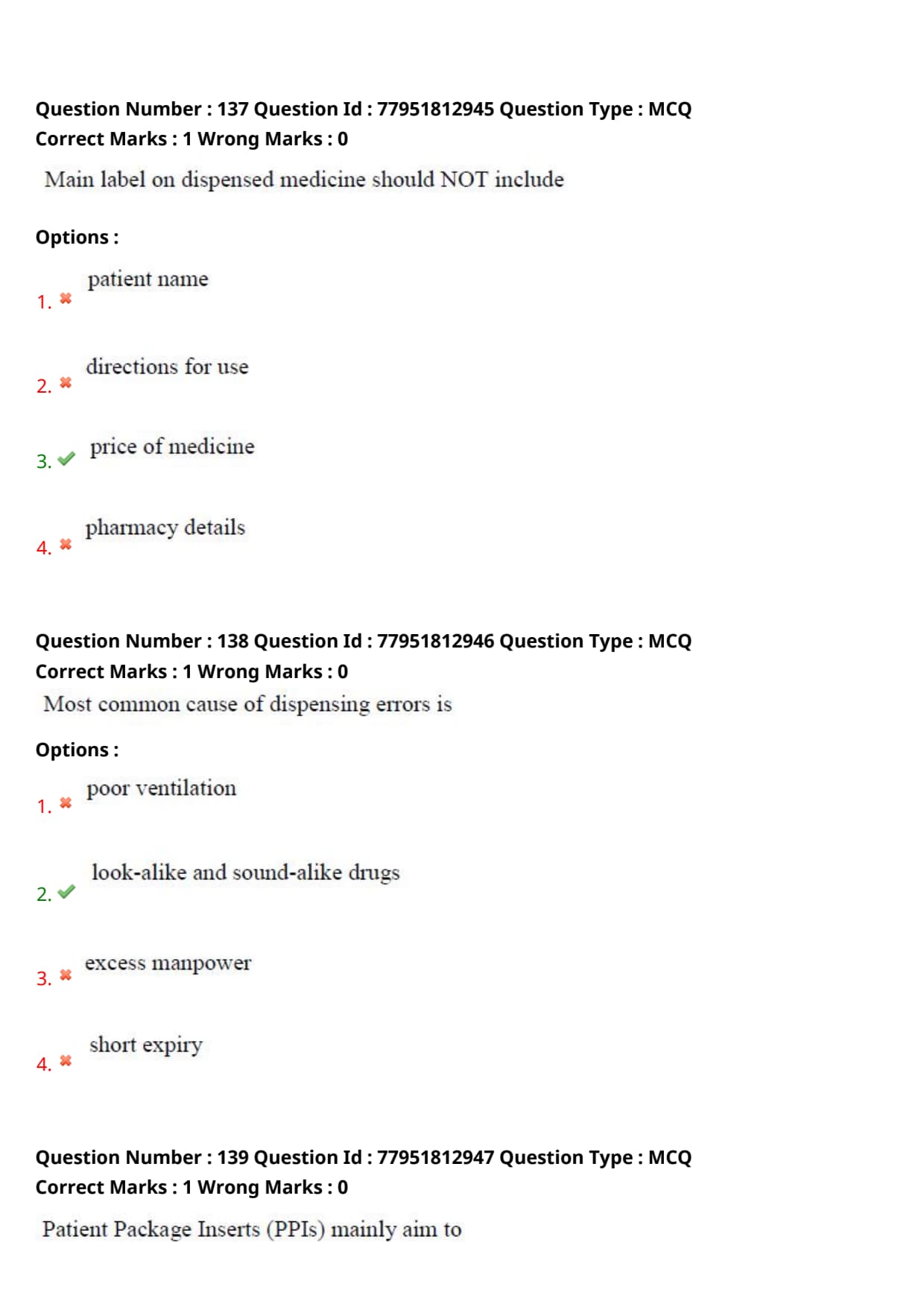
Question 137:
Main label on dispensed medicine should NOT include
- (A) Patient name
- (B) Directions for use
- (C) Price of medicine
- (D) Pharmacy details
Question 138:
Most common cause of dispensing errors is
- (A) Poor ventilation
- (B) Look-alike and sound-alike drugs
- (C) Excess manpower
- (D) Short expiry
Question 139:
Patient Package Inserts (PPIs) mainly aim to
- (A) Promote brands
- (B) Replace pharmacist counselling
- (C) Meet marketing needs
- (D) Provide standardized drug information for safe use
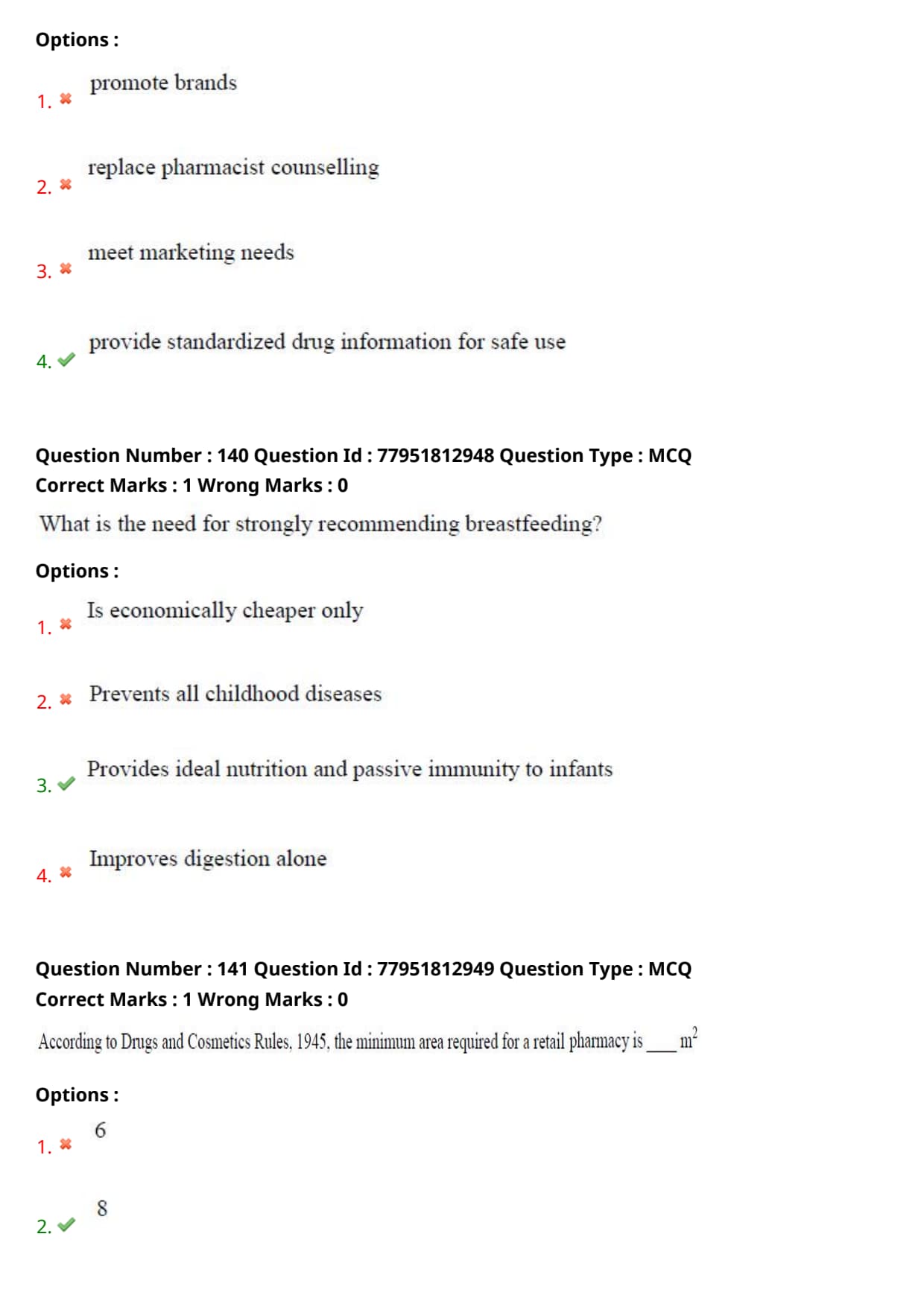
Question 140:
What is the need for strongly recommending breastfeeding?
- (A) Is economically cheaper only
- (B) Prevents all childhood diseases
- (C) Provides ideal nutrition and passive immunity to infants
- (D) Improves digestion alone
Question 141:
According to Drugs and Cosmetics Rules, 1945, the minimum area required for a retail pharmacy is _______ \(m^2\).
- (A) 6
- (B) 8
- (C) 10
- (D) 12
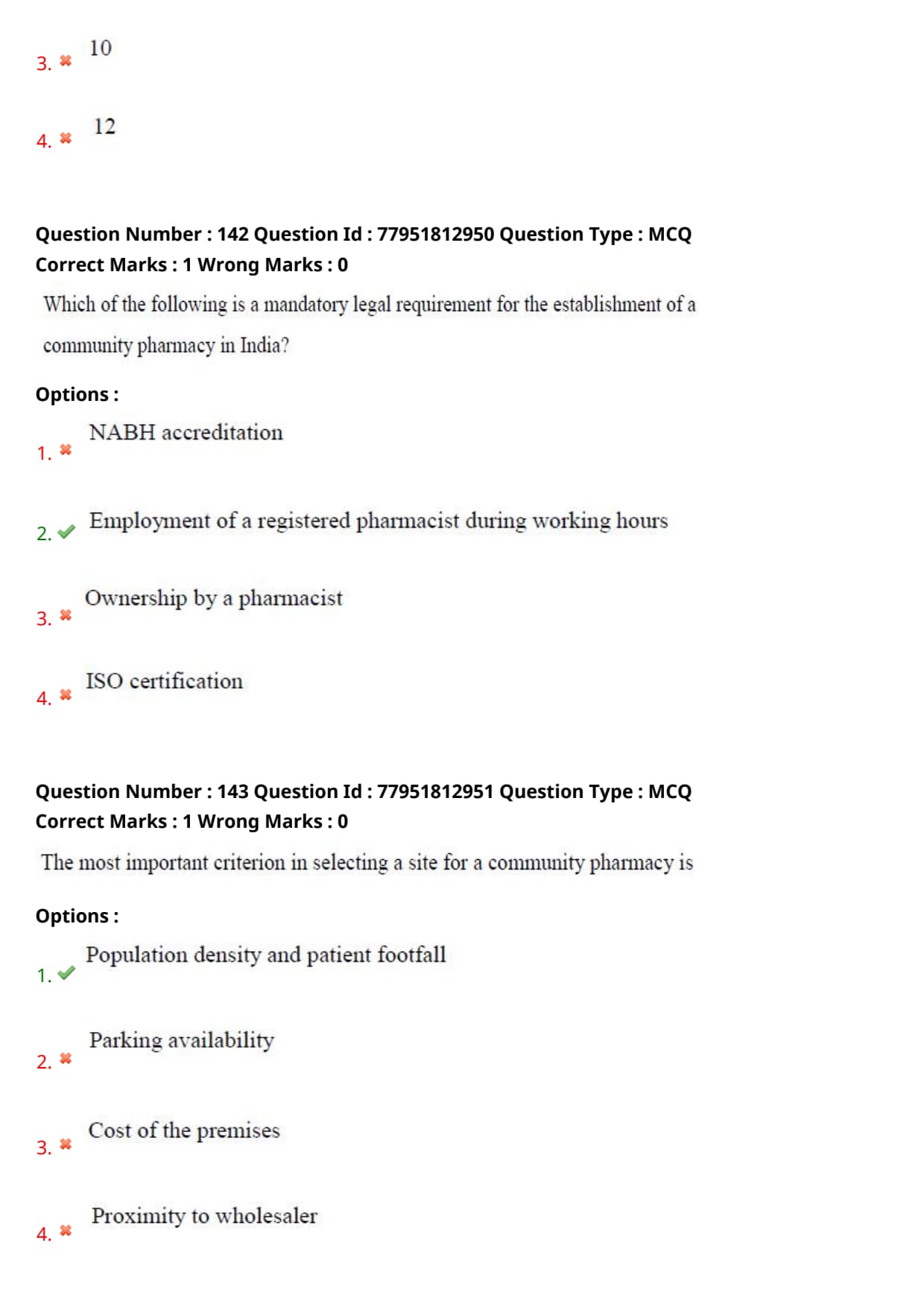
Question 142:
Which of the following is a mandatory legal requirement for the establishment of a community pharmacy in India?
- (A) NABH accreditation
- (B) Employment of a registered pharmacist during working hours
- (C) Ownership by a pharmacist
- (D) ISO certification
Question 143:
The most important criterion in selecting a site for a community pharmacy is
- (A) Population density and patient footfall
- (B) Parking availability
- (C) Cost of the premises
- (D) Proximity to wholesaler
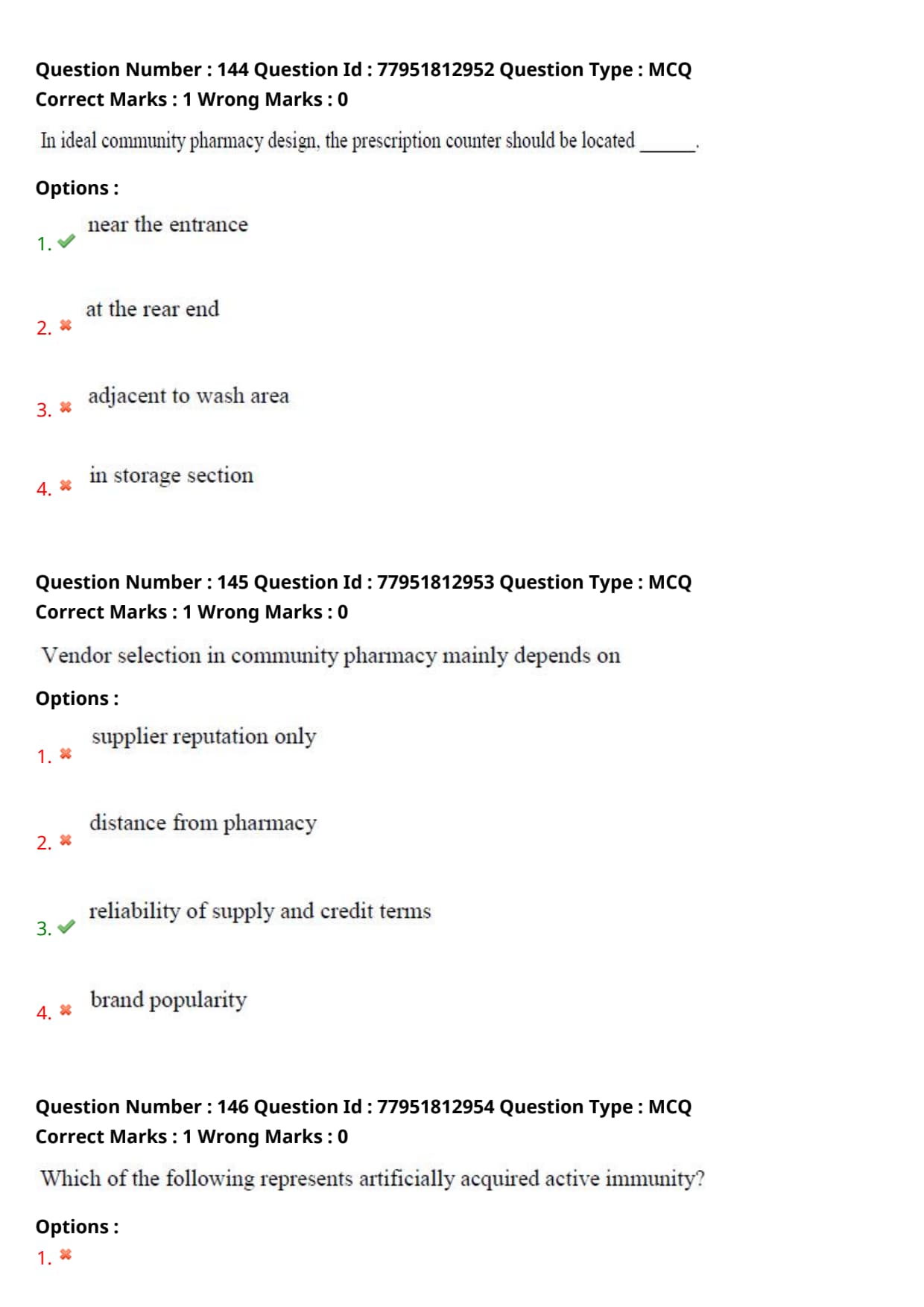
Question 144:
In ideal community pharmacy design, the prescription counter should be located _________.
- (A) Near the entrance
- (B) At the rear end
- (C) Adjacent to wash area
- (D) In storage section
Question 145:
Vendor selection in community pharmacy mainly depends on
- (A) Supplier reputation only
- (B) Distance from pharmacy
- (C) Reliability of supply and credit terms
- (D) Brand popularity
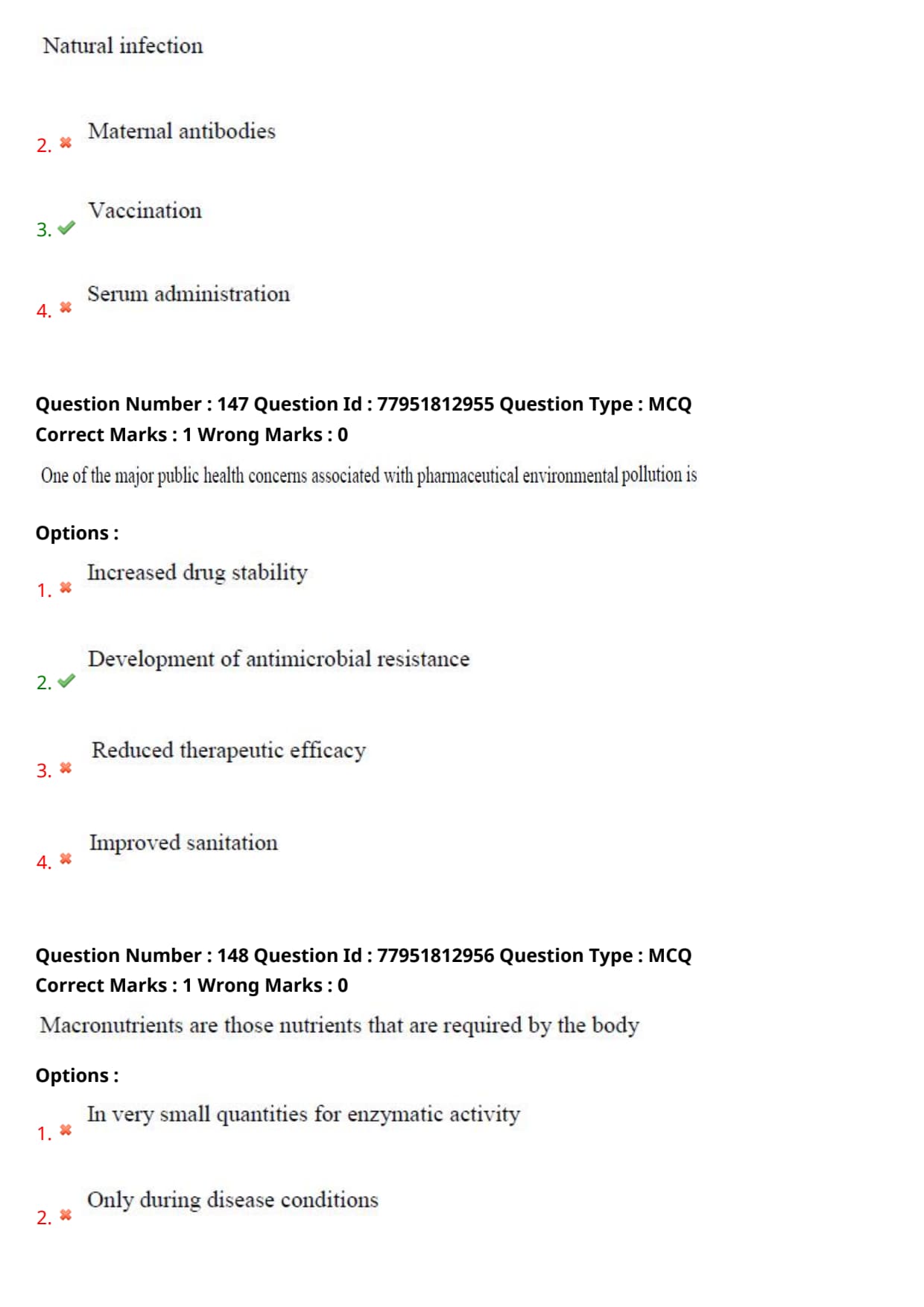
Question 146:
Which of the following represents artificially acquired active immunity?
- (A) Natural infection
- (B) Maternal antibodies
- (C) Vaccination
- (D) Serum administration
Question 147:
One of the major public health concerns associated with pharmaceutical environmental pollution is
- (A) Increased drug stability
- (B) Development of antimicrobial resistance
- (C) Reduced therapeutic efficacy
- (D) Improved sanitation
Question 148:
Macronutrients are those nutrients that are required by the body
- (A) In very small quantities for enzymatic activity
- (B) Only during disease conditions
- (C) In large amounts for energy and growth
- (D) Only for metabolic regulation
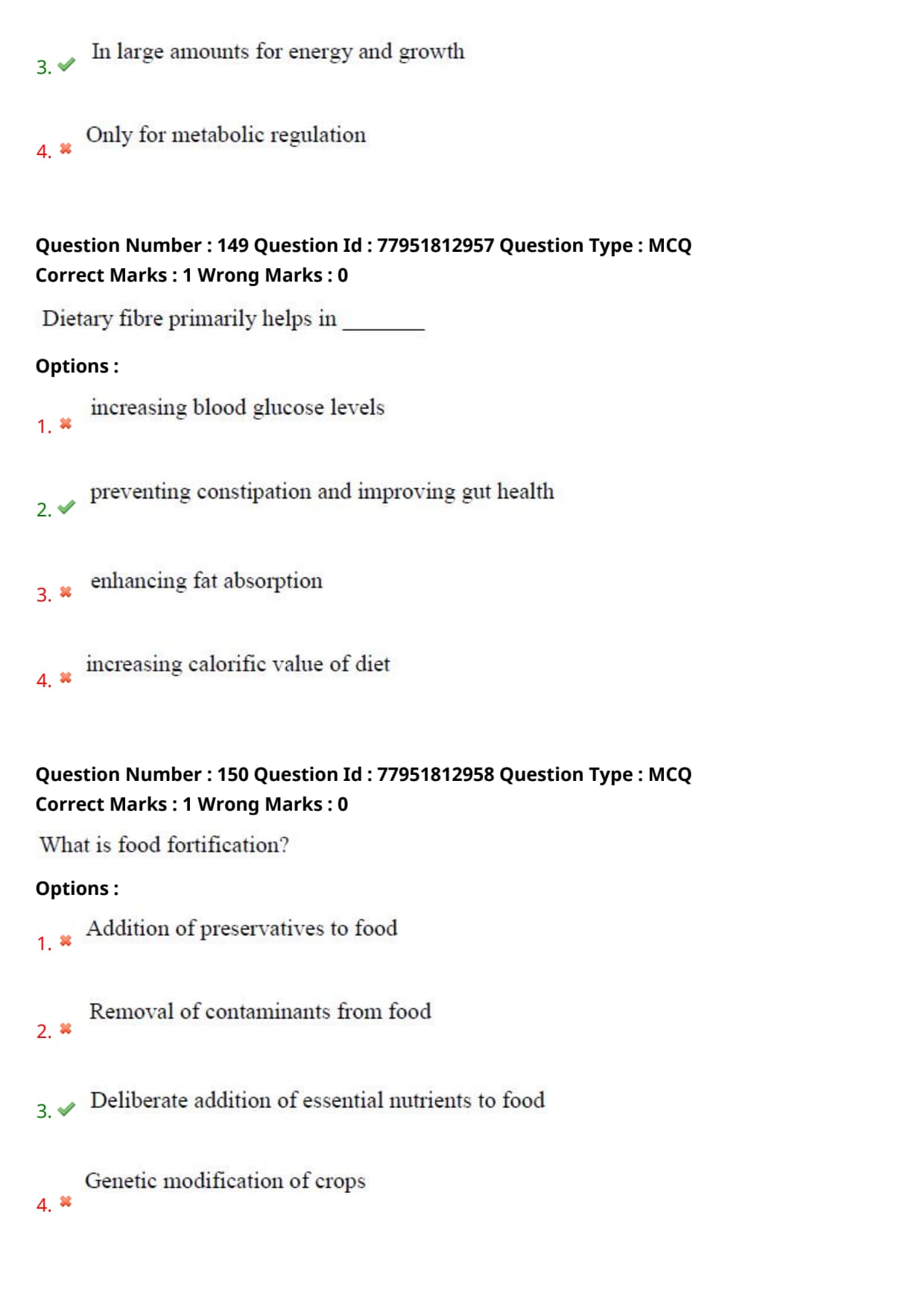
Question 149:
Dietary fibre primarily helps in _________.
- (A) Increasing blood glucose levels
- (B) Preventing constipation and improving gut health
- (C) Enhancing fat absorption
- (D) Increasing calorific value of diet
Question 150:
What is food fortification?
- (A) Addition of preservatives to food
- (B) Removal of contaminants from food
- (C) Deliberate addition of essential nutrients to food
- (D) Genetic modification of crops
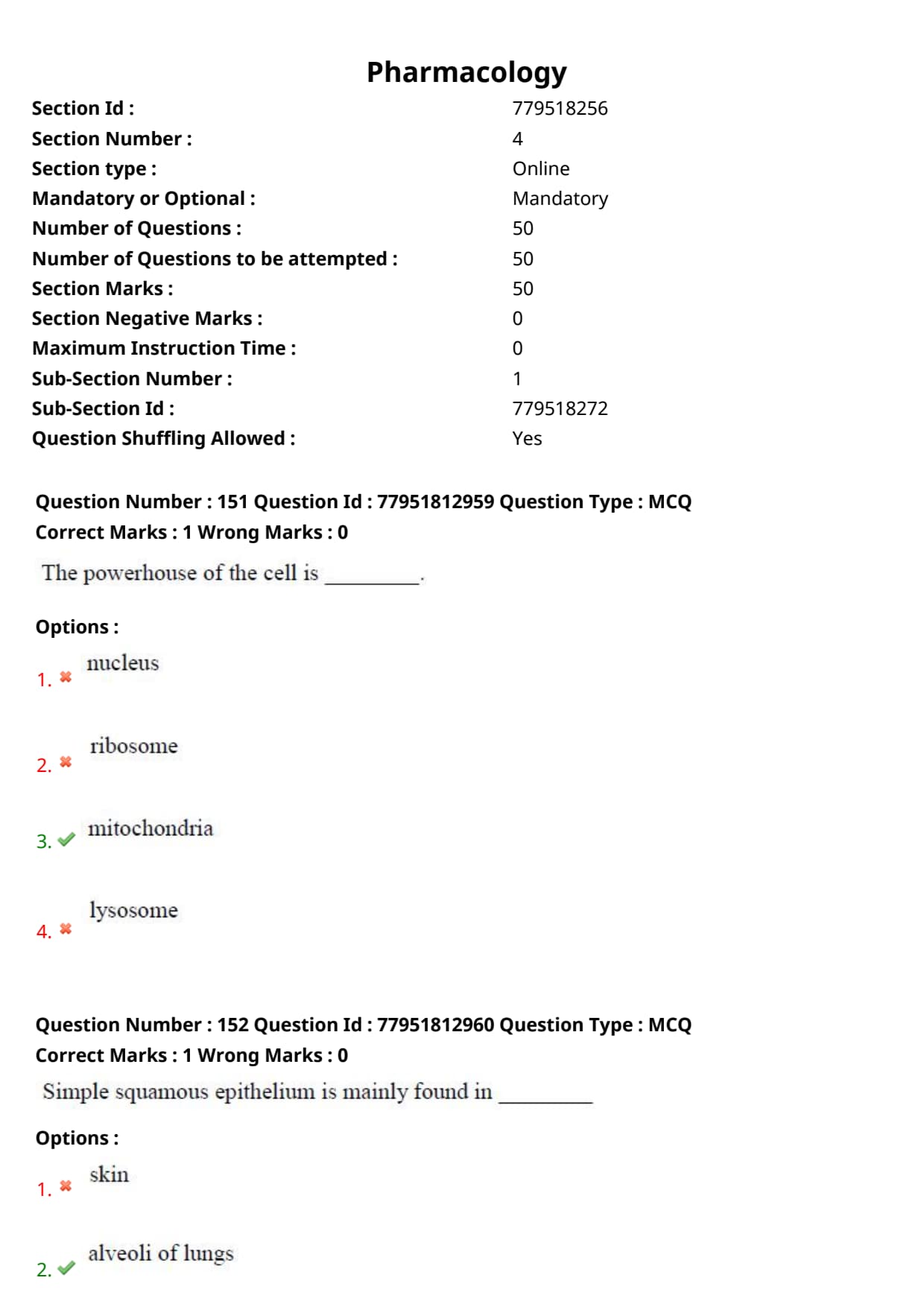
Question 151:
The powerhouse of a cell is
- (A) Nucleus
- (B) Mitochondria
- (C) Ribosomes
- (D) Lysosomes
Question 152:
Simple squamous epithelium is found in
- (A) Skin
- (B) Alveoli of lungs
- (C) Tendon
- (D) Brain
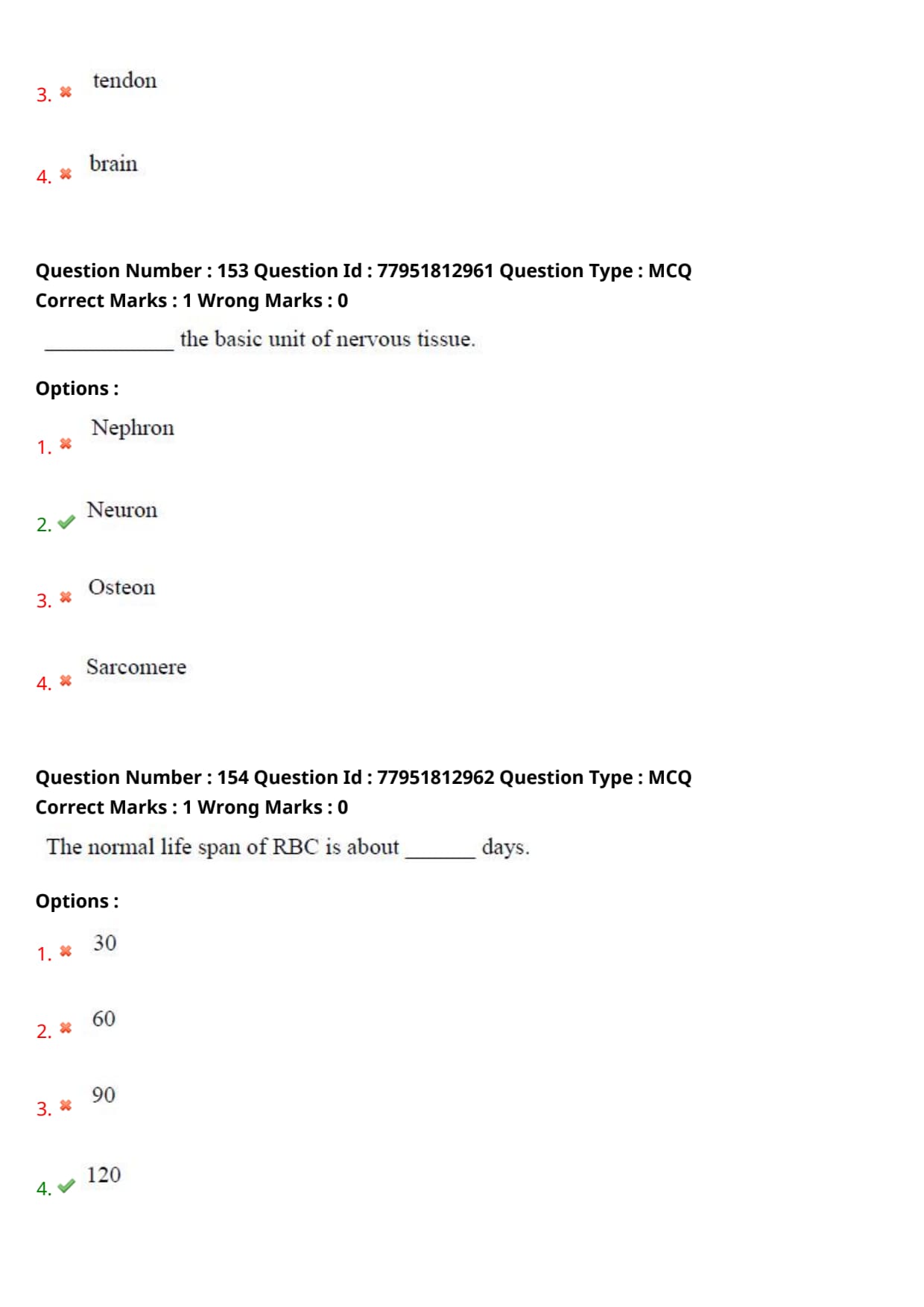
Question 153:
Functional unit of nervous tissue is
- (A) Neuron
- (B) Nephron
- (C) Osteon
- (D) Sarcomere
Question 154:
Normal life span of RBC is approximately
- (A) 60 days
- (B) 90 days
- (C) 120 days
- (D) 180 days
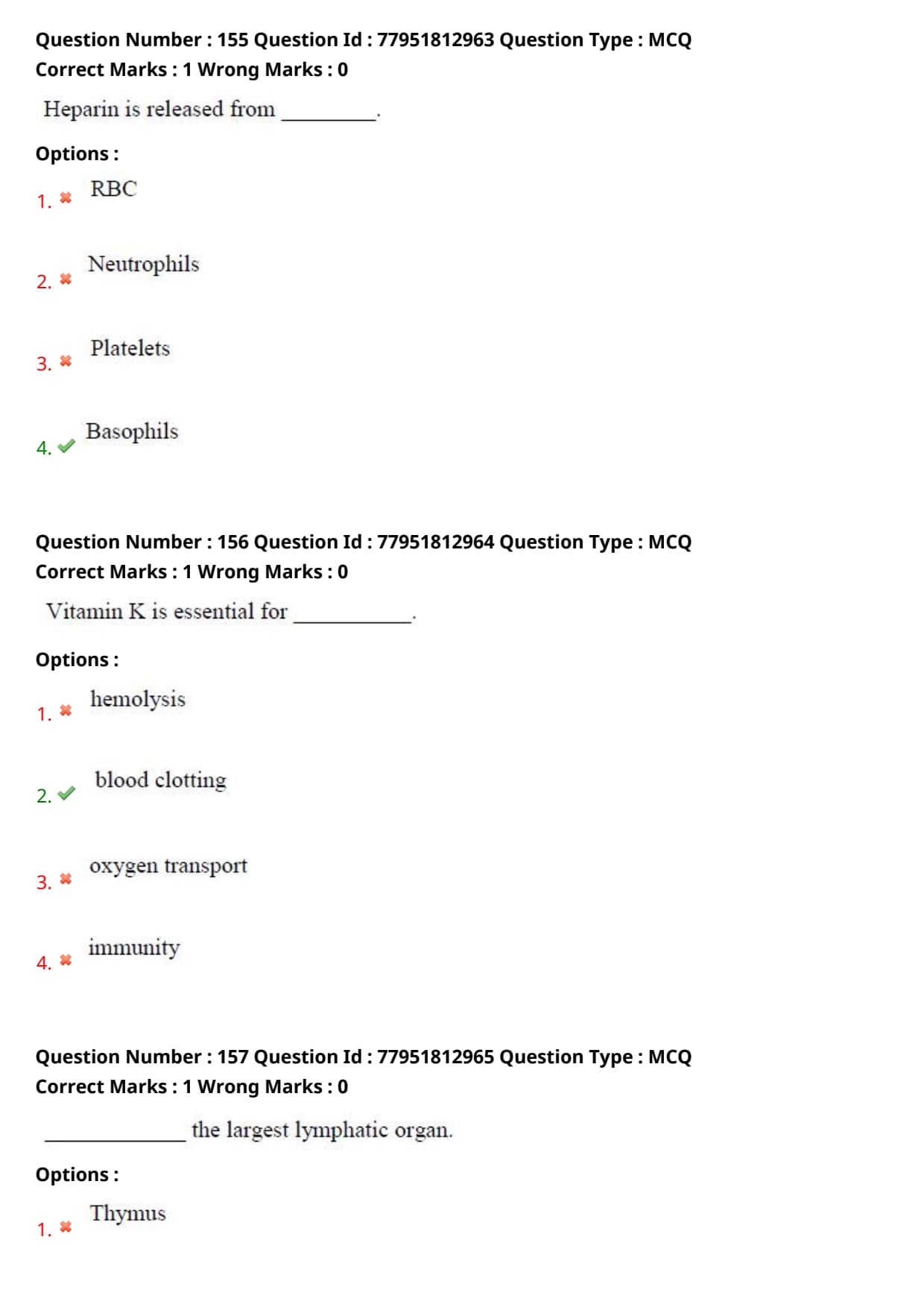
Question 155:
Heparin is secreted by
- (A) Neutrophils
- (B) Eosinophils
- (C) Basophils
- (D) Platelets
Question 156:
Vitamin essential for blood clotting is
- (A) Vitamin A
- (B) Vitamin C
- (C) Vitamin D
- (D) Vitamin K
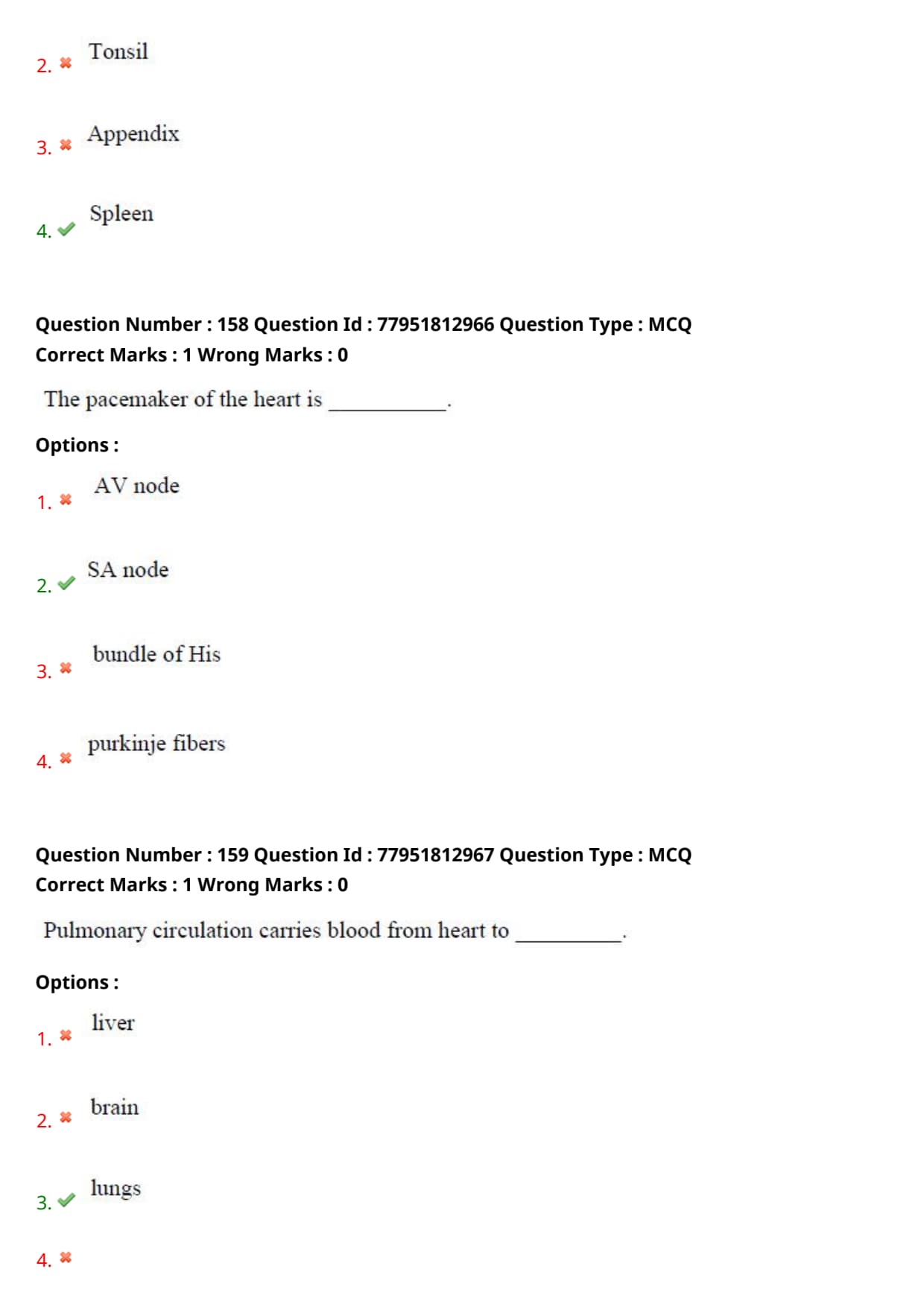
Question 157:
Largest lymphatic organ in human body is
- (A) Thymus
- (B) Spleen
- (C) Tonsil
- (D) Lymph node
Question 158:
The pacemaker of heart is
- (A) AV node
- (B) SA node
- (C) Bundle of His
- (D) Purkinje fibres
Question 159:
Pulmonary circulation carries blood from
- (A) Heart to lungs
- (B) Liver to heart
- (C) Intestine to liver
- (D) Kidney to bladder
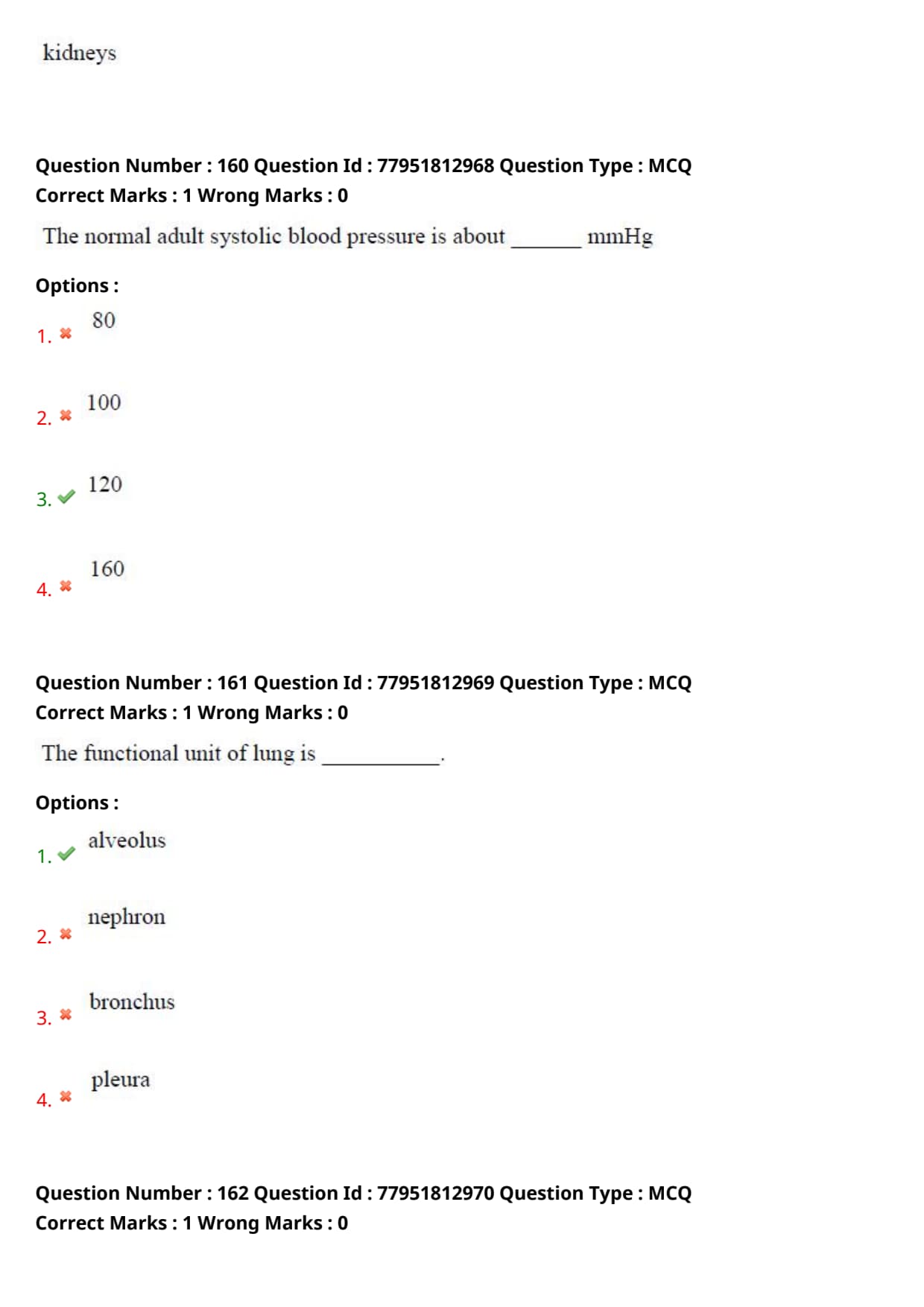
Question 160:
Normal systolic blood pressure in adult is
- (A) 80 mm Hg
- (B) 100 mm Hg
- (C) 120 mm Hg
- (D) 160 mm Hg
Question 161:
Functional unit of lungs is
- (A) Bronchus
- (B) Alveolus
- (C) Trachea
- (D) Pleura
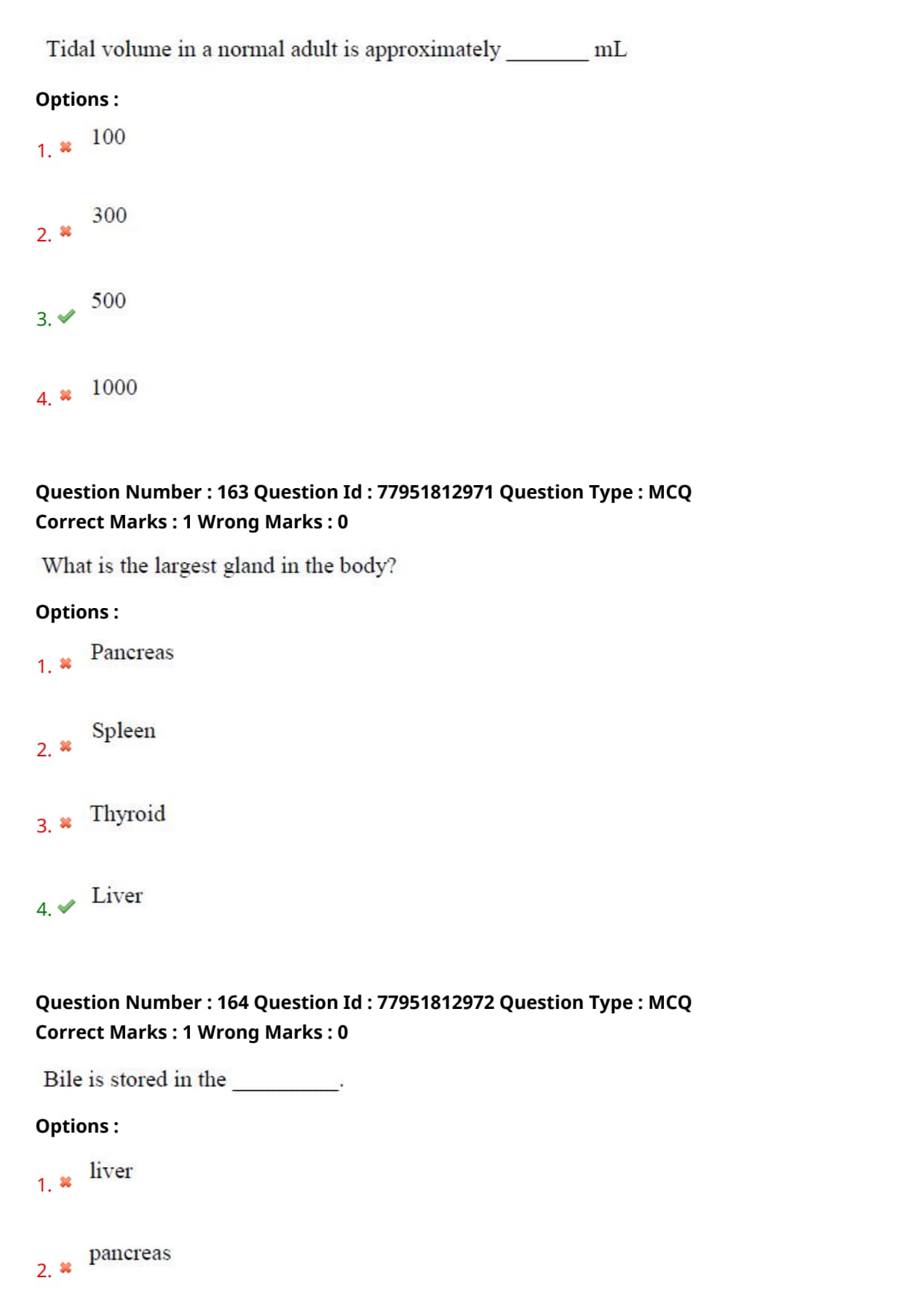
Question 162:
Normal tidal volume in adult is approximately
- (A) 100 mL
- (B) 500 mL
- (C) 1000 mL
- (D) 1500 mL
Question 163:
Largest gland in the human body is
- (A) Pituitary
- (B) Thyroid
- (C) Liver
- (D) Pancreas
Question 164:
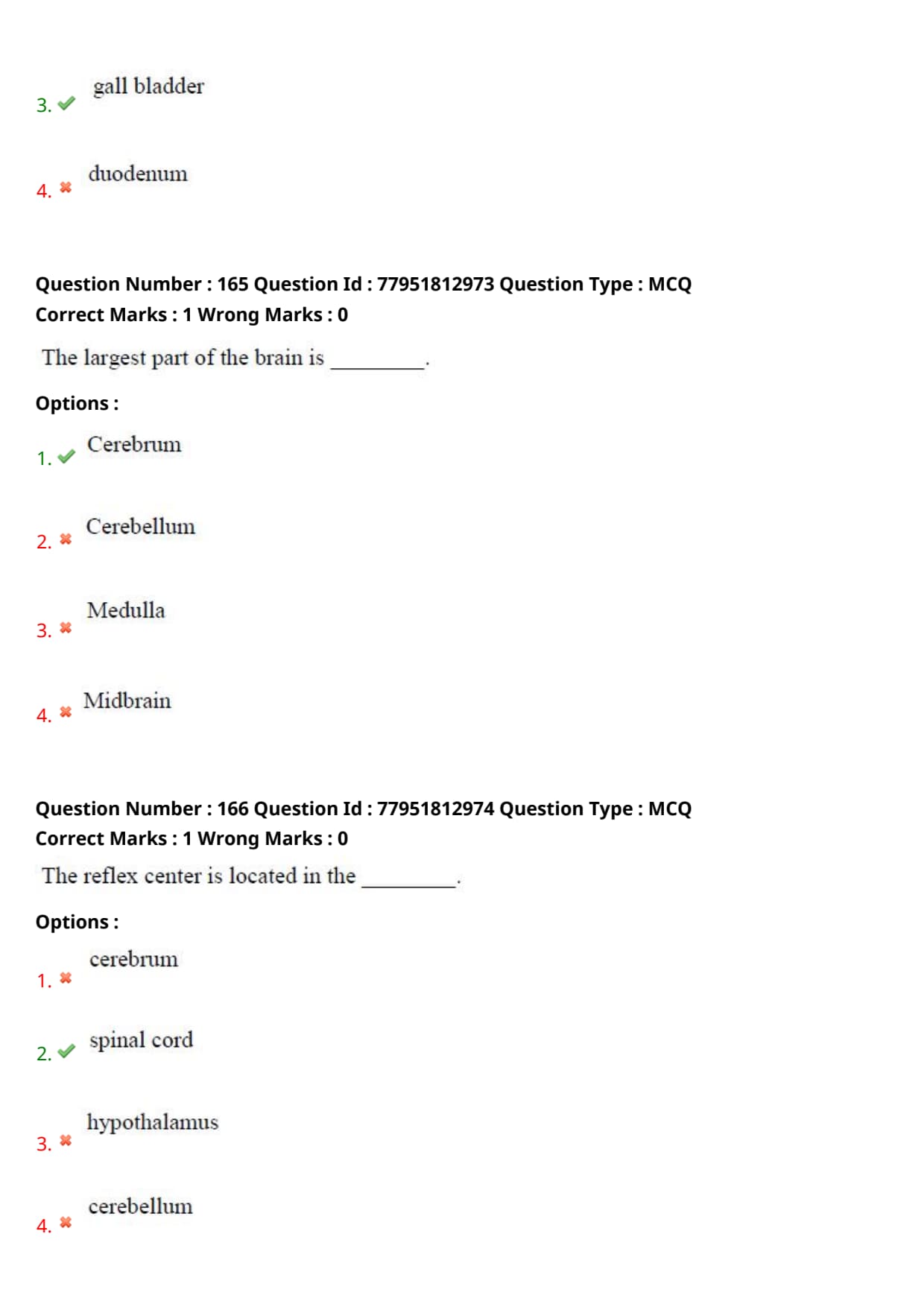
Bile is stored in
- (A) Liver
- (B) Pancreas
- (C) Gall bladder
- (D) Spleen
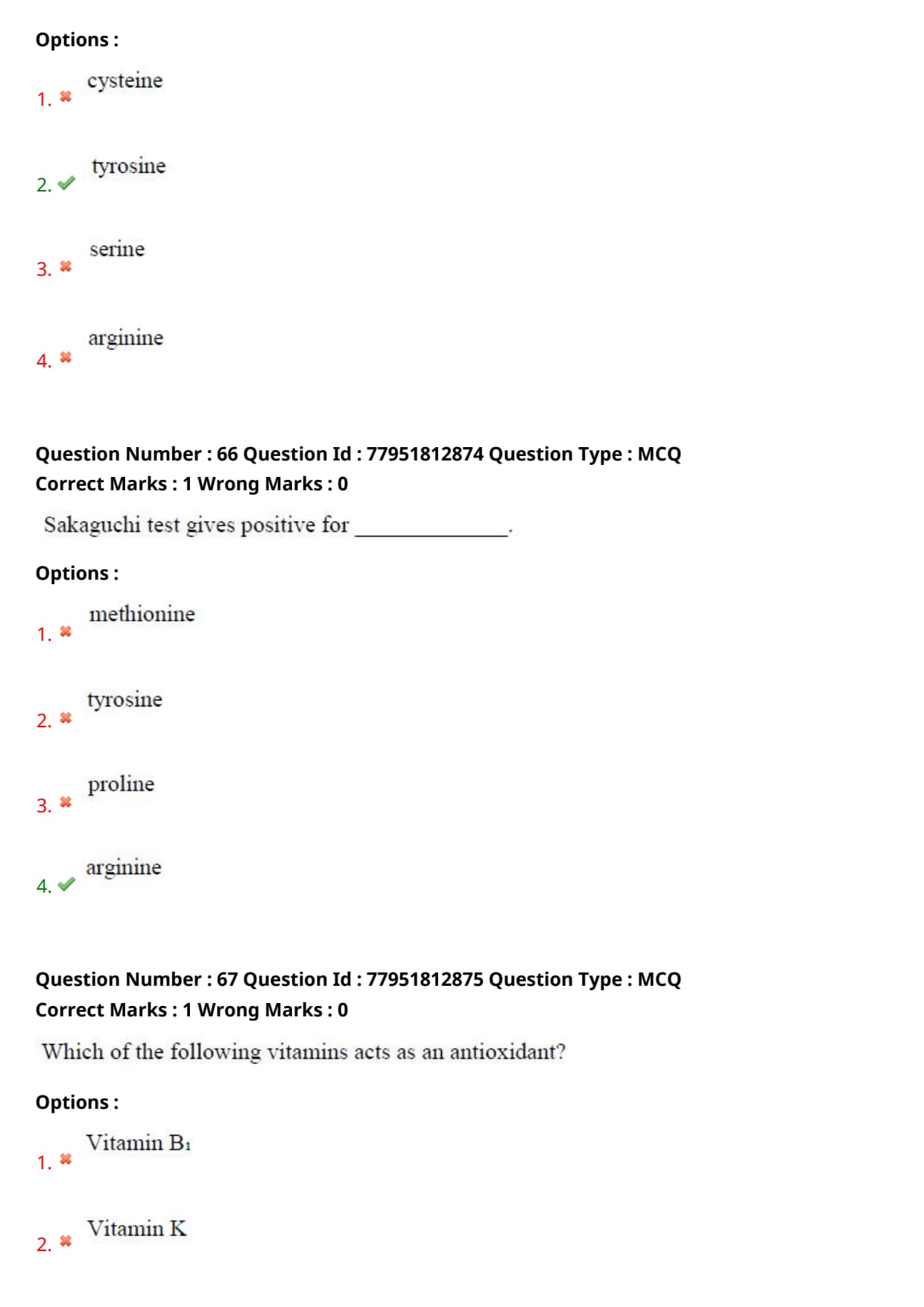
Question 165:
Which of the following vitamins acts as an antioxidant?
- (A) Vitamin B\(_1\)
- (B) Vitamin K
- (C) Vitamin E
- (D) Vitamin D
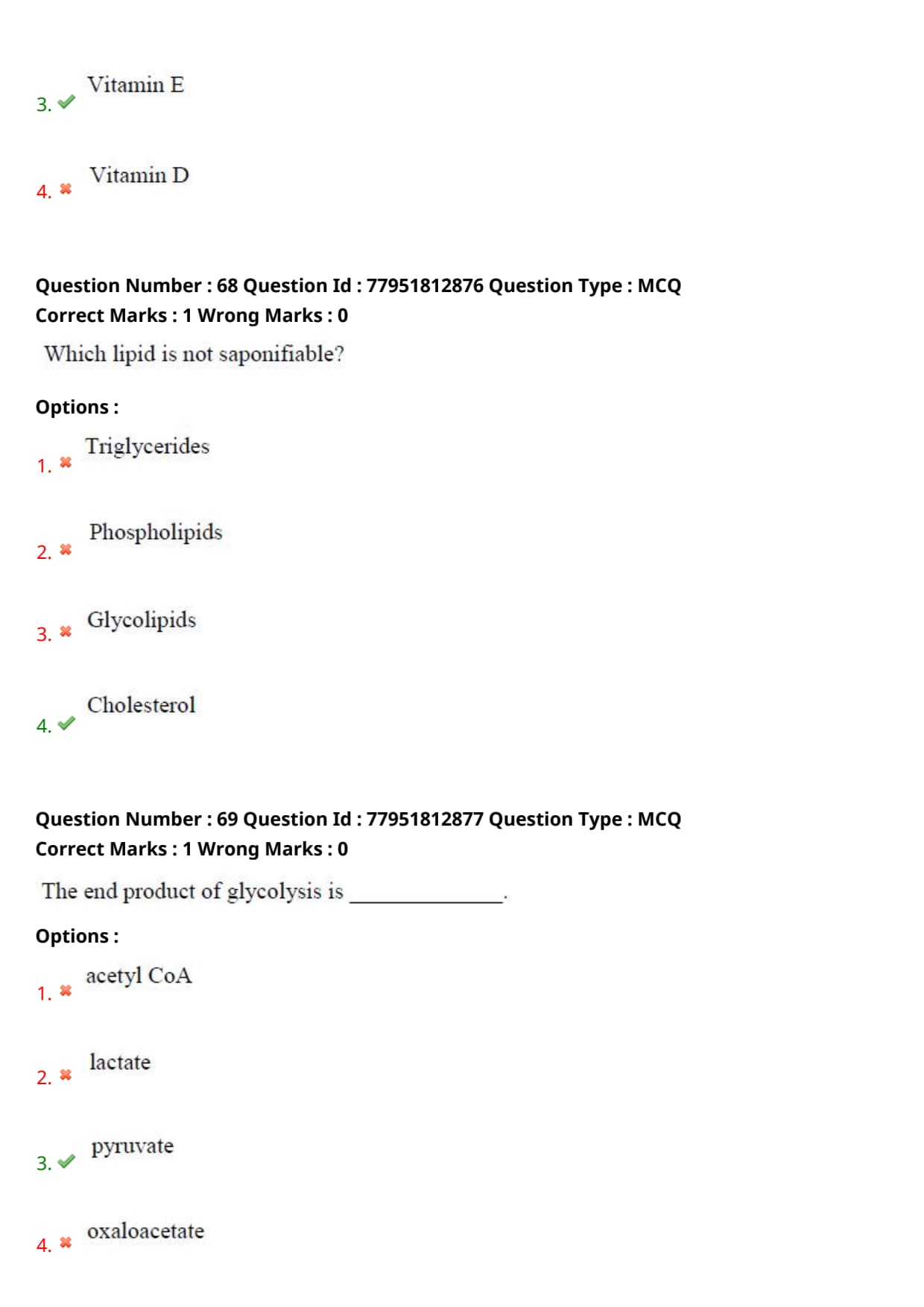
Question 166:
Which of the following is NOT a saponifiable lipid?
- (A) Triglycerides
- (B) Waxes
- (C) Cholesterol
- (D) Phospholipids
Question 167:
Which of the following is a common example of phospholipid present in cell membranes?
- (A) Lecithin
- (B) Cholesterol
- (C) Palmitic acid
- (D) Glucose
Question 168:
Which of the following lipoproteins transports dietary triglycerides from intestine to tissues?
- (A) VLDL
- (B) LDL
- (C) HDL
- (D) Chylomicrons
Question 169:
HDL is called good cholesterol because it
- (A) Transports cholesterol from tissues to liver
- (B) Transports triglycerides from intestine
- (C) Carries cholesterol from liver to tissues
- (D) Increases fat deposition in blood vessels
Question 170:
Which enzyme is involved in digestion of fats?
- (A) Amylase
- (B) Pepsin
- (C) Lipase
- (D) Trypsin
Question 171:
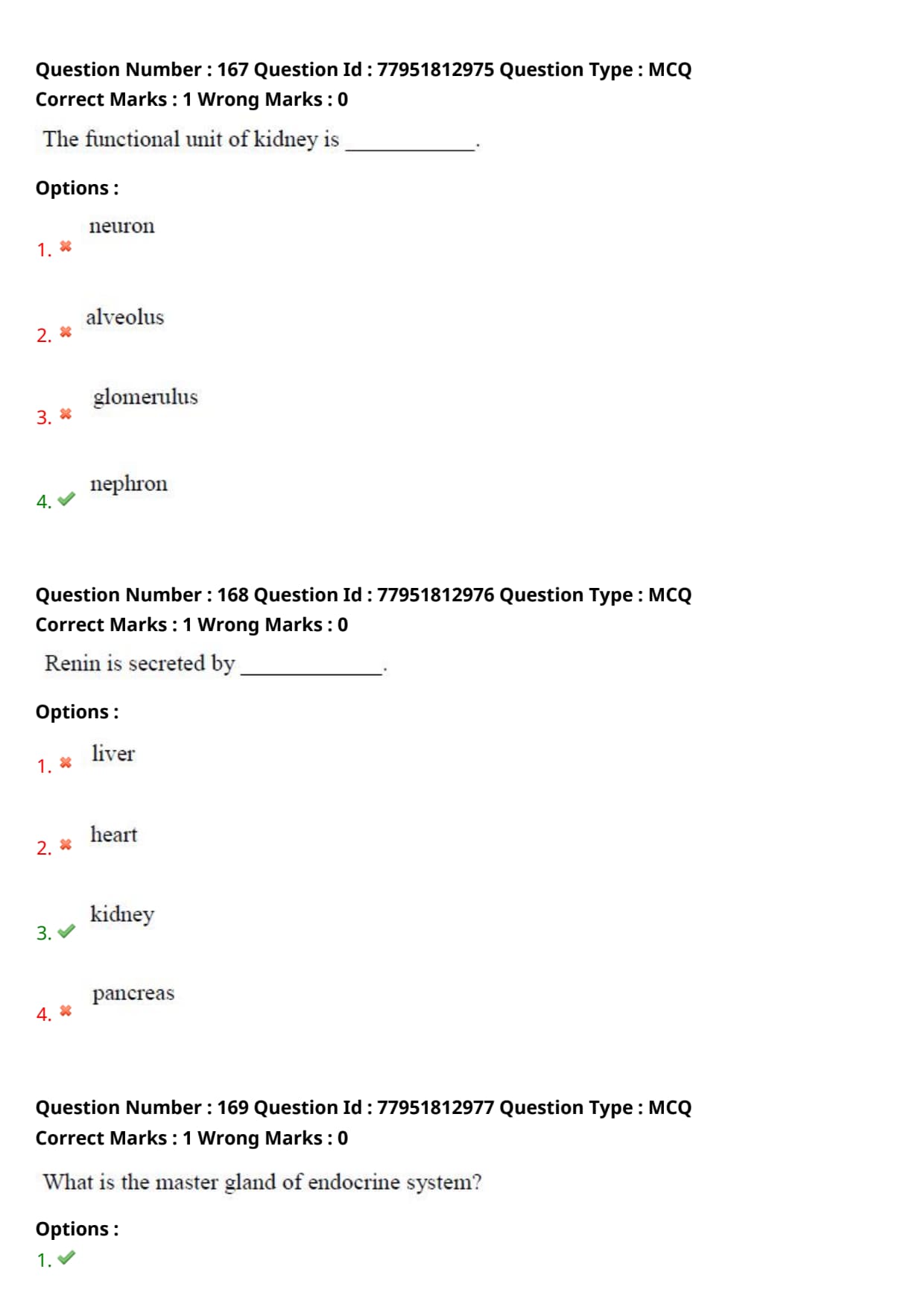
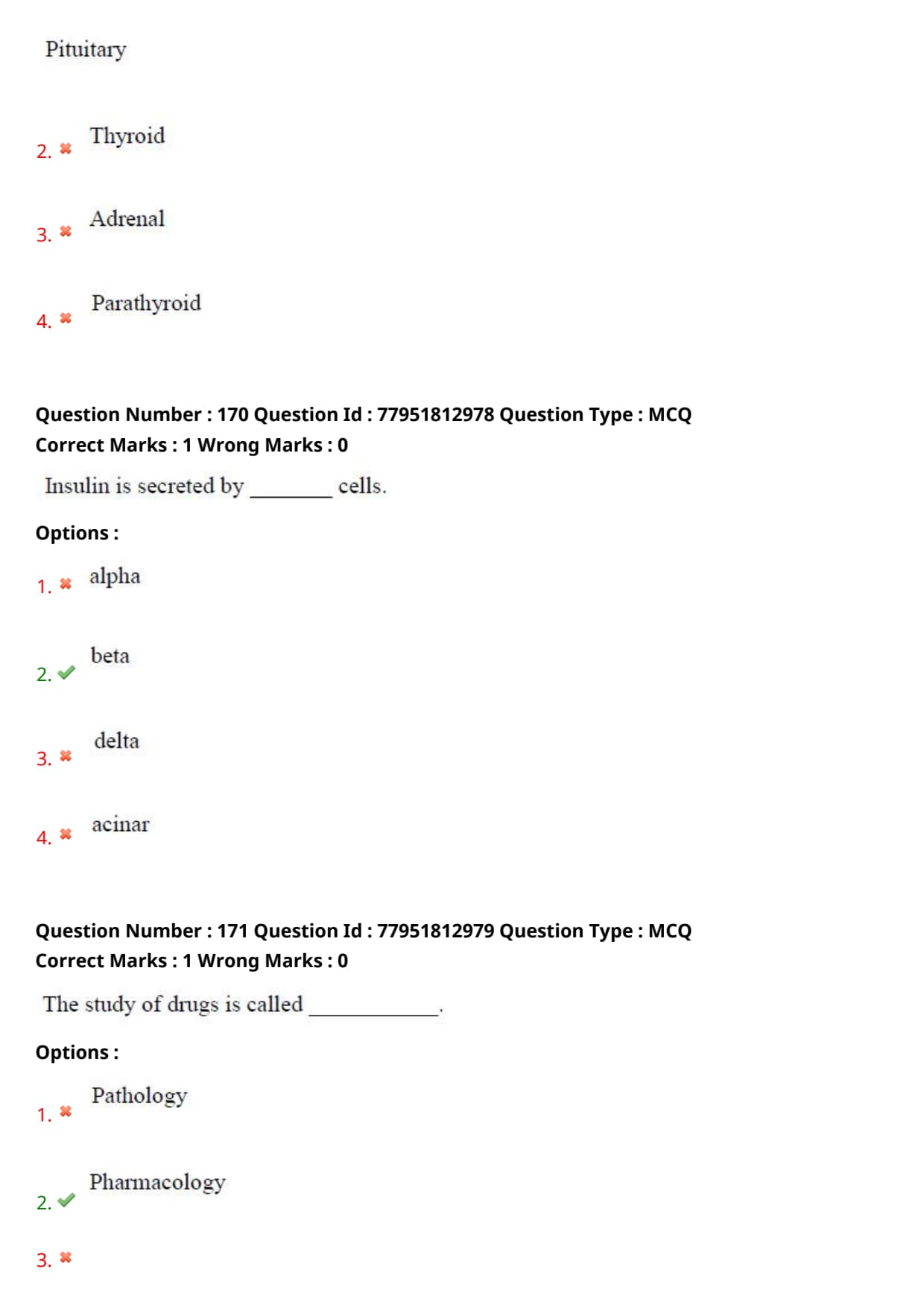
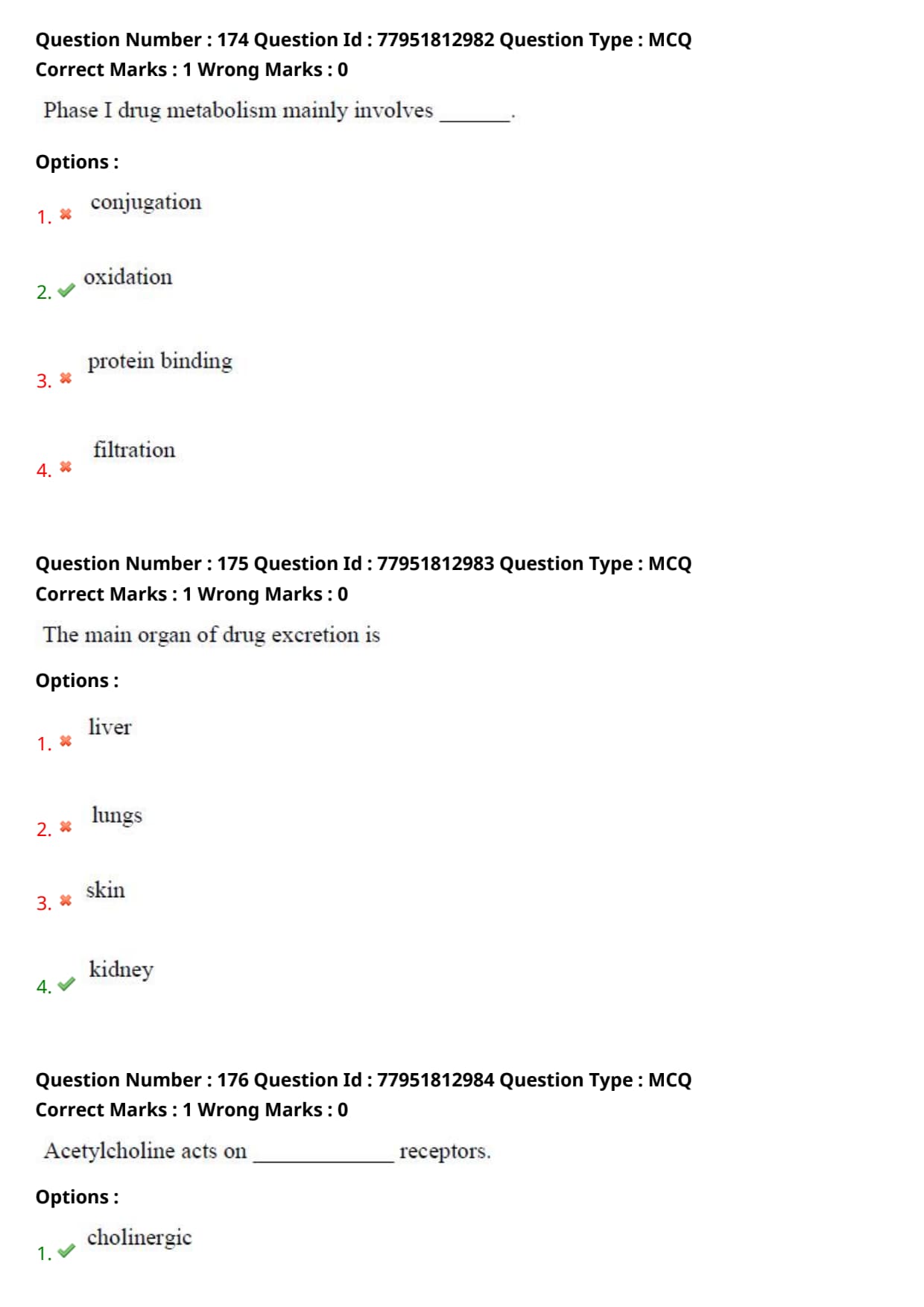
Insulin is secreted by _________.
- (A) Alpha cells
- (B) Beta cells
- (C) Delta cells
- (D) Acinar cells
Question 172:
Which route gives fastest drug absorption?
- (A) Oral
- (B) Intramuscular
- (C) Subcutaneous
- (D) Transdermal
Question 173:
First pass metabolism occurs mainly in _________.
- (A) Kidney
- (B) Liver
- (C) Lungs
- (D) Skin
Question 174:
Which route is suitable for unconscious patient?
- (A) Oral
- (B) Parenteral
- (C) Sublingual
- (D) Topical
Question 175:
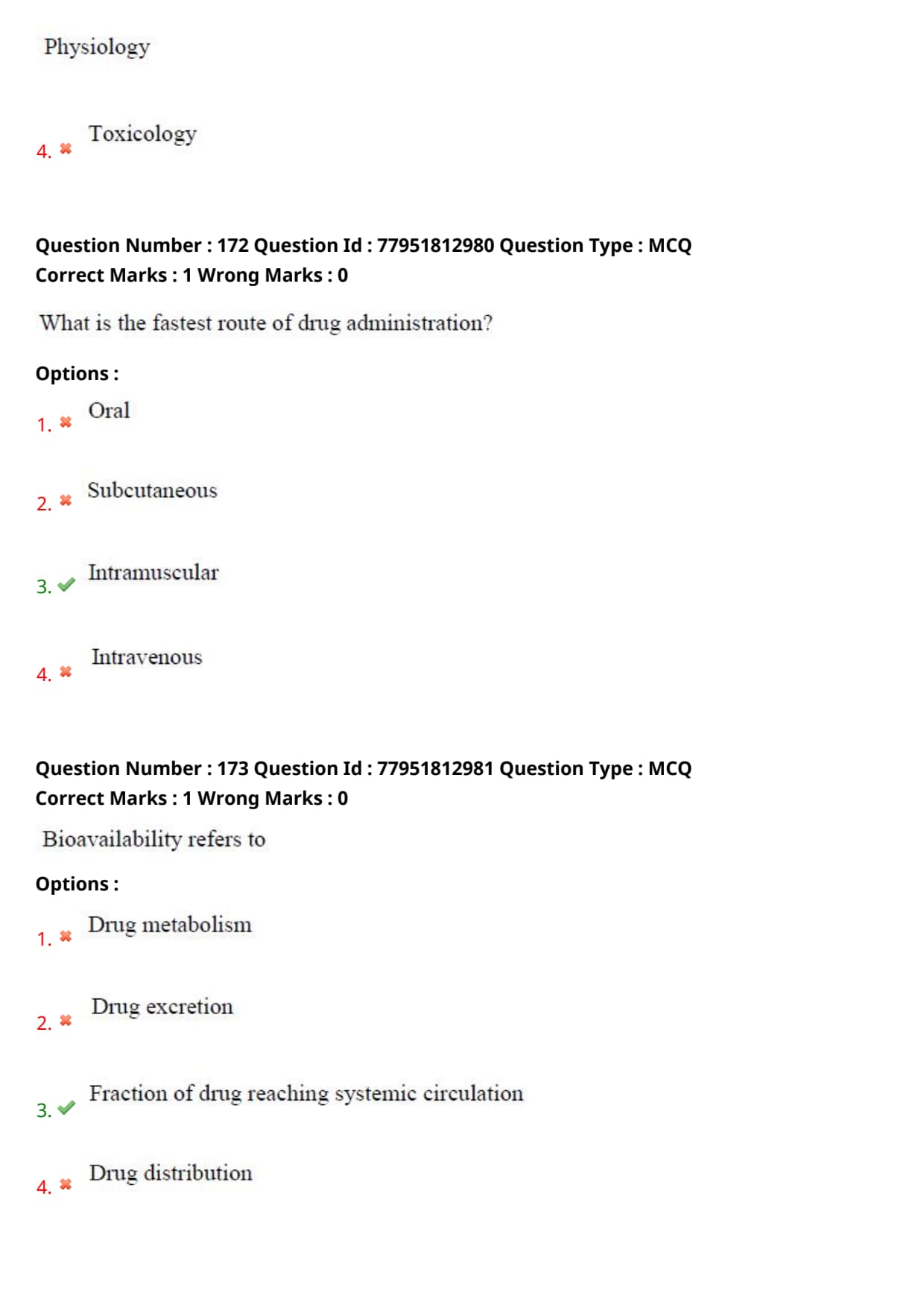
Bioavailability refers to _________.
- (A) Rate and extent of drug reaching systemic circulation
- (B) Drug protein binding
- (C) Drug metabolism
- (D) Drug excretion
Question 176:
Loading dose is given to _________.
- (A) Reduce toxicity
- (B) Achieve therapeutic level quickly
- (C) Increase excretion
- (D) Avoid absorption
Question 177:
Drug excretion mainly occurs through _________.
- (A) Liver
- (B) Kidney
- (C) Lungs
- (D) Skin
Question 178:
Antagonist is a drug which _________.
- (A) Activates receptor
- (B) Blocks receptor response
- (C) Increases absorption
- (D) Stimulates metabolism
Question 179:
The therapeutic index is defined as _________.
- (A) \(LD_{50}/ED_{50}\)
- (B) \(ED_{50}/LD_{50}\)
- (C) \(Dose/Time\)
- (D) \(Clearance/Volume\)
Question 180:
Placebo is _________.
- (A) Highly toxic drug
- (B) Inert substance with no specific pharmacological action
- (C) Antidote
- (D) Antibiotic
Question 181:
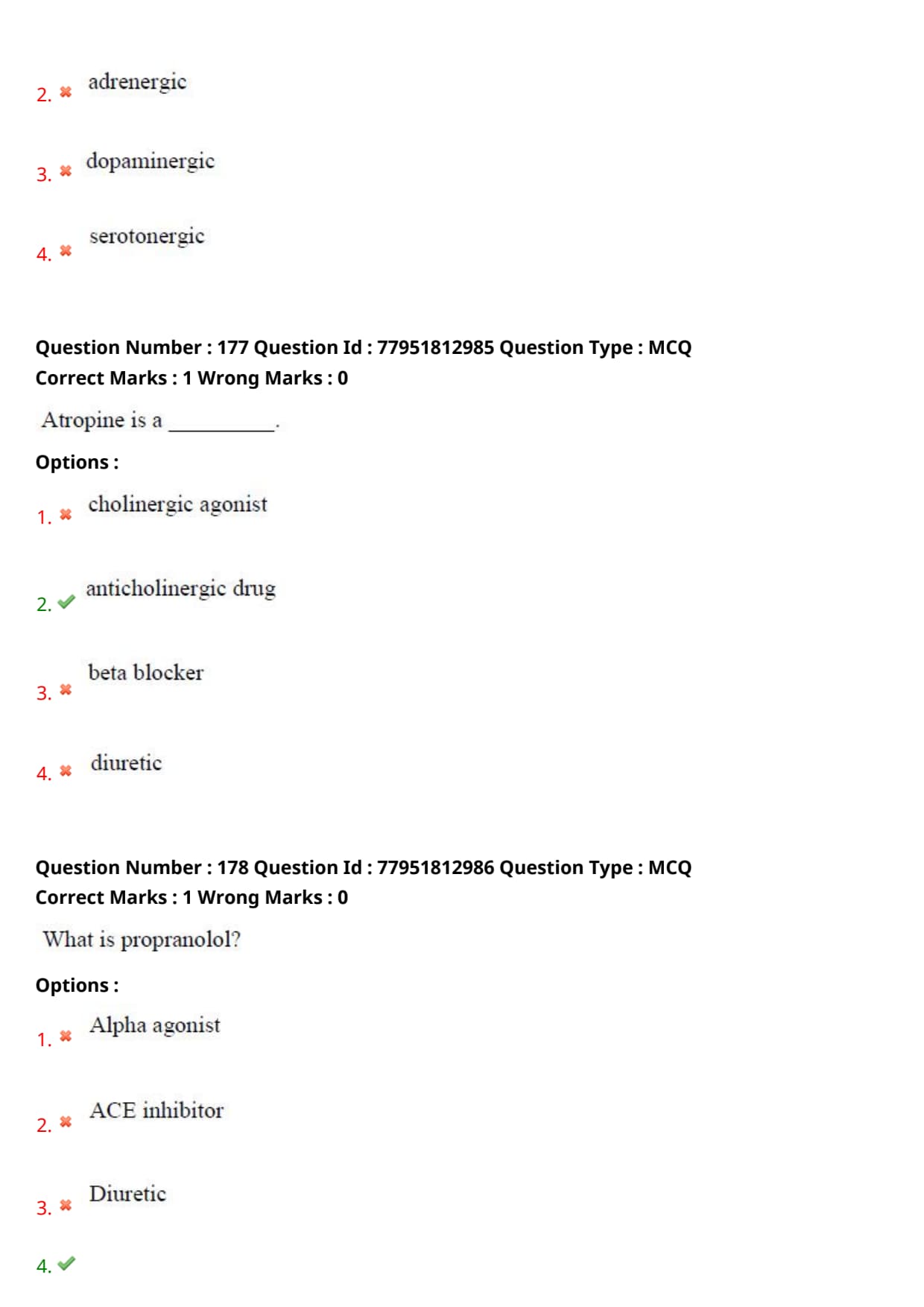
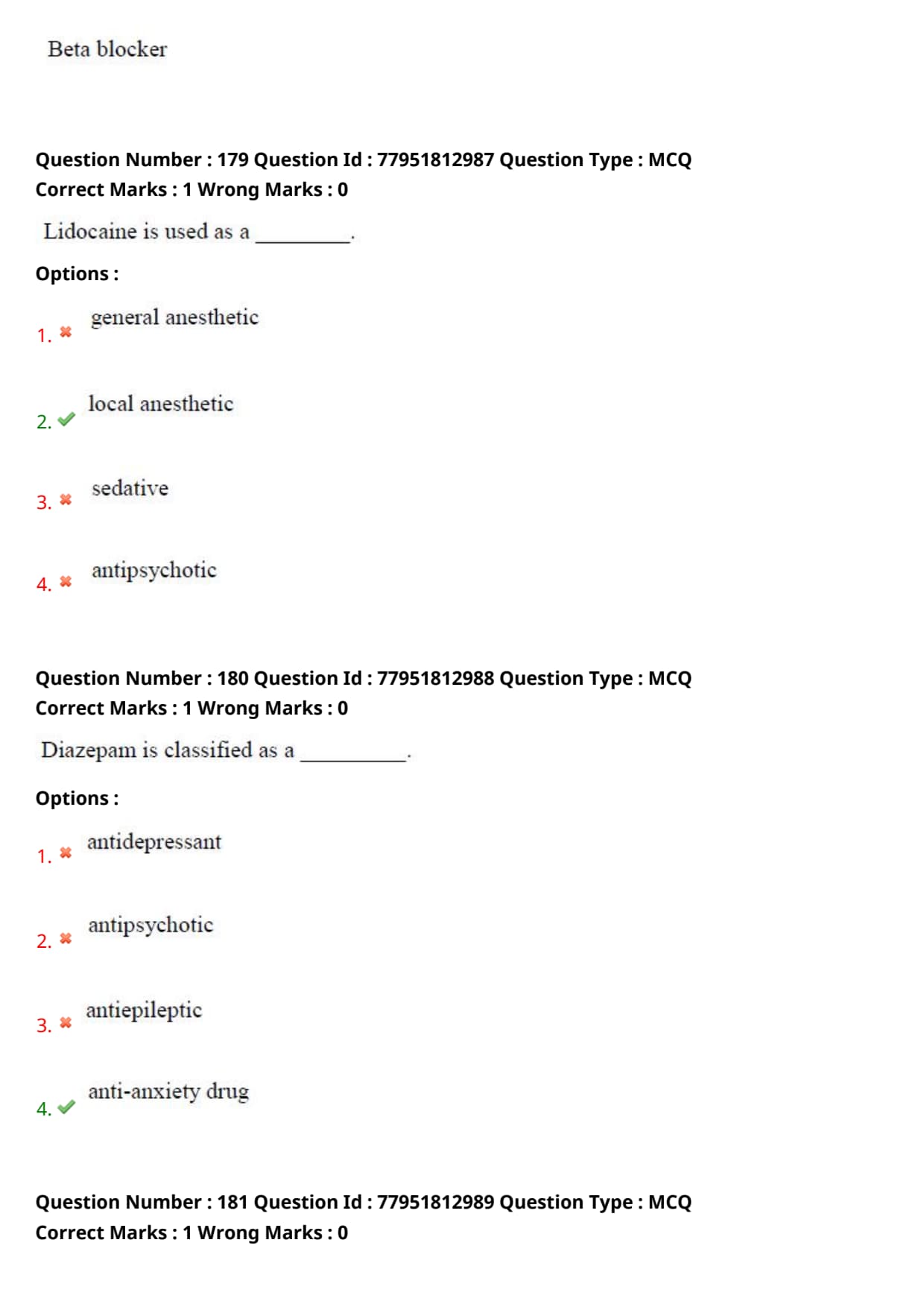
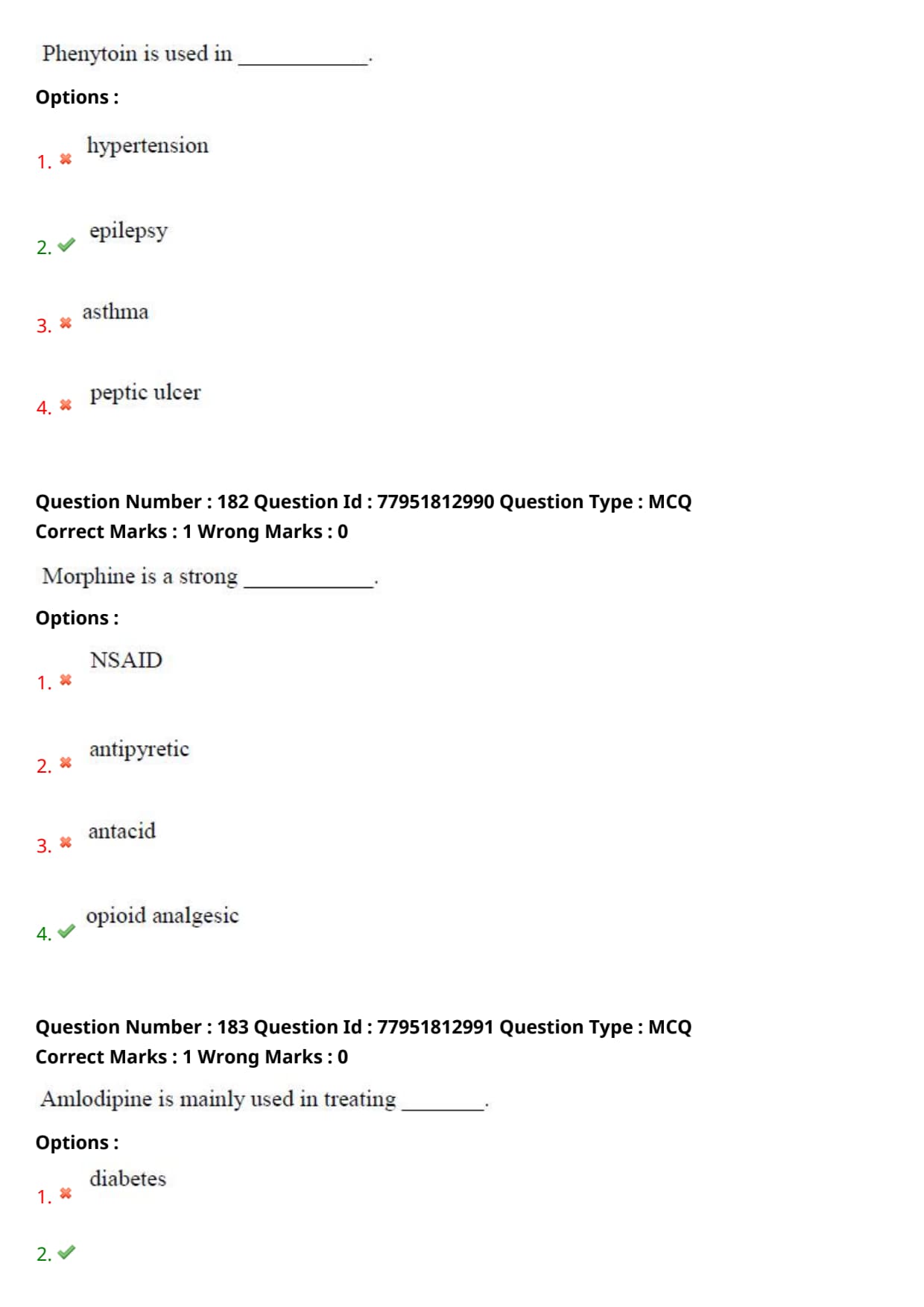
Phenytoin is mainly used in _________.
- (A) Hypertension
- (B) Epilepsy
- (C) Diabetes
- (D) Asthma
Question 182:
Atropine is obtained from _________.
- (A) Atropa belladonna
- (B) Digitalis purpurea
- (C) Rauwolfia serpentina
- (D) Papaver somniferum
Question 183:
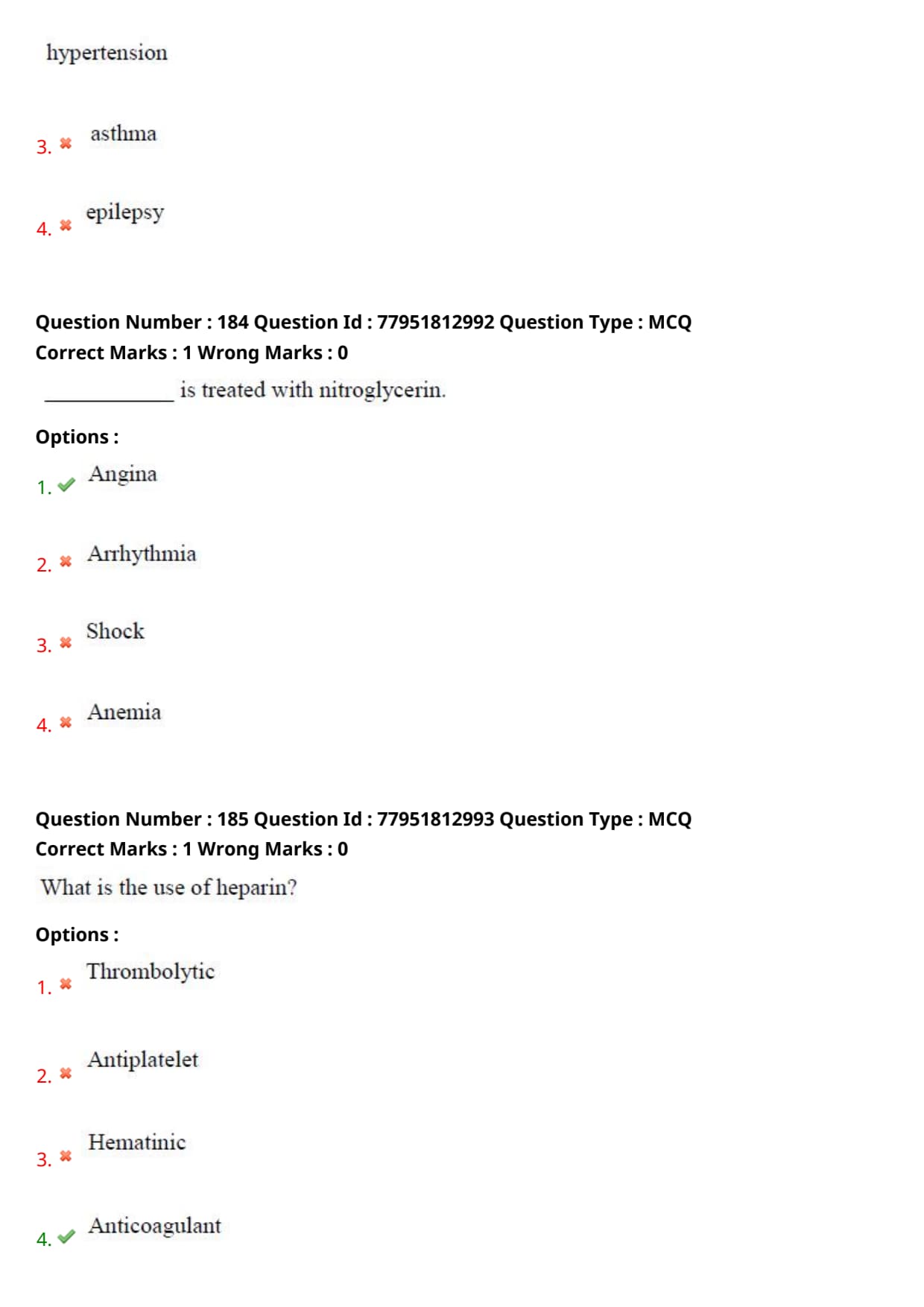
Amlodipine is used in treatment of _________.
- (A) Epilepsy
- (B) Hypertension
- (C) Tuberculosis
- (D) Malaria
Question 184:
Salbutamol is used as _________.
- (A) Antacid
- (B) Bronchodilator
- (C) Antidiabetic
- (D) Antimalarial
Question 185:
Morphine is used as _________.
- (A) Antihypertensive
- (B) Strong analgesic
- (C) Antifungal
- (D) Antacid
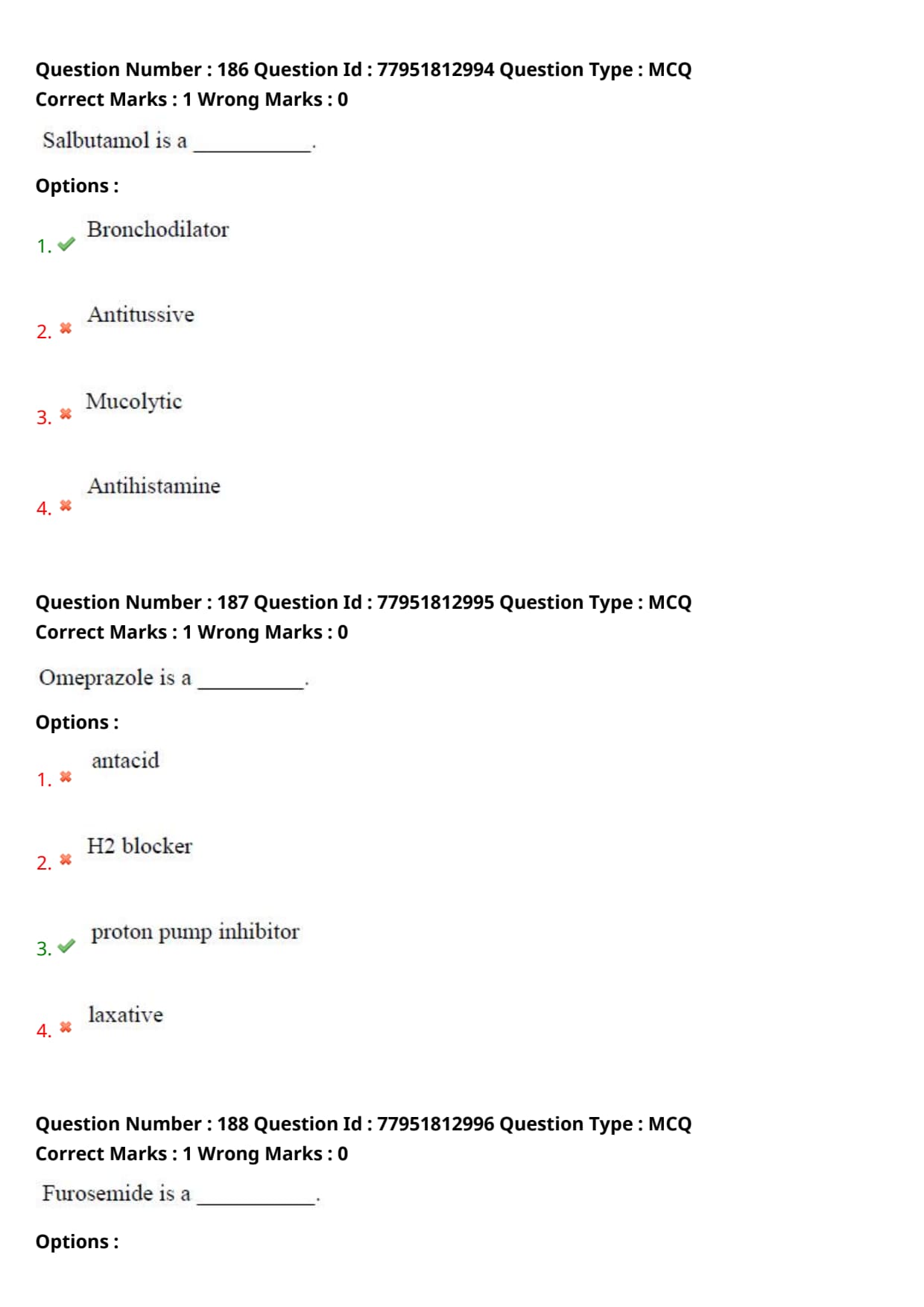
Question 186:
Paracetamol is mainly used as _________.
- (A) Antibiotic
- (B) Analgesic and antipyretic
- (C) Antifungal
- (D) Antihypertensive
Question 187:
Penicillin acts by inhibiting _________.
- (A) Protein synthesis
- (B) Cell wall synthesis
- (C) DNA replication
- (D) Folic acid synthesis
Question 188:
Tetracycline inhibits _________.
- (A) Cell wall synthesis
- (B) Protein synthesis
- (C) DNA replication
- (D) RNA synthesis
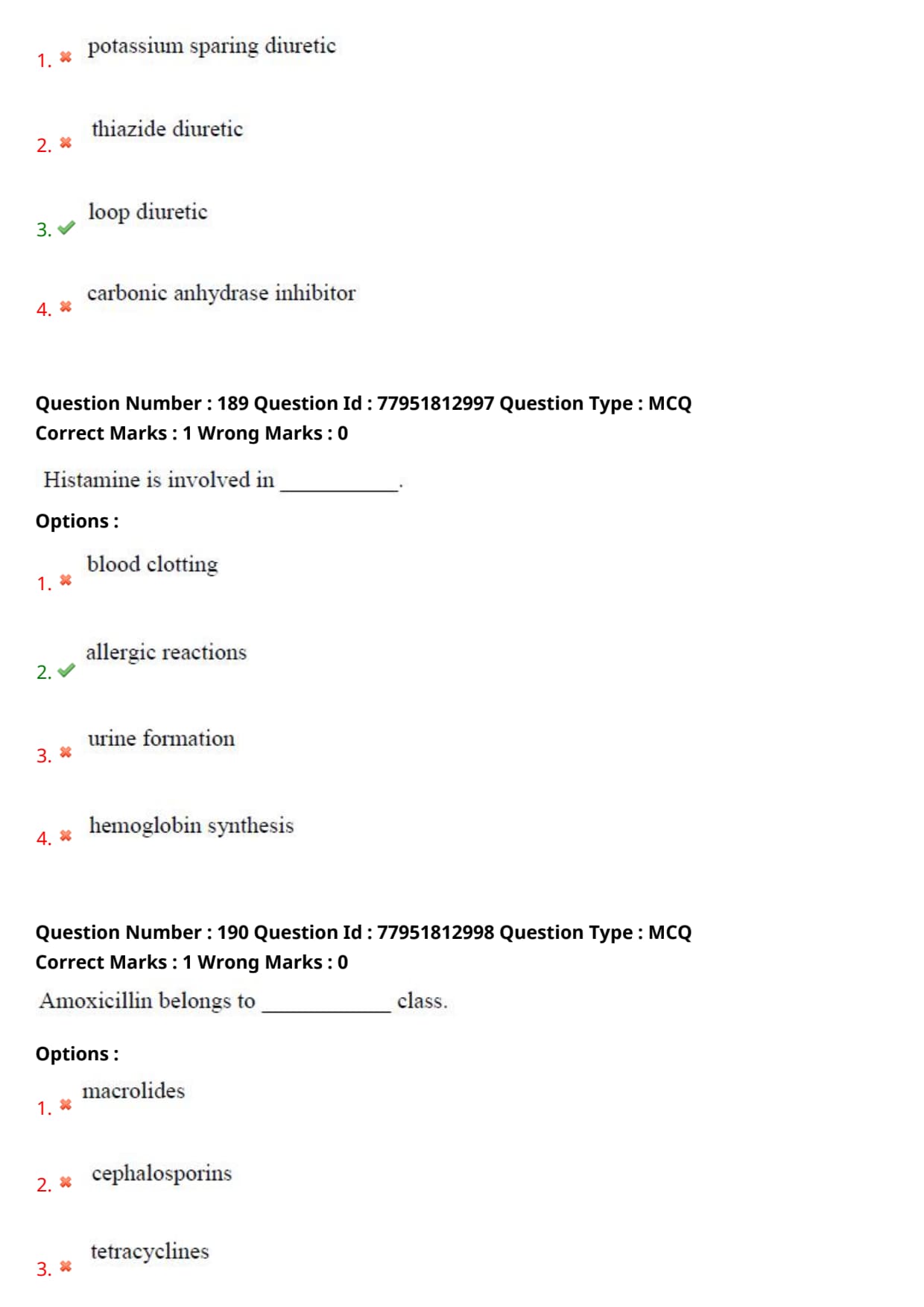
Question 189:
Streptomycin belongs to _________ antibiotics.
- (A) Penicillins
- (B) Cephalosporins
- (C) Aminoglycosides
- (D) Macrolides
Question 190:
Which drug should be avoided in patients with history of hypersensitivity to penicillins?
- (A) Paracetamol
- (B) Tetracycline
- (C) Gentamicin
- (D) Penicillins
Question 191:
Metformin is used for treatment of _________.
- (A) Hypertension
- (B) Type 2 diabetes mellitus
- (C) Asthma
- (D) Epilepsy
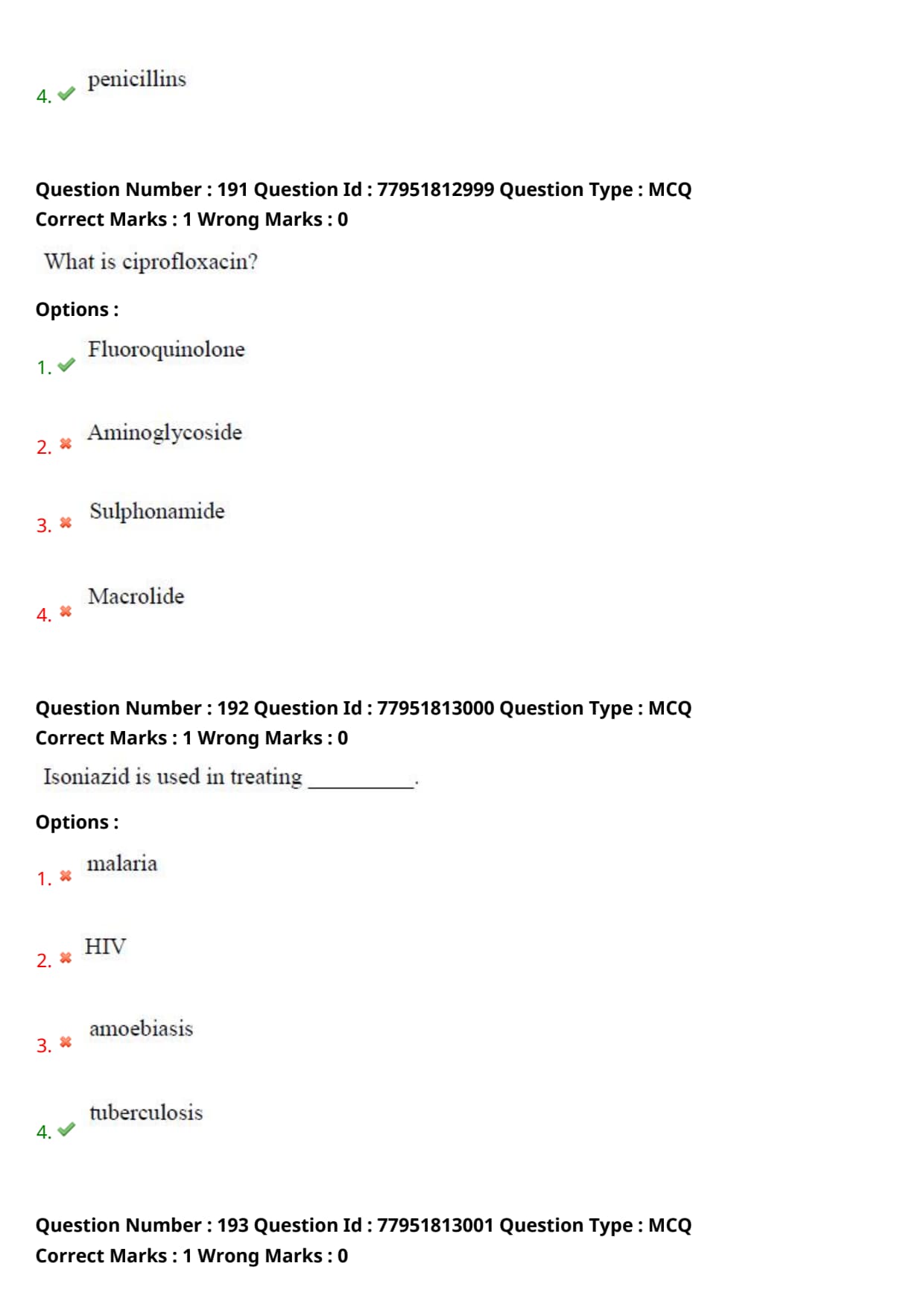
Question 192:
Aspirin is used as _________.
- (A) Antacid
- (B) Analgesic, antipyretic and anti-inflammatory drug
- (C) Antifungal
- (D) Antidiabetic
Question 193:
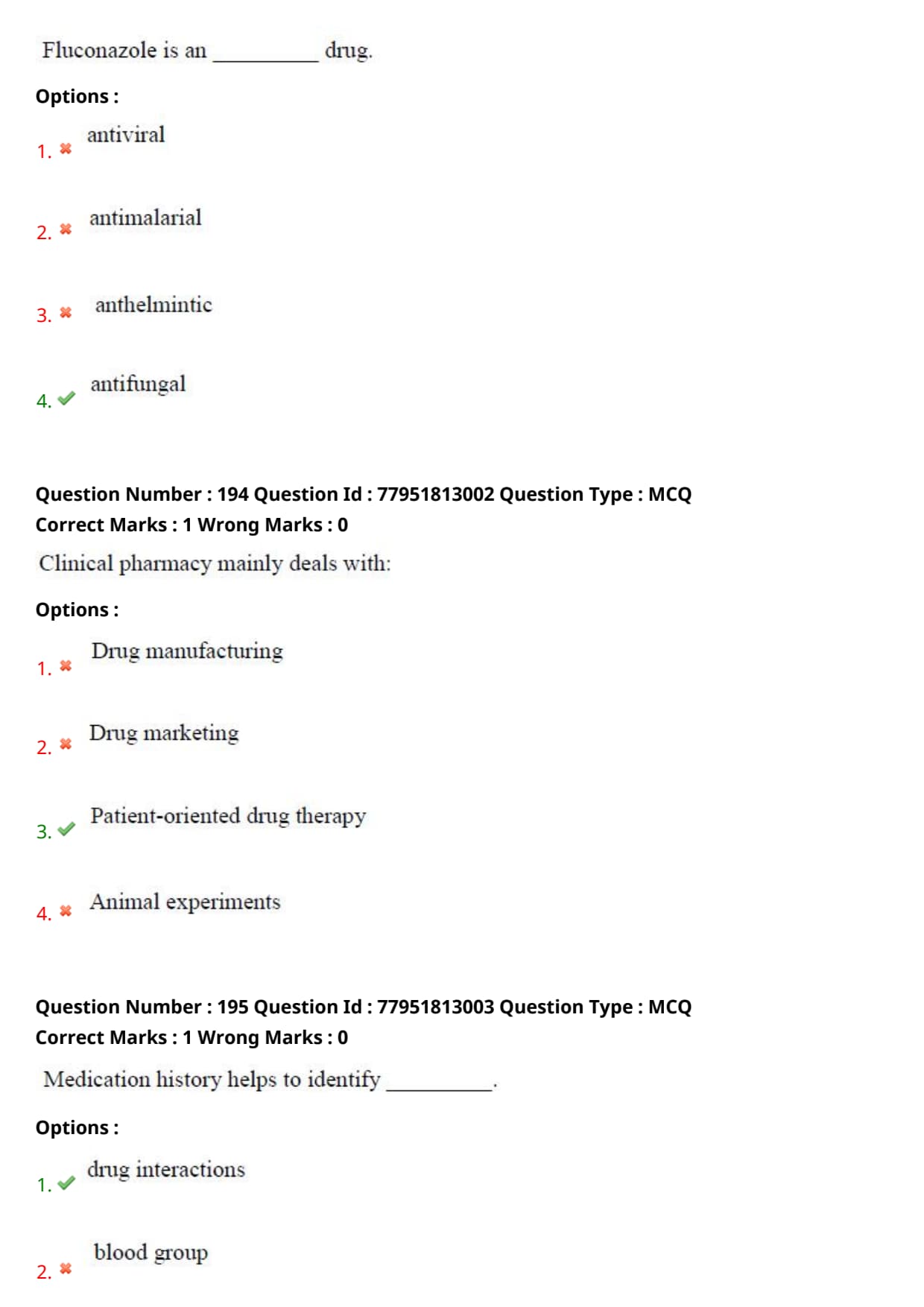
Fluconazole is _________ drug.
- (A) Antibacterial
- (B) Antifungal
- (C) Antiviral
- (D) Antimalarial
Question 194:
Antihistamines are mainly used for _________.
- (A) Allergic conditions
- (B) Diabetes
- (C) Tuberculosis
- (D) Malaria
Question 195:
Corticosteroids are mainly used as _________.
- (A) Anti-inflammatory drugs
- (B) Antacids
- (C) Antifungals
- (D) Antimalarials
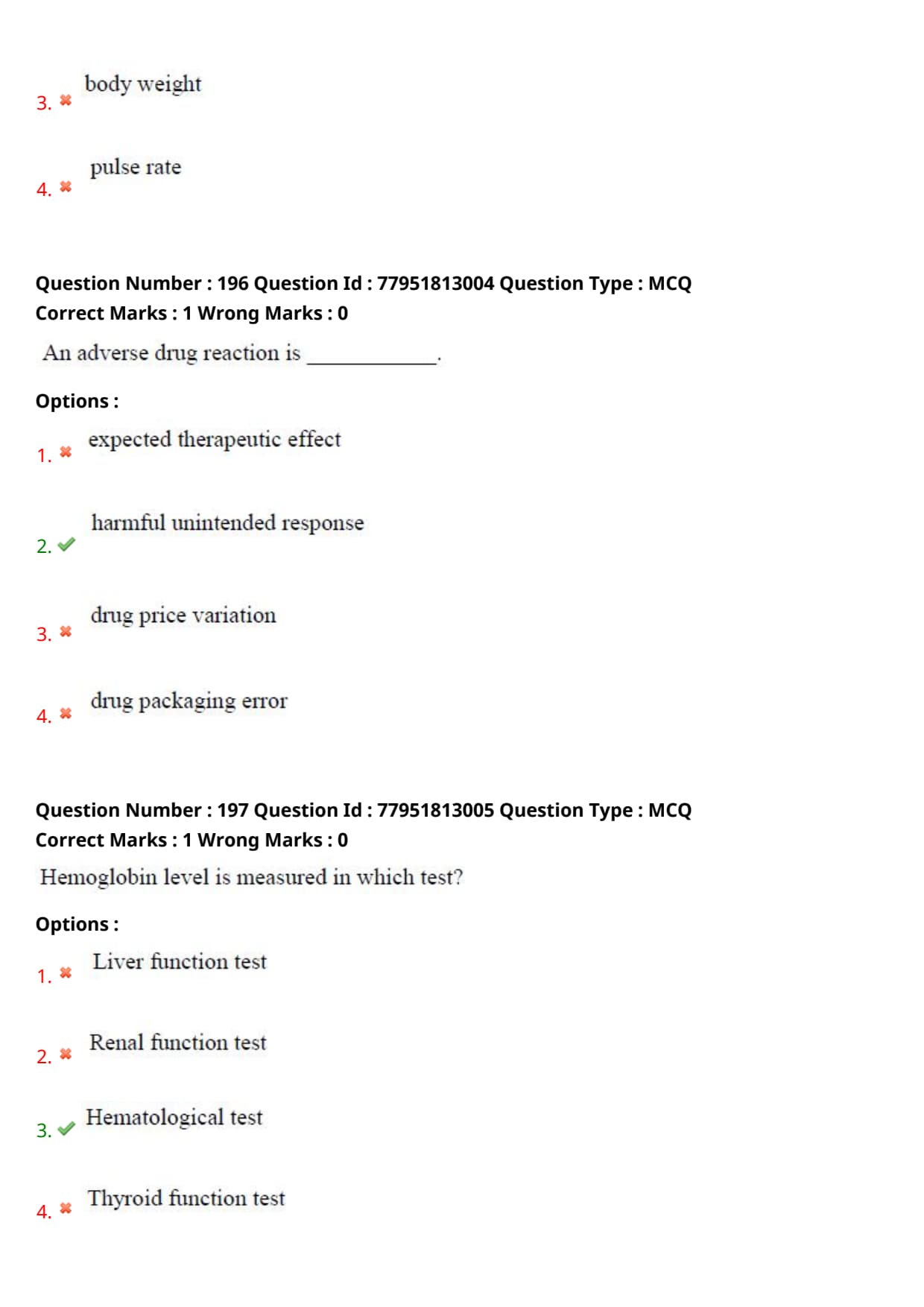
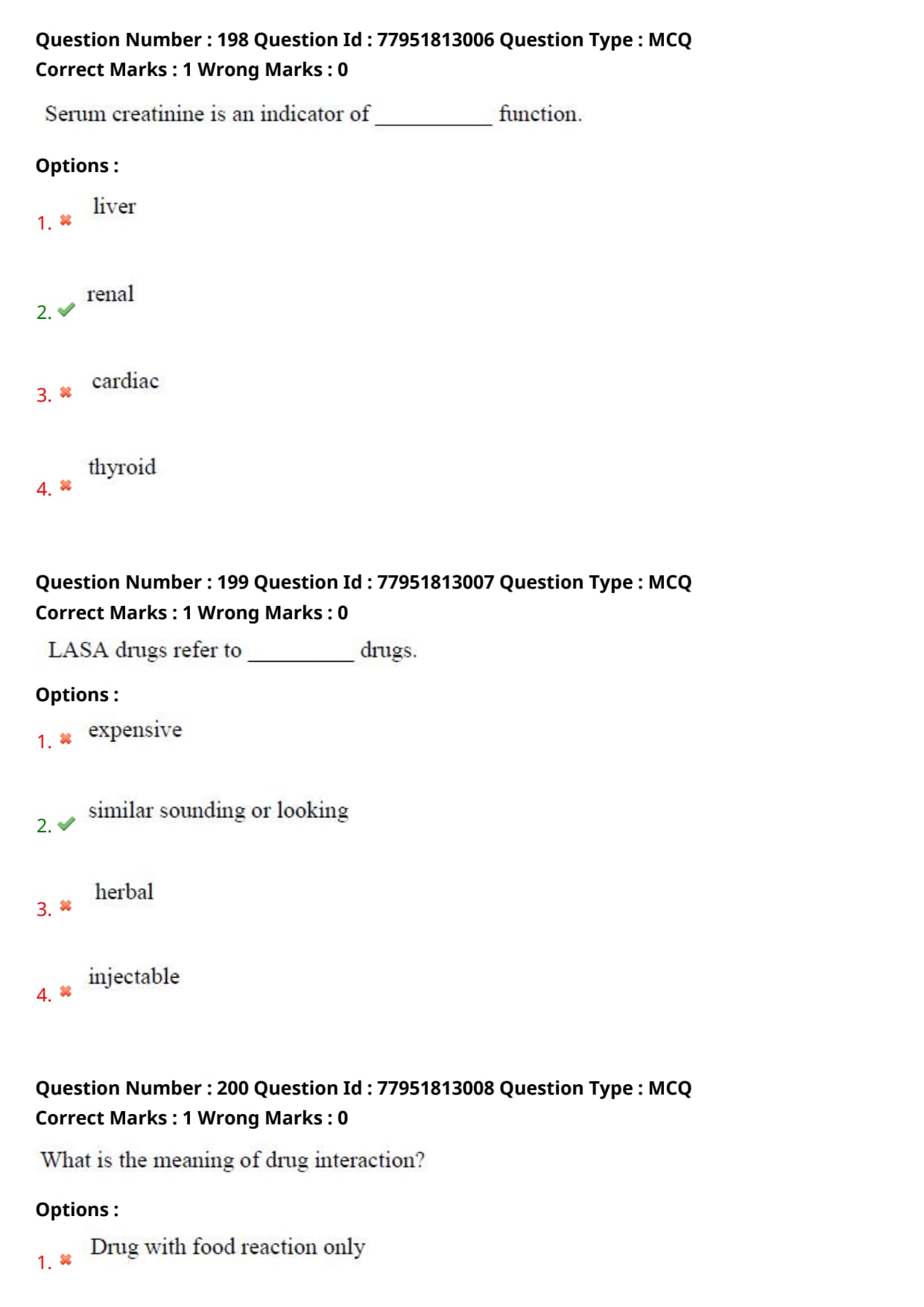
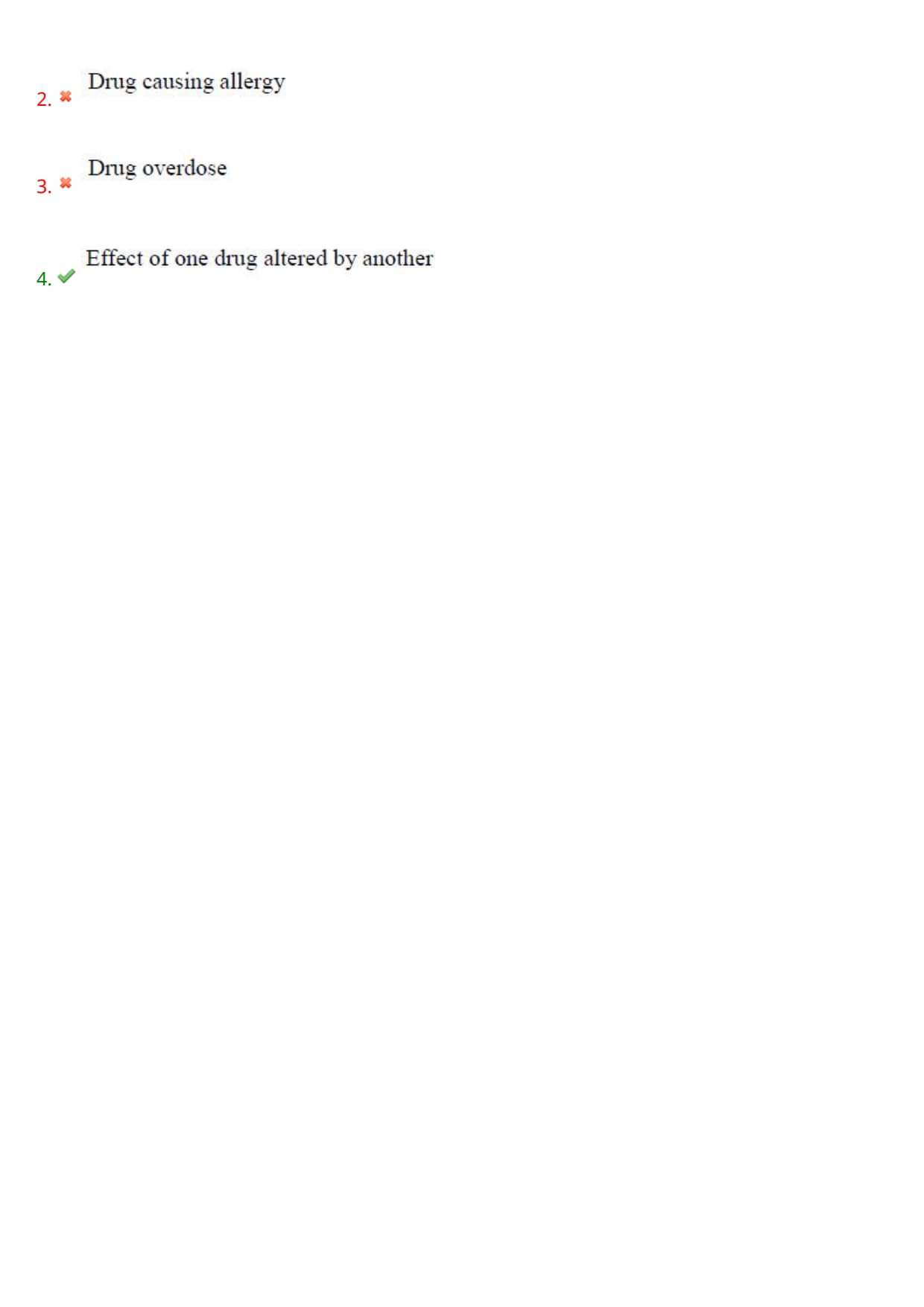
Question 196:
Drug of choice in anaphylactic shock is _________.
- (A) Adrenaline
- (B) Paracetamol
- (C) Metformin
- (D) Fluconazole
Question 197:
Oral contraceptive pills mainly prevent pregnancy by _________.
- (A) Increasing ovulation
- (B) Preventing ovulation
- (C) Increasing fertilization
- (D) Increasing implantation
Question 198:
Propranolol is classified as _________.
- (A) Beta blocker
- (B) Calcium channel blocker
- (C) Diuretic
- (D) Antifungal
Question 199:
Furosemide is classified as _________.
- (A) Loop diuretic
- (B) Antacid
- (C) Antifungal
- (D) Antiepileptic
Question 200:
Ondansetron is mainly used as _________.
- (A) Antiemetic
- (B) Antidiabetic
- (C) Antimalarial
- (D) Antacid
AP ECET 2026 Exam Pattern
| Subjects |
Maximum Questions |
Maximum Marks |
| Pharmaceutics |
50 |
50 |
| Pharmaceutical Chemistry |
50 |
50 |
| Pharmacognosy |
50 |
50 |
| Pharmacology |
50 |
50 |
| Total |
200 |
200 |
AP ECET 2026 Final Tips






Comments