




MHT CET 2026 April 21 Shift 1 PCB Question Paper is available for download here. Maharashtra State CET Cell conducted MHT CET 2026 PCB Exam on April 21 in Shift 1 from 9 AM to 12 PM in CBT mode.
- The MHT CET 2026 PCB Question Paper consists of 200 multiple-choice questions (MCQs) totalling 200 marks divided into 3 sections: Physics (50 questions), Chemistry (50 questions), and Biology (100 questions).
- All questions carry 1 mark each. There is no negative marking for incorrect answers.
MHT CET 2026 April 21 Shift 1 PCB Question Paper PDF Download
| MHT CET 2026 April 21 Shift 1 Question Paper | Download PDF | Check Solution |

Filarial disease (filariasis) is transmitted by which of the following mosquitoes?
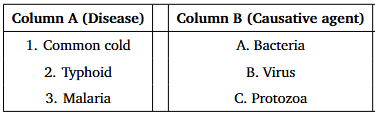
The normal value of Tidal Volume (TV) in a healthy adult is approximately:
Which of the following respiratory volumes represents the air remaining in the lungs after forced expiration?
Where is sperm produced?
If the stroke volume of the heart is \(70\ mL/beat\) and the cardiac output is \(5250\ mL/min\), what is the heart rate?
Extrusion of the second polar body from the egg nucleus occurs:
Which of the following population interactions is widely used in medical science for the production of antibiotics?
Wuchereria bancrofti is transmitted to the human body by:
What is the phenotypic ratio of a dihybrid cross in the F\(_2\) generation?
View Solution
Concept:
A dihybrid cross involves the inheritance of two different traits simultaneously.
According to Mendel’s Law of Independent Assortment, the alleles of different genes assort independently during gamete formation.
Consider two traits:
Seed shape: \(R\) (Round) dominant over \(r\) (Wrinkled)
Seed color: \(Y\) (Yellow) dominant over \(y\) (Green)
A typical dihybrid cross is:
\[ RrYy \times RrYy \]
Step 1: Determine the possible gametes.
Each parent can produce four types of gametes:
\[ RY, \; Ry, \; rY, \; ry \]
Step 2: Form the Punnett square combinations.
Combining the four gametes from each parent gives \(4 \times 4 = 16\) possible offspring combinations.
Step 3: Determine the phenotypes.
The resulting phenotypes are:
\(9\) Round Yellow
\(3\) Round Green
\(3\) Wrinkled Yellow
\(1\) Wrinkled Green
Step 4: Write the phenotypic ratio.
\[ 9 : 3 : 3 : 1 \] Quick Tip: In a dihybrid cross involving two heterozygous parents (\(AaBb \times AaBb\)), the F\(_2\) phenotypic ratio is always \(9:3:3:1\), provided the genes assort independently and there is complete dominance.
Identify the "molecular scissors" used to cut DNA at specific sequences.
View Solution
Concept:
In genetic engineering, special enzymes are used to manipulate DNA.
Restriction enzymes are known as molecular scissors because they cut DNA at specific recognition sequences.
These enzymes were discovered in bacteria and are used by them as a defense mechanism against invading viral DNA.
Step 1: Understand the role of restriction enzymes.
Restriction enzymes recognize specific short DNA sequences called recognition sites.
They cut the DNA at these sites, producing fragments.
Step 2: Example of restriction enzyme action.
For example, the enzyme EcoRI recognizes the sequence:
\[ GAATTC \]
and cuts between specific bases, producing sticky ends.
Step 3: Role in recombinant DNA technology.
Restriction enzymes are widely used in:
Gene cloning
Recombinant DNA technology
Genetic engineering
DNA analysis
Because they precisely cut DNA, they are called "molecular scissors". Quick Tip: Restriction enzymes cut DNA at specific recognition sequences, while DNA ligase joins DNA fragments together. Remember: \textbf{Restriction enzyme = cut, Ligase = join.
Which hormone is responsible for apical dominance in plants?
Which antibody is most abundant in human colostrum (initial breast milk)?
In an ecosystem, which ecological pyramid is always upright and never inverted?
View Solution
Concept:
Ecological pyramids represent the relationship between different trophic levels in an ecosystem.
The three main ecological pyramids are:
Pyramid of Numbers
Pyramid of Biomass
Pyramid of Energy
Among these, the Pyramid of Energy is always upright because energy flow in an ecosystem is unidirectional and decreases at each successive trophic level according to the 10% law of energy transfer.
Step 1: Understand energy flow in an ecosystem.
Energy enters the ecosystem through producers (plants) via photosynthesis and then passes to consumers through food chains.
Step 2: Energy loss at each trophic level.
At each trophic level, a large portion of energy is lost as heat through metabolic activities.
Only about 10% of the energy is transferred to the next trophic level.
Step 3: Implication for ecological pyramids.
Because energy continuously decreases from producers to top consumers, the energy pyramid can never be inverted.
Hence, it always remains upright. Quick Tip: Remember: Pyramid of numbers and pyramid of biomass can sometimes be inverted in certain ecosystems, but the pyramid of energy is always upright due to continuous energy loss at each trophic level.
What is the ratio of escape velocity to orbital velocity?
View Solution
Concept:
Escape velocity is the minimum velocity required for an object to escape the gravitational field of a planet without returning.
\[ v_e = \sqrt{\frac{2GM}{R}} \]
Orbital velocity is the velocity required for a satellite to remain in circular orbit around a planet.
\[ v_o = \sqrt{\frac{GM}{R}} \]
where \(G\) = gravitational constant, \(M\) = mass of the planet, \(R\) = radius of the planet.
Step 1: Write the ratio of escape velocity to orbital velocity.
\[ \frac{v_e}{v_o} = \frac{\sqrt{\frac{2GM}{R}}}{\sqrt{\frac{GM}{R}}} \]
Step 2: Simplify the expression.
\[ \frac{v_e}{v_o} = \sqrt{2} \]
Thus the ratio is
\[ \sqrt{2} : 1 \] Quick Tip: Escape velocity is \(\sqrt{2}\) times the orbital velocity for the same celestial body.
Find the moment of inertia of a solid sphere about its diameter.
View Solution
Concept:
The moment of inertia of a body measures its resistance to rotational motion about a given axis.
For a solid sphere, the moment of inertia about an axis passing through its centre (diameter) is a standard result.
Step 1: Recall the standard formula.
The moment of inertia of a solid sphere about its diameter is
\[ I = \frac{2}{5}MR^2 \]
where \(M\) = mass of the sphere, \(R\) = radius of the sphere.
Step 2: Interpret the result.
This means the rotational inertia of a solid sphere depends on both its mass and the square of its radius. Quick Tip: Common moment of inertia results: Ring about centre \(= MR^2\), Solid cylinder/disc \(= \frac{1}{2}MR^2\), Solid sphere \(= \frac{2}{5}MR^2\).
If the distance between two charges is doubled, the Coulomb force becomes:
What is the de Broglie wavelength of a particle at rest?
View Solution
Concept:
According to de Broglie hypothesis, every moving particle has an associated wavelength given by
\[ \lambda = \frac{h}{p} \]
where \(\lambda\) = de Broglie wavelength, \(h\) = Planck's constant, \(p\) = momentum of the particle.
Step 1: Express momentum.
Momentum of a particle is
\[ p = mv \]
where \(m\) is mass and \(v\) is velocity.
Step 2: Consider a particle at rest.
For a particle at rest,
\[ v = 0 \]
\[ p = 0 \]
Step 3: Substitute into de Broglie equation.
\[ \lambda = \frac{h}{0} \]
Thus,
\[ \lambda = \infty \]
Hence, the wavelength of a particle at rest is infinite. Quick Tip: The de Broglie wavelength is inversely proportional to momentum. Lower momentum means larger wavelength; if momentum approaches zero, wavelength becomes extremely large.
The working of an optical fiber is based on which phenomenon?
View Solution
Concept:
Optical fibers transmit light signals over long distances using the principle of Total Internal Reflection (TIR).
Total internal reflection occurs when light travels from a denser medium to a rarer medium and the angle of incidence is greater than the critical angle.
Step 1: Structure of optical fiber.
An optical fiber consists of:
Core (denser medium)
Cladding (rarer medium)
Step 2: Propagation of light.
Light entering the core undergoes repeated total internal reflections at the boundary between the core and cladding.
Step 3: Result.
Because of continuous total internal reflection, the light signal travels through the fiber with very little loss. Quick Tip: For total internal reflection to occur: 1. Light must travel from denser to rarer medium. 2. Angle of incidence must be greater than the critical angle.
What is the hybridization of carbon in an Ethyne (\(\mathrm{C_2H_2}\)) molecule?
Name the linkage that holds amino acids together in a protein.
View Solution
Concept:
Proteins are polymers made up of amino acid monomers.
The bond that links two amino acids together is called a peptide bond.
Step 1: Structure of amino acids.
Each amino acid contains:
An amino group (\(-NH_2\))
A carboxyl group (\(-COOH\))
A hydrogen atom
A variable side chain (R-group)
Step 2: Formation of peptide bond.
A peptide bond forms when the carboxyl group of one amino acid reacts with the amino group of another amino acid.
Step 3: Condensation reaction.
During this reaction, a molecule of water is released, forming a peptide linkage:
\[ -CO-NH- \]
This process forms long chains called polypeptides which fold into proteins. Quick Tip: Remember: Proteins are made of amino acids joined by peptide bonds, carbohydrates by glycosidic bonds, and lipids by ester bonds.
Which element has the highest electronegativity in the periodic table?
View Solution
Concept:
Electronegativity is the ability of an atom to attract shared electrons in a chemical bond.
It generally increases across a period and decreases down a group in the periodic table.
Step 1: Trend in the periodic table.
Electronegativity increases from left to right across a period due to increasing nuclear charge.
Step 2: Trend down a group.
Electronegativity decreases down a group because atomic size increases and the attraction for bonding electrons decreases.
Step 3: Identify the most electronegative element.
Fluorine lies at the top-right of the periodic table (excluding noble gases), giving it the highest electronegativity value.
Step 4: Numerical value.
On the Pauling scale, the electronegativity of fluorine is approximately:
\[ 3.98 \] Quick Tip: Fluorine is the most electronegative element, followed by oxygen, chlorine, and nitrogen.
What is the product when Phenol reacts with neutral Ferric Chloride?
View Solution
Concept:
Phenol reacts with neutral ferric chloride (\(\mathrm{FeCl_3}\)) to form a colored complex.
This reaction is commonly used as a qualitative test for phenols.
When phenol reacts with ferric chloride, a violet (purple) colored complex is formed due to the formation of a coordination compound between phenolate ions and \(Fe^{3+}\).
Step 1: Ionization of phenol.
Phenol slightly ionizes in solution to form phenoxide ions:
\[ \mathrm{C_6H_5OH \rightarrow C_6H_5O^- + H^+} \]
Step 2: Formation of ferric phenolate complex.
The phenoxide ions react with ferric ions:
\[ \mathrm{Fe^{3+} + Phenoxide \rightarrow Violet\ Complex} \]
Step 3: Observation.
A violet colored complex appears in the solution, confirming the presence of phenolic groups. Quick Tip: Ferric chloride test is commonly used to detect phenols. A violet or purple coloration indicates the presence of phenolic compounds.
In a BCC (Body-Centered Cubic) unit cell, what is the coordination number?
View Solution
Concept:
The coordination number of a crystal structure is the number of nearest neighboring atoms surrounding a given atom.
Step 1: Understand BCC structure.
In a Body-Centered Cubic (BCC) unit cell:
Atoms are present at the \(8\) corners of the cube.
One atom is present at the center of the cube.
Step 2: Nearest neighbors of the central atom.
The atom at the center is directly surrounded by the \(8\) corner atoms.
Step 3: Determine coordination number.
Thus, each atom in a BCC structure has 8 nearest neighbors.
\[ Coordination Number = 8 \] Quick Tip: Common coordination numbers: SC (Simple Cubic) = 6, BCC (Body-Centered Cubic) = 8, FCC (Face-Centered Cubic) = 12.
MHT CET PCB Exam Pattern 2026
| Parameter | Details |
|---|---|
| Conducting Body | Maharashtra Common Entrance Test Cell (Maharashtra CET Cell) |
| Exam Mode | Online (Computer-Based Test) |
| Duration | 180 minutes (3 hours) |
| Groups / Subjects | PCB (Physics, Chemistry, Biology) for Pharmacy and Agriculture |
| Total Questions |
200 |
| Total Marks | 200 |
| Question Type | Multiple Choice Questions (MCQs) |
| Marking Scheme | 1 mark for each correct answer |
| Negative Marking | No |
| Syllabus Weightage |
|



Comments