


Bachelor of Science [BS] (Environmental Engineering)
Field of Study:
₹34.4 L/Yr

Colorado State University Bachelor of Engineering Environmental Engineering: A Comprehensive Guide for Indian Students
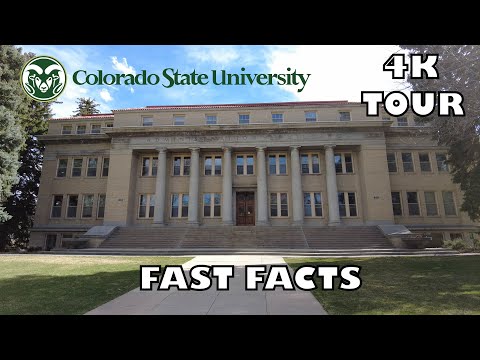
Colorado State University’s Bachelor of Engineering in Environmental Engineering is a 4-year undergraduate program designed to equip students with the knowledge and skills to address environmental challenges through engineering innovation. Located in Fort Collins, Colorado, the program combines rigorous academic training with practical fieldwork and research opportunities, making it an ideal choice for Indian students seeking world-class engineering education in the United States.
The programme attracts international students from diverse backgrounds, with a strong emphasis on sustainability, water resource management, air quality control, and waste management. CSU’s environmental engineering graduates work with leading organizations globally, addressing critical issues such as climate change, renewable energy, and environmental remediation. The university maintains a welcoming international community with comprehensive support services for students from India.
This article covers all essential aspects of the programme including admission requirements, costs, scholarship opportunities, application procedures, campus life, career outcomes, and visa processes. Whether you’re exploring your study-abroad options or ready to apply, this guide provides detailed information tailored to Indian student needs, including INR equivalents and specific guidance for international applicants.
Colorado State University Environmental Engineering Tuition and Cost Breakdown
The total cost of pursuing a Bachelor of Engineering in Environmental Engineering at Colorado State University comprises tuition, mandatory fees, and living expenses. For international students, the annual in-state tuition ranges from US$30,656 to US$34,751 (?2,93,600 to ?3,32,900 approximately) depending on course load and program specialization. This makes CSU significantly more affordable than many private institutions in the United States while maintaining excellent academic standards and research facilities.
Living expenses in Fort Collins are moderate compared to major metropolitan areas. Students typically budget US$14,040 to US$19,800 annually (?1,34,500 to ?1,89,700) for accommodation, food, transportation, and personal expenses. Shared apartment housing costs approximately US$550-700 per month (?5,300-6,700), with utilities adding another US$80-120 monthly. Groceries and dining typically cost US$250-350 per month (?2,400-3,350).
| Cost Category | Annual USD | Annual INR (@95.77 rate) |
|---|---|---|
| Tuition (range) | US$30,656 - US$34,751 | ?2,93,600 - ?3,32,900 |
| Health Insurance | US$2,407 | ?23,050 |
| Total First Year | US$33,063 - US$37,158 | ?3,16,700 - ?3,56,100 |
| Living Expenses (mid-range) | US$16,900 | ?1,61,800 |
| Books and Materials | US$1,200 | ?11,490 |
| Personal/Miscellaneous | US$2,500 | ?23,930 |
| Total Annual Estimate | US$54,000 - US$58,000 | ?5,17,000 - ?5,56,000 |
Four-year total programme cost ranges from US$216,000 to US$232,000 (?20,68,000 to ?22,24,000). Indian families should budget conservatively and account for inflation, travel expenses, and contingencies. The environmental engineering specialization does not incur additional fees beyond standard engineering programme costs at CSU.
Colorado State University Environmental Engineering Scholarships and Financial Aid
Colorado State University offers limited but meaningful financial assistance to international students, with merit-based scholarships ranging from US$3,000 to US$15,000 annually (?28,730 to ?1,43,650). These scholarships are highly competitive and typically awarded to applicants demonstrating exceptional academic records, strong standardized test scores, and leadership qualities. Indian students with a GPA of 3.5 or higher and TOEFL scores of 90 and above are most competitive for merit-based awards.
The university prioritizes talent-based aid, meaning scholarships are awarded based on academic merit rather than financial need. International students are not eligible for federal or state-funded aid programs, making private scholarships and university merit awards the primary funding sources. The scholarship decision is made during the admissions process, and applicants do not need to submit separate scholarship applications beyond the regular admission requirements.
Additionally, Indian students should explore government-backed funding options such as ICCR scholarships, Ministry of External Affairs scholarships, and state-level schemes. Many engineering firms in India also offer post-graduation employment guarantees with sponsorship for overseas education. Graduate research assistantships offering tuition waiver plus stipend (typically US$12,000-18,000 annually) are available for exceptional students entering graduate programs after their bachelor’s degree.
CSU’s International Office provides comprehensive information on external funding sources and connects students with alumni networks in India who have successfully funded their education. Many Indian students work part-time on campus (maximum 20 hours per week during studies) to supplement living expenses, earning the federal minimum wage of US$7.25 per hour.
Colorado State University Environmental Engineering Admission Requirements
Admission to the Bachelor of Engineering programme at Colorado State University requires meeting specific academic and English proficiency standards. The minimum GPA requirement is 2.5 on a 4.0 scale, though competitive applicants typically maintain a GPA of 3.0 or above. Indian students from CBSE, ICSE, or state boards should aim for 75-80% marks in 12th standard, particularly in Physics, Chemistry, and Mathematics, as these subjects form the foundation for environmental engineering coursework.
English proficiency is assessed through standardized tests. CSU accepts TOEFL (iBT minimum 80 points, IELTS Band 6.5, Duolingo 100, or PTE Academic 59). For Indian students, TOEFL iBT or IELTS is most commonly recognized. A score of 90 or above strengthens scholarship competitiveness significantly. The university also evaluates SAT or ACT scores, though these are optional for many undergraduate applications; submitting strong scores enhances admission chances.
| Admission Criteria | Minimum | Competitive (Recommended) |
|---|---|---|
| GPA (out of 4.0) | 2.5 | 3.0 - 3.5 |
| TOEFL iBT | 80 | 90 - 100 |
| IELTS Band | 6.5 | 7.0 - 7.5 |
| SAT Score | Optional | 1250 - 1350 |
| Physics Marks (12th) | 60% | 75 - 85% |
| Chemistry Marks (12th) | 60% | 75 - 85% |
| Mathematics Marks (12th) | 60% | 75 - 85% |
The university admits students for both Fall and Spring semesters. Fall semester admissions are more competitive, with an acceptance rate typically around 70-75% for international students. Spring semester admissions have slightly higher acceptance rates. Environmental engineering is a popular major, so admission standards may be marginally higher than university averages. CSU requires official documentation including transcripts, test score reports, a statement of purpose, and two recommendation letters from teachers or academic advisors.
Colorado State University Environmental Engineering Application Process and Deadlines
The application process for Colorado State University is primarily conducted online through the Common Application or the university’s proprietary portal. Indian students must register with an official CollegeBoard account, pay the application fee (currently US$60 for international students), and submit all required documents electronically. The entire process typically takes 2-4 weeks from application submission to final decision, though CSU recommends allowing 6-8 weeks for document verification and review.
Application deadlines are firm for international students, with no extensions granted. For Fall 2027 admission, the deadline is typically March 15, 2027, with expected decision notifications by May 15, 2027. For Spring 2028, the deadline is usually November 15, 2027, with decisions by December 20, 2027. The university operates on a rolling admissions basis, meaning early applications receive priority review and access to merit scholarships before the deadline. Indian applicants should aim to submit applications at least 4 weeks before published deadlines to allow time for document processing and courier delays.
| Intake | Application Deadline | Decision Notification | Enrollment Deadline |
|---|---|---|---|
| Fall 2027 | March 15, 2027 | May 15, 2027 | June 1, 2027 |
| Spring 2028 | November 15, 2027 | December 20, 2027 | January 10, 2028 |
| Fall 2028 | March 15, 2028 | May 15, 2028 | June 1, 2028 |
Required documents include official transcripts from all secondary and post-secondary institutions, English translations of non-English documents (certified by approved translators), TOEFL/IELTS score reports sent directly from testing agencies, optional SAT scores, a statement of purpose (500-750 words addressing academic goals, career aspirations, and reasons for choosing environmental engineering), and two recommendation letters from teachers. Financial documentation proving ability to pay (bank statements, affidavit of support) is required for visa purposes but not for admission.
The I-20 form (Certificate of Eligibility for Nonimmigrant Student Status) is issued only after admission and payment of the enrollment deposit (typically US$500). This form is essential for F-1 visa application at the US embassy in India. CSU’s International Office expedites I-20 processing for admitted students, typically completing it within 2-3 weeks of receiving the enrollment deposit.
Colorado State University Fort Collins Campus Life and Student Experience
Colorado State University’s Fort Collins campus is situated in a vibrant mountain town with direct access to outdoor recreation, ranging from hiking and skiing to white-water rafting and climbing. The town itself has a population of approximately 160,000 with a strong college-town atmosphere, featuring independent bookstores, coffee shops, craft breweries, and restaurants serving diverse cuisines. The climate features sunny days year-round (300+ days of sunshine annually), though winters are cold with moderate snowfall, averaging 50-60 inches per year in the surrounding mountain regions.
On-campus housing is guaranteed for first-year international students, with dormitory options ranging from traditional residence halls to themed living communities and modern apartment-style facilities. Housing costs approximately US$9,000-11,000 annually (?86,200-1,05,300), making on-campus living economical and socially enriching. The International Student Services Office organizes cultural events, mentorship programmes, and networking opportunities specifically for international students. CSU has a registered student organization for Indian students and South Asian communities, facilitating cultural exchange and peer support networks essential for students adjusting to life in the United States.
The university operates a comprehensive transportation system with free bus service to all students. Fort Collins is a bicycle-friendly city with dedicated cycling infrastructure, and most students commute by bike during fair weather. The Recreation Center offers state-of-the-art fitness facilities, swimming pools, and sports clubs at no additional cost. Dining options include multiple cafeterias with vegetarian, vegan, and culturally diverse meal plans, acknowledging the dietary preferences of Indian students.
Environmental engineering students benefit from specialized facilities including environmental laboratories with water quality analysis equipment, air sampling instruments, and GIS mapping technology. The Engines Office and Mechanical Engineering Building host collaborative research spaces where students work on real-world environmental projects. CSU’s emphasis on sustainability means campus operations align with environmental engineering principles, providing authentic learning contexts.
Colorado State University Environmental Engineering Graduate Outcomes and Career Placement
Environmental engineering graduates from Colorado State University achieve a 91% placement rate within six months of graduation. The average starting salary for environmental engineers is US$61,400 annually (?5,88,700), with the salary range for experienced professionals extending to US$75,000+ (?7,18,250+) depending on specialization, employer, and geographic location. Career trajectories span diverse sectors including environmental consulting, water utilities, renewable energy companies, government agencies, and private corporations focusing on sustainability.
CSU environmental engineering alumni work with prestigious employers including Jacobs Engineering, AECOM, CH2M Hill, EPA (Environmental Protection Agency), US Geological Survey, and multinational firms like Siemens and General Electric. Many Indian graduates pursue H-1B sponsorship after completing Optional Practical Training (OPT), with environmental engineers typically qualifying due to the specialized nature of the work. The average H-1B sponsorship salary for environmental engineers exceeds US$104,000 annually (?9,96,800), meeting Department of Homeland Security thresholds.
Popular career paths for CSU environmental engineering graduates include Water Resources Engineering (US$58,000-68,000 annually), Environmental Consultant (US$60,000-75,000), Air Quality Specialist (US$55,000-70,000), Sustainability Officer (US$65,000-80,000), and Project Manager (US$70,000-85,000). The programme emphasizes both technical competency and business acumen, preparing graduates for management positions within 5-7 years of career progression.
| Career Path | Starting Salary USD | Starting Salary INR | 5-Year Salary USD |
|---|---|---|---|
| Water Resources Engineer | US$58,000 | ?5,55,500 | US$75,000 - US$88,000 |
| Environmental Consultant | US$60,000 | ?5,74,600 | US$78,000 - US$92,000 |
| Air Quality Specialist | US$55,000 | ?5,26,700 | US$70,000 - US$85,000 |
| Sustainability Officer | US$65,000 | ?6,22,500 | US$82,000 - US$100,000 |
| Project Manager | US$70,000 | ?6,70,400 | US$88,000 - US$110,000 |
The university maintains an active alumni network in India with regular events in Delhi, Mumbai, and Bangalore. CSU Career Services provides lifetime job placement support, resume guidance, and interview preparation specifically for international students seeking employment in India or globally. Many graduates return to India within 2-5 years, leveraging their US experience to establish environmental consulting practices or lead sustainability initiatives in Indian corporations.
Colorado State University Environmental Engineering F-1 Visa and Work Opportunities
International students at Colorado State University require an F-1 Student Visa to study in the United States. The visa process begins after CSU issues an I-20 form (Certificate of Eligibility for Nonimmigrant Student Status), which applicants present to the US embassy or consulate in India. The F-1 visa is valid for the duration of studies plus a 60-day grace period after graduation, allowing time for employment transitions or return travel. The visa itself does not specify an expiration date once granted; validity is tied to I-20 status and maintained as long as students remain enrolled full-time.
During studies, F-1 visa holders may work on-campus up to 20 hours per week during academic terms, without requiring additional work authorization. On-campus employment includes positions in university libraries, dining services, administrative offices, and research laboratories, typically offering US$15-18 per hour (?143-172). Optional Practical Training (OPT) allows work up to 12 months in the United States after graduation for non-STEM fields, extended to 36 months for STEM-designated programmes including environmental engineering.
Environmental engineering is classified as a STEM (Science, Technology, Engineering, Mathematics) field, granting graduates extended OPT eligibility of up to 36 months. This extended period significantly increases H-1B visa sponsorship prospects, as many employers use OPT to assess employee performance before pursuing permanent visa sponsorship. H-1B visa sponsorship requires employer support and typically specifies a minimum salary of US$104,000 annually, which environmental engineers frequently exceed given specialized skills and US job market demands.
Indian students must maintain valid passport documentation and I-20 status throughout their studies. Leaving the United States without proper authorization or violating visa conditions results in visa cancellation and future immigration complications. CSU’s International Office provides guidance on visa maintenance, travel documentation, and re-entry procedures. Spring break and semester break travel to India is permitted as long as students maintain valid I-20 status and return by the required dates specified on immigration documents.
Colorado State University Environmental Engineering Compared to Peer Institutions
Colorado State University’s environmental engineering programme ranks competitively among mid-tier public universities in the United States, offering excellent value compared to private research institutions with similar academic reputations. The programme emphasizes practical experience and industry partnerships, differentiating itself from purely theoretical approaches. Peer institutions offering comparable environmental engineering programmes include University of Colorado Boulder, Arizona State University, University of Wisconsin-Madison, and University of Michigan.
In comparison to private institutions such as Stanford and MIT, CSU offers significantly lower tuition (US$33,000 vs. US$60,000+ annually) while maintaining strong employer recognition and industry partnerships. When compared to in-state public options, CSU provides superior graduate placement rates and starting salaries versus many regional competitors. The university’s location in Fort Collins provides cost-of-living advantages over major metropolitan areas, reducing total four-year programme expenses.
| University | Annual Tuition USD | Placement Rate | Starting Salary USD |
|---|---|---|---|
| Colorado State University | US$30,656 - US$34,751 | 91% | US$61,400 |
| Arizona State University | US$31,500 - US$35,200 | 89% | US$60,500 |
| University of Wisconsin-Madison | US$38,500 - US$43,000 | 92% | US$63,000 |
| Stanford University | US$60,000+ | 96% | US$75,000+ |
CSU’s programme is recognized by ABET (Accreditation Board for Engineering and Technology), the gold standard for engineering accreditation in the United States, ensuring that degrees are recognized globally and fulfill professional engineering licensure requirements. The university’s commitment to sustainability and environmental innovation aligns with global trends, making CSU graduates particularly valuable in growing sectors such as renewable energy, climate adaptation, and environmental remediation.
Colorado State University Environmental Engineering Frequently Asked Questions
Q: Is the environmental engineering programme at CSU ABET-accredited?
A: Yes, Colorado State University’s environmental engineering programme is fully accredited by ABET (Accreditation Board for Engineering and Technology). This accreditation ensures that the programme meets rigorous international standards for engineering education and is recognized globally. ABET accreditation is essential for professional engineering licensure (PE) in the United States and many other countries, giving CSU graduates competitive advantages in the global job market. The accreditation is reviewed and renewed every six years, confirming ongoing compliance with quality standards.
Q: Can Indian students with 12th standard marks apply, or must they complete undergraduate studies first?
A: Indian students applying directly after 12th standard are eligible for admission. CSU evaluates 12th standard marks, TOEFL/IELTS scores, and optional SAT scores for direct admission to undergraduate programmes. Applicants should have strong marks in Physics, Chemistry, and Mathematics (preferably 75%+). Students who have completed one or two years of undergraduate studies in India may apply for advanced standing, potentially shortening their degree completion timeline. Transfer students must submit transcripts and course-by-course evaluations for credit evaluation.
Q: What is the typical class size for environmental engineering courses at CSU?
A: Introductory engineering courses typically have 150-250 students in lecture format, with smaller recitation sections of 25-35 students led by teaching assistants. Upper-level environmental engineering courses (junior and senior level) have 20-50 students, allowing for more personalized instruction and interaction with faculty. Capstone design courses in the final year have 15-25 students working in teams on real-world environmental projects. Laboratory sessions are capped at 20 students to ensure hands-on experience with equipment and instruments.
Q: Are there opportunities for internships and co-op programmes during the four-year degree?
A: Yes, Colorado State University offers extensive internship and cooperative education opportunities. Most environmental engineering students complete 1-2 internships during their programme, typically during summer breaks (May-August). Many students participate in cooperative education programmes, alternating semesters between classroom study and full-time work with employers. These experiences provide practical training, professional networking, and often result in job offers upon graduation. The university’s Career Services Office maintains relationships with over 500 employers actively recruiting CSU interns and graduates, particularly in environmental consulting, water utilities, and sustainability sectors.
Q: What are the options for returning to India after graduation, and what is the job market for CSU graduates?
A: Many CSU environmental engineering graduates return to India after gaining 2-5 years of experience in the United States. The job market in India for returning international graduates is strong, particularly in environmental consulting, renewable energy companies, government agencies (CPCB, state pollution control boards), and corporate sustainability departments. CSU’s reputation is well-established in India, and many multinational firms preferentially hire US-trained environmental engineers. Graduates often establish consulting practices, lead environmental compliance initiatives, or transition into management roles. The alumni network in India, with chapters in Delhi, Mumbai, Bangalore, and Pune, facilitates job placements and professional connections. Starting salaries for returning CSU graduates in India typically range from ?8,00,000 to ?12,00,000 annually, significantly above average due to US experience and specialized expertise.
Important Alert
- Application Deadline for Spring 2027 Intake - Nov 1, 2026
Tuition Fees
| Year | 1st Year Fees |
|---|---|
| Tuition Fees | ₹3441569 (USD 36113) |
Other Expenses
| Head | Avg Cost Per Year |
|---|---|
| Books and supply | ₹114360 (USD 1200) |
| Total Cost | ₹114360 (USD 1200) |
Previous Year Tuition Fees
| Year | 1st Year Fees |
|---|---|
| 2024 | ₹3311770 (USD 34751) |
Important Dates
| Event | Application Date |
|---|---|
| Application Deadline for Spring 2027 Intake | Nov 1, 2026 |
| Early Action Application Deadline for Fall 2027 Intake | Nov 15, 2026 |
| Regular Decision Application Deadline for Fall 2027 Intake | Jan 15, 2027 |
Scores Required
Required Document List
Complete Application
Application Fee
Official Transcripts
English Language Requirements
A copy of the Passport
Personal Statement
Letters of Recommendation are optional


Do you think the Rankings are wrong ? Report Here
Key Resources for Your Study Abroad Journey


Course Guides
BTech in USA: Deadlines, Fees, Scholarships & Jobs
STEM Courses in USA in 2025: Eligibility, Fees, Job Opportunities
Scholarship Grants & Financial Aids
| Name | Scholarship Per Student | Level of Study | Type | |
|---|---|---|---|---|
| VueVille Future Technology Scholarship | Scholarship per student₹ 95,300/Yr$1,000 | Level Of StudyBachelor | TypeMerit-Based | |
| R&D Systems Scholarship | Scholarship per student₹ 1.4 L/Yr$1,500 | Level Of StudyBachelor | TypeMerit-Based | |
| BL Mandhana Scholarships | Scholarship per student₹ 9.5 L/Yr$10,000 | Level Of StudyBachelor | TypeMerit-Based | |
| Go Clean Scholarship | Scholarship per student₹ 3.3 L/Yr$3,500 | Level Of StudyBachelor | TypeMerit-Based | |
| Business Administration Scholarships | Scholarship per studentVariable Amount | Level Of StudyBachelor | TypeMerit-Based | |
| Washington DC Scholarships | Scholarship per studentVariable Amount | Level Of StudyBachelor | TypeMerit-Based |
interested in this College ?
Follow & Share this college to get information about admission.



Comments