



Bachelor of Arts [BA] (Criminology, Law and Society - Criminal Justice)
Field of Study:
₹37.5 L/Yr

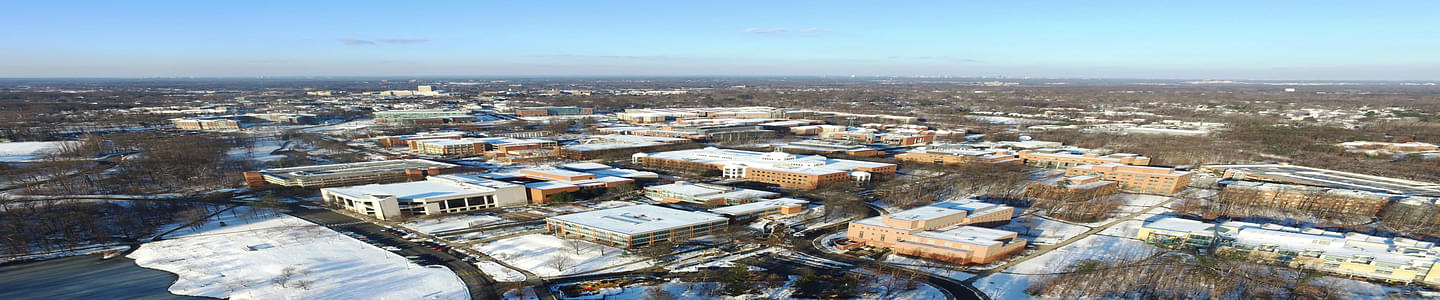
George Mason University Bachelor of Arts in Criminology, Law and Society is a four-year, full-time undergraduate degree for international students seeking to understand crime, law, and society through empirical methods. The program integrates sociology, psychology, law, and public policy to train crime analysts, legal professionals, and justice policy makers. Located in Fairfax, Virginia—a hub for federal law enforcement, intelligence agencies, and criminal justice organizations—the programme offers unmatched proximity to practitioners and career opportunities.
The program is distinctive for combining multiple disciplines: unlike single-focus law or criminal justice degrees, it merges sociology, law, psychology, and policy. You can concentrate in Criminal Justice, Law and Society, or Homeland Security and Justice based on career goals. The ideal applicant combines strong academics (GPA 3.0+) with genuine interest in how legal systems address crime and social harm.
- Research-backed curriculum informed by George Mason’s #10-ranked criminology research centre nationally.
- Flexibility to concentrate in Criminal Justice, Homeland Security, or Law and Society based on your focus.
- Northern Virginia location gives you access to federal agencies, law enforcement, and policy think tanks.
Current Admission Status
Applications for the Fall 2026 intake are Open. International student deadline: 31 January 2027.
For Indian applicants, WES evaluation of your high school transcript takes 4–6 weeks; apply by mid-November to secure your place before the final deadline.
Also Check: George Mason University Criminology, Law and Society Admission
George Mason University Criminology, Law and Society Fees 2026
International tuition and living costs form the core of your total investment at George Mason University. Below is a comprehensive breakdown of all fee components for the four-year degree.
| Fee Component | Year 1–2 (2025–26) | Year 3–4 (2026–27) | INR Equivalent |
|---|---|---|---|
| International Tuition (annual) | US$ 34,487 | US$ 34,847 | INR 32.86 Lakhs / INR 33.22 Lakhs |
| On-Campus Accommodation (annual) | US$ 20,976–27,826 | US$ 20,976–27,826 | INR 19.98 Lakhs–26.51 Lakhs |
| Books and Supplies (annual) | US$ 1,200 | US$ 1,200 | INR 1.14 Lakhs |
| Personal and Transportation (annual) | US$ 2,500 | US$ 2,500 | INR 2.38 Lakhs |
| Total Annual Cost (estimated) | US$ 59,163–65,913 | US$ 59,523–66,273 | INR 56.36–62.80 Lakhs |
All INR conversions in the article use a conversion rate of USD 1 = INR 95.21 as of June 2026. Rates fluctuate daily; verify before applying.
- Four-year total tuition is US$ 137,948 (INR 1.31 Crore) for the degree, excluding living costs.
- On-campus housing ranges from US$ 20,976 to US$ 27,826 annually (INR 19.98 Lakhs to INR 26.51 Lakhs).
- Books, supplies, and personal expenses add approximately US$ 3,700 per year (INR 3.53 Lakhs).
- Most international students pursue merit scholarships to offset tuition costs significantly.
Cost of Living in Fairfax, Virginia for Criminology Students
Fairfax, Virginia offers moderate living costs compared to major US metropolitan areas. Below is a realistic monthly budget breakdown for students.
| Monthly Budget Item | Low Estimate | High Estimate | INR Equivalent |
|---|---|---|---|
| Rent (off-campus, shared) | US$ 600–800 | US$ 1,000–1,200 | INR 57,126–1,14,252 |
| Food and Groceries | US$ 300–400 | US$ 400–500 | INR 28,563–47,605 |
| Transportation (bus pass or car) | US$ 100–150 | US$ 150–200 | INR 9,521–19,042 |
| Entertainment and Miscellaneous | US$ 200–250 | US$ 300–350 | INR 19,042–33,324 |
| Total Monthly | US$ 1,200–1,600 | US$ 1,850–2,250 | INR 1,14,252–2,14,225 |
Cost Reality: Living off-campus in Fairfax costs INR 1.14 Lakhs to INR 2.14 Lakhs monthly—roughly 40% less than major US cities. Housing is your largest controllable expense; budget carefully and explore shared accommodation to reduce costs.
Also Check: Cost of Living in the United States for Indian Students
George Mason University Criminology, Law and Society Admission 2026
George Mason University accepts applications year-round with rolling admissions. Domestic and international students follow the same academic standards but different application tracks and deadlines.
Intake Schedule
- Fall intake (August 2026): Priority deadline 15 June 2026; Final deadline 31 January 2027.
- Spring intake (January 2027): Priority deadline 15 October 2026; Final deadline 01 November 2026.
Academic Eligibility
| Criterion | Minimum | Competitive Range (Indian Applicants) |
|---|---|---|
| High School GPA (4.0 scale) | 3.0 | 3.2–3.5 |
| SAT Composite | 1100 | 1100–1250 |
| ACT Composite | 22 | 22–28 |
| English-medium school requirement | Required for ELP waiver | 10-year or continuous enrollment |
English Language Proficiency (ELP) Requirements
All international students must demonstrate English proficiency unless they completed secondary education in English-medium schools with 85%+ in English.
| Test | Overall Minimum | Reading | Listening | Speaking | Writing |
|---|---|---|---|---|---|
| TOEFL iBT | 88 | 20 | 20 | 20 | 20 |
| IELTS Academic | 7.0 | 6.5 | 6.5 | 6.5 | 6.5 |
| Duolingo English Test | 120 | No section minimums | |||
- TOEFL 88 requires 4–6 months of focused preparation from intermediate English level.
- IELTS 7.0 is achievable with 6–12 weeks of structured coaching; Indian test-takers often use coaching centres.
- TOEFL offers greater flexibility for Indian applicants with multiple test dates, online options, and faster result delivery.
- Duolingo test is faster, cheaper, and immediately accepted; prepare for 2–4 weeks if you are already intermediate-level.
George Mason University is ranked #117 nationally and #57 among US public universities by US News and World Report 2026, reflecting strong research and teaching across all disciplines including social sciences.
Honest Take: A 3.0 GPA and IELTS 7.0 are attainable for most Indian applicants with directed preparation. Holistic review means strong essays, relevant experience (debate, student journalism, community work), and clear career statements strengthen your profile significantly.
Also Check: George Mason University Criminology, Law and Society Admission Requirements
George Mason University Criminology, Law and Society Application 2027
George Mason operates rolling admissions, meaning decisions are issued continuously as complete applications arrive. Apply early to secure your seat in your preferred intake.
| Intake | Priority Deadline | Final Deadline | Status and Notes |
|---|---|---|---|
| Fall 2026 | 15 June 2026 | 31 January 2027 | Rolling admissions; early applications advised for merit aid consideration. |
| Spring 2027 | 15 October 2026 | 01 November 2026 | Limited seats available; apply early to confirm enrollment. |
| Fall 2027 | Expected 15 June 2027 | Expected 31 January 2028 | Tentative based on 2026 cycle; confirm in late 2026. |
Required Application Materials
- Online Common App or George Mason-specific application form with statement of purpose (500 words on career goals and criminology interest).
- Official high school transcripts: English-language certified copies or WES-evaluated transcripts (evaluation takes 4–6 weeks).
- TOEFL/IELTS/Duolingo score: Minimum 88 TOEFL, 7.0 IELTS, or 120 Duolingo English Test.
- One academic reference letter from a teacher or guidance counselor familiar with your academic work.
- SAT or ACT score optional if your GPA exceeds 3.5; strongly recommended otherwise.
Application Tip: WES evaluation of your high school transcript takes 4–6 weeks; submit your transcript for evaluation 8 weeks before your target deadline to avoid last-minute delays and ensure your application is complete.
Read More: George Mason University Complete Application Process
George Mason University Criminology, Law and Society Scholarships 2026
George Mason awards merit-based scholarships to international undergraduates based on academic achievement. Scholarships do not require US citizenship and are available to all enrolled degree-seeking students.
Scholarship Options for International Students
- #YouAreWelcomeHere Scholarship covers minimum 50% tuition, reducing your annual cost from US$ 34,487 (INR 32.86 Lakhs) to US$ 17,244 (INR 16.43 Lakhs).
- Merit-Based First-Year Award ranges from US$ 5,000 to US$ 15,000 annually (INR 4.76 Lakhs to INR 14.28 Lakhs) and is renewable for four years if you maintain a 3.0 GPA.
- Department-specific scholarships for criminology majors are available from the School of Humanities and Social Sciences; amounts vary based on application strength.
- Additional institutional scholarships are awarded through the George Mason Scholarship Application, required annually for continued aid consideration.
Scholarship Value for This Course
A 50% tuition scholarship reduces your four-year tuition cost from US$ 137,948 (INR 1.31 Crore) to US$ 68,974 (INR 65.70 Lakhs). Combined with merit aid for living costs and books, your total four-year out-of-pocket investment can drop to INR 80–95 Lakhs.
Alternative Financing Options
- Private education loans from US lenders require a US-based co-signer and typically carry 6–8% annual interest rates.
- Parent loans from your home country via education finance institutions are available; compare interest rates and tenure options.
- Employer sponsorship if you are sponsored by a company in India or the US is possible; clarify visa and tax implications with your employer.
Scholarship Reality: Competitive scholarships exceeding 50% tuition require strong academics (GPA 3.5+), TOEFL 95+, and a compelling statement of purpose. Apply early and highlight your unique perspective as an Indian student interested in comparative criminal justice systems.
Check Out: Scholarships for Indian Students in the United States
George Mason University Criminology, Law and Society Salary 2026
Criminology graduates from George Mason secure employment in law enforcement, policy, research, and federal agencies. Below are actual employment and salary outcomes reported by the university.
| Outcome Metric | Figure | INR Equivalent |
|---|---|---|
| Employment rate within six months of graduation | 92% | — |
| Median starting salary (all graduates) | US$ 74,000 | INR 70.46 Lakhs |
| Starting salary range (year one) | US$ 65,000–80,000 | INR 61.89–76.17 Lakhs |
| Criminal Justice specialist salary (entry-level) | US$ 56,000–70,000 | INR 53.34–66.65 Lakhs |
Source: George Mason University Career Services and Placement Data 2025–2026.
Salary Context
Gross salary figures shown are before federal and Virginia state income taxes. Federal income tax reduces gross pay by 12–15%; Virginia state income tax adds 2–5%; combined effective tax is approximately 15–22%. Use IRS online calculators to estimate take-home pay for your salary range.
Top Hiring Sectors
- Federal law enforcement agencies (FBI, DEA, ATF, CBP) hire criminology graduates into analyst and special agent roles.
- Virginia state police and local law enforcement recruit graduates for patrol officer, detective, and crime analyst positions.
- Criminal justice consulting firms (CNA, RTI International) employ graduates in policy analysis and research roles.
- Policy research organizations (Urban Institute, RAND Corporation) hire criminology graduates as research analysts and evaluators.
ROI Reality: Your four-year investment of INR 1.31 Crore (tuition alone) generates a 10-year career earning potential of INR 4.5–6.5 Crore, yielding a solid return for a liberal arts degree. Career advancement and federal position bonuses further accelerate earnings.
Read More: Post-Study Work Visa and OPT Guidelines for US Graduates
United States Visa and Post-Study Work for Criminology Students
You will study in the United States on an F-1 Student Visa, which is valid for your entire degree plus a 60-day grace period. No visa renewal is required during your four-year studies; you can exit and re-enter the US as needed on a valid passport and I-20 document.
Post-Study Work Options After Graduation
- Optional Practical Training (OPT): 12 months of full-time work authorization after graduation (standard for non-STEM fields including Criminology).
- H-1B Skilled Worker Visa: Criminology graduates qualify for H-1B sponsorship in policy analyst, research officer, and federal law enforcement roles with a minimum salary of US$ 60,000 (INR 57.13 Lakhs).
- Spouse and dependent (F-2) visa allows family members to accompany you; they can pursue part-time work with restrictions.
- PR pathway: Transition from OPT to H-1B to employment-based green card typically takes 6–10 years depending on job category and visa priority dates.
Visa Reality: F-1 with 12-month OPT is your pathway to US work experience and potential permanent residency. Federal agencies sponsor H-1B positions readily for criminal justice professionals; many hire OPT graduates directly into permanent roles.
Also Check: US F-1 Student Visa Requirements and Process
The George Mason University Bachelor of Arts in Criminology, Law and Society is designed for international applicants who want to combine rigorous academic study with proximity to real-world criminal justice and federal law enforcement infrastructure. The program’s multidisciplinary framework, optional concentrations, and Northern Virginia location make it an excellent choice if you aim for careers in policy, federal law enforcement, or crime research. With a 92% employment rate and median starting salary of US$ 74,000 (INR 70.46 Lakhs), the four-year investment aligns well with long-term earning potential and career advancement in criminal justice fields.
Criminology, Law and Society FAQs
Ques. Do I need prior law or criminal justice background to enroll in the B.A. program?
Ans. No. The B.A. is designed for students with strong general academic skills but no prior specialization in criminology or law. You will learn law, sociology, psychology, and policy from foundational courses; advanced courses require completion of prerequisite classes. Your GPA and English proficiency matter far more than prior subject knowledge.
Ques. Can I work while studying on an F-1 visa at George Mason?
Ans. Yes. You can work on-campus up to 20 hours per week during the academic term (fall and spring semesters). During official breaks (winter, spring, summer), you can work full-time on-campus. Off-campus work is restricted to Curricular Practical Training (CPT) approved by your Designated School Official—available for criminal justice internships at law firms, government agencies, and policy organizations.
Ques. What percentage of criminology graduates enter federal law enforcement agencies within two years of graduation?
Ans. Approximately 15–20% of graduates enter federal law enforcement (FBI, DEA, ATF) within two years of graduation. The remaining 70–75% pursue state and local law enforcement, criminal justice consulting, policy research, or graduate studies (M.A. in Criminology, M.S. in Criminal Justice, or law school). Your career path depends on internships, networking, and specific federal agency eligibility requirements.
Ques. Are criminology graduates eligible for STEM OPT extension in the United States?
Ans. No. Criminology and Criminal Justice are classified as social sciences, not STEM fields. You are eligible for the standard 12-month Optional Practical Training (OPT) only—not the 24-month or 36-month STEM extension. Plan your career timeline accordingly; use your 12-month OPT to secure employment and transition to H-1B sponsorship.
Ques. What is the difference between concentrations in Criminal Justice, Law and Society, and Homeland Security and Justice?
Ans. Criminal Justice concentration focuses on crime causation, police effectiveness, and corrections policy. Law and Society concentration emphasizes how legal systems address social issues (civil rights, environmental law, family law). Homeland Security and Justice concentration centers on counter-terrorism, border security, and intelligence analysis. All three prepare you for federal and local government careers with slightly different specializations and career paths.
Important Alert
- Priority Application Deadline for Spring Semester - Oct 1, 2026
Tuition Fees
| Year | 1st Year Fees |
|---|---|
| Tuition Fees | ₹3746434 (USD 39312) |
Other Expenses
| Head | Avg Cost Per Year |
|---|---|
| Living Exp | ₹1460377 (USD 15324) |
| Health Insurance | ₹341365 (USD 3582) |
Previous Year Tuition Fees
| Year | 1st Year Fees |
|---|---|
| 2024 | ₹3322158 (USD 34860) |
| 2023 | ₹3590523 (USD 37676) |
Important Dates
| Event | Application Date |
|---|---|
| Regular Decision Deadline for Fall Semester | |
| Final Application Deadline for Fall Semester | |
| Priority Application Deadline for Spring Semester | Oct 1, 2026 |
| Non-Binding Early Action Deadline | Nov 1, 2026 |
| Enrollment Deposit Deadline for Spring Semester | Dec 1, 2026 |
Scores Required
Required Document List
- Completed online application and paid application fee
- Certified official, original transcripts
- Official scores from SAT or ACT
- Verification of English language proficiency
- Secondary School Report and counselor recommendations
- Personal statement or essay
- Resume

Do you think the Rankings are wrong ? Report Here
Key Resources for Your Study Abroad Journey


Scholarship Grants & Financial Aids
| Name | Scholarship Per Student | Level of Study | Type | |
|---|---|---|---|---|
| BeArt Presets-Academic Scholarship | Scholarship per student₹ 2.4 L/Yr$2,500 | Level Of StudyBachelor | TypeMerit-Based | |
| Chuan Ai Lu Engstrom Memorial Scholarship | Scholarship per student₹ 95,300/Yr$1,000 | Level Of StudyBachelor | TypeMerit-Based | |
| Jagdish Bhagwati Fellowship | Scholarship per studentVariable Amount | Level Of StudyBachelor | TypeCollege-Specific | |
| Comindware Scholarship | Scholarship per student₹ 3.8 L/Yr$4,000 | Level Of StudyApprenticeship | TypeMerit-Based | |
| Forktip Women’s- Innovation Scholarship | Scholarship per studentVariable Amount | Level Of StudyBachelor | TypeCollege-Specific | |
| Ritchie-Jennings Memorial Scholarship Program | Scholarship per student₹ 9.5 L/Yr$10,000 | Level Of StudyBachelor | TypeMerit-Based |
Similar Programs
| Program | Important Date | Total Fees | Median Exams Score | Action |
|---|---|---|---|---|
Priority Application Deadline for Spring Semester (1st Oct 2026) Non-Binding Early Action Deadline (1st Nov 2026) Enrollment Deposit Deadline for Spring Semester (1st Dec 2026) | INR 37.5 L/Yr USD 39,312 /Yr |
| ||
Application Deadline for Spring Intake (1st Oct 2026) Application Deadline for Early Decision I (1st Nov 2026) Regular Decision Deadline (5th Jan 2027) Application Deadline for Early Decision II (5th Jan 2027) | INR 68.6 L/Yr USD 72,000 /Yr |
| ||
-- | INR 30.7 L/Yr USD 32,200 /Yr |
|


Do you think the Dates are wrong ? Report Here

interested in this College ?
Follow & Share this college to get information about admission.



Comments