

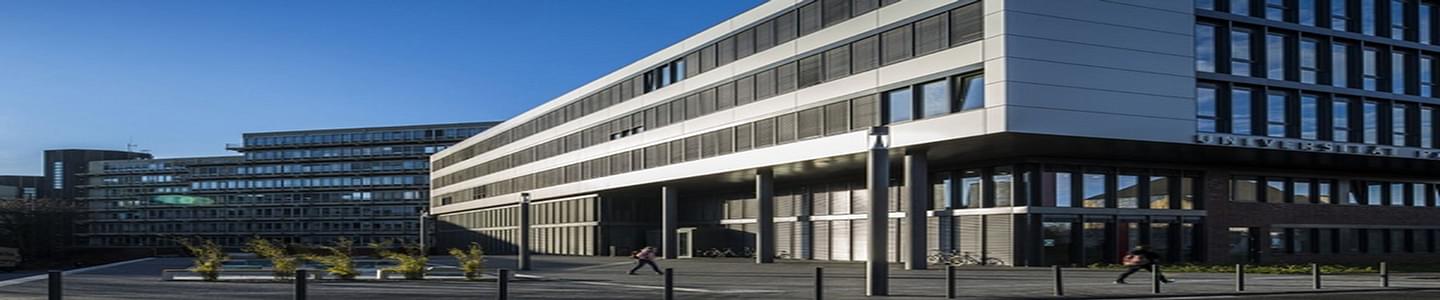


Paderborn University Bachelor of Arts Media Sciences is a three-year, full-time degree combining media studies with a second subject. This German-taught programme requires advanced German fluency and costs just €0 tuition plus €326 per semester. Winter intake opens applications in April; international deadline is 31 May 2026. The degree trains students for careers in journalism, media management, public relations, and broadcasting across Germany’s robust media sector. What sets this programme apart: hands-on media projects, real industry internships, and direct pathways to Germany’s media corporations (Deutsche Welle, ARD, Der Spiegel).
The ideal applicant is committed to full German immersion (18–24 months to reach DSH-2 or TestDaF TDN 4), intellectually curious about media theory and practice, and genuinely interested in working in Germany’s media industry post-graduation. You will earn competitive entry-level salaries (€31,000–€45,000 annually) and access an 18-month post-study work visa to launch your career.
- Zero tuition fees with only semester contributions and living costs to cover; roughly €15,300 per year total.
- 2-subject structure gives flexibility: pair Media Sciences with subjects like German, English, Business, or Psychology based on career goals.
- Direct access to German media employers and 90%+ graduate employment rates across the sector.
Current Admission Status
Applications for the Winter 2026 intake are Open. International student deadline: 31 May 2026.
German applicants often complete language certification (TestDaF/DSH-2) within 6–12 months of intensive study. Indian applicants should expect 18–24 months of dedicated German language preparation before meeting C1 entry requirements. Apply early to secure placement and language preparation timelines.
Also Check: Paderborn University Admission Requirements
Paderborn University Media Sciences Fees and Living Costs 2026
Paderborn charges zero tuition to all students. You pay only semester contributions, health insurance, and living expenses.
| Fee Component | Amount (EUR) | Amount (INR) | Frequency |
|---|---|---|---|
| Tuition Fees | €0 | INR 0 | Per semester |
| Semester Contribution (admin, transport) | €325.50 | INR 35,676 | Per semester |
| Health Insurance (mandatory) | €420 | INR 46,036 | Per semester (~€140/month) |
| Application Fee (uni-assist) | €75 | INR 8,221 | One-time |
| Total Per Semester | €820.50 | INR 89,933 | 6 semesters = €4,923 |
- Semester contribution includes the Deutschlandsemesterticket, a public transport pass covering trains, trams, and buses across Germany.
- Health insurance is mandatory for all students under age 30; public insurance averages €140/month; private plans start at €60–€80/month.
- Application fee applies only if you submit through uni-assist (required for most non-EU international applicants).
- No additional course fees, laboratory fees, or hidden charges; the semester contribution covers all administrative costs.
All INR conversions in the article use a conversion rate of EUR 1 = INR 109.61 as of June 2026. Rates fluctuate daily, verify before applying.
Cost of Living in Paderborn for Media Sciences Students
| Expense Category | Monthly Budget (EUR) | Monthly Budget (INR) |
|---|---|---|
| Accommodation (shared flat/dorm) | €300–€400 | INR 32,883–INR 43,844 |
| Groceries & Meals | €200–€250 | INR 21,922–INR 27,403 |
| Utilities (electricity, water, internet) | €80–€120 | INR 8,769–INR 13,153 |
| Personal Care & Misc. | €120–€150 | INR 13,153–INR 16,441 |
| Total Monthly (excluding health insurance) | €700–€920 | INR 76,727–INR 100,841 |
| Recommended Monthly Budget (with health insurance) | €850–€1,050 | INR 93,168–INR 115,091 |
Cost Reality: Paderborn is significantly cheaper than major cities (Berlin, Munich, Frankfurt). Many students live on €800–€900 per month with shared accommodation and strategic food shopping. Student dormitories typically cost €250–€350/month and fill quickly; apply immediately after admission.
Paderborn University Media Sciences Admission 2026
Admission to this programme is free (no numerus clausus). You must meet language requirements and hold a valid secondary school qualification equivalent to the German Abitur.
| Intake | Start Month | Application Opens | Application Deadline | Status |
|---|---|---|---|---|
| Winter Semester | October 2026 | 15 April 2026 | 31 May 2026 | Open |
| Summer Semester | April 2027 | 1 September 2026 | Not offered for Media Sciences | — |
Academic Eligibility: A secondary school diploma or equivalent (12–13 years of schooling). Paderborn uses the APS (Akademische Prüfstelle) certificate for credential verification; non-EU applicants typically submit documents through uni-assist. No minimum GPA is required (free admission programme).
German Language Proficiency Requirement
You must demonstrate advanced German proficiency (C1 CEFR level) before or upon enrolment. The programme is entirely German-taught; low language proficiency will make coursework extremely difficult.
- Accepted certifications: DSH-2, TestDaF TDN 4 (all four sections), Goethe-Zertifikat C2, or telc Deutsch C1 Hochschule.
- TestDaF TDN 4 and DSH-2 are the most common; roughly 70% of international students enter via TestDaF pathway.
- Preparation timelines: Intensive programmes take 12–18 months to C1 from intermediate; self-study typically requires 24+ months.
- German language exams cost €150–€250; registration deadlines are 8–10 weeks before the test date.
Tip for Indian Students: Enrol in a certified German language programme at a DAAD-recognised institution in India (Goethe Institute, Max Mueller Bhavan). Most Indian applicants benefit from 6-month intensive in-country study before a final 3–6 month immersion in Germany to certify.
Paderborn University Media Sciences Application 2026
Apply through uni-assist (most international applicants) or directly to the university’s International Office. Deadlines are firm; applications received after 31 May 2026 are typically rejected unless spaces remain.
| Intake | Application Opens | Standard Deadline | Late Application Window | Status |
|---|---|---|---|---|
| Winter 2026 | 15 April 2026 | 31 May 2026 | 22 Sept – 15 Oct 2026 (subject to availability) | Open |
- Submit: completed application form, secondary school transcript, German language certificate (DSH-2 or TestDaF), APS credential evaluation (if non-EU), and proof of uni-assist fee payment (€75).
- Paderborn responds to applications within 4–6 weeks of submission. Acceptances are conditional on maintaining language proficiency until enrolment.
- Once accepted, you must formally confirm enrolment within the uni-assist portal and submit health insurance documentation to complete registration.
Application Tip: Submit 2–3 weeks before the deadline to allow time for document corrections. uni-assist frequently flags missing or unclear documents; early submission means you can resubmit quickly without missing the deadline.
Paderborn University Media Sciences Scholarships 2026
Paderborn offers modest scholarship support for international undergraduates. DAAD scholarships (the most generous German source) are not available for Bachelor’s degrees; they are reserved for Master’s and PhD. However, internal and regional scholarships can offset costs.
| Scholarship | Amount (EUR/month) | Amount (INR/month) | Eligibility | Competitiveness |
|---|---|---|---|---|
| Deutschlandstipendium | €934 | INR 102,411 | Top academic performance + extracurricular engagement | Highly competitive (<2% award rate) |
| PROMOS (internship/study abroad) | Variable | Variable | Degree students at Paderborn pursuing approved internships or semester exchanges | Competitive |
| OWL Social Scholarship | Variable (one-time grant) | Variable | Financial or personal hardship + satisfactory progress | Moderate |
- Deutschlandstipendium awards around €934/month (or €11,208/year) to exceptionally strong applicants; the bar is very high.
- PROMOS funds semester-long study exchanges and internships abroad; amounts vary by country but typically cover €300–€500 of monthly costs.
- Most international undergraduates fund studies via personal savings, family support, or part-time work (€520/month permitted during lectures; unlimited during breaks).
Scholarship Reality: Paderborn is heavily subsidised by the state; tuition is free for everyone. Scholarship awards are sparse because living costs are already very low by global standards (€800–€1,000/month). Plan financially as a self-funded student; any scholarship is a bonus.
Paderborn University Media Sciences Salary 2026
Media Studies graduates enter mid-tier roles in journalism, PR, advertising, and broadcasting. Entry-level salaries are below Germany’s overall graduate average (€44,000/year) but competitive within media and communications sectors.
| Role / Career Path | Gross Annual (EUR) | Gross Annual (INR) | Sector / Employer Examples |
|---|---|---|---|
| Junior Journalist / Content Writer | €31,000–€35,000 | INR 33.98 Lakhs–INR 38.37 Lakhs | News outlets, online journalism, trade publications |
| PR Officer / Communications Specialist | €33,000–€40,000 | INR 36.17 Lakhs–INR 43.84 Lakhs | Corporate communications, government agencies, NGOs |
| Media Planner / Advertising Coordinator | €34,000–€45,000 | INR 37.27 Lakhs–INR 49.32 Lakhs | Advertising agencies, media buying firms, digital marketing |
| Broadcast Producer (TV/Radio) | €32,000–€42,000 | INR 35.08 Lakhs–INR 46.04 Lakhs | ARD, ZDF, Deutsche Welle, private broadcasters |
Source: Statistisches Bundesamt (German Federal Statistical Office), IAB employment surveys, 2025.
- Gross salaries in Germany are higher than take-home due to mandatory income tax (20–40% depending on income) and social insurance contributions.
- Net annual income after tax and deductions: roughly €24,000–€32,000 from the entry-level roles listed above.
- Salary growth accelerates with experience; professionals 5+ years in-role earn €55,000–€70,000 annually.
Salary Reality: Media careers in Germany offer stability and benefits (universal health care, strong labour protections) rather than high salaries. Entry-level media roles are well-paid compared to other countries, but return-on-degree investment is strongest for those with internship experience during studies and second-language skills (English + German).
Germany Visa Pathway for Media Sciences Graduates 2026
Germany offers a dedicated post-study work visa (Job Seeker Visa) lasting 18 months. This permit allows unlimited work in any sector while you search for or launch your media career.
- Post-Study Job Seeker Visa (Section 20 AufenthG): Issued automatically upon graduation for 18 months; no visa interview required. Work any job in any sector without employer sponsorship during this period.
- Skilled Worker Visa (Blue Card): Available once you secure a position paying €45,934/year (reduced threshold for STEM; Media Studies uses standard rate). Processing takes 2–4 weeks.
- Permanent Residence (PR): Eligible after 33 months of skilled worker visa tenure, or after 18 months if you hold a bachelor’s plus demonstrate language at B1 level.
- Family / Dependent Visas: Spouse and dependent children of post-study visa holders can apply for residence permits with full work rights.
Visa Reality: Germany actively welcomes international graduates. The 18-month post-study window is generous and gives you real time to find a permanent role without immediate visa or salary pressure. Many graduates transition to Blue Cards within 6–12 months of job searching; others choose to leave and apply for return work visas later.
Read More: Paderborn University Complete Profile
Paderborn University Media Sciences Ranking 2026
Paderborn University holds a strong reputation in Germany for research and teaching. While no subject-specific ranking exists for Media Sciences globally, the university ranks 501–550 overall in QS World Rankings (2026) and 601–800 in THE World Rankings. Within Germany, it is a tier-1 research university with particular strength in engineering and media studies research output.
- QS World Ranking: 501–550 (competitive in Europe; strong in German-speaking region).
- THE World Ranking: 601–800 (solid research-intensive university with PhD programme strength).
- Media Studies programme is well-regarded in German media industry circles for practical curriculum and internship placements; employers actively recruit from Paderborn.
Honest Take: Global rankings matter less for Media Studies than industry reputation and internship connections. Paderborn’s real strength is German employer recognition and the OWL region’s proximity to major corporations (Siemens, Bertelsmann). You will network directly with ARD, ZDF, and Deutsche Welle recruiters through internships and projects during your degree.
Paderborn’s Bachelor of Arts Media Sciences offers a structured, affordable pathway into Germany’s established media sector. The programme balances theory (media history, economics, sociology) with hands-on production work and mandatory internships. Tuition is free; living costs are modest; German employer recognition is strong. Success hinges on your commitment to mastering German language before arrival and leveraging the 18-month post-study visa to secure a permanent media role in Germany or the EU.
Media Sciences FAQs
Ques. What is the 2-subject requirement in Paderborn’s Media Sciences degree?
Ans. Paderborn requires all Bachelor of Arts students to combine their major subject (Media Sciences in this case) with a second subject (e.g., German, English, Business, Psychology). You choose your minor at application or during your first semester; both subjects carry equal weight in your final grade and diploma.
Ques. Can I study Media Sciences in English at Paderborn University?
Ans. No. The entire Media Sciences programme is taught in German. Some electives or seminar components may include English-language academic texts, but lectures, assignments, exams, and group projects are conducted in German. You must be fluent (C1) by the time you enrol.
Ques. What internship opportunities are available during the Media Sciences degree?
Ans. Media Sciences includes practical courses and project-based learning with industry partners. Internships are not mandated by the curriculum, but 80%+ of students complete 8–12 week internships at media companies, publishing houses, or broadcast stations during semester breaks or between semesters. Paderborn maintains partnerships with ARD, Deutsche Welle, ZDF, and regional media outlets.
Ques. How difficult is it for Indian students to get admitted to Paderborn’s Media Sciences programme?
Ans. Admission is free (no numerus clausus); the only barriers are German language proficiency and valid secondary school credentials. The challenge for Indian students is not competition but language preparation—reaching C1 German before deadline (31 May 2026) requires 18–24 months of intensive study. Academic qualifications are straightforward to verify through APS.
Ques. Can I work part-time while studying Media Sciences at Paderborn?
Ans. Yes. International students can work up to 20 hours per week during lecture periods or full-time during semester breaks. Many students earn €450–€600/month in part-time roles while maintaining their studies. Media companies and news outlets are common employers for student workers in Paderborn.
Tuition Fees
Other Expenses
| Head | Avg Cost Per Year |
|---|---|
| Rent | ₹531888 (EUR 4800) |
| Food | ₹465402 (EUR 4200) |
Previous Year Tuition Fees
| Year | 1st Year Fees |
|---|---|
| 2024 | ₹66486 (EUR 600) |
Important Dates
| Event | Application Date |
|---|---|
| Application Deadline For Winter 2026 Intake | |
Required Document List
- Secondary school leaving certificate
- Bachelor’s certificate
- Transcript(s) of Records
- Diploma Supplement
- Language Certificate (IELTS, TOEFL, etc. with scores that meet minimum requirements, Medium of Instruction)
- GRE or dMAT
- Module Handbook
- APS if you are applying from India, China or Vietnam
- Passport

Do you think the Rankings are wrong ? Report Here
TOP Scholarships
| Scholarship name | Award amount | Eligibility |
|---|---|---|
| Deutschlandstipendium Scholarship | 3600 | Prerequisites for an application are very good school or academic performance as well as extracurricular or non-university social commitment. |
| OWL Study Fund | 1800 | Must be studying or starting studies at Paderborn University (or partner universities in the OWL region). |
Key Resources for Your Study Abroad Journey


Scholarship Grants & Financial Aids
| Name | Scholarship Per Student | Level of Study | Type | |
|---|---|---|---|---|
| VueVille Future Technology Scholarship | Scholarship per student₹ 1.1 L/Yr$1,000 | Level Of StudyBachelor | TypeMerit-Based | |
| MAWISTA Scholarship | Scholarship per student₹ 7.4 L/Yr$6,691 | Level Of StudyBachelor | TypeEasy-to-Apply | |
| Axol Science Scholarship | Scholarship per student₹ 2.2 L/Yr$2,000 | Level Of StudyBachelor | TypeCompany-Sponsored |
Similar Programs
| Program | Important Date | Total Fees | Median Exams Score | Action |
|---|---|---|---|---|
-- | INR 11,635/Yr EUR 105 /Yr | |||
Application Deadline For Winter 2026 Intake (15th Jul 2026) | INR 78,010/Yr EUR 704 /Yr | |||
-- | INR 3.3 L/Yr EUR 3,000 /Yr |
| ||
-- | INR 55,405/Yr EUR 500 /Yr | |||
-- | INR 77,567/Yr EUR 700 /Yr |
|


Do you think the Dates are wrong ? Report Here



Comments