



Education Journalist | Study Abroad Strategy Lead | Updated On - Feb 17, 2026
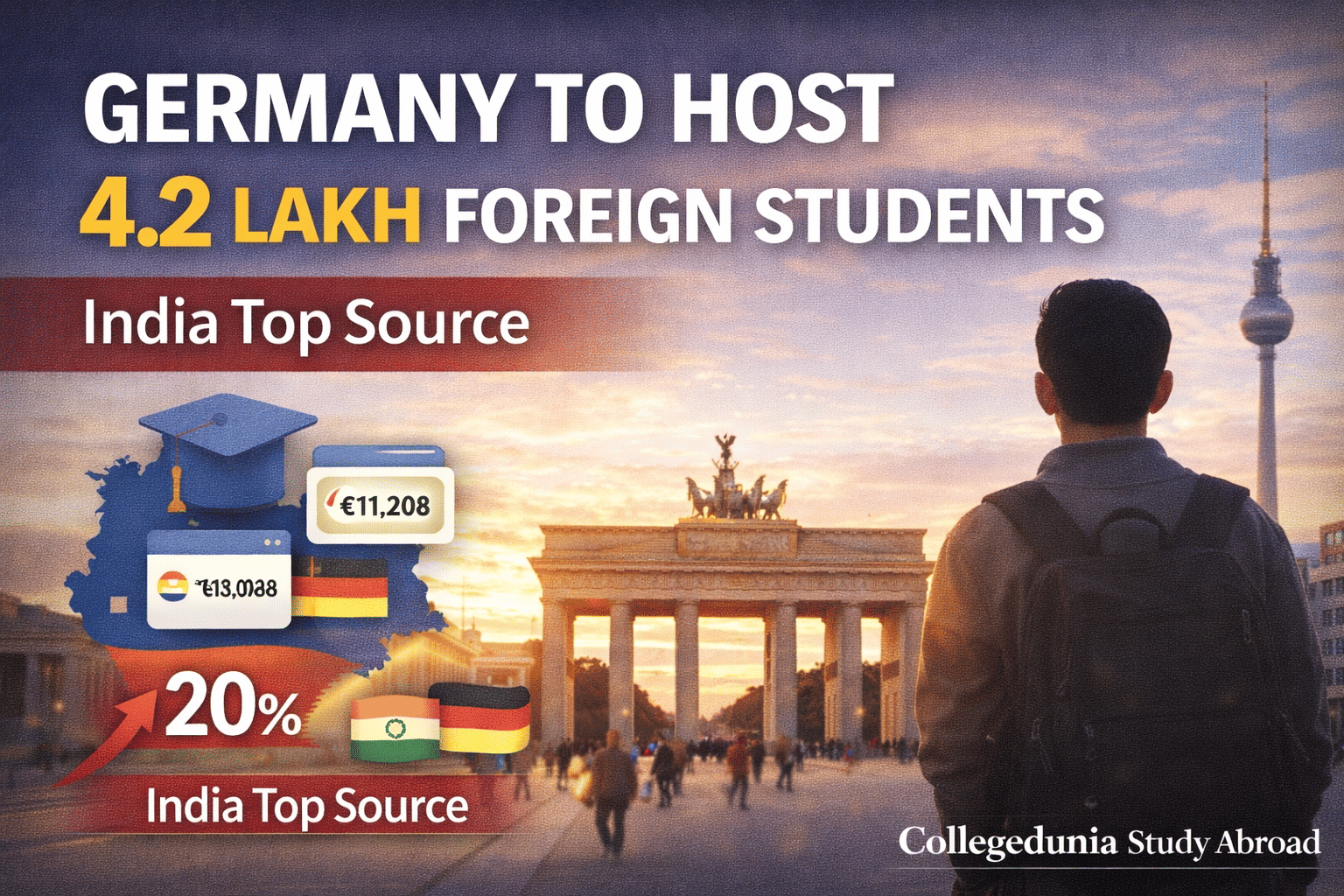
Germany is on track to host around 4,20,000 international students and doctoral candidates in the winter semester 2025/26, based on a DAAD snapshot survey of German higher education institutions. The update matters for Indian students because India is cited as the largest source country in the latest Wissenschaft weltoffen 2025 release, and Indian demand is still rising.
The DAAD said universities in Germany are reporting higher international interest in Germany as a study and research destination, and it expects the current winter semester to end above last year’s confirmed totals.
What’s new in the latest DAAD update: DAAD’s snapshot survey indicates Germany is currently at about 4.2 lakh international students/doctoral candidates for 2025/26 (winter semester).
What changed vs earlier numbers?
In the winter semester 2024/25, Wissenschaft weltoffen 2025 reported around 4,02,000 international students and doctoral candidates at German universities—about 6% higher than the previous year—and a record 1,16,600 international first-year students.
Key numbers at a glance
These are the figures Indian applicants should track from the latest official releases:
- ~4,20,000 international students/doctoral candidates (DAAD snapshot for winter 2025/26)
- ~4,02,000 international students/doctoral candidates (confirmed for winter 2024/25)
- India ~59,000 students, largest source country; up ~20% year-on-year (as cited in Wissenschaft weltoffen 2025 coverage)
What DAAD says is driving the rise
DAAD notes that institutions are seeing stronger interest from abroad in studying and conducting research in Germany, reflected in the snapshot results for the current winter semester.
The Wissenschaft weltoffen 2025 summary also flags that international degree-seeking students in Germany are concentrated in engineering and economics/law/social sciences, and that international participation is particularly high at the master’s and doctoral levels.
Impact on Indian students
For Indian applicants, “India as the top source country” combined with higher overall intakes can translate into:
- More competition for English-taught master’s seats in high-demand fields (engineering, business, data/IT) that already attract large international cohorts.
- Earlier timelines for applications and housing planning in popular student cities, as universities manage larger incoming cohorts (especially first-year international students).
What’s next for 2026 applicants
- Shortlist and apply early: if you’re aiming for winter 2026/27 admissions, don’t wait for late-cycle openings—German universities often fill popular English-taught programmes quickly.
- Use official programme and mobility data: track updates via DAAD and Wissenschaft weltoffen rather than secondary summaries when planning destinations and timelines.
- Keep documents ready: admissions + visa planning often move in parallel for Germany; avoid last-minute delays by preparing academic records and financing proofs well ahead of intake windows.












Comments