


Deggendorf Institute of Technology Courses and Fees 2026


Deggendorf Institute of Technology (DIT) offers Bachelor's and Master's programs across engineering, computer science, business, and health sciences, with a strong emphasis on applied learning and industry-integrated research.
As a public Bavarian institution, DIT does not charge tuition fees. Students pay only a mandatory semester fee of €582 (₹64,008) per semester, covering student union membership, administrative costs, and a semester transit pass (for travel). This applies equally to domestic and international students.
- Application Review Fee: €60 (₹6,599), one-time and non-refundable
- Annual Cost of Living in Deggendorf: €11,376 – €12,690 (₹12.51 – ₹13.96 Lakhs)
- Scholarships: Available only after students have completed at least 1–2 semesters on campus and require a separate application.
- Key funding options include the Deutschlandstipendium (€300/month for one year) for high-achieving students and DAAD STIBET scholarships.
Note: All currency conversions are based on €1 = ₹109.98, as of 12 June 2026.
Check out the guide for Indian students to study in Germany

- Popular Programs and Fees at Deggendorf Institute of Technology 2026
- How to Pay Fees at Deggendorf Institute of Technology?
- Deggendorf Institute of Technology Cost of Living 2026
- Deggendorf Institute of Technology Scholarships 2026
- Return on Investment (ROI) at Deggendorf Institute of Technology
- FAQs
Popular Programs and Fees at Deggendorf Institute of Technology 2026
DIT fees are listed as a per-semester rate. All programs, including Bachelor's and Master's, carry the same mandatory semester fee of €582 (₹64,008), which includes the student union contribution of €82 (₹9,012) and an international service fee. There are no additional tuition charges for international students beyond this.
Popular DIT courses for international students include artificial intelligence, mechatronics, computer science, and international management. Programs are available in English, German, or a combination. English-taught programs do not require German language proof for admission, though B1/B2 German is strongly recommended for regional employment.
| Program | Language of teaching | Duration | Semester Fee |
|---|---|---|---|
| MSc Artificial Intelligence and Data Science | English | 4 semesters | €582 (₹64,008) |
| MSc Applied Computer Science | German | 3 semesters | €582 (₹64,008) |
| MSc Electrical Engineering and Information Technology | English | 3 semesters | €582 (₹64,008) |
| MEng Mechanical Engineering | German | 3 semesters | €582 (₹64,008) |
| MEng Mechatronic and Cyber-Physical Systems | English | 3 semesters | €582 (₹64,008) |
| BSc Health Informatics | English | 7 semesters | €582 (₹64,008) |
| BSc Artificial Intelligence | English / German | 7 semesters | €582 (₹64,008) |
| BSc Business Informatics | German | 7 semesters | €582 (₹64,008) |
| BA International Management | English | 7 semesters | €582 (₹64,008) |
| BEng Civil and Construction Engineering | German | 7 semesters | €582 (₹64,008) |
Note: Programs listed as 'German' language of instruction require a minimum B2 German certificate (TestDaF or DSH) for admission. English-taught programs accept IELTS 5.5–6.5 or equivalent.
Explore the admission requirements at Deggendorf Institute of Technology
How to Pay Fees at Deggendorf Institute of Technology?
Payments at DIT are divided into two distinct phases: the application review fee and the enrollment/semester fees. Both are handled through DIT's official Primuss Application Portal. The application review fee of €60 (₹6,599) is paid at the time of application submission via International Credit Card (Visa, Mastercard) or PayPal through the Primuss Portal.
Payment confirmation automatically updates the application status to allow document processing. Once an official Letter of Admission is issued, the first semester fee must be paid via SEPA/International Bank Wire Transfer to complete formal enrollment.
Steps to pay the semester fee:
- Download the Official Invoice: Log into your Primuss Portal account and navigate to the enrollment section to download your itemised invoice containing DIT's official bank routing details.
- Note the Bank Transfer Details: The invoice lists the university's IBAN and BIC/SWIFT code.
- Insert Your Unique Reference Code (Verwendungszweck): When executing the bank transfer, enter your exact Student ID or Application Number and full name in the Payment Reference field. An incorrect or missing reference code prevents the accounting office from matching the payment to your account, causing registration delays.
Note: Flywire and Convera are not university-partnered payment portals for DIT. Use only the bank transfer details provided on your official DIT invoice. PayMyTuition is not applicable to German public universities.
Deggendorf Institute of Technology Cost of Living 2026
Deggendorf is a small city in Lower Bavaria with a significantly lower cost of living compared to major German cities such as Munich, Frankfurt, or Berlin. Rent, transportation, and day-to-day expenses are considerably more affordable, making DIT a cost-effective study destination within Germany.
Annual cost of living in Deggendorf: €11,376 – €12,690 (₹12.51 – ₹13.96 Lakhs)
| Cost Component | Cost (EUR) | Cost (INR) |
|---|---|---|
| Semester Fee (2 semesters) | €1,164 | ₹1.28 Lakhs |
| Food | €3,000 | ₹3.30 Lakhs |
| Accommodation (including internet & utilities) | €4,200 | ₹4.62 Lakhs |
| TV & Radio Licence | €216 | ₹23,756 |
| Health & Dental Insurance | €1,560 | ₹1.72 Lakhs |
| Recreational Expenses | €2,400 | ₹2.64 Lakhs |
| One-Time Residence Permit Cost | €100–150 | ₹10,998–16,497 |
| Estimated First-Year Cost of Attendance | €12,640–12,690 | ₹13.90–13.96 Lakhs |
Note: Health insurance is mandatory for all students in Germany. The one-time Residence Permit (Aufenthaltserlaubnis) fee of €100–150 is payable at the local Ausländerbehörde after arrival. Costs will vary based on accommodation type and individual lifestyle.
Deggendorf Institute of Technology Scholarships 2026
DIT does not offer full-ride admission scholarships for international students arriving for their first semester. Scholarship support at DIT is performance-based or need-based and becomes available only after completing at least one to two semesters of active study on campus.
A separate application is required for all awards. Students are never automatically considered for scholarships based on their course application alone.
| Scholarship Name | Value (EUR) | Eligibility | Application Details |
|---|---|---|---|
| Deutschlandstipendium (Germany Scholarship) | €300 (₹32,994)/month (1 year) |
Bachelor's and Master's students; High GPA, social commitment, or documented hardship |
Application via Primuss Portal; Window: Nov 1 – Dec 15 annually |
| DAAD STIBET – Special Commitment Track | Varies | Min. 2 semesters (B.Sc.) or 1 semester (M.Sc.); Intercultural campus involvement |
Application via Mobility Online; Deadlines: Apr 30 / Oct 31 |
| DAAD STIBET – Graduation Scholarship | Varies | Within 6–12 months of degree completion, Thesis-phase financial support |
Note: For the Deutschlandstipendium, mandatory documents include a 1-page Motivation Letter answering DIT's specific questionnaire, a CV, and a current grade transcript. For DAAD STIBET tracks, a formal financial needs statement, enrollment certificate, and motivation letter are required.
Check out the scholarships available in Germany for Indian students
Return on Investment (ROI) at Deggendorf Institute of Technology
DIT's total program cost across a full Master's degree (3 semesters) amounts to approximately €1,746 (₹1.92 Lakhs) in semester fees. Combined with Deggendorf's lower cost of living relative to German urban centres, the total investment for a 1.5-year Master's typically falls between €13,500–15,000 (₹14.85–16.50 Lakhs), including living expenses.
Entry-level graduates in fields such as M.Sc. Applied Computer Science or M.Eng. Mechatronics generally secure starting salaries of €45,000–60,000 (₹49.46–₹65.94 Lakhs) per year in Germany. At this income level, students can recover their total study investment within 4–6 months of full-time employment.
Germany's 18-month post-study job-seeking visa provides ample time to secure employment after graduation. DIT also maintains an internal student job board listing open corporate positions, primarily with Bavarian manufacturing and technology firms.
Explore the job options in Germany
The single most important factor affecting employability in Lower Bavaria is German language proficiency. Even for graduates of English-taught programs, local Mittelstand companies in the Deggendorf, Cham, and Pfarrkirchen area strongly favour candidates with at least B1/B2 conversational German during recruitment. Students are strongly advised to begin German language learning before arrival and continue throughout their degree.
FAQs
Ques. Is Deggendorf Institute of Technology a public university?
Ans. Yes. DIT (Technische Hochschule Deggendorf) is a public university of applied sciences (Fachhochschule) in Bavaria, Germany, funded by the Free State of Bavaria. Students pay only the mandatory semester fee of €582 per semester, with no additional tuition charged.
Ques. What is the APS Certificate, and do Indian students need it?
Ans. The APS (Academic Evaluation Centre) Certificate is mandatory for Indian applicants to German universities. It verifies that your academic documents — Class 12 marksheet, degree certificates, and transcripts — are genuine and meet German entry standards. Processing takes 6–10 weeks, so apply early. APS India operates through the German Embassy in New Delhi.
Ques. Do Indian students need to know German to study at DIT?
Ans. Not necessarily for admission to English-taught programs such as M.Sc. AI and Data Science or M.Eng. Mechatronic Systems. However, learning German to at least B1/B2 level significantly improves employment prospects in the Lower Bavaria region, where local Mittelstand companies strongly favour German-speaking candidates during recruitment.
Ques. What is the Primuss Portal, and how is it used?
Ans. Primuss is DIT's official online application and student management portal. It is used to submit your application, pay the €60 application review fee, track your application status, download your enrollment invoice once admitted, and apply for the Deutschlandstipendium scholarship. All formal academic interactions at DIT run through Primuss.
Course Finder - Search from 50K+ courses
Popular Streams:
Deggendorf Institute of Technology Reviews
11 Reviews Found
Likes
- Course structure is really great
- Atmosphere of the uni is always motivating
- Professors are really helpful
Dislikes
- The campus area is little small
- It does not have any ground to play some games
- At my time there was very less interaction with other students due to Corona
Course Curriculum
- The course is really very difficult as it has mix structure of Practical and Theoretical exams for the subjects. In some of the subject it requires only a practical submission.
- The positive aspect was the practical labs that gave me so much practical experience, which helped me understand the technologies more deeply and easily. Negative was the theoretical exams, which I just wrote to get it passed.
- 3 classes were scheduled per day during my time
- We had 60 students in one class
- There were roughly 50 indian students in my class
Fees
- I paid 62 euros for each semester.
- The fees charges was semester wise in TH Deggendorf.
- The monthly expense, including everything, was 600 euros.
- The rent per month was 200 euros
- Per month, health insurance was 108 euros
- Internet and mobile phone recharge per month was 23 euros
- Grocery per month was around 150 euros
- Transportation was around 49 euros
- Other expenses: 70 euros
Likes
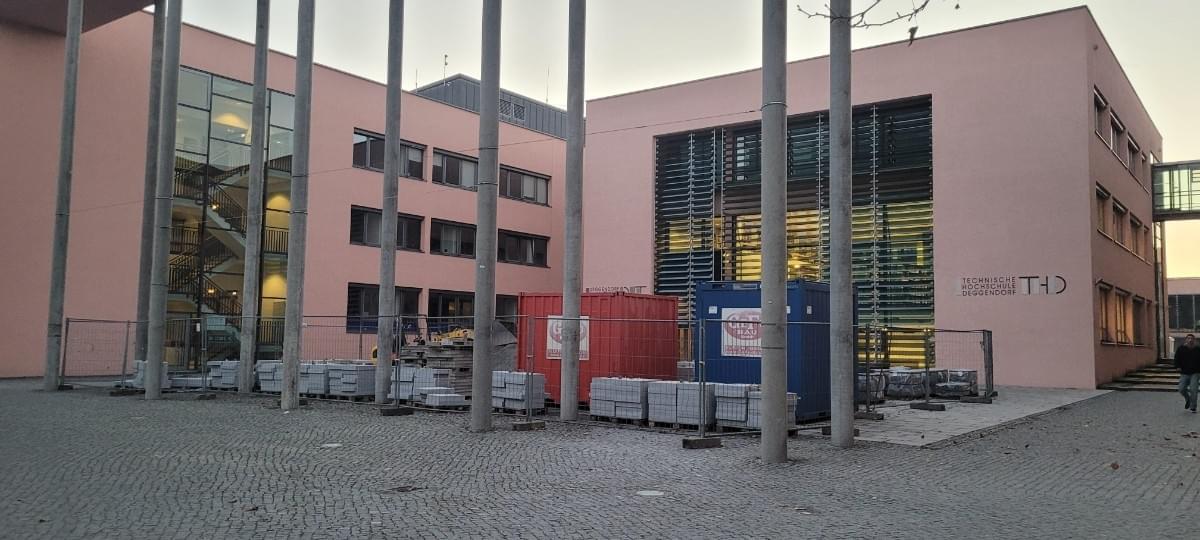
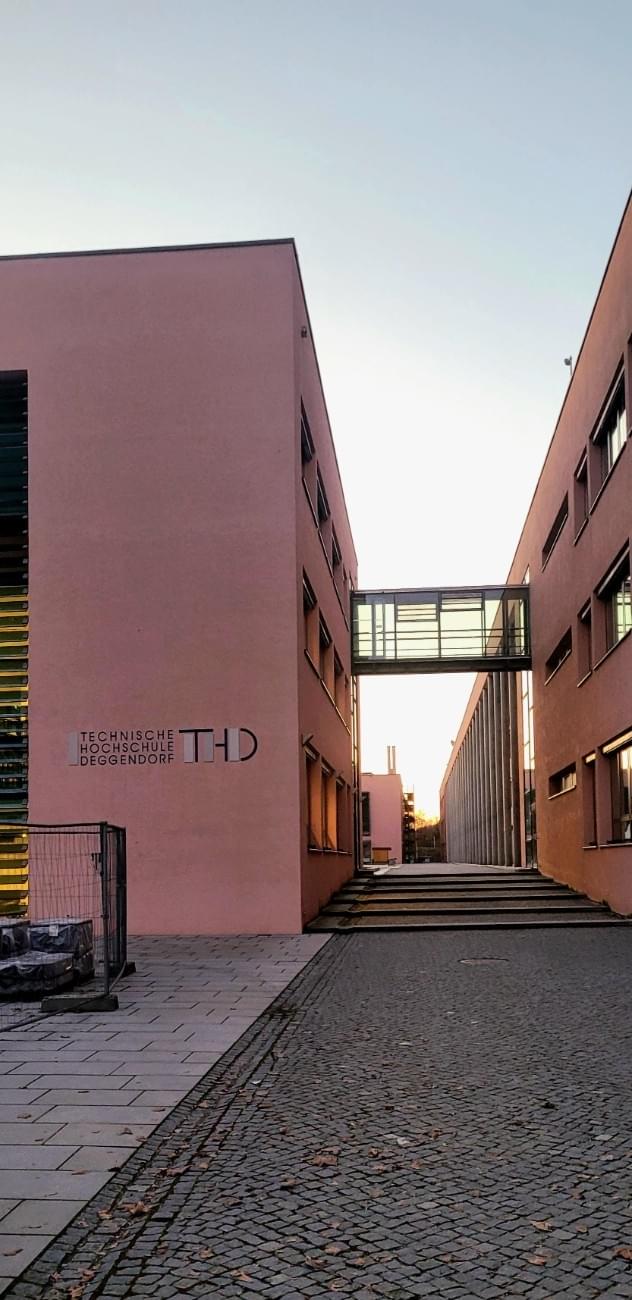
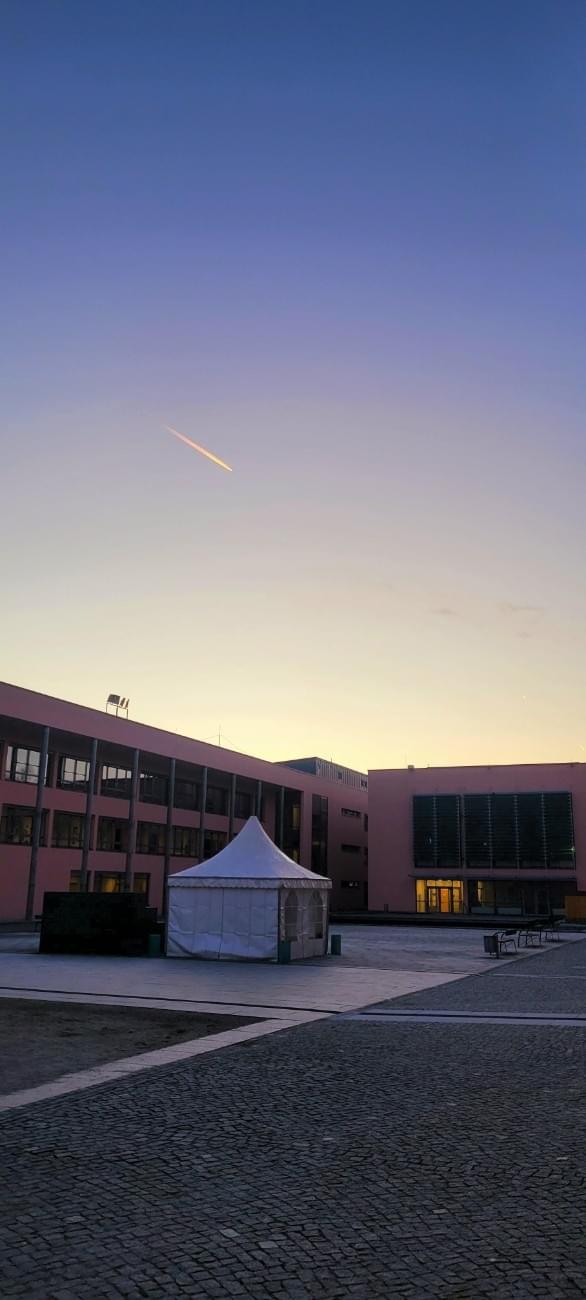
- Open campus, no hassle for entering, no walls, no doors, no locks; anyone can join the library.
- Perfectly connected to nature; due to presence of no boundaries, nature seems everywhere and never-ending
- No attendance needed; you can chose which subjects to study each semester and which exam to give each semester. your education is completely controlled by you.
Dislikes
- There is nothing in particular I don't dislike; I mean, no place is perfect, and we should learn to adapt and find peace where we are. As such, I have not encountered any bad experiences. So right now I don't have anything in the top of my head that recalls any bad memory or service regarding the college.
- Coming here and learning how to use all the it services like student mail, DIT website and ilearn could be a bit confusing.
- Finding the classes could be a bit trying and confusing too, as the campus is located in the city center, a corporate building, and the main campus. Navigating between them is fun when you are full of energy and the weather is nice, which in my experience never has been super good. HAHAH
Course Curriculum
- My AI course is difficult; it's not easy. You have to study throughout the semester and keep making project assignments from scratch, which is very difficult but helps you build your own understanding, which is very good for you. Typically we have 3, 2, or 1 class, which are 1.5-hour lectures depending on the timetable.
- Sometimes classes start at 8 or 9 or 10 or 12 or 1, depending on the professors and when we want to take the class. On average, we have 100 AI students, but only a very few show up to class, and there are around 30 Indian students in my class.
Fees
- You pay 78 euros as a contribution fee, but from the academic year 2025/2026, you have to pay an additional 500 euros as a tuition fee or some other fee, as the government has changed the rule.
- The total is 578 euros. So now every non-EU student has to pay 578 euros each semester, which is far less than what you pay in India at a good private college.

Likes
- Located right next to the river Donau in Deggendorf makes for a calming atmosphere.
- Friendly and helpful staff and faculty members.
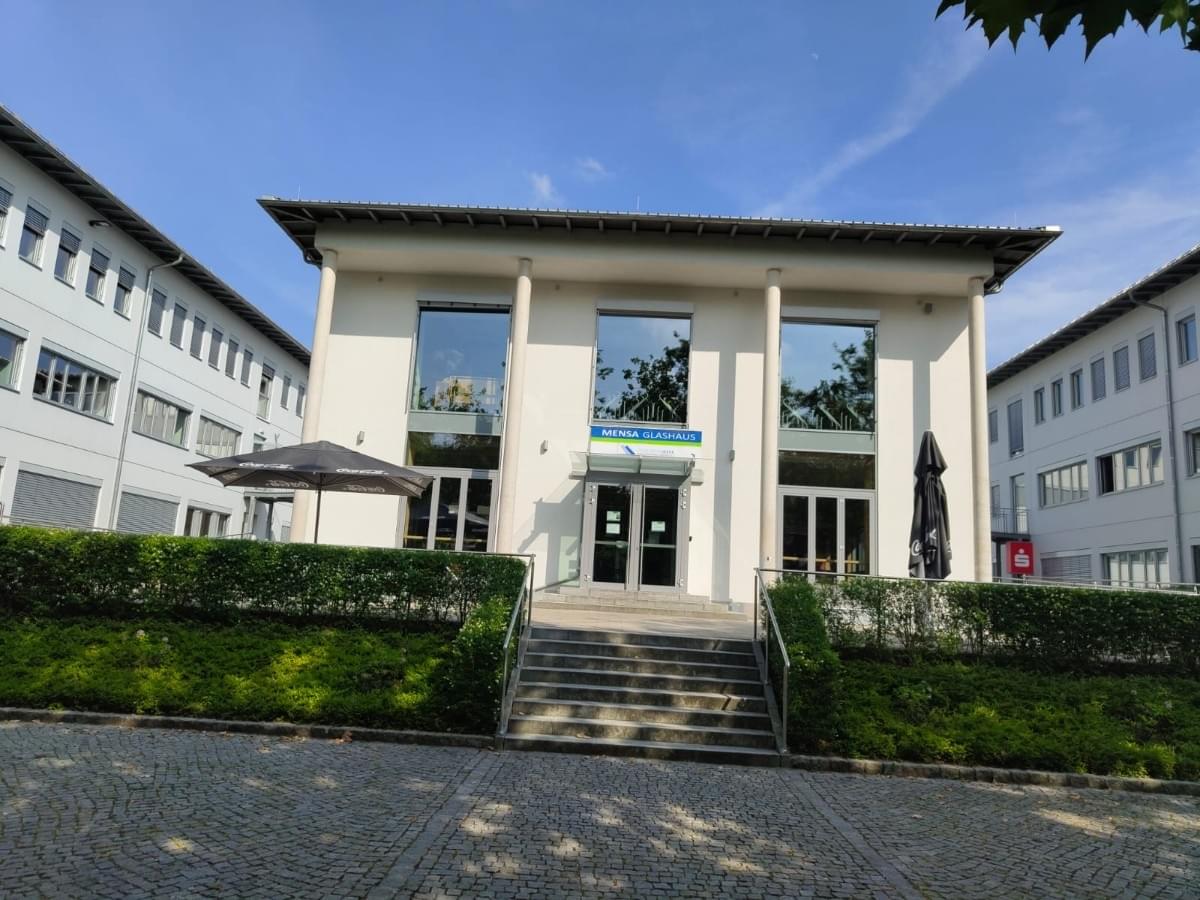
- Facilities like the library and cafeteria(Mensa) are very well maintained.
Dislikes
- Located in a small town/village, connectivity from other places might be an issue especially when there is bad weather.
- Language barrier is strong as this is a small town and not many people speak good English.
- Campus does not include a dedicated sports ground or a sports arena, even though there are plenty, but not just in the campus itself
Course Curriculum
- My course was a mix of theoretical and practical applications. The course is moderately difficult and the focus is more on application than just copy-pasting question answers from the textbooks.
- The positive of my course was the friendly faculty and the negative was the big number of mandatory subjects we had to clear, which was a bit tedious.
- The number of classes in a day varies based on the day. For example, Tuesdays used to be a full day for us, where we had around 5 classes, starting from 8:30 AM and it went up to 5 PM.
- And on Monday we had only one class. Each class lasted for around one and a half hours.
- The number of students in my class was around 40, and the number of indian students out of those was 31.
Fees
- So currently the fee per semester is 582 euros in total for international students and 82 euros for students from the EU. There will be a 60 euro application fee as well while putting in the application. This 82 or 582 euro fee will be charged every semester.
- Since in Germany universities do not have hostels, students have to arrange for their own accommodations and some student dorms will be recommended by the university itself. But getting into the university-recommended accommodation will be challenging due to the high competition; students would have plenty of other options as well.
- The average rent in Deggendorf would be around 350-400 (warm rent) on average, but there would be much cheaper and more expensive options as well. I personally landed a studio apartment whose rent was around 430 euros per month and usually the electricity, wifi and radio bills will be included within the warm rent. Make sure to check whether the rent you're paying is a "cold rent" or a "warm rent". "Cold rent" usually means the base rent, the rent without the electricity, wifi and water heating bills, and the "warm rent" includes all the above-mentioned bills.
- My monthly expense came up to 650-700 euros, with 430 being my rent, 145 being my health insurance amount, and around 20-25 euros being my weekly expense for groceries and other home utility stuff. It may vary for every individual so I would not want to estimate generally, but for me it would be this much. If there is a room with lesser rent, then the monthly expense would be reduced drastically.
Likes
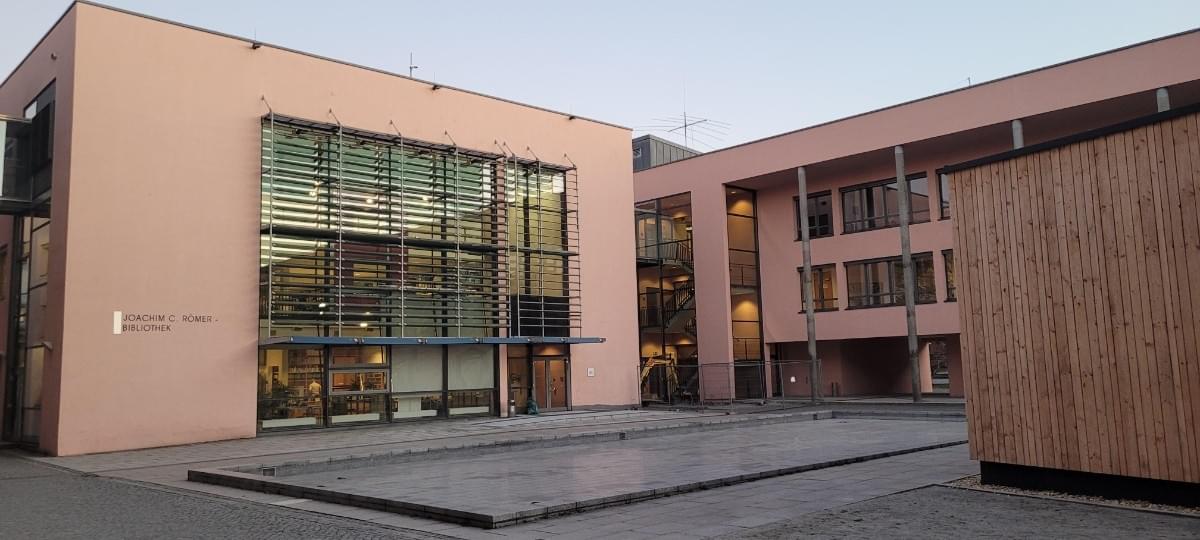
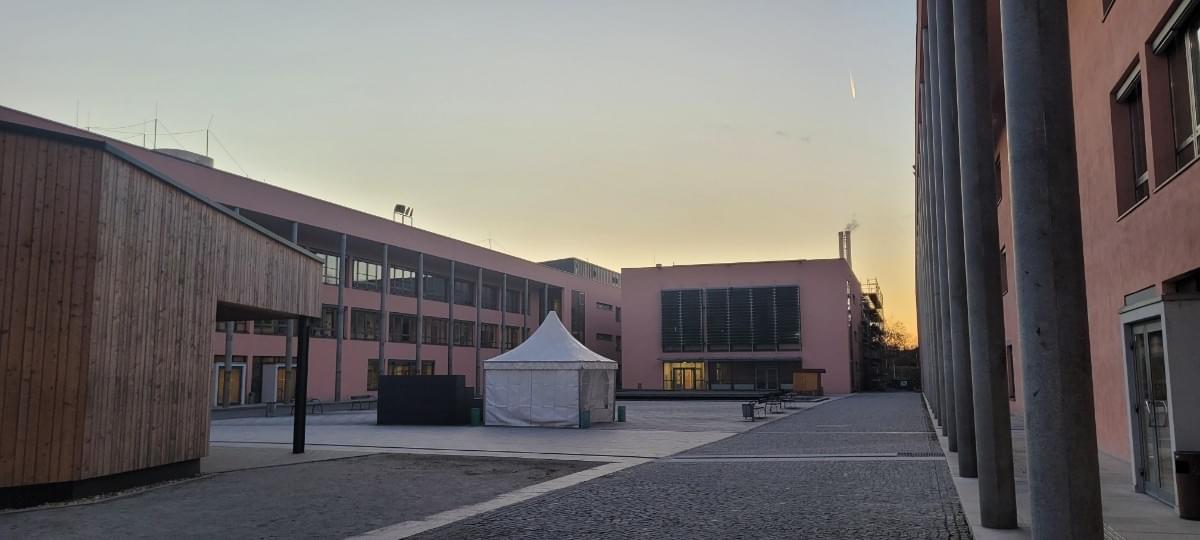
- Beautiful location
- Practical skill based teaching approach which makes you job ready.
- Very knowledgeable profs who teach masterfully.
Dislikes
- Accomodation is hard to find (problem everywhere in Germany). Dorm rooms are limited so most people stay in a rented room
- People who are used to rote learning and have forgot to use their brain in exams will not like the courses here.
- Little to no placement support
Course Curriculum
- Very relevant to the current industry standards. They also focus a lot on the safety and social impact of technology, which indian colleges disregard completely.
- I was given a chance to work on a power electronics project under a prof.
- The class schedule is similar to engineering courses in india. 1.5-hour blocks for each subject. Labs are given the same weightage as theory subjects. Classes start at 8 am and go on till 5:30. Average number of students in a class is around 40-60.
Fees
- Tuition fee is 0. You have to pay a student contribution of around 60€ per semester
Likes
- A diverse student community that gave me opportunities to learn teamwork and leadership
Dislikes
- Limited exposure to real-world industry practices (more theory-heavy than practical)
Course Curriculum
- Curriculum: Modern and industry-relevant (e.g., robotics, VR/AR, simulation).
- Exposure: Strong hands-on focus via real-world case studies.
- Timings: ~4–6 hours of lectures daily (9 AM—4 PM).
- Class Size: About 60 students per cohort.
Fees
- Students from non?EU/EEA countries are required to pay a service fee of approximately €500 per semester, plus a standard student union fee (around €370 per semester) to cover administrative services, public transport, and student life initiatives.
Likes
- Its a Public University, which means there is no tution fees
- The Campus is located in beautiful and clean city
- The Campus is modern and the labs are well equipped.
Dislikes
- Student housing is hard to find and is bit expensive.
- There aren’t many food choices on campus.
- It’s hard to find a part-time job because the town is small.
Course Curriculum
- The academics are a good mix of theory and practical work, with hands-on labs and real-world projects.
- The course is moderately difficult; some topics are technical and conceptually tricky.
- We usually have 3-4 classes a day, each about 90 minutes.
- Class size is around 33 - 35 students.
- In my course, there are about 24-25 Indian students, along with a mix of German and international students.
Fees
-
Fees Structure:
- Tuition fees: 0 Euro
- Student Contribution Fees (for every semester): 82 Euro
- Other Fees while applying:
- Fees for writing entrance exam: 25 Euro
- Monthly Expenses:
- Rent: 350-450 Euro
- Health Insurance: 144 Euro
- Radio/TV tax: 18 Euro
- Deutschland ticket: 38 Euro (Gives access to Every Public Transportation in Germany)
- Grocery and food: 100 - 150 Euro
- Total: 800 Euro (Approx.)
Likes
- I like the intercultural exposure and mutual effort from the university to help students achieve their goals. Support is provided when required by the university on professional and personal living in Germany.
Dislikes
- More practical courses could be appreciated, and industrial visits must be planned more often. An appropriate amount of national and international students would be good.
Course Curriculum
The curriculum is updated and relevant to the present technological advancements. Industrial visits are also provided and language courses are free.
Fees
60 Euro per Semester
Likes
- Small campus, so faculty is easily accessible.
Dislikes
- Since it is a small campus and a small town, limited housing and part-time jobs.
Course Curriculum
The course curriculum is great. It's an industry ready course and learn what we need in the employment. So I'm highly satisfied with the course curriculum.
Fees
There was no fee. I only had to pay a semester fee of around 55 Euros per semester.
Likes
- University management always takes initiatives so that students feel good and have a low stress level regarding their studies by organizing day trips and outdoor activities.
- University is relatively new but innovative, there are multiple research projects that are going on in the university in collaboration with many big german manufacturers.
- Modern Infrastructure and supportive staff that sums it up to a healthy and friendly environment.
Dislikes
- There is nothing that I find worse or not acceptable but there is no university which is perfect.
- Shortage of accommodation options and less frequency of public transport in some campuses made it inconvenient and a waste of time but could be solvable if some can travel with private means of transport.
Course Curriculum
Completely modern and latest with current technology. Exposure to industry is voluntary, and you have to put some effort to get this opportunity.
Fees
No hefty tuition fee, only a semester fee of 72 euros per semester.
Likes
- I applied randomly for a lot of universities and particular courses among the one's I preferred. This University had so many courses I was eligible for.
- The classes and teachings. The extra curricular activities. Curriculum. Professors Student life balancing the studies and work. Not much pressure on studies rather they help mentally and gives positive responses for students.
Dislikes
- I don't dislike anything here. The only thing is the public transport here which runs few times. Other than that there is nothing wrong or anything to be disliked here.
Course Curriculum
The university lies in Cham, which is nearby Deggendorf. They have got a lot of colleges in the area. Mostly into science, they have got enormous courses for students to study and research on. This is a practical orientated University (Hochschule) which makes it easy for students to learn with practical knowledge. They gives a lot of case studies and assignments for us to prepare and get to know into subjects. The classes are wonderful and most of thr professors are really nice. It was online until corona time and now its face to face. But sometimes it can be hybrid. The curriculum is wonderful and the subjects can be understood with a bit of effort.
Fees
The university is free of charge for all students as it is a public university. The semester fee contribution is 72€ ( approximately Rs. 6500). This fee goes to the student union inorder to benefit students and their life.
SUBSCRIBE TO OUR NEWS LETTER



Comments